Connect with us

LNG Bunkering

2026 ESG Report: Singapore-based EPS completes 530 LNG bunkering operations

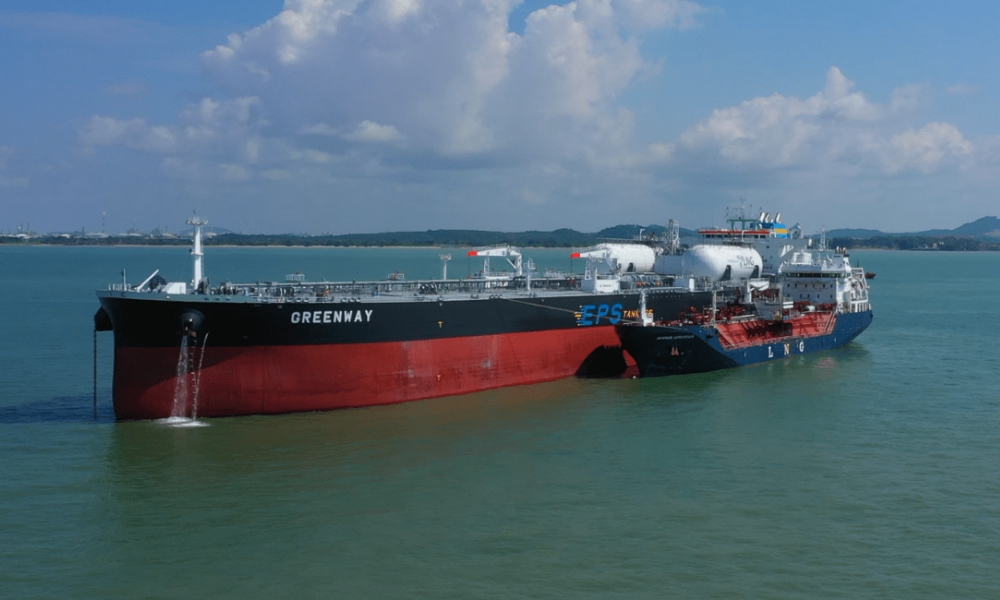
EPS said from the start of recorded data to 31 Dec 2025, the company completed a total of 530 LNG bunkering operations with over 2.4 million m3 of LNG bunkered.

Admin

Published

on

2026 ESG Report: Singapore-based EPS completes 530 LNG bunkering operations

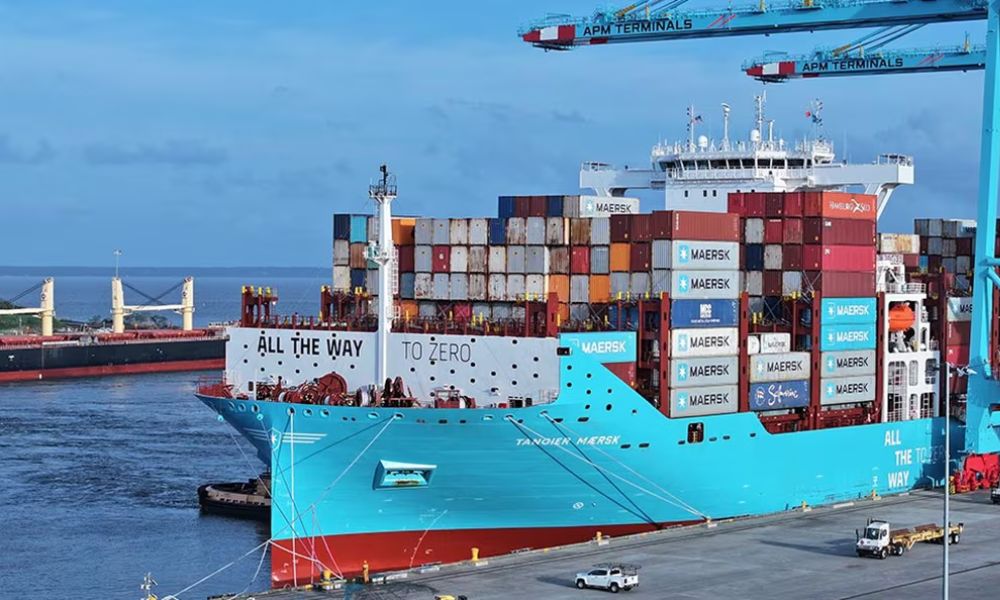
Singapore-headquartered shipping firm Eastern Pacific Shipping (EPS) on Monday (29 June) said from the start of recorded data to 31 Dec 2025, the company completed a total of 530 LNG bunkering operations with over 2.4 million cubic meters (m3) of LNG bunkered. 

In its 2026 ESG Report, the company said it continued advancing practical decarbonisation through its dual-fuel fleet expansion, alternative fuels, wind-assisted propulsion, and digital optimisation initiatives, alongside strengthened emissions reporting and third-party assurance.

With over 170 vessels designed to operate on alternative fuels, EPS said its fleet is among the largest dual-fuel fleets in the industry. In 2025, 25% of the fuel consumed by EPS fleet were alternative marine fuels, including LNG, LPG, ethane, and biofuels. 

In 2025, EPS also expanded its use of B100 biodiesel, a renewable fuel derived from sustainably sourced biomass such as used cooking oil, food waste, and agricultural residues, which offers increasing global availability and compatibility with existing marine engines while delivering substantial Well-to-Wake (WtW) emission reductions relative to conventional fossil fuels under certified supply chains. 

In 2025 alone, 94% of the biofuel the company  purchased were B100 grade. Cumulatively, from the start of recorded data to 31 Dec 2025, EPS has completed 61 biofuel bunkering operations with over 33,000 mt of biofuel.

The use of alternative fuels has lowered its emission by 464,610 mt of CO2e relative to conventional marine fuels, and it is equivalent to 9% of its entire Scope 1 emission.

The company added that its investments in wind-assisted propulsion systems, alternative fuels, digital optimisation and operational efficiency reinforced its long-term decarbonisation strategy. 

Since 2018, EPS has invested significantly in maritime decarbonisation, committing at scale to LNG as a transition fuel while progressively deploying a broad range of sustainable solutions across both legacy vessels and newbuild programmes, including ammonia-fuelled vessel orders.

As at the end of 2025, EPS had invested approximately USD 2.6 billion across 15 green projects, with over 51% of the fleet designed to operate on alternative fuels such as LNG, LPG, ethane and ammonia.


Photo credit: Eastern Pacific Shipping
Published: 30 June, 2026
Continue Reading

Alternative Fuels

ENGINE on Fuel Switch Snapshot: B100 premiums narrow for Singapore-EU voyages

Rotterdam B100 over $100/mt costlier than HSFO; Rotterdam LBM discounts to LSMGO widen; B100 premium over LSMGO drops to $39/mt in Singapore.

Admin

Published

on

By

ENGINE on Fuel Switch Snapshot: B100 premiums narrow for Singapore-EU voyages

Once a week, bunker intelligence platform ENGINE will publish a snapshot of alternative and conventional bunker fuel prices in the world’s two biggest bunkering hubs. The following is the latest snapshot:

  • Rotterdam B100 over $100/mt costlier than HSFO
  • Rotterdam LBM discounts to LSMGO widen
  • B100 premium over LSMGO drops to $39/mt in Singapore

Rotterdam B100’s premium over HSFO has widened by a further $35/mt to $103/mt over the past week.

On the other hand, its discounts to VLSFO and LSMGO have widened by $8/mt and $25/mt to $26/mt and $266/mt, respectively.

Singapore’s B100 has dropped slightly relative to conventional fuels. Its premiums over HSFO, VLSFO and LSMGO have narrowed by $16-25/mt over the past week to $39-408/mt.

ENGINE on Fuel Switch Snapshot: B100 premiums narrow for Singapore-EU voyages

LNG premiums over liquefied biomethane (LBM) in Rotterdam have widened by $15/mt to $440-447/mt.

Rotterdam’s LBM discounts to LSMGO have widened by $56-58/mt to $595-796/mt, depending on the engine type.

Liquid fuels

Rotterdam’s HSFO price has fallen by $41/mt over the past week. Its VLSFO has edged up by $2/mt, while its LSMGO price has increased by $19/mt.

The port’s B100 has edged down by $7/mt. Dutch ZRE A ticket prices have remained unchanged for a third consecutive week amid a “lack of reported trades,” Prima Markets has noted.

Singapore’s conventional fuel prices have declined by $36-45/mt over the past week, while its B100 benchmark has fallen by a larger $61/mt

The port’s monthly B100 sales doubled from 6,500 mt in April to 13,000 mt in May, according to preliminary data from the Maritime and Port Authority of Singapore.

Liquid gases

Rotterdam’s LNG prices have declined by $23-24/mt in the past week, driven largely by a 7% decline in LNG bunker premiums, which dropped from $134/mt to $125/mt. The front-month Dutch TTF Natural Gas contract has fallen by 2%, adding further downward pressure to LNG bunker prices.

Rotterdam’s LBM prices have fallen by $37-39/mt.

Singapore’s LNG prices have edged up by $8-9/mt. Resurging tensions in the Middle East, a Qatari gas facility explosion and rising LNG demand in Asia have added upward pressure on the prices.

LNG sales in Singapore jumped from 42,000 mt in April to a record 70,000 mt in May.

By Konica Bhatt


Photo credit and source: ENGINE
Published: 30 June, 2026

Continue Reading

Newbuilding

Yang Ming names third 15,500 TEU LNG dual-fuel boxship in South Korea

Company held a naming ceremony at HD HHI shipyard in Ulsan, South Korea, for “YM Wayfinder”, the third vessel in its series of LNG dual-fuel container vessels built by HD HHI.

Admin

Published

on

By

Yang Ming names third 15,500 TEU LNG dual-fuel boxship in South Korea

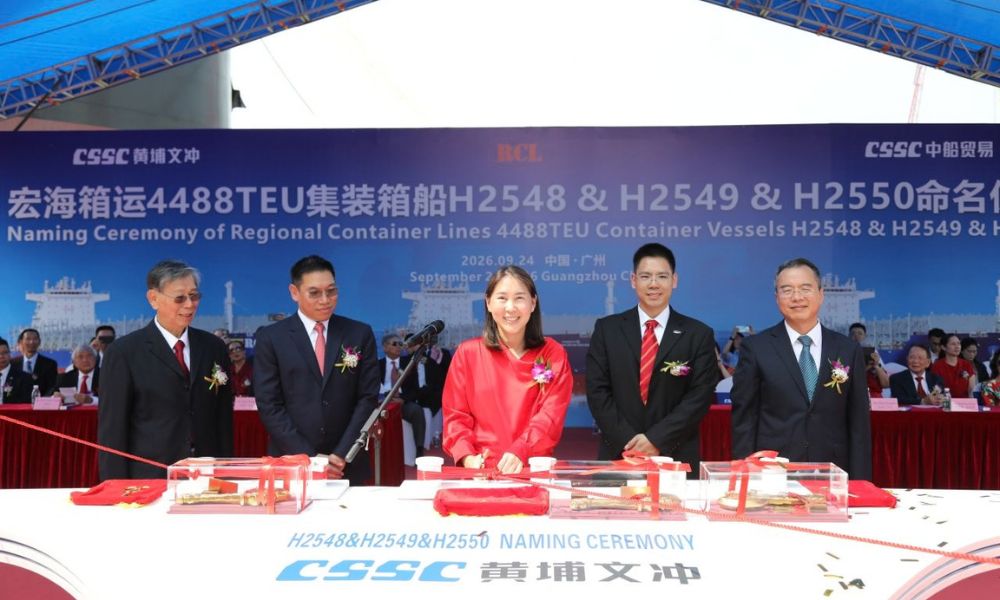
Taiwanese shipping firm Yang Ming Marine Transport Corporation (Yang Ming) on Friday (26 June) said it held a naming ceremony at the HD Hyundai Heavy Industries (HD HHI) shipyard in Ulsan, South Korea, for YM Wayfinder.

It is the third vessel in its series of 15,500 TEU-class LNG dual-fuel container vessels built by HD HHI. 

Mrs. Wei-Nung Kao, the spouse of Yang Ming’s Chairman, Mr. Feng-Ming Tsai, was invited as the Godmother to officially name the vessel and perform the ceremonial cord-cutting.

As additional LNG dual-fuel vessels join the fleet, Yang Ming will enhance operational efficiency, strengthen service competitiveness, and further reduce fleet carbon intensity to provide customers with low-carbon transportation services.

This series of vessels built by HD HHI has a length overall (LOA) of 364.97 metres, a breadth of 51 metres, and a capacity of approximately 15,600 TEU. 

In alignment with the global net-zero emissions target by 2050, Yang Ming has been actively expanding its energy-efficient fleet and is the first container shipping company in Taiwan to operate vessels utilising LNG as an alternative fuel. 

Equipped with high-pressure dual-fuel main engines that run on both LNG and low-sulphur fuel oil, this series of vessels primarily utilises LNG as fuel upon delivery, which immediately reduces greenhouse gas emissions by approximately 20% compared to conventional fuel oil. 

Two sister vessels in the LNG dual-fuel series, YM Willpower and YM Worthiness, are already in service and primarily operate on LNG. To date, the two vessels have bunkered more than 11,158 metric tonnes (mt) of LNG, which is expected to reduce greenhouse gas emissions by up to 12,532 mt.

YM Wayfinder is scheduled to commence service on the Asia-North Europe FE3 service on 1 July. 

The vessel’s deployment will enable Yang Ming to maximise slot utilization and enhance the competitiveness of its service network while fulfilling the company’s commitment to providing comprehensive, efficient, and energy-saving transportation services for customers. 

The comprehensive port rotation for the FE3 service is: Qingdao – Ningbo – Yantian – Singapore – Felixstowe – Antwerp – Hamburg.


Photo credit: Yang Ming Marine Transport Corporation
Published: 29 June, 2026

Continue Reading

Alternative Fuels

ICS report: LNG and biofuels seen as most viable marine fuels over next decade

This was followed closely by HFO combined with abatement technologies while methanol ranked in fourth place, according to ICS’s new Maritime Barometer Report.

Admin

Published

on

By

RESIZED william william on Unsplash

A new report by the International Chamber of Shipping (ICS), published on Tuesday (23 June) found that  LNG and biofuels are seen as the most viable marine fuels over the next decade.

This was followed closely by HFO (Heavy Fuel Oil) combined with abatement technologies while methanol ranked in fourth place. 

The report found that in 2025 to 2026, maritime leaders are displaying a preference for traditional fuels that have established supply mechanisms. 

The ICS Maritime Barometer Report 2025–2026 surveyed C-suite level leaders, shipowners, and operators worldwide to identify the key risk areas shaping shipping. 

Despite slight decline, LNG shared top spot with biofuels as one of three most viable future fuels over the next decade. 

LNG maintained its position as a joint leading fuel in the Barometer, with roughly 51.35% of leaders naming it as one of the most viable fuels over the next decade. 

“This is despite a marginal softening in sentiment amongst maritime leaders compared to last year’s survey, reflecting its continued role as the most immediately scalable alternative within the current fuel mix,” the report said. 

However, the report noted that this positioning is increasingly shaped not just by infrastructure maturity, but by how geopolitical instability translates into fuel-specific perceptions of security, routing exposure, and price volatility across global trade flows.

This is particularly evident in Asia-Pacific and the Middle East, where LNG’s role is reinforced through continued investment in import and bunkering infrastructure.

Singapore remains the world’s leading LNG bunkering hub, supported by expanding small-scale supply chains and vessel availability, while South Korea and China are rapidly scaling receiving and bunkering capacity to support both shipping and power demand growth.

Biofuels record one of the sharpest increases in sentiment across the future fuels landscape to match LNG at 51.35% in this year’s report.

“This could reflect a shift driven less by structural conviction and more by operational response to heightened uncertainty in global energy and trade systems,” it said. 

Their growing prominence could be closely linked to the increasing attractiveness of low-friction compliance options in a context where alternative fuels remain constrained by uneven infrastructure development, fragmented regulatory alignment, and delayed capital deployment across key regions.

Compared with LNG, which is shaped by infrastructure lock-in and geopolitical price exposure, biofuels offer immediate operational flexibility.

Japan has emerged as a key driver of marine biofuel adoption, with government-backed trials involving major shipping lines such as NYK testing biofuel blends on international routes. China has also expanded pilot programmes using biodiesel and waste-derived fuels in coastal shipping, reflecting a pragmatic approach to emissions reduction in regional trade flows.

Note: The ‘ICS Maritime Barometer Report 2025–2026’ can be viewed here


Photo credit: william william on Unsplash
Published: 26 June, 2026

Continue Reading

Trending