Connect with us

Bunker Fuel

Interview: PMG Energies leverages physical bunkering heritage to power global energy trading ambitions

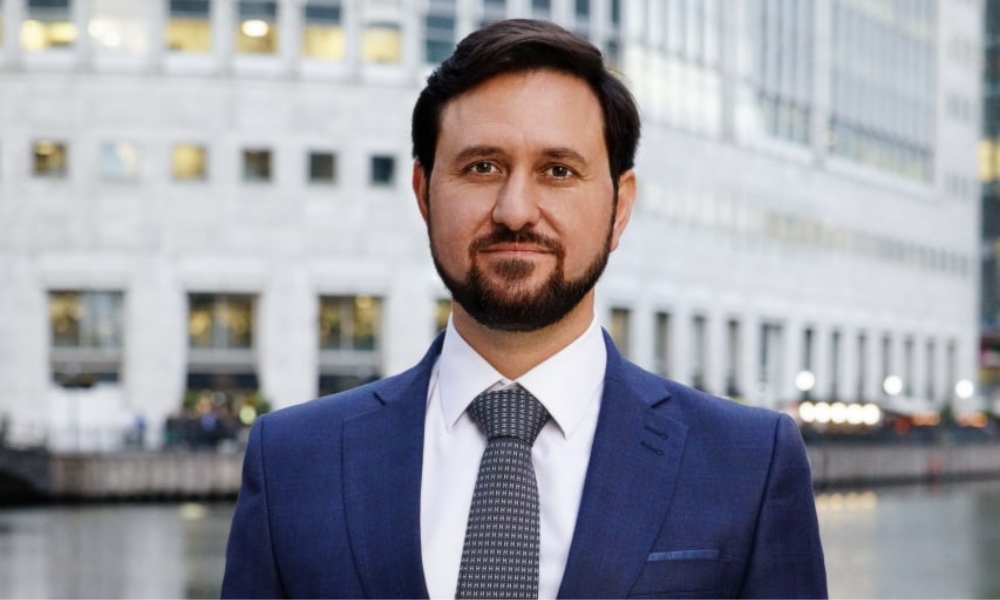
Michael Malamen, Global Commercial Director of PMG Energies, introduces his company and explains why Asia is its next strategic step.

Admin

Published

on

Interview: PMG Energies leverages physical bunkering heritage to power global energy trading ambitions

PMG Energies combines deep physical bunkering expertise with worldwide trading coverage, as it prepares to strengthen its footprint in Asia, says Global Commercial Director Michael Malamen. 

With more than two decades of hands-on operational experience and annual coverage spanning over 720 ports worldwide, PMG Energies has evolved into a global energy trading and physical supply partner trusted by shipowners, operators, and industrial clients alike. 

Speaking with Manifold Times, Michael Malamen, Global Commercial Director of PMG Energies, explains how the company’s physical DNA underpins its trading strength and why Asia represents the next strategic chapter. 

MT: PMG Energies has its roots in physical bunkering. How has that shaped the company you are today? 

PMG Energies was built from the ground up as an operational business. We started in physical bunker supply and cargo trading in the Black Sea region, and that practical foundation still defines how we operate today.

Running bunker barges, managing deliveries, testing fuel we consume on our tanker fleet ourselves, dealing with delays, weather, port constraints, and claims this gives you a very different perspective compared to being purely a paper trader. It forces discipline, transparency, and accountability.

That experience now directly supports our back-to-back bunker trading activities globally. When we advise clients, structure deals, or manage supply chains, we do so with a clear understanding of what actually happens on the water. That operational credibility is something our counterparties value, especially in volatile or complex markets.

MT: What assets and capabilities differentiate PMG Energies in today’s bunkering market? 

Our core physical bunker assets include flow-meter-equipped bunkering barges, supported by additional chartered tonnage during peak periods to ensure continuity of supply. These assets operate primarily in the Black Sea and surrounding regions, with ongoing expansion into the Mediterranean.

Beyond physical supply, PMG Energies operates a fully integrated global trading platform, supported by offices across Europe, the Middle East, and key maritime hubs. We also maintain active chartering and cargo trading desks, handling products ranging from petroleum fuels to vegetable oils.

This combination allows us to deliver real operational value: fast response times, accurate quantities, consistent quality, and reliable execution. In many ports, we aim to deliver within one hour of vessel arrival, using flow meters to ensure full transparency.

Ultimately, our strength lies in connecting physical execution with global trading reach allowing us to support clients across regions, time zones, and market conditions.

MT: PMG Energies now covers a very broad geographical footprint. How extensive is your global reach? 

On an annual basis, PMG Energies supports clients across more than 720 ports worldwide, through a combination of physical supply and back-to-back trading.

Our teams operate across all major time zones, allowing us to provide near-continuous market coverage. This is particularly important for owners and operators trading globally, who require a counterparty that understands regional nuances while maintaining consistent standards across the board.

Scale, for us, is not just about volume it’s about reliability at scale. Clients need to know that whether they are lifting in the Black Sea, the Mediterranean, the Middle East, Africa, Americas, Baltics or Asia, they are dealing with the same organisation, the same mindset, and the same commitment to delivery.

MT: What has enabled PMG Energies to remain relevant and resilient for over 25 years in such a competitive industry? 

The bunker industry rewards long-term thinking and punishes short-term opportunism.

We plan on a 10-20 year horizon, not quarter to quarter. Reputation takes decades to build and minutes to lose, so we are very deliberate in how we conduct business, choose counterparties, and grow the organisation.

At the core, it comes down to people. Treating partners fairly, standing by commitments, and creating an environment where employees can grow and take ownership of their work. We empower our teams, but we also expect accountability.

That mindset has allowed us to navigate multiple market cycles while continuing to expand and professionalise the business.

MT: Asia is clearly a strategic focus. What are PMG Energies’ plans for the region? 

Asia is a natural next step for PMG Energies as we continue to grow our global trading activities.

While Singapore remains the world’s leading bunkering hub and a market where we already handle substantial volumes, Asia represents a natural next phase in PMG Energies’ global expansion. We are currently evaluating several locations as potential entry points, with Hong Kong among the options under consideration due to its proximity to the Chinese market and its well-established legal and financial infrastructure. Our focus is on selecting the right regional base that enables us to engage effectively with Chinese clients and counterparties, while building a platform designed for long-term, sustainable growth.

Our approach is pragmatic. We already service Asian volumes through our existing offices, particularly Dubai and Europe. Establishing a local presence is about strengthening relationships, improving responsiveness, and building infrastructure for the long term not chasing headlines.

MT: How would you summarise PMG Energies’ value proposition to Asian counterparties? 

PMG Energies is a reliable, physically-grounded trading partner.

We combine operational knowledge with global reach, and we understand both sides of the bunker transaction from barge alongside to back-to-back supply chains across continents.

For Asian clients, that means dealing with a counterparty that thinks long term, executes consistently, and has the scale and experience to support growth. We are not new to the market we are simply extending a platform that has been built over more than two decades.


Photo credit: PMG Energies
Published: 5 February 2026

Continue Reading

LNG Bunkering

PIL’s LNG dual-fuel boxship “Kota Elok” arrives in Singapore on maiden call

As the first of 13 new 13,000 TEU vessels joining its fleet, Kota Elok is equipped to operate on LNG and low-sulphur fuel oil that helps reduce our greenhouse gas emissions.

Admin

Published

on

By

PIL's LNG dual-fuel boxship “Kota Elok” arrives in Singapore on maiden call

Singapore-based Pacific International Lines Pte Ltd on Monday (20 July) said its first 13,000 TEU LNG dual-fuel container vessel, Kota Elok, recently made her maiden call to Singapore on 15 July.

As the first of 13 new 13,000 TEU vessels joining its fleet, Kota Elok is equipped to operate on liquefied natural gas (LNG) and low-sulphur fuel oil that helps reduce our greenhouse gas emissions. 

The vessel also incorporated energy-saving features and digital technologies to reduce fuel consumption and enhance operational performance, as well as a bow windshield to improve aerodynamics, contributing to improved fuel efficiency and lower emissions over the course of long-haul voyages.

“Following Singapore, Kota Elok will continue her voyage on our East Coast Service 1 (ES1) route to South America, calling at ports in Brazil, Uruguay, and Argentina before returning to Asia,” the company said in a social media post. 

Kota Elok also became PIL’s first vessel to receive Lloyd’s Register certification for compliance with the IACS UR E26 and UR E27 cyber security requirements.

Developed by the International Association of Classification Societies (IACS), UR E26 and UR E27 are mandatory cyber resilience requirements for newbuild vessels contracted from 1 July 2024. 


Photo credit: Pacific International Lines
Published: 21 July, 2026

Continue Reading

LNG Bunkering

CIMC SOE secures order for 12,000-cbm LNG bunkering vessel from Sinopec Clean Energy

Once operational, the vessel is expected to strengthen Sinopec’s domestic coastal LNG bunkering network and help address gaps in China’s alternative fuel bunkering infrastructure.

Admin

Published

on

By

CIMC SOE secures order for 12,000-cbm LNG bunkering vessel from Sinopec Clean Energy

China’s Nantong CIMC Sinopacific Offshore & Engineering Co., Ltd. (CIMC SOE) recently signed a contract with Sinopec (Beijing) Clean Energy Co., Ltd. to build a 12,000-cubic metre (m3) LNG bunkering vessel, according to Chinese maritime media.

The vessel is scheduled for delivery in 2028 and will support Sinopec’s efforts to expand its presence in the marine clean energy sector.

Once operational, the vessel is expected to strengthen Sinopec’s domestic coastal LNG bunkering network and help address gaps in China’s LNG bunkering infrastructure.

With this signing , CIMC Pacific Offshore Engineering’s LNG bunkering vessel orderbook is further strengthened, maintaining its leading position in the global market for small and medium-sized LNG bunkering vessels.

The contract also marked another milestone for CIMC SOE, which has seen a sharp increase in orders and business performance this year amid a surge in domestic LNG vessel demand.


Photo credit: Nantong CIMC Sinopacific Offshore & Engineering
Published: 21 July, 2026

Continue Reading

Nuclear

ABS awards AiP to Korean institute for SMR-powered container ship concept design

KRISO says AiP recognises the technical feasibility and safety of its concept design, marking an important milestone toward the development of next-generation nuclear-powered commercial ships.

Admin

Published

on

By

ABS awards AiP to Korean institute for SMR-powered container ship concept design

Korea Research Institute of Ships & Ocean Engineering (KRISO) on Thursday (16 July) received Approval in Principle (AiP) from the American Bureau of Shipping (ABS) for its concept design of a 15,000 TEU Small Modular Reactor (SMR)-powered container ship utilising Molten Salt Reactor (MSR) technology.

KRISO said the AiP recognises the technical feasibility and safety of its concept design, marking an important milestone toward the development of next-generation nuclear-powered commercial ships.

“This achievement demonstrates international recognition of KRISO’s technological capabilities in the rapidly evolving field of nuclear-powered shipping, supporting the transition toward low-carbon maritime transport,” it said. 

Building on this milestone, KRISO will continue advancing basic and detailed ship design, paving the way for future demonstration and commercialisation of SMR-powered vessels. 

Through continued R&D and international collaboration, KRISO remains committed to strengthening next-generation maritime technologies and contributing to the safe deployment of nuclear propulsion in the maritime industry.


Photo credit: Korea Research Institute of Ships & Ocean Engineering
Published: 21 July, 2026

Continue Reading

Trending