Connect with us

Events

China: Over 20 speakers confirmed for Green ShipTech Innovation Asia Summit 2025

Karim Fahssis, Decarbonization China Head of Maersk, Bo Cerup-Simonsen, CEO of MMMCZCS, Tan Wee Meng, Chief Projects Officer of GCMD, are some of the key speakers to be featured at the event.

Admin

Published

on

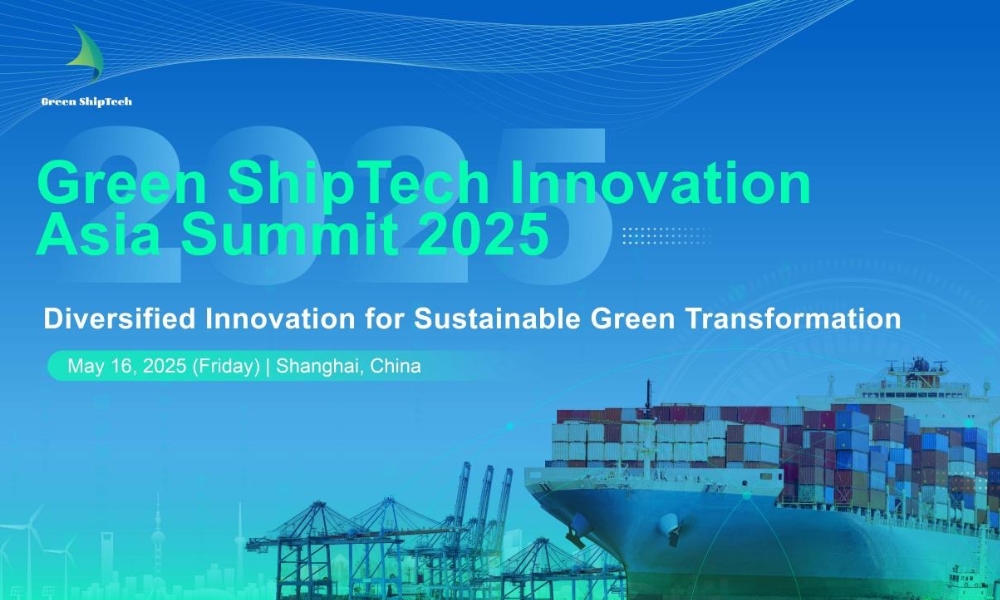
Green ShipTech Innovation Asia Summit 2025 to be held in Shanghai on 16 May

Shine Consultant, the organiser of Green ShipTech Innovation Asia Summit 2025, on Thursday (20 March) announced over 20 speakers have been confirmed for the event to discuss key green technology topics related to the shipping industry.

The speakers are key stakeholders in the shipping industry including transportation management departments, international shipping organisations and related industry associations, shipping companies, shipyards, repair yards, third-party ship management companies, ship equipment suppliers, high-tech solution providers, design research units, and research institutions.

With over 300 attendees expected to attend, the Green ShipTech Innovation Asia Summit 2025 will be held in Shanghai, China, on 16 May. 

Themed Diversified Innovation for Sustainable Green Transformation, the summit will set up a main forum called Green Development Strategies and Pioneer Practices Towards Zero Carbon Goals and two sub-forums, Green Shipbuilding and Retrofitting Forum and Green Shipping Ecosystem Cooperation Forum. 

It will focus on key topics such as innovative design methods for green ship types, development and design of methanol dual-fuel ship types, prospects and challenges of ammonia fuel application, and new marine fuels and supply systems. 

Speakers for the summit include:

  • Sun Haihua, Deputy Director of Shanghai Arbitration Commission, Deputy Chairman and Secretary-General of Shanghai International Shipping Center Development and Promotion Organization
  • Yan Wei, Vice President, Shanghai Maritime University
  • Bo Cerup-Simonsen, CEO, Mærsk Mc-Kinney Møller Center for Zero Carbon Shipping
  • Lu Yanhui, Vice President, COSCO Shipping Heavy Industry Co., Ltd
  • Wu Jianyi, Chief Engineer & General Manager of the Ship Technology Center, China Merchants Energy Transportation Co., Ltd. (CMES)
  • Karim Fahssis, Decarbonization China Head, Maersk
  • Liu Jianfeng, Chief Technologist, Shanghai Waigaoqiao Shipbuilding Co., LTD.
  • Keiichiro Nakanishi, Managing Executive Officer, MOL (Mitsui O.S.K. Lines, Ltd.)
  • Vivi Wong, Head of Digital Products, Greater China, MSC Mediterranean Shipping Company
  • Li Zhonggang, Vice President, China Ship Design & Research Center Com.,Ltd. (CSDC)
  • Zhang Qingsheng, General Manager of Shanghai Fujian Guohang Ocean Shipping Management Co., Ltd., President Assistant of Fujian Guohang Ocean Shipping (Group) Co.,Ltd.
  • Bai Junli, Deputy Director of Innovation & Development Center, Wuchang Shipbuilding Industry Group Co., LTD.
  • Tan Wee Meng, Chief Projects Officer, Global Centre for Maritime Decarbonisation
  • John Kollander, General Manager Stena RoRo Asia & Owners Representative China, Stena RoRo
  • Thibaut Raeis, Business & Technical Solutions Director, GTT China
  • Li Zhengjian, Chief Expert/Senior Engineer, the Chinese Society of Naval Architects and Marine Engineers
  • Yuan Chao, General Manager of Strategy and Investment, CSSC (Hong Kong) Shipping Company Limited
  • Pan Jinfeng, General Manager of Digital Intelligence Promotion Department, COSCO Shipping (Qidong) Offshore Co., Ltd
  • Zhu Feng, Head of the Ballast Water Convention Research Office, Hebei Maritime Safety Administration
  • Gou Yingdi, Director of Sustainable Development and General Manager of the Technology and Development (Innovation) Center, Seacon Shipping Group
  • Yang Lixin, Deputy Secretary-General, Shanghai International Shipping Center Development and Promotion Organization
  • Zhao Cuiyun, Deputy Director of the Institute for the Construction of the Shipping Center and Director of the Green Shipping Research Office, Shanghai International Shipping Institute

Conference Framework

16 May (am)

Sub-Forum I: Green Development Strategies and Pioneer Practices Towards Zero Carbon Goals

16 May (pm)

Sub-Forum II: Green Shipbuilding and Retrofitting Forum
Sub-Forum III: Green Shipping Ecosystem Cooperation Forum

Key Topics

  • Maritime regulatory focus under policy guidance towards zero-carbon goals
  • Global green ship type product key technologies and applications
  • Analysis of paths to improve the efficiency of existing ships
  • How shipping companies can achieve sustainable green transformation
  • Green ship technology practices and future prospects
  • Innovative design methods for green ship types
  • Development and design of methanol dual-fuel ship types
  • Innovation and application of ship engines and propulsion systems
  • Technological application and outlook of wind energy as auxiliary power for ships
  • Prospects and challenges of ammonia fuel application
  • Innovation in new marine fuels and supply systems
  • Upgrading of ship battery systems to meet shipping emission reduction
  • Fluid power energy-saving technology and practice to promote the green and low-carbon development of the shipping industry
  • Green ship repair, intelligent painting and VOCs management in ship and marine engineering
  • Exploration and practice in digital transformation and intelligent upgrading of the ship repair and modification industry
  • Practice of ship energy consumption data analysis and carbon intensity management
  • SCR technology innovation for NOx reduction in ship diesel engines
  • The latest technological applications of “carbon capture” in the shipping industry
  • Ballast water management systems in line with international standards
  • Shore power systems combined with green electricity to assist shipping decarbonization
  • Supply status and choice analysis of the marine green fuel market

Host:

  • Shanghai International Shipping Center Development and Promotion Organization

Co-organisers:

  • Shanghai Maritime University 
  • Shanghai Institute of Navigation
  • Jiangsu Association of Shipbuilding Industry
  • Shanghai Association of Shipbuilding Industry
  • Jiangsu Society of Naval Architects And Marine Engineers

Supporting Organisations:

  • Shanghai Port Association
  • Hubei Association of Shipbuilding Industry
  • Shanghai International Shipping institute

Organizer:

  • Shine Consultant International Ltd

Interested parties may contact:

Yulia Zhang
T: (+8621) 6095 7179
M:(+86) 158 3615 6079 (Also on WeChat)
E-mail: [email protected]  

Note: More information on the summit, including registration, can be found here


Photo credit: Shine Consultant
Published: 8 May, 2025

Continue Reading

Alternative Fuels

Yang Ming orders six LNG dual-fuel, ammonia-ready containerships from Hanwha Ocean

Each of the six new vessels will have a capacity of up to 13,650 TEU and feature LNG dual-fuel propulsion and Ammonia Fuel Ready specifications.
Admin

Published

on

By

Yang Ming orders six LNG dual-fuel, ammonia-ready containerships from Hanwha Ocean

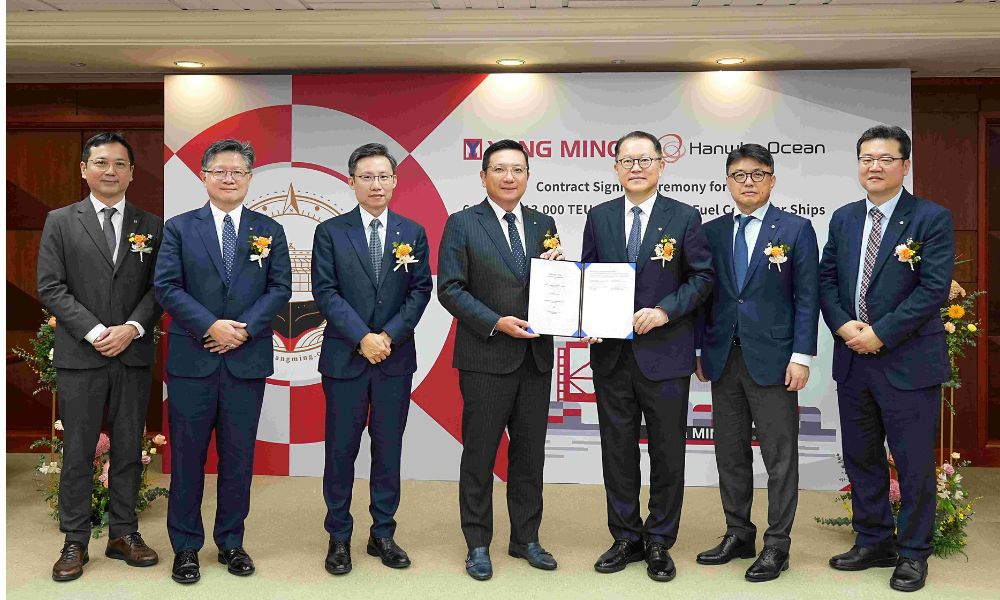
Taiwanese shipping firm Yang Ming Marine Transport Corporation (Yang Ming) and South Korean shipbuilder Hanwha Ocean on Wednesday (2 September) signed a shipbuilding contract for six 13,000 TEU class LNG dual-fuel container vessels. 

The contract was signed by Dr. Chuck Tsai, Chairman of Yang Ming, and Mr. Charles Kim, CEO of Hanwha Ocean. The vessels are scheduled for delivery between 2028 and 2029. 

They will complement Yang Ming’s existing fleet of 10,000+ TEU vessels and serve as key vessels on East-West services, with deployment flexibility across trade lanes connecting Asia with the East and West Coasts of North America, South America, and the Mediterranean. 

Each of the six new vessels will have a capacity of up to 13,650 TEU and feature LNG dual-fuel propulsion and Ammonia Fuel Ready specifications.

“As Yang Ming transitions toward net-zero emissions, LNG provides a relatively mature and economically viable alternative fuel solution, capable of reducing greenhouse gas emissions by approximately 20%,” the company said. 

“At the same time, ammonia can serve as a carbon-free fuel by utilising converted LNG storage facilities, while offering relatively lower conversion costs and comparatively well-developed supply chains and infrastructure. The Ammonia Fuel Ready design will therefore provide Yang Ming with greater flexibility in responding to increasingly stringent international regulations on greenhouse gas emissions.”

In addition, the vessels will be equipped with Type B LNG fuel tanks with a design pressure of 1.0 bar to enhance the safety and efficiency of LNG operations, together with a range of energy-saving technologies, including Wind Shields, Rudder Bulbs, Pre-Swirl Stators, and Shore Power Systems. Smart ship technologies and cybersecurity protection features will also be incorporated to enhance operational efficiency, safety, and reliability while effectively reducing fuel consumption and greenhouse gas emissions.

Deliveries under Yang Ming’s next-generation fleet optimization plan commenced earlier this year. By 2030, a total of 24 new vessels are expected to enter service. 

This includes 18 LNG dual-fuel vessels—comprising five 15,500 TEU, seven 16,000 TEU, and the six 13,000 TEU vessels under this contract—alongside six 8,000 TEU methanol dual-fuel-ready ships. 


Photo credit: Yang Ming Marine Transport
Published: 4 September, 2026

Continue Reading

Alternative Fuels

LR, China’s MARIC unveil tanker concept ready for three future bunker fuels

Both secured AiP for a new 114,000 DWT product and crude oil tanker designed to accommodate future conversion to LNG, methanol or ammonia.
Admin

Published

on

By

LR, China’s MARIC unveil tanker concept ready for three future bunker fuels

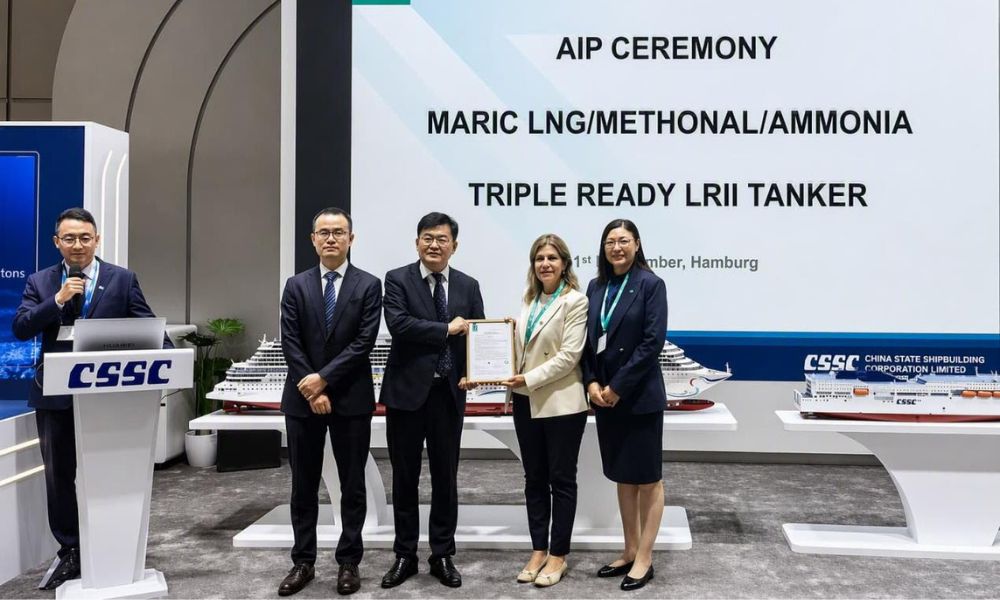
Lloyd’s Register (LR) and the Marine Design and Research Institute of China (MARIC) on Thursday (3 September) have secured Approval in Principle (AiP) for a new 114,000 DWT product and crude oil tanker designed to accommodate future conversion to LNG, methanol or ammonia.

Announced at SMM 2026, the concept addresses one of the biggest investment challenges facing shipping today: the need to develop vessels and capabilities that can support a range of alternative fuel options and pathways as technologies, infrastructure and regulations evolve.

While LNG is already a mature fuel pathway, methanol and ammonia remain at an earlier stage of development, with questions around global fuel availability, infrastructure development, economics and long-term adoption.

The 114,000 DWT tanker concept has been designed as a product and crude oil carrier that can accommodate future conversion to LNG, methanol or ammonia as technologies, regulations and fuel supply chains mature. By incorporating conversion readiness at the design stage, the concept aims to reduce future retrofit complexity and provide owners with greater confidence when planning long-term fleet investments.

The design concept was reviewed against LR’s July 2026 class rules and regulations, including requirements relating to ships using gases and other low-flashpoint fuels, alongside relevant IACS Common Structural Rules for oil tankers. Final classification and statutory approval remain subject to full compliance with all applicable rules and regulations.

Theo Kourmpelis, Global Business Director for Tankers, Lloyd’s Register, said: “Shipowners are being asked to make major investment decisions today despite continued uncertainty around which fuels will dominate in the decades ahead. Alternative fuel solutions each offer potential pathways to compliance, but fuel infrastructure, regulation and economics continue to evolve at different speeds around the world.

“Designs that preserve flexibility will be critical in helping owners manage risk while preparing for multiple future scenarios.”

Si Nan, Marine & Offshore Marketing Department Vice Director, MARIC, said: “As the industry explores different decarbonisation pathways, shipowners need vessel designs that can adapt alongside technological and regulatory developments. This concept was developed specifically to provide greater fuel flexibility and long-term resilience, allowing owners to respond to changing market requirements without being locked into a single fuel strategy.

“Receiving Approval in Principle from Lloyd’s Register is an important milestone that validates the design concept and supports its future development.”


Photo credit: Lloyd’s Register
Published: 4 September, 2026

Continue Reading

Alternative Fuels

DNV: Alternative-fuelled vessel orders hit highest monthly level since October 2024

LNG-fuelled vessels accounted for the vast majority of August activity while the strong summer performance marked a significant acceleration in ordering activity after a relatively slow start to the year.
Admin

Published

on

By

DNV: Alternative-fuelled vessel orders hit highest monthly level since October 2024

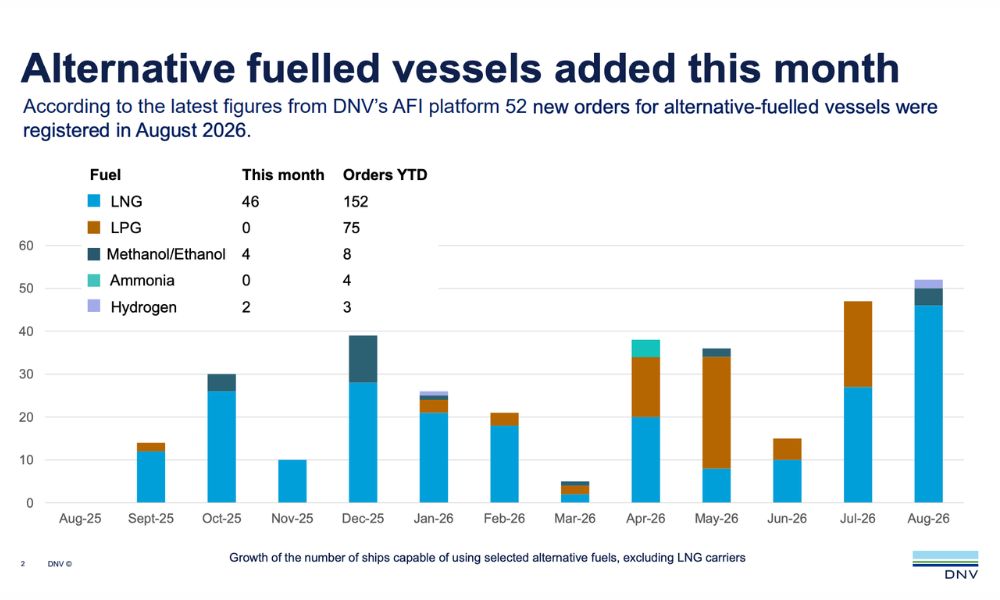
Latest data from classification society DNV’s Alternative Fuels Insight (AFI) platform alternative-fuelled vessel ordering was strong in August, with 52 new vessels added to the platform.

This is the highest monthly total since October 2024 and follows another active month in July, when 47 vessels were added to the database.

LNG-fuelled vessels accounted for the vast majority of August activity, with 46 orders recorded. The container segment led the way with 30 orders, while the car carrier segment contributed a further 12 LNG-fuelled vessels. In addition, four ethanol-fuelled bulk carriers and two hydrogen-powered bulk carriers were added during the month, as well as one LNG bunker vessel.

The strong summer performance marked a significant acceleration in ordering activity after a relatively slow start to the year. In total, 242 alternative-fuelled vessel orders have been placed in the first eight months of 2026, representing a 27% increase compared with the same period in 2025.

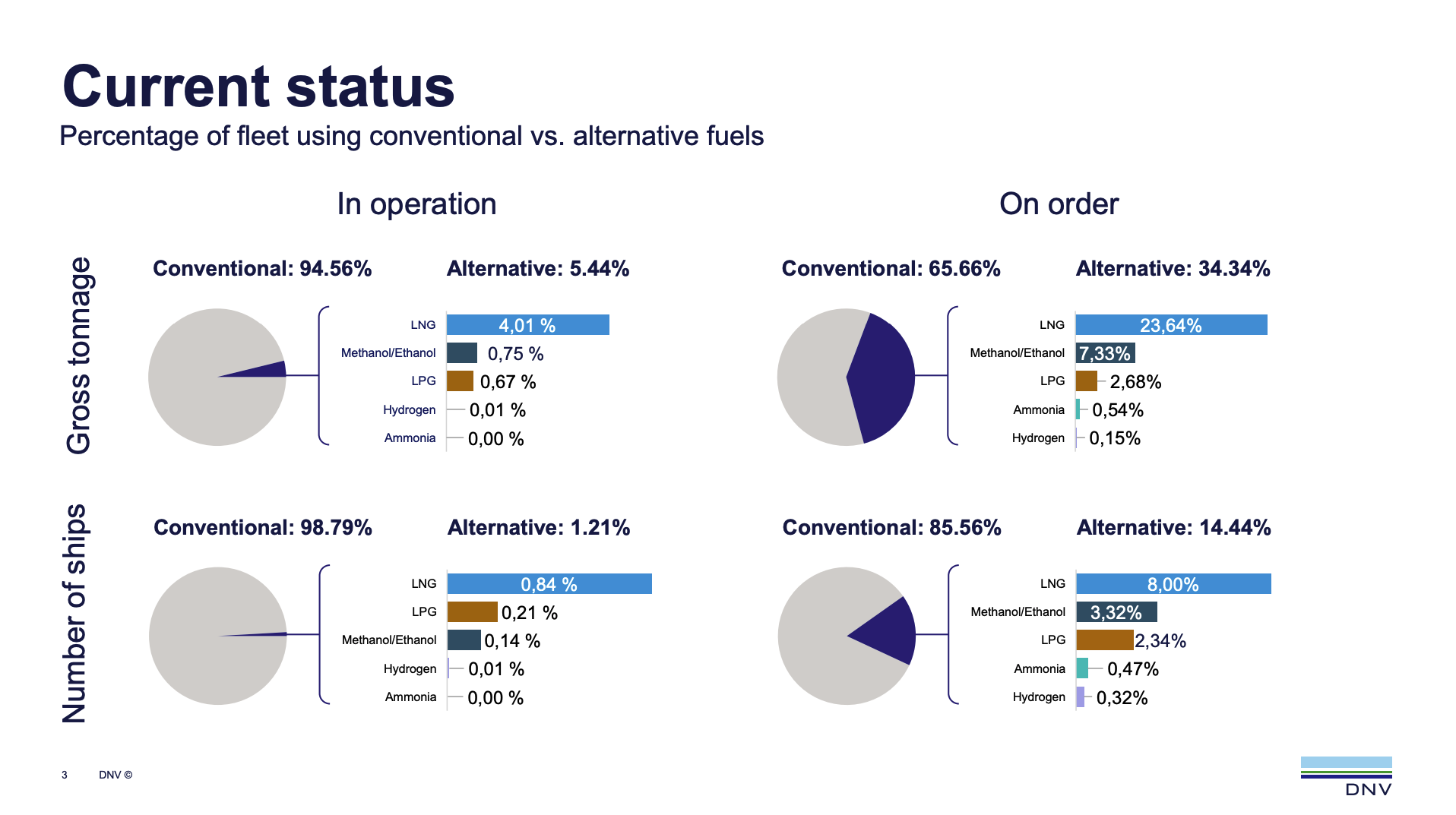
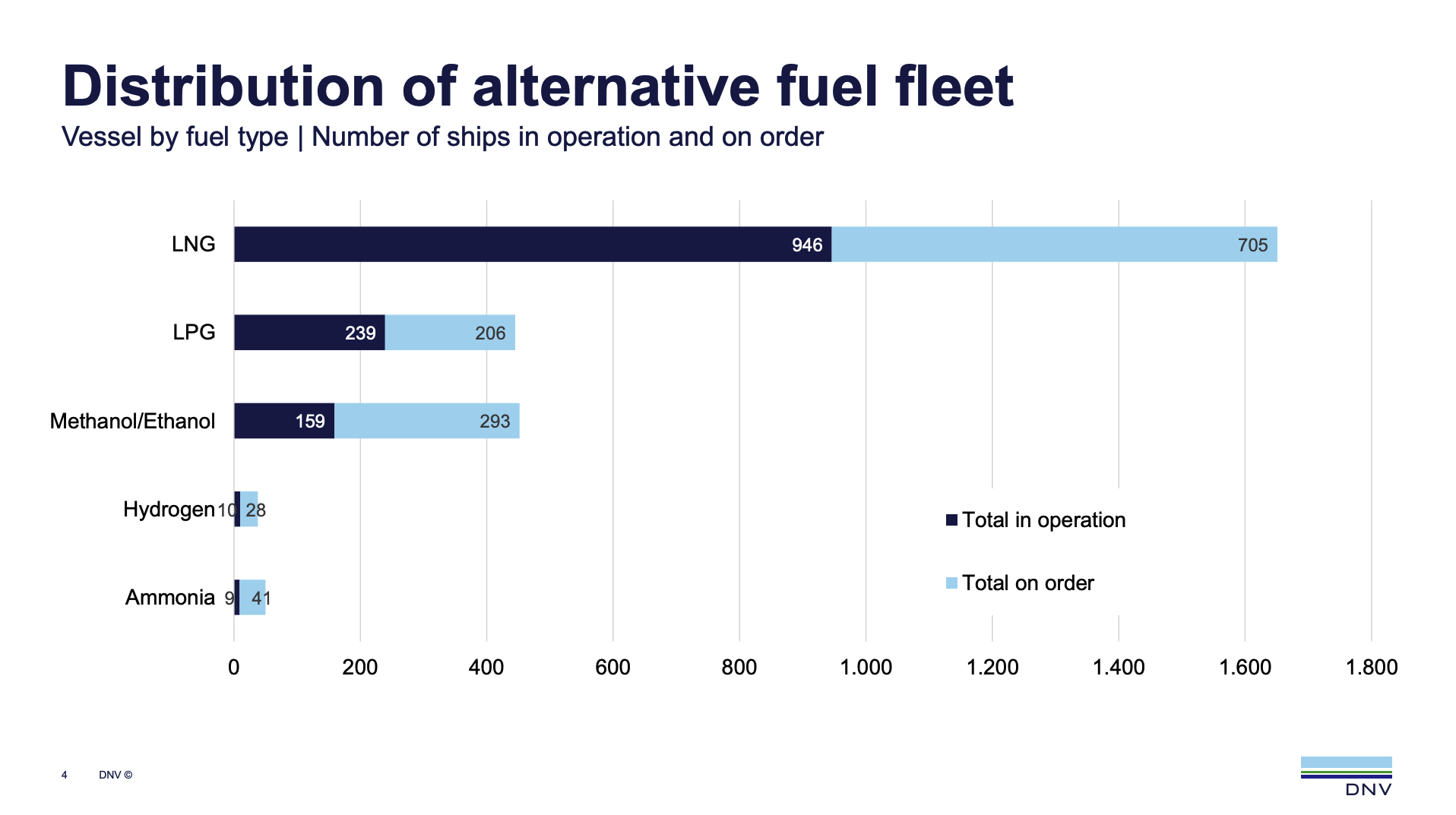
LNG remains the dominant fuel choice, accounting for 63% of all alternative-fuelled vessel orders registered so far this year. Container vessels represent the largest share of these LNG orders (59%), followed by car carriers (30%).

Jason Stefanatos, Global Decarbonization Director at DNV Maritime, said: “The past two months have been particularly strong for alternative-fuelled vessel ordering, with August recording the highest monthly total we’ve seen since October 2024. This has helped lift year-to-date orders to a level well above the same period last year.

“LNG remains the leading fuel choice, driven largely by activity in the container and car carrier segments. These sectors have been among the earliest adopters of alternative fuels, supported by predictable liner operations and increasing demand from cargo owners to reduce emissions across supply chains. 

“For many owners, LNG offers a combination of emissions reductions, fuel availability and future flexibility while the longer-term fuel landscape continues to evolve. 

“At the same time, the latest figures include orders for ethanol- and hydrogen-fuelled vessels, highlighting that owners continue to explore a range of decarbonization pathways. Different segments are making different fuel choices, but the overall level of activity demonstrates continued investment in lower-emission shipping.”
Screenshot 2026 09 04 at 12.29.26 PM Screenshot 2026 09 04 at 12.29.36 PM


Photo credit: DNV
Published: 4 September, 2026

Continue Reading
Advertisement

OUR INDUSTRY PARTNERS


Trending