Connect with us

Decarbonisation

DNV on decarbonizing maritime: Overcoming challenges with innovation and ingenuity

Knut Ørbeck-Nilssen says shipping must invest in development of technological solutions that improve energy efficiency to reduce GHG emissions until carbon-neutral bunker fuels become available.


Admin

Published

on

dnv Knut Ørbeck-Nilssen

Classification society DNV on recently published a Maritime Impact article on Knut Ørbeck-Nilssen, DNV Maritime’s CEO, sharing his reflections on the latest findings of the new Maritime Forecast to 2050 report and how maritime can get closer to achieving upcoming decarbonization goals: 

Knut Ørbeck-Nilssen, CEO, DNV Maritime, says shipping must invest in the exploration and development of technological solutions that improve energy efficiency to reduce greenhouse gas emissions until carbon-neutral fuels become available.

Decarbonization is one of the greatest challenges facing shipping. Following a slow start, decarbonization aspirations have been embraced by the maritime industry. IMO goals have been set, notably full-scale decarbonization by or around 2050, a 20% emissions reduction by 2030, and a 70% reduction by 2040.

While these moves have been widely welcomed, it’s time to get real. Setting goals is the easy part. Achieving them is extremely difficult, bordering on the impossible. Indeed, a pragmatic assessment of the shipping industry today indicates that decarbonization is slowing down, not accelerating.

Let’s look at the facts.

The costly transition to carbon-neutral fuels

Full decarbonization will require a large-scale transition to carbon-neutral fuels. This is a huge challenge requiring the construction of new vessels and the retrofitting of existing vessels to enable them to operate on, likely very expensive, green versions of fuels. In a global economy already heavily burdened by inflation and high interest rates, the extra costs associated with this transformation are about as appealing to shipowners as a leaky hull.

Indeed, in an era of higher freight rates, shipowners are understandably seeking to harvest profits and have little incentive to join the queue for limited yard space. While around 50% of new orders today are for ships with dual-fuel capability, constructing them comes at a premium which is difficult to pass along the supply chain. The happy hour for methanol appears to be over already, and the reality is that 93% of the global fleet is still running on conventional fuels.

Even if this technological shift on board the vessels is eventually successful, global supplies of carbon-neutral fuels remain miniscule and shipping needs to compete with other industries for its share. Fuel suppliers are reluctant to invest billions of dollars in projects for which demand is uncertain and, so far, the exponential growth in supply that we need is nowhere to be seen.

But all is not lost yet.

Harnessing technology and cultural changes to drive energy efficiency

Using simulations, this year’s Maritime Forecast to 2050 report by DNV estimates that fuel consumption can be reduced by between 4% and 16% by 2030 using energy efficiency measures.

The first few percentage points can be achieved quite easily. Many maritime companies have already shown that by instilling cultural changes throughout an organization, and by encouraging crew members to seek efficiencies through their day-to-day operations, fuel consumption can be reduced, and emissions reductions of around 5% can be achieved.

However, going to the next level and reaching double-digit energy efficiency requires technological solutions. Technologies like wind-assisted propulsion and waste-heat recovery systems, to name just a few, have already been proven to deliver tangible emissions reductions.

But technology can do even more.

Note: DNV’s full article titled ‘Decarbonizing maritime: Overcoming challenges with innovation and ingenuity’ can be read here.

Related: DNV report: Technological developments key to reducing maritime sector emissions


Photo credit: DNV
Published: 16 September, 2024

Continue Reading

LNG Bunkering

Singapore-based EPS takes delivery of three LNG dual-fuel bulk carriers

Three vessels are the third, fourth and fifth in the company’s series of 14 Newcastlemaxes being built at the yard, and were delivered five months ahead of their contracted delivery dates.
Admin

Published

on

By

35

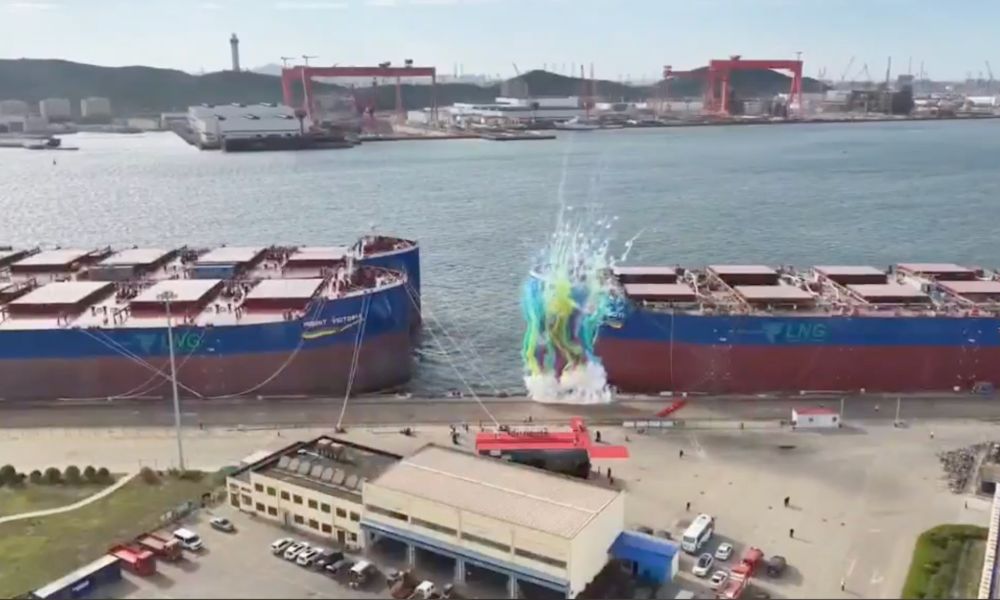
Singapore-based Eastern Pacific Shipping (EPS) on Friday (4 September) announced the naming and delivery of three new LNG dual-fuel Newcastlemax bulk carriers from China’s Qingdao Beihai Shipbuilding. 

Cyril Ducau, CEO of EPS, said the vessels were named Mount Victoria, Mount Yulong and Mount Wuyi

The three vessels are the third, fourth and fifth in the company’s series of 14 Newcastlemaxes being built at the yard, and were delivered five months ahead of their contracted delivery dates.

“A big thank you to CSSC Group and Qingdao Beihai Shipbuilding, working alongside our EPS team, for the tremendous collaboration and commitment behind this achievement,” Ducau said in a social media post.  


Photo credit: Eastern Pacific Shipping
Published: 7 September, 2026

Continue Reading

Port & Regulatory

ISWG-GHG 22: IMO working group aims to present NZF text at MEPC 85

The Chair expressed his observation of a genuine willingness within the Group to make concrete further progress at the next ISWG-GHG meeting and work towards presenting text to MEPC 85.

Admin

Published

on

By

IMO

The Intersessional Working Group on Reduction of Greenhouse Gas (GHG) Emissions from Ships (ISWG-GHG 22) met for its 22nd meeting from 1 to 4 September 2026, chaired by Mr. Sveinung Oftedal (Norway), according to the International Maritime Organization on Friday (4 September). 

According to a meeting summary by IMO, the meeting had a high level of participation, with nearly 1200 registered participants, in person and online.

During the meeting participants considered the following agenda items:

Consideration of proposals, including documents submitted to MEPC 84 and 85, previous sessions of ISWG-GHG, as well as documents submitted to ISWG-GHG 22, on how to address concerns with the draft amendments to MARPOL Annex VI on the Net-Zero Framework, in line with the 2023 IMO GHG Strategy

Following constructive discussions, the Chair expressed his observation of a genuine willingness within the Group to make concrete further progress at the next ISWG-GHG meeting and work towards presenting text to MEPC 85 that adequately addresses the noted progress made in the consideration of proposals on how to address concerns raised regarding the draft amendments to MARPOL Annex VI on the mid-term measure.

The Group invited interested delegations to continue to consult intersessionally to address remaining concerns with the draft amendments to MARPOL Annex VI, in line with the 2023 IMO GHG Strategy, taking into account views expressed at the Group’s session, with a view to submitting concrete proposals reflecting enhanced convergence allowing timely adoption and effective implementation.

Further consideration of the draft guidelines supporting the uniform and effective implementation of IMO’s mid-term measures.

The Group held a preliminary exchange of views on this agenda item, although time became a limiting factor and the Group and agreed to defer the consideration of all documents submitted to this session under this agenda item to ISWG-GHG 23 (23-27 November 2026).

Further consideration of the development of the IMO Life Cycle GHG Assessment (LCA) framework.

Due to time constraints, the Group was not able to consider the agenda item related to the IMO Life Cycle GHG Assessment (LCA) framework. The Group deferred the consideration of those documents to ISWG-GHG 23, in conjunction with the report of the fourth meeting of the GESAMP-LCA Working Group expected to be submitted to MEPC 85.

Next steps

The next meeting of the Intersessional Working Group on Reduction of Greenhouse Gas (GHG) Emissions from Ships (ISWG-GHG 23) is scheduled for 23 to 27 November 2026, ahead of MEPC 85 (30 November to 3 December).

The second extraordinary session of MEPC (adjourned last October) is scheduled to resume on 4 December, subject to discussions at MEPC 85.


Photo credit: International Maritime Organization
Published: 7 September, 2026

Continue Reading

Port & Regulatory

UCL on ISWG-GHG 22: Majority back GHG pricing, centralised fund in IMO NZF talks

A significant majority of IMO member states backed a centralised system for collecting revenues to reward early adopters and support a just transition, according to UCL.
Admin

Published

on

By

34

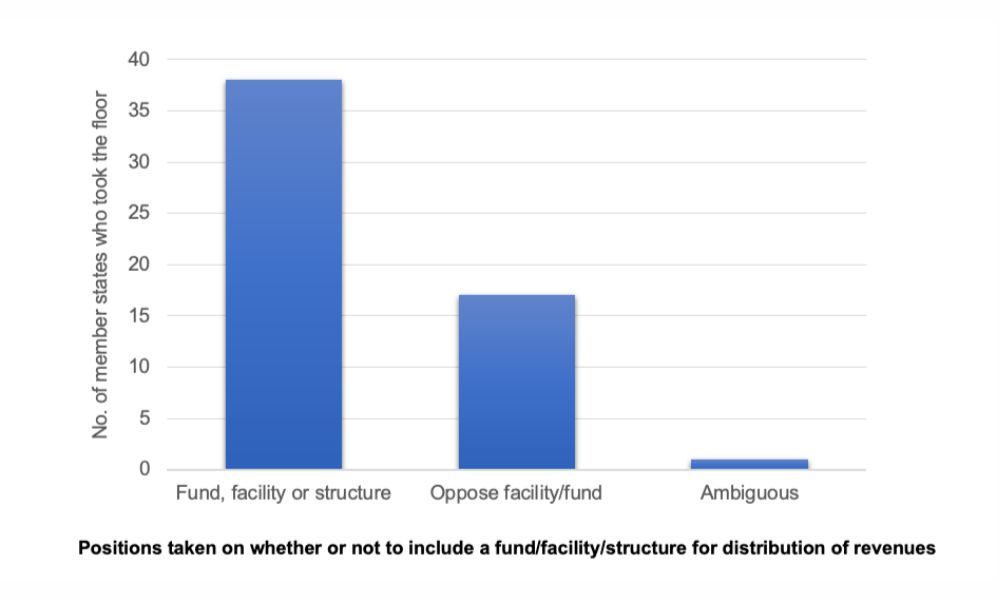
UCL Shipping and Oceans Research Group on Friday (4 September) said the IMO’s 22nd Intersessional Working Group on GHG emissions has concluded with significant majority of member states supporting a centralised system for collecting revenues, operationalised through a GHG price (RU price), and disbursing it for rewards for early adopters and supporting a just and equitable transition. 

The group of member states focused on a technical-only solution and abandonment of GHG pricing, remained small and consistently composed of strongly fossil fuel aligned governments.

Just as at MEPC 84, the political dynamics observed at MEPC.ES2 did not occur in this meeting. 

The discussions were more representative of the ISWG-GHG 19 and MEPC 83 negotiating dynamics, but this does not rule out the potential for the dynamics that occurred at MEPC.ES2 returning in future meetings. That said, there was reassuring evidence from the week that reduces that risk, including in the contrast between strong public (press) positions taken against the IMO’s NZF, and the substance of how delegations negotiated in the meeting.

Dr Tristan Smith, Professor of Energy and Transport at UCL Shipping and Oceans Research Group, said: “Whilst there are many positives to take away – there is clear potential for a return to a strong policy solution and decision making this December, there remains high uncertainty in the extent that both industry’s transition and low-income countries’ transitions will be supported. 

“There remains high risk that in the effort to find a creative way forwards, the equilibrium between these two aspects, that enabled the NZF in the first place, is lost to the detriment of the outcome overall.”

In addition to the discussion on centralised system for revenue collection and disbursement, the meeting discussed a number of other items as guided by the chair, discussed in detail with member state positions in the readout. Some of these included:

  • GFI (Global Fuel Intensity) reduction pathway: GFI is likely to be softened initially (around 2030), but then steeper in the period to 2040. 
  • ZNZ rewards: ZNZ reward still broadly supported and a priority to many member states, but the broad support for a multiplier, despite it being taken off the table at the last meeting, could yet lead this to be incorporated to provide incentivisation. 
  • Compliance approaches
  • Most interventions confirmed support for the compliance mechanisms as setup in NZF ‘as is’. The strongest support was for the two least controversial options common to all proposals: reducing GHG intensity and pooling/transfer of SU. 
  • Direct contributions: Japan’s proposal to replace GHG pricing with shipowner-directed contributions was robustly rejected, particularly by the member states that would need to ‘swing’ to support it for this to start to build momentum. 
  • SU (Surplus Units) trading: Majority of member states opposed the inclusion of energy efficiency SU credits and the concept of printing SU’s to manage an SU price shock, citing various reasons, primarily a concern that this would destabilise the SU market and undermine investment predictability. 
  • Netting: China’s proposal to balance of RU and reward payments that could be netted to form a single transaction received broad support. However, the details of the concept will now need to be set out in guidelines and there remain a number of issues regarding this approach, as raised by several delegations.

Note: The full article can be read here


Photo credit: UCL Shipping and Oceans Research Group
Published: 7 September, 2026

Continue Reading
Advertisement

OUR INDUSTRY PARTNERS


Trending