
Alternative Fuels
VPS updates Chinese shipping sector on bunker fuel quality, new fuels, and decarbonisation challenges
Representatives from China Shipowners’ Association, China Maritime Safety Administration, VPS and DNV informed the audience on latest developments from the marine fuel and shipping sectors.

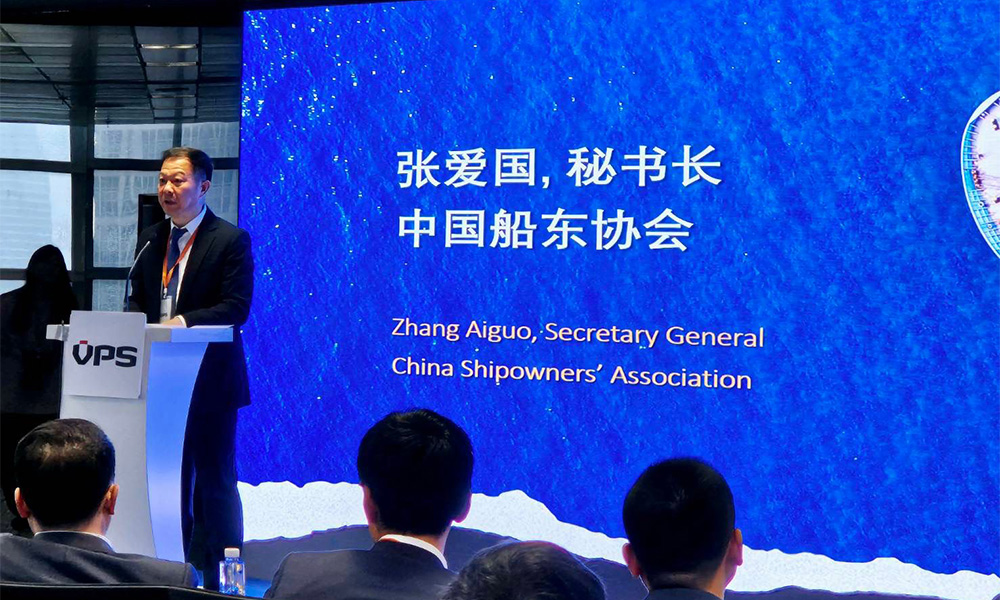
Marine fuels testing and decarbonisation services company VPS on Thursday (28 March) held its Fuel Quality, New Fuels & Decarbonisation Challenges seminar at Jin Mao Tower in Shanghai, China.
The event was attended by about 100 local shipping executives and graced by Zhang Ai Guo, Secretary General, China Shipowners’ Association (CSA) and Zhang Wei, Director, China Maritime Safety Administration (MSA) Shanghai who both delivered opening speeches.
CSA – Green maritime developments part of national plan
“President Xi Jinping has encouraged green development and the transition to alternative fuels for the maritime sector is an important means towards lower carbon and pollution emissions especially in highly populated areas,” said Mr Zhang of CSA.
“By 2030, we are going to reduce traditional fuel consumption by 20 to 40 million tonnes. The Chinese Ministry of Transport has launched some options for green shipping.
“We going to establish our own standards for green shipping technology. By 2030, green power such as LNG and methanol, as well as other low carbon energy will be used to propel Chinese vessels plying not only inland rivers but also international waters.”
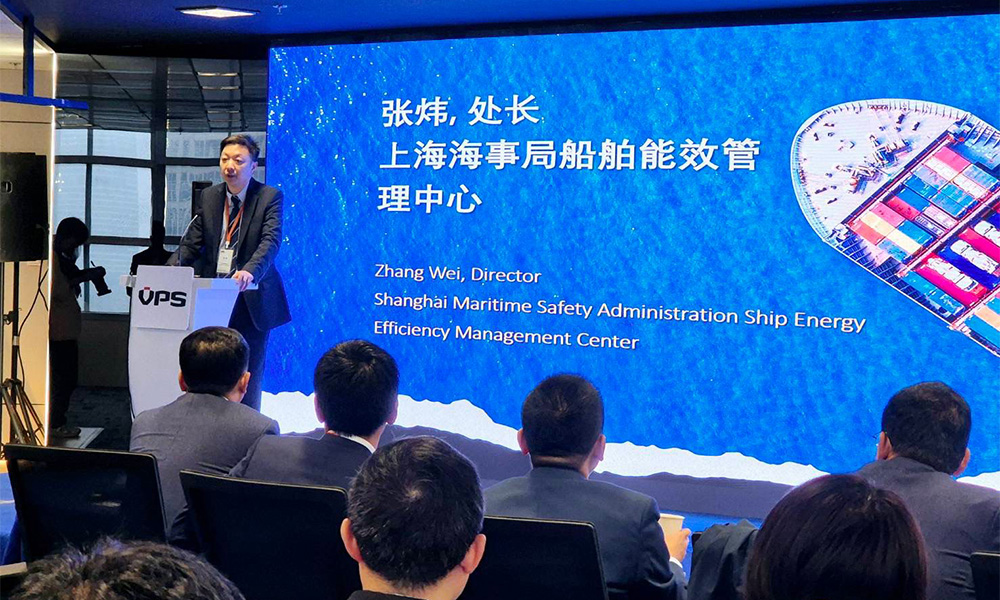
Zhang Wei, Director, China Maritime Safety Administration (MSA) Shanghai
MSA, Shanghai – Establishment of Maritime Energy Efficiency Centre
Mr Zhang of China MSA Shanghai branch updated the audience about the recent establishment of its Maritime Energy Efficiency Centre as part of operations to support International Maritime Organization (IMO) activities.
“The Maritime Energy Efficiency Centre was opened about a week ago and work is driven by the IMO Data Collection System (DCS),” he explained.
“IMO has asked related flag States to record and report fuel oil consumption data of their ships, which will be later used to calculate the vessel’s operational Carbon Intensity Indicator (CII).
“This centre is established to fulfil the requests of IMO and we are going to responsibly provide data of the Chinese fleet to ensure compliance when operating on international waters.”
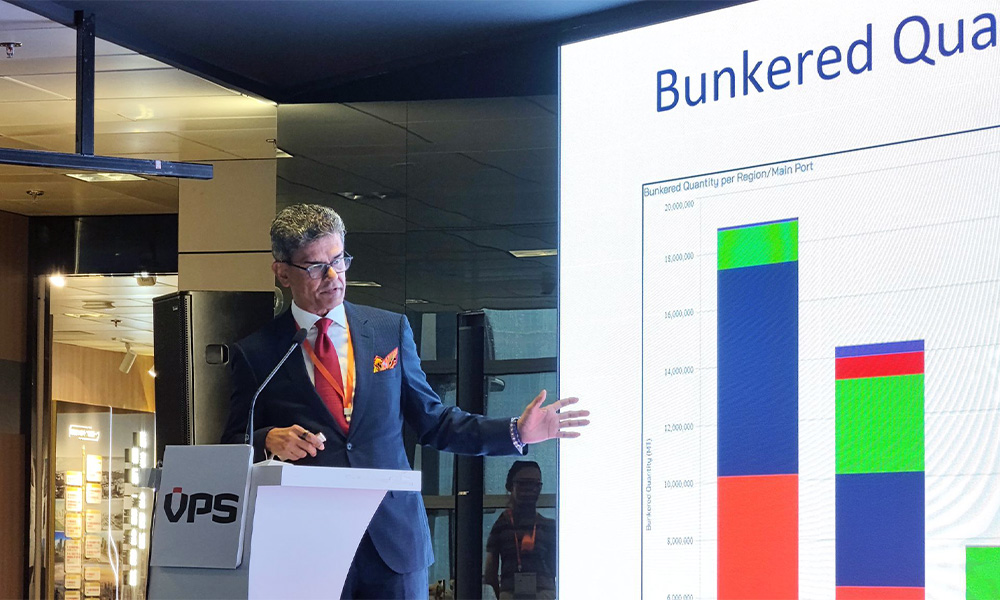
Captain Rahul Choudhuri, President Strategic Partnerships, VPS
VPS – Proposes ‘joint effort’ to enhance biofuel bunker quality standards
Captain Rahul Choudhuri, President Strategic Partnerships, VPS began his presentation by highlighting the ‘Two Mountains’ theory of President Xi which noted clear waters and lush mountains to be invaluable assets when compared to resources of gold and silver.
He further mentioned: “As earlier pointed out by Mr Zhang of China MSA, decarbonisation is a joint effort required by all stakeholders.”
Noting the inadequacy of current ISO 8217 fuel quality standards for biofuels as a marine fuel, Captain Choudhuri said Singapore has developed its own provisional national standard on specifications of marine biofuel (WA 2:2022) and will be happy to work with China to enhance its biofuel bunker quality standards.
“I am pretty sure China will be a big biofuel producer in the future. We should find common waters to develop a strong biofuel standard for local and global use by China’s shipping industry,” he suggested.
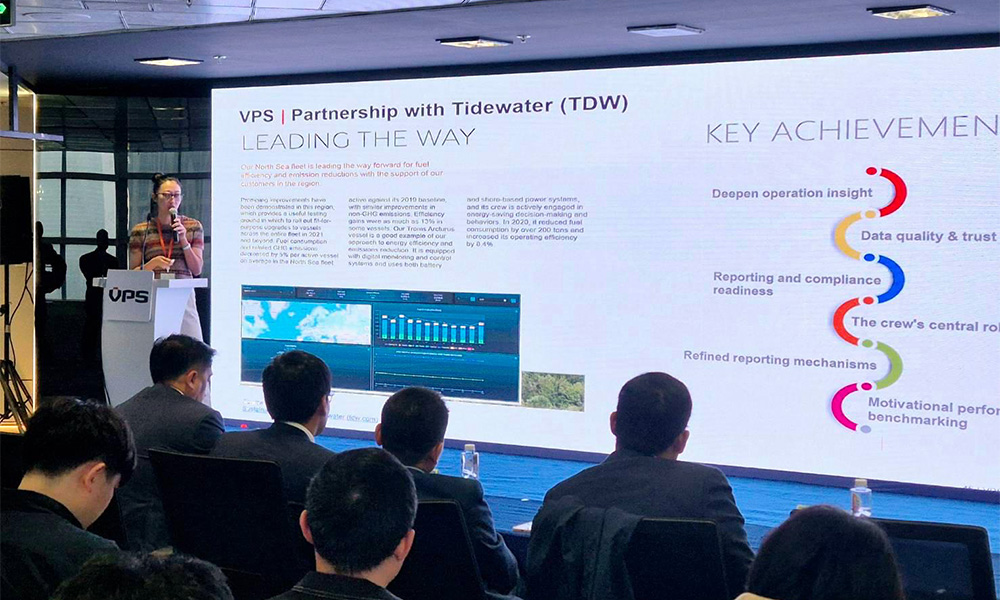
Li Ting, Decarbonisation Advisor, VPS
VPS – Showcases suite of maritime decarbonisation advisory services
Li Ting, Decarbonisation Advisor, VPS meanwhile gave delegates an introduction to the firm’s suite of maritime decarbonisation advisory services including Maress, Portstats and Emsys which leverages upon VPS’ operational, fuel and emissions databases.
Ms Ting shared Maress is a digital management system for fleet data-driven decarbonisation. The subscription-based system, currently used by about 500 vessels, has reduced more than 200,000 metric tonnes of carbon dioxide emissions within the last three years.
“Maress has helped companies such as Tidewater decrease fuel consumption and related GHG emissions by 5% per active vessel in the North Sea fleet, while increasing efficiency by as much as 13% in some vessels,” she said.
“A partnership with SIEM Offshore has shown Maress increasing its overall FO-efficiency for its fleet of 22 vessels by 2.3% higher than the expected consumption baseline.”
Photo credit: VPS
Published: 8 April 2024
LNG Bunkering
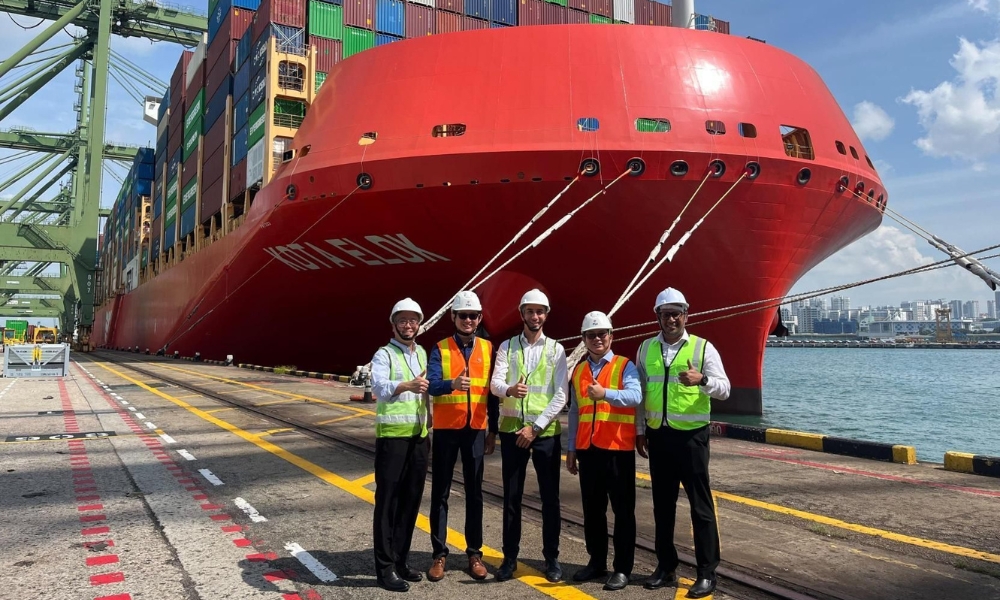
PIL’s LNG dual-fuel boxship “Kota Elok” arrives in Singapore on maiden call
As the first of 13 new 13,000 TEU vessels joining its fleet, Kota Elok is equipped to operate on LNG and low-sulphur fuel oil that helps reduce our greenhouse gas emissions.
LNG Bunkering
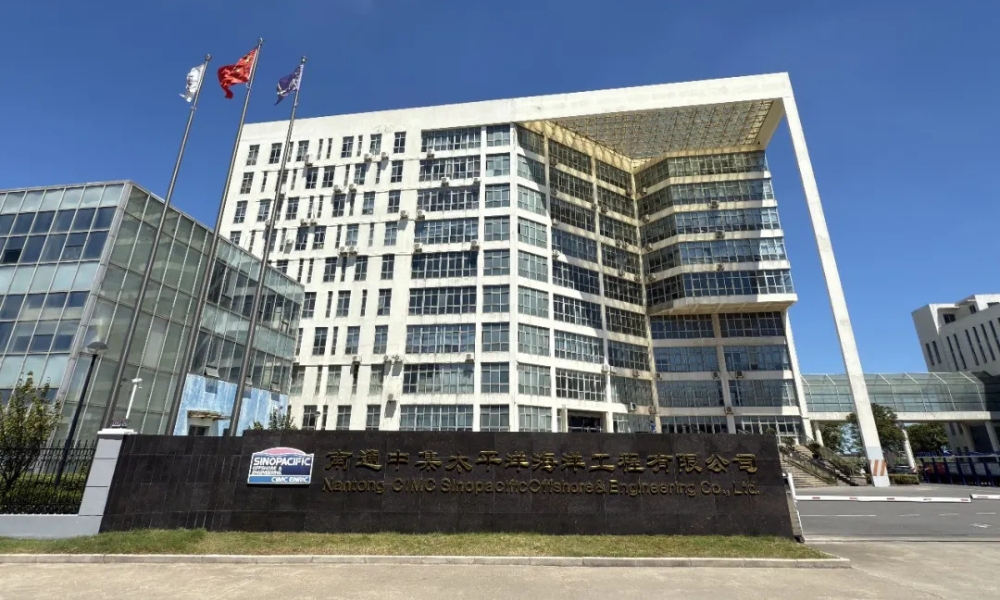
CIMC SOE secures order for 12,000-cbm LNG bunkering vessel from Sinopec Clean Energy
Once operational, the vessel is expected to strengthen Sinopec’s domestic coastal LNG bunkering network and help address gaps in China’s alternative fuel bunkering infrastructure.
Nuclear
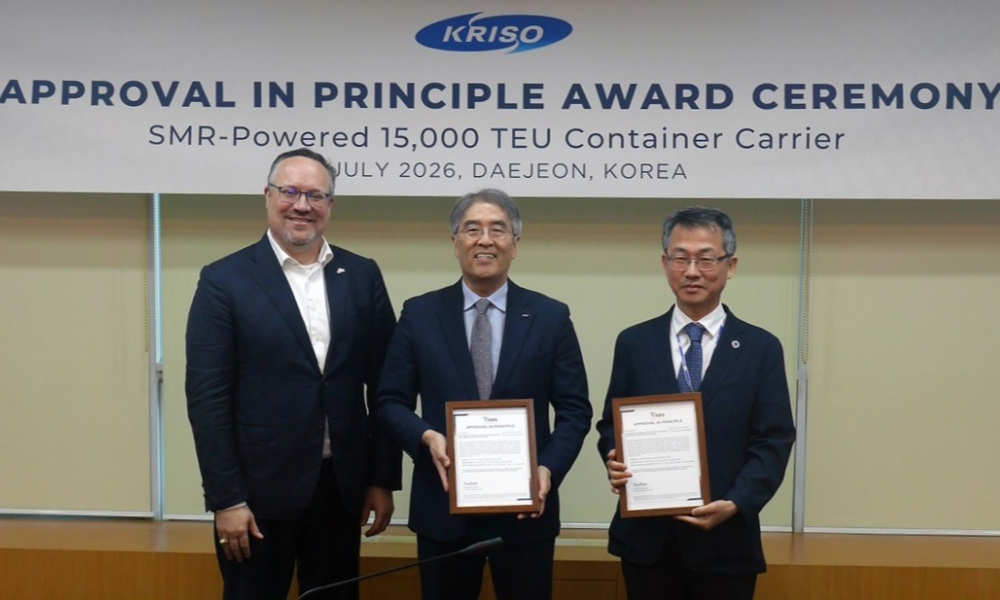
ABS awards AiP to Korean institute for SMR-powered container ship concept design
KRISO says AiP recognises the technical feasibility and safety of its concept design, marking an important milestone toward the development of next-generation nuclear-powered commercial ships.

OUR INDUSTRY PARTNERS

Singapore withdraws remaining 127 charges against Hin Leong founder OK Lim

Singapore: Coastal Logistics Pte Ltd to be wound up voluntarily

PIL’s LNG dual-fuel boxship “Kota Elok” arrives in Singapore on maiden call

CIMC SOE secures order for 12,000-cbm LNG bunkering vessel from Sinopec Clean Energy

ABS awards AiP to Korean institute for SMR-powered container ship concept design

EXMAR’s “ANTWERPEN” completes first commercial voyage using ammonia bunker fuel

ENGINE on Fuel Switch Snapshot: LSMGO surges to greater premium over biofuel

US reinstates Iran oil sanctions, orders wind-down by 17 July

ENGINE: East of Suez Fuel Availability Outlook (7 July 2026)

ENGINE: Europe and Africa Fuel Availability Outlook (8 July 2026)

Malaysia: Maharani Freeport to implement MFM and e-BDN technologies for enhanced bunkering transparency

Evergreen Marine director questioned, offices searched in Taiwan insider trading probe

Singapore retains world’s leading maritime centre ranking in 2026 ISCD Index

Russian court orders marine fuel supplier Transbunker assets transferred to state
-
 Sanctions2 weeks ago
US reinstates Iran oil sanctions, orders wind-down by 17 July
-
 Bunker Fuel Availability2 weeks ago
ENGINE: East of Suez Fuel Availability Outlook (7 July 2026)
-
 Bunker Fuel Availability2 weeks ago
ENGINE: Europe and Africa Fuel Availability Outlook (8 July 2026)
-
 Technology7 days ago
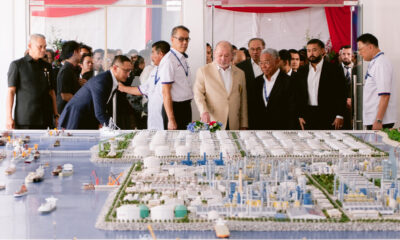
Malaysia: Maharani Freeport to implement MFM and e-BDN technologies for enhanced bunkering transparency
-
 Legal2 weeks ago
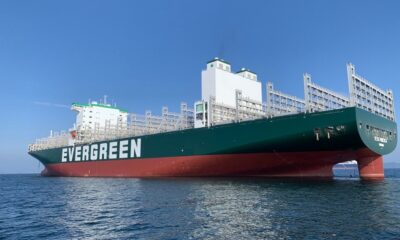
Evergreen Marine director questioned, offices searched in Taiwan insider trading probe
-
 Business2 weeks ago
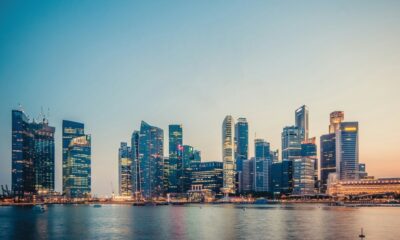
Singapore retains world’s leading maritime centre ranking in 2026 ISCD Index
-
 Legal2 weeks ago
Russian court orders marine fuel supplier Transbunker assets transferred to state
-
 Lubricants2 weeks ago
VPS on longer drains, lower cost: The role of oil analysis of synthetic engine oils