Connect with us

Safety

Trafigura assesses security risks of voyages after tanker was hit by missile in Gulf of Eden

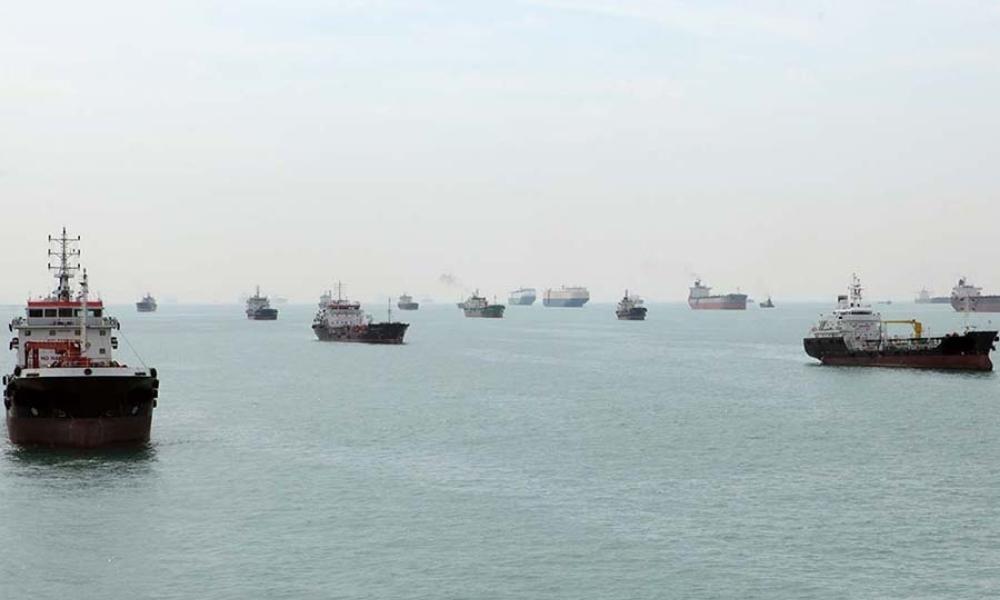
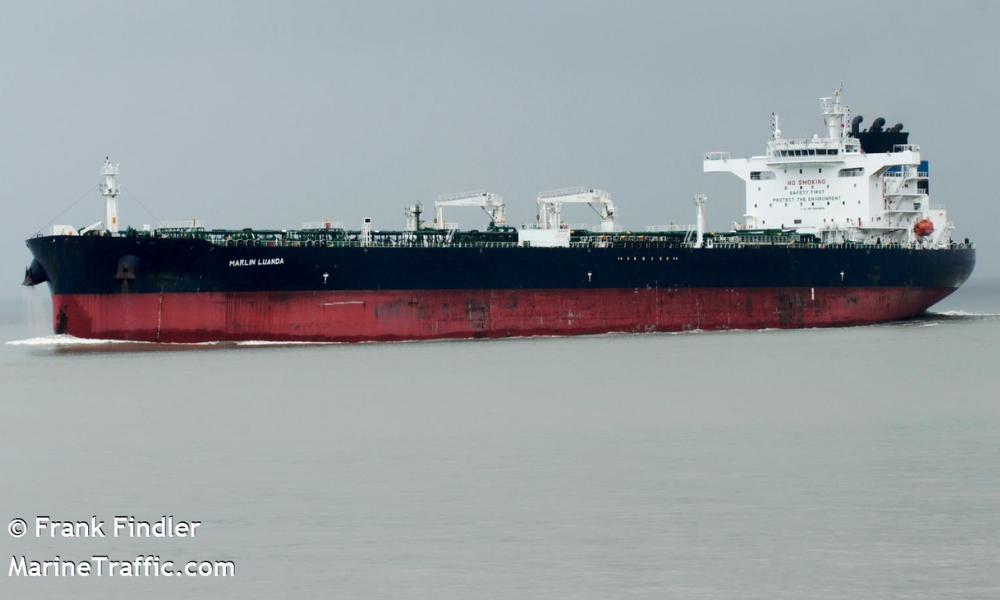
Firm was assessing the security risks involved in any voyage after tanker “Marlin Luanda”, operated on behalf of Trafigura, was struck by a missile in the Gulf of Aden after transiting the Red Sea on 26 January.

Admin

Published

on

MarineTraffic / Frank Findler

Commodity trading firm Trafigura Pte Ltd on Saturday (27 January) said it was assessing the security risks involved in any voyage after the Marlin Luanda, a petroleum products tanker vessel operated on behalf of Trafigura, was struck by a missile in the Gulf of Aden after transiting the Red Sea on 26 January. 

Firefighting equipment on board were deployed to suppress and control the fire caused in one cargo tank on the starboard side and Trafigura later confirmed no injuries or casualties have been reported in respect of the incident on board the Marlin Luanda.

“We are pleased to confirm that all crew on board the Marlin Luanda are safe and the fire in the cargo tank has been fully extinguished. The vessel is now sailing towards a safe harbour. The crew continues to monitor the vessel and cargo closely,” it said in its latest update.

“No further vessels operating on behalf of Trafigura are currently transiting the Gulf of Aden and we continue to assess carefully the risks involved in any voyage, including in respect of security and safety of the crew, together with shipowners and customers.”

Yemen’s Houthi rebel group reportedly started attacking commercial ships in the southern Red Sea and the Bab al-Mandeb Strait between Yemen and Africa on 19 November 2023.

Several shipping companies, including MSC, Maersk, Hapag-Lloyd, Wan Hai Lines, Ocean Network Express (ONE), HMM, Evergreen and Yang Ming, have rerouted their vessels via the longer Cape of Good Hope route to avoid these attacks.

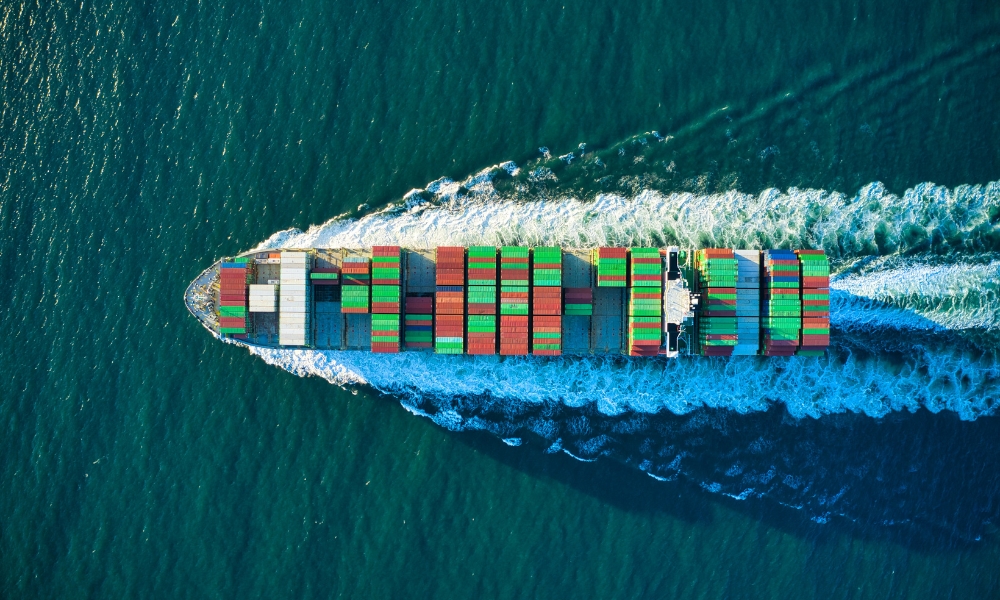
Glander International Bunkering said some 35,000 vessels that sail through the region annually could be affected as the wave of attacks on merchant ships continue in the Red Sea.

“With the disruption of key trade route linking Europe and North America with Asia through the Suez Canal, exporters and shippers are increasingly looking to find alternative ocean transportation routes,” it said.

Under an extended threat, ship- and freight forwarders face disruption and freight cost rises. Moving goods around Africa can add as much as 30 days to a voyage.

“As a result, we are seeing an increase in bunker demand in East/West Africa and the Arabian Gulf. This is primarily in Durban, Port Louis, Canary Islands, Salalah, and Fujairah,” the firm added. 

Related: ENGINE: War-risk premium soars to 0.75-1% as the Red Sea attacks enter third month|
Related: Glander sees bunker demand spike in East/West Africa, Arabian Gulf due to Red Sea crisis
Related: Argus Media: US-led naval coalition tells shipping to avoid Red Sea
Related: IMO Secretary-General condemns attacks against international shipping in Red Sea


Photo credit: MarineTraffic / Frank Findler
Published: 29 January, 2024

Continue Reading

Hydrogen

DNV launches new recommended practice for use of hydrogen as bunker fuel

New RP outlines the competence requirements for crew, inspectors, and technical personnel to support the proper handling of hydrogen systems on board ships.

Admin

Published

on

By

DNV study for EMSA backs design-based safety approach for hydrogen‑fuelled ships

Classification society DNV on Wednesday (20 May) said it has released a new recommended practice (RP) for hydrogen as ship fuel, outlining the competence requirements for crew, inspectors, and technical personnel to support the proper handling of hydrogen systems on board ships.

Hydrogen is gaining traction as a marine fuel, with seven vessels currently in operation and another 30 in the orderbook. However, several safety barriers like hydrogen leakage, low ignition energy, and management of high‑pressure or cryogenic storage, still limit its uptake. But with proper training and a strong safety culture, and with ship designs engineered to limit risk as much as possible, its use can be managed more safely and efficiently.

The DNV-RP-0703 “Competence related to use of hydrogen as fuel” addresses hydrogen’s specific risk profile by defining structured competence requirements. The RP can also be used as a basis for operational procedures and emergency preparedness planning. It builds on DNV’s existing competence framework for low‑GHG fuel, following RPs and Standards for LNG, ammonia, and methanol.

Cristina Saenz de Santa Maria, CEO Maritime at DNV, said: “Hydrogen represents one of several possible pathways in maritime decarbonization. The development of efficient safety regulations and guidelines is fundamental for hydrogen to evolve from large-scale demonstration to commercial use. 

“To get there it is essential that the industry develops competence levels among seafarers in parallel with technical solutions so that they can operate hydrogen‑fuelled vessels with confidence.”

DNV’s RP is designed to supplement existing regulatory frameworks such as the STCW Convention and ISM Code by providing hydrogen‑specific competence guidance for organizations considering using hydrogen as a marine fuel. 

It is also intended for use by shipowners and operators for onboard familiarization and competence management, by maritime academies and training institutions to develop curricula and courses, and by third parties as a reference for certification or verification of learning programs and competence assessments.

Kirsten Birgitte Strømsnes, Business Development Leader in DNV, said: “The use of hydrogen as a ship fuel requires that crew and shore-based personnel are trained on its specific hazards, and that organizations reflect these risks in their management systems and competence frameworks. It also means ensuring safer ship designs and implementing the necessary technical barriers.

“We have developed this recommended practice using DNV’s established methodology for competence standards, with input from industry partners and with reference to international regulations. As industry experience with hydrogen-fuelled vessels grows, this RP is intended to evolve in line with emerging best practices into a competence standard.” 

DNV has collaborated with industry partners Samskip, eCap Marine, Naval Dynamics, Chart Industries, LH2 Shipping, Torghatten, Shell, Everllence, and GreenH in developing the recommended practice. 

Note: More information on DNV’s new RP can be found here


Photo credit: DNV
Published: 21 May, 2026

Continue Reading

Business

SMW 2026: MPA and Shanghai Maritime University renew pact in maritime development

MoU will expand collaboration in key maritime areas such as maritime safety and security, maritime energy, port management and navigational technologies.

Admin

Published

on

By

SMW 2026: MPA and Shanghai Maritime University renew pact in maritime development

The Maritime and Port Authority of Singapore (MPA) and Shanghai Maritime University (SMU) have signed a Memorandum of Understanding (MOU) to deepen cooperation in maritime talent development and knowledge exchange. 

The MOU was signed by Mr Ang Wee Keong, Chief Executive of MPA, and Professor Chu Beiping, President of SMU.                                                                 

Started in 2020, this partnership supports exchanges of students and maritime professionals and facilitates participation in high-level seminars and knowledge sharing platforms. These efforts provide valuable opportunities for participants to gain insights into development in maritime safety, digitalisation and decarbonisation in both countries. 

Since 2023, MPA and SMU have enhanced collaboration through mutual participation in maritime leadership programmes, and by contributing expert speakers to high-level forums that help shape maritime policy across China and ASEAN.

Under the MOU, both parties will continue to facilitate information sharing and exchanges between academia and maritime professionals. This includes study visits, learning journeys, and joint training programmes across areas such as maritime safety and security, maritime energy, port management, navigational technologies, and marine environmental management.

Mr Ang Wee Keong, Chief Executive, MPA, said: “This MOU signifies the value of this partnership with Shanghai Maritime University. As a leading knowledge partner, Shanghai Maritime University offers deep expertise in many areas such as maritime safety, digitalisation and decarbonisation. Our collaboration allows both sides to learn from each other’s experience and strengthens our capabilities in these areas. 

Mr Beiping Chu, President of Shanghai Maritime University, said: “The continued partnership between Shanghai Maritime University and MPA fully reflects our shared commitment to advancing maritime education and international exchange. 

“Against the major transformations facing the global maritime industry, including digitalisation and green low-carbon development, deepening international academic and professional exchanges is particularly important. We look forward to expanding our collaboration in key maritime areas such as maritime safety and security, maritime energy, port management, navigational technologies, and marine environmental management through the MOU, creating more opportunities for mutual learning between maritime professionals and students of both countries.”


Photo credit: Maritime and Port Authority of Singapore
Published: 23 April, 2026

Continue Reading

Biofuel

FOBAS announces online course on safe handling of FAME-containing bunker fuels

Learners will gain an understanding of FAME characteristics, applicable regulations and standards, and practical risk controls needed to prevent fuel degradation, contamination, and operational issues.

Admin

Published

on

By

Louis Reed from Unsplash

Lloyd’s Register Fuel Oil Bunkering Analysis and Advisory Service (FOBAS) on Friday (17 April) announced an e-Learning course on LR’s FAME Fuel Training. 

The course is online, studied at one’s own pace and will take roughly 2 hours as well as a certificate provided upon successful course completion.

“Our new eLearning course from our Lloyds Register Training team provides practical guidance on the safe handling, storage and management of FAME-containing fuels, helping you reduce operational risk,” the bulletin said.

This eLearning course will help participants understand:

  • How to safely handle, bunker, store, and manage FAME-containing fuels.
  • FAME characteristics, regulations and standards.
  • The practical risk controls needed to prevent fuel degradation, contamination, and operational issues across the fuel lifecycle.

Learning outcomes

By the end of the course, participants will be able to:

  • Explain the global drivers and regulatory context for the uptake, storage and handling of biofuels,

particularly FAME, in the maritime sector.

  • Identify the defining characteristics and properties of FAME.
  • Compare FAME to conventional marine fuels with respect to chemical composition, behaviour, and

operational impact.

  • Describe the sources and production pathways of FAME.
  • Discuss the regulatory landscape and relevant standards governing the safe carriage of FAME.
  • Apply safe handling practices, including storage, transfer, and maintenance procedures to mitigate operational risks.

Note: Contact [email protected] for further details and to make relevant bookings.


Photo credit: Louis Reed from Unsplash
Published: 20 April, 2026

Continue Reading

Trending