Connect with us

Decarbonisation

Gasum: Shipping companies must be prepared for the tightening EU regulations

Gasum released an insight on the upcoming EU regulations including Fit for 55 regulatory package, FuelEU Maritime and EU Emission Trading System, while also touching on cleaner bunker fuels.

Admin

Published

on

Gasum: Shipping companies must be prepared for the tightening EU regulations

Nordic energy company Gasum released an insight on the upcoming EU regulations including Fit for 55 regulatory package, FuelEU Maritime regulation and EU Emission Trading System (ETS) while also touching on cleaner bunker fuels: 

Shipping companies must prepare for stricter EU regulations as the European Union tightens emissions rules for the maritime sector. New regulations and customer demands will drive the need for low-emission maritime fuels like renewable biogas and synthetic methane. Gasum stands ready to assist its customers in compliance and emissions reduction.

The European maritime industry faces significant changes impacting all companies operating in European waters. Under the EU’s Fit for 55 regulatory package, companies must reduce the greenhouse gas intensity of the energy used by vessels. In practice, this means companies need to buy low or zero emission fuels.

The forthcoming FuelEU Maritime regulation will mandate a 2% reduction from 2020 levels in fleet greenhouse gas emissions by 2030, escalating to 80% by 2050. Additionally, the EU Emission Trading System (ETS) will affect the maritime industry for the first time in 2024. Companies using fossil fuels will need to purchase and use EU ETS emission allowances for each tonne of reported CO2 emissions.

“The scale of change will be significant, with five directives tightening maritime emissions rules. Companies must assess their vessel operations and transition to low-emission fuels promptly. At Gasum, our mission is to ensure our customers’ long-term compliance with available low-emission fuel options, such as LNG, fully renewable biogas, or synthetic methane,” says Jani Arala, Gasum’s Head of Sustainable Logistics Solutions.

The demand for low-emission biofuels is set to increase

The demand for low-emission biofuels is set to rise due to these regulations, and Gasum is committed to meeting its customers’ needs. Gasum plans to introduce an additional 7 TWh of biogas by 2027, reducing emissions and addressing the growing demand for biofuels in the maritime sector.

Gasum is also actively participating in the emerging synthetic fuel market, aiming to provide more emission-free synthetic methane. Another potential synthetic fuel is green and e-methanol, but they face challenges in terms of vessel engines capable of utilizing methanol and the necessary bunkering infrastructure.

Electric engines are gaining traction for short-range travel, while long-haul electric shipping remains challenging due to, among other things, space requirements.

“In the long term, compliant cleaner maritime fuels like LNG, LBG, and synthetic methane are viable options due to availability and futureproofing. Dual-fuel engines allow ships to transition cost-effectively, and LNG dual fuel vessels can use all renewable and e-methane types as ‘drop-in’ fuels, with solid LNG vessel order books,” Jani Arala adds.

Portfolio management services bring competitive advantage when dealing with ETS

In 2024, the maritime industry faces a significant shift with the Emission Trading System (ETS), which mandates companies to purchase emission allowances for fossil fuels used. Unlike some sectors, the maritime industry does not receive free allowances.

The EU ETS will gradually impact shipping companies. In the first year, they must offset 40% of maritime emissions, with this requirement reaching 100% after three years in 2027.

For shipping companies relying on fossil fuels, this will lead to significantly higher costs, inevitably affecting customer prices. One option for shipping companies who participate in ETS is to outsource allowance purchasing or otherwise seek help from portfolio management services.

Gasum offers comprehensive portfolio management services related to EU ETS with capabilities of taking care of the whole process on customers’ behalf.

“Timely allowance purchases within the EU ETS can be a complex and dynamic endeavor, necessitating specialized knowledge. We have observed, alongside our clients, that outsourcing emission trading is often a cost-effective and practical choice. Gasum’s dedicated specialists monitor market conditions, ensuring our customers with predictability and transparency regarding allowance costs, risk reductions in price and volume risks, and ultimately lower costs and less stress,” Jani Arala explains.

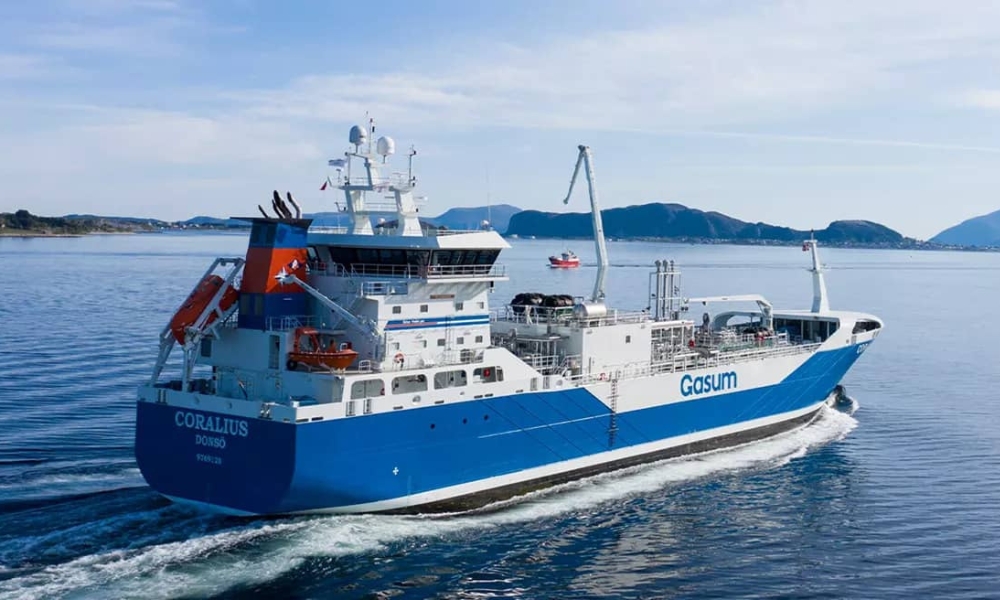
Photo credit: Gasum
Published: 16 November, 2023

Continue Reading

LNG Bunkering

PIL’s LNG dual-fuel boxship “Kota Elok” arrives in Singapore on maiden call

As the first of 13 new 13,000 TEU vessels joining its fleet, Kota Elok is equipped to operate on LNG and low-sulphur fuel oil that helps reduce our greenhouse gas emissions.

Admin

Published

on

By

PIL's LNG dual-fuel boxship “Kota Elok” arrives in Singapore on maiden call

Singapore-based Pacific International Lines Pte Ltd on Monday (20 July) said its first 13,000 TEU LNG dual-fuel container vessel, Kota Elok, recently made her maiden call to Singapore on 15 July.

As the first of 13 new 13,000 TEU vessels joining its fleet, Kota Elok is equipped to operate on liquefied natural gas (LNG) and low-sulphur fuel oil that helps reduce our greenhouse gas emissions. 

The vessel also incorporated energy-saving features and digital technologies to reduce fuel consumption and enhance operational performance, as well as a bow windshield to improve aerodynamics, contributing to improved fuel efficiency and lower emissions over the course of long-haul voyages.

“Following Singapore, Kota Elok will continue her voyage on our East Coast Service 1 (ES1) route to South America, calling at ports in Brazil, Uruguay, and Argentina before returning to Asia,” the company said in a social media post. 

Kota Elok also became PIL’s first vessel to receive Lloyd’s Register certification for compliance with the IACS UR E26 and UR E27 cyber security requirements.

Developed by the International Association of Classification Societies (IACS), UR E26 and UR E27 are mandatory cyber resilience requirements for newbuild vessels contracted from 1 July 2024. 


Photo credit: Pacific International Lines
Published: 21 July, 2026

Continue Reading

LNG Bunkering

CIMC SOE secures order for 12,000-cbm LNG bunkering vessel from Sinopec Clean Energy

Once operational, the vessel is expected to strengthen Sinopec’s domestic coastal LNG bunkering network and help address gaps in China’s alternative fuel bunkering infrastructure.

Admin

Published

on

By

CIMC SOE secures order for 12,000-cbm LNG bunkering vessel from Sinopec Clean Energy

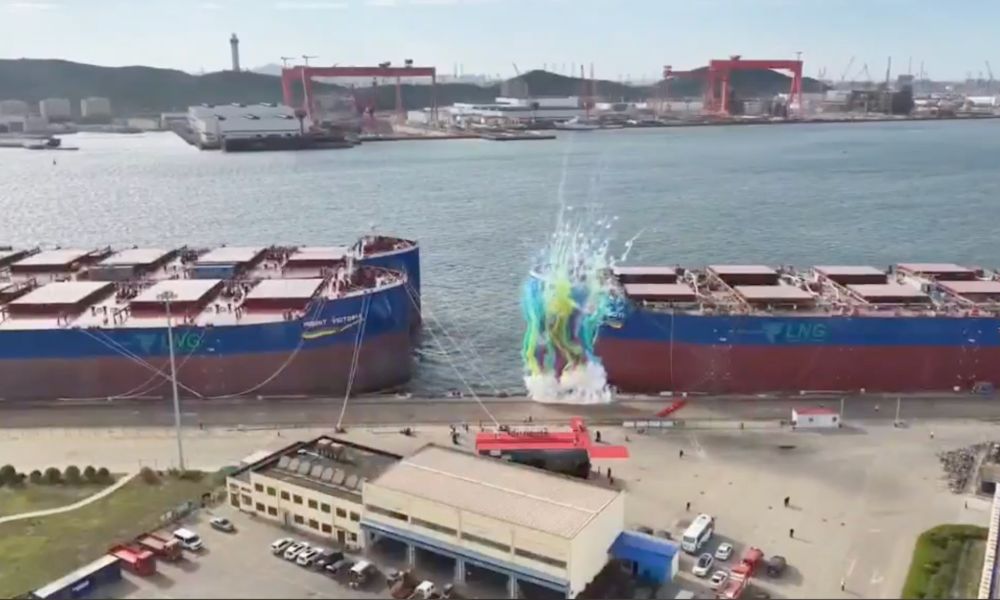
China’s Nantong CIMC Sinopacific Offshore & Engineering Co., Ltd. (CIMC SOE) recently signed a contract with Sinopec (Beijing) Clean Energy Co., Ltd. to build a 12,000-cubic metre (m3) LNG bunkering vessel, according to Chinese maritime media.

The vessel is scheduled for delivery in 2028 and will support Sinopec’s efforts to expand its presence in the marine clean energy sector.

Once operational, the vessel is expected to strengthen Sinopec’s domestic coastal LNG bunkering network and help address gaps in China’s LNG bunkering infrastructure.

With this signing , CIMC Pacific Offshore Engineering’s LNG bunkering vessel orderbook is further strengthened, maintaining its leading position in the global market for small and medium-sized LNG bunkering vessels.

The contract also marked another milestone for CIMC SOE, which has seen a sharp increase in orders and business performance this year amid a surge in domestic LNG vessel demand.


Photo credit: Nantong CIMC Sinopacific Offshore & Engineering
Published: 21 July, 2026

Continue Reading

Nuclear

ABS awards AiP to Korean institute for SMR-powered container ship concept design

KRISO says AiP recognises the technical feasibility and safety of its concept design, marking an important milestone toward the development of next-generation nuclear-powered commercial ships.

Admin

Published

on

By

ABS awards AiP to Korean institute for SMR-powered container ship concept design

Korea Research Institute of Ships & Ocean Engineering (KRISO) on Thursday (16 July) received Approval in Principle (AiP) from the American Bureau of Shipping (ABS) for its concept design of a 15,000 TEU Small Modular Reactor (SMR)-powered container ship utilising Molten Salt Reactor (MSR) technology.

KRISO said the AiP recognises the technical feasibility and safety of its concept design, marking an important milestone toward the development of next-generation nuclear-powered commercial ships.

“This achievement demonstrates international recognition of KRISO’s technological capabilities in the rapidly evolving field of nuclear-powered shipping, supporting the transition toward low-carbon maritime transport,” it said. 

Building on this milestone, KRISO will continue advancing basic and detailed ship design, paving the way for future demonstration and commercialisation of SMR-powered vessels. 

Through continued R&D and international collaboration, KRISO remains committed to strengthening next-generation maritime technologies and contributing to the safe deployment of nuclear propulsion in the maritime industry.


Photo credit: Korea Research Institute of Ships & Ocean Engineering
Published: 21 July, 2026

Continue Reading

Trending