Connect with us

Business

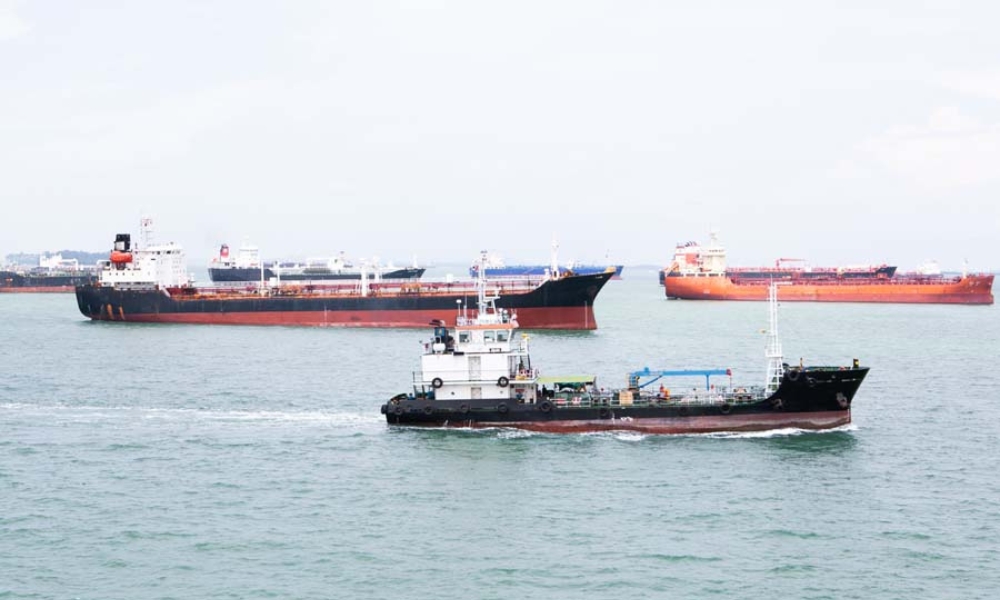
Gard: Anchoring in Malaysian Waters off East Johor

In nearly all the cases Gard has handled, mariners had mistakenly understood their anchoring position to be outside Malaysian territorial waters.

Admin

Published

on

Screen Shot 2021 04 29 at 11.55.47 AM

Norwegian maritime insurance company Gard on Thursday (27 April) published an alert to the shipping industry clarifying anchoring positions and requisite permissions from the Malaysian Maritime Enforcement Agency for vessels to anchor in East Johor waters:

In the past few weeks, several vessels entered with Gard have been detained and fined by the Malaysian Maritime Enforcement Agency  for anchoring in East Johor waters without the requisite permissions from the authorities.

Malaysian authorities recently reportedly conducted a special operation, “Jangkar Haram”, targeting ships that had anchored in waters off East Johor, without prior written permission from the Director General of the Malaysian Marine Department.

Extent of Malaysian waters off East Johor

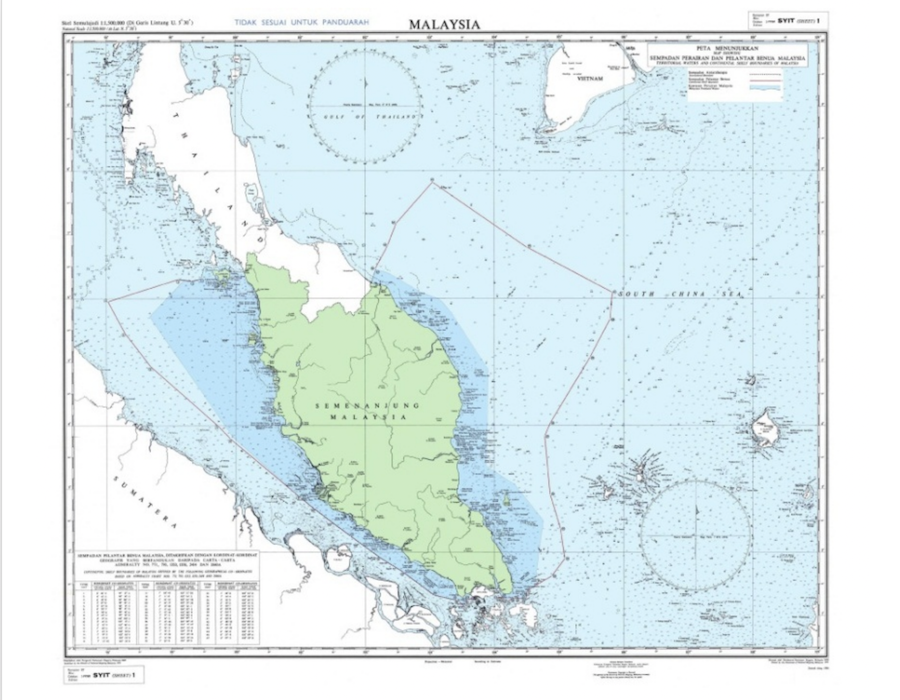
In nearly all the cases Gard has handled, mariners had mistakenly understood their anchoring position to be outside Malaysian territorial waters. As our correspondent, Spica, reports in their recent circular these waters are sometimes referred to as Singapore OPL East, or sometimes even International waters.

The Malaysian governing law which sets out the limits of its territorial waters is the Territorial Sea Act 2012 (TSA). To determine if a vessel has entered Malaysian territorial waters, the Malaysian Maritime Enforcement Agency (MMEA) and the Marine Department of Malaysia rely on the “1979 Territorial Waters Chart”. We reproduce an image of this chart from one of our earlier alerts from 2012 on this topic, solely to illustrate the area within which vessels have been detained, which is shaded in blue in the below chart. This area may not be marked on the navigational charts commonly used by merchant vessels and this has contributed to a lack of clarity amongst mariners. As such, vessels are advised to obtain a copy of the Malaysian “1979 Territorial Waters Chart” through their local agents.

The Merchant Shipping Ordinance 1952 and the Federation Light Dues Act 1953

All the recent detentions have been under section 491B(1) of the Malaysian Merchant Shipping Ordinance 1952 (MSO). This section stipulates that ships must notify the Director of Marine of activities within Malaysian waters whenever engaging in various activities. The relevant provision in this section under which vessels have been detained by the MMEA is 491B(1)(l) which is a sweep-up provision, requiring approval be obtained for “any other activity as determined by the Director of Marine”. The provision is widely worded, which makes it difficult to challenge.

Malaysian Shipping Notice no. 05/2014 aims to clarify the definition of “any other activity” to include the following: laying up; welding and other hot works; anchoring in a non-anchorage; and any form of underwater operations. The effect of this Notice is that it is now more difficult for owners of detained vessels to argue that they were not aware of the fact that permission was needed prior anchoring.  

We have previously also seen vessels being detained by the MMEA for alleged non-payment of light dues. Section 3(1) of the Federation Light Dues Act 1953 requires the owner, agent or master of every ship which visits any port or place within Peninsular Malaysia to pay light dues. 

Detention and Statement taking of crew

Once a vessel has been detained, Owners can expect the following investigative steps to be taken by the MMEA: 

  1. The Master and Chief Officer/Chief Engineer are usually taken ashore to MMEA’s office to give their statements.
  2. The Master and Chief Officer/Chief Engineer can expect to be questioned about their qualifications and experience, voyage details, and the reasons for anchoring at that specific location etc.
  3. The crew’s passports and ship’s documents are also confiscated by MMEA.
  4. Owners will have to appoint a local Malaysian agent, and it is recommended that the owner’s representative (local agent, correspondent, or a lawyer) accompanies the crew member when the statement is being taken by the MMEA investigating officer. An owners’ local representative would be able to assist with translating the questions asked by the investigating officer into English, as well as deal with the authorities on behalf of the owners.

We understand that the investigation could take anywhere between 1-3 days, or even longer and owners may have to make arrangements, through their local agents, for overnight stay of the Master ashore.

Getting the vessel released

Once statements have been taken from the crew, MMEA will hand the case over to the Marine Department. For the purposes of securing the release of the vessel a hearing may be fixed before the magistrate. Owners usually will be represented by a lawyer at the hearing and will be required to pay a bond to release the vessel under section 413 of the Criminal Procedure Code (CPC). A bond is a security paid by owners for the release of the vessel, as security for a fine or compound to be set at a later date. The bond is paid by a fixed deposit through opening an account under the name of the Court appointed bailor – usually the local agent.

Once the bond is paid and the ship’s documents returned to the vessel, the vessel can be released. Thereafter, a decision can be taken whether to admit liability and pay the compound, i.e., pay a lower penalty in exchange for admitting liability for the charges, or dispute the charges. The maximum fine for each offence is MYR 100,000 (approximately USD 24,000).

The entire process of getting the vessel released can take anything from a few days to a few weeks.

Recommendations 

  • Vessels are advised to obtain a copy of the Malaysian “1979 Territorial Waters Chart” through their local agents.
  • If anchoring in locations within the purported boundaries of the 1979 Territorial Waters Chart, it is advised that owners appoint a local agent in Malaysia.
  • Mariners must check with the appointed local agents that the Director of Marine has been informed before anchoring and written permission obtained.
  • Fines of this nature may not be covered by Gard under P&I Rule 47 and therefore could fall outside P&I cover. That being said, if a vessel is detained or arrested, we encourage Members to contact Gard for assistance.

Gard thanks Jeremy Joseph and Matthew Van Huizen of Joseph & Partners for their contribution to this alert.


Photo credit and source:
Gard
Published: 29 April, 2021

Continue Reading

Business

Singapore: Notice of intended dividend issued for Parakou Shipping Pte Ltd

Creditors of the company will have to submit proof of debt to the liquidators of Parakou Shipping by 17 June, according to Government Gazette notice.

Admin

Published

on

By

steve pb from Pixabay

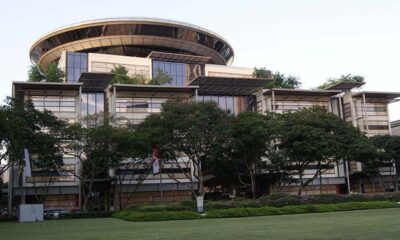
A notice to declare the intended dividend of Parakou Shipping Pte Ltd to its creditors has been posted on the Government Gazette on Wednesday (3 June).

The following are the details of the notice of intended dividend:

Name of Company : Parakou Shipping Pte Ltd (In Creditors’ Voluntary Liquidation)
Address of Registered Office : c/o KordaMentha, 50 Raffles Place, 25-01 Singapore Land Tower, Singapore 048623
Last Day of Receiving Proofs (if not already lodged): 17 June 2026
Name of Liquidator : Cameron Duncan
Address : c/o KordaMentha Pte Ltd, 50 Raffles Place, #25-01 Singapore Land Tower, Singapore 048623


Photo credit: steve pb from Pixabay
Published: 5 June, 2026

Continue Reading

LNG Bunkering

Chinese firms form pact for 20,000 cbm LNG bunkering vessel project

CM Energy Tech, Seacon Shipping Group and China Merchants Heavy Industry (Jiangsu) signed a joint venture agreement for 1+1 20,000 cubic meter LNG bunkering vessels.

Admin

Published

on

By

China Flag

CM Energy Tech Co Ltd, Seacon Shipping Group Holdings Limited and China Merchants Heavy Industry (Jiangsu) Co Ltd on Tuesday (26 May) signed a joint venture agreement for the construction of 1+1 20,000 cubic meter liquefied natural gas (LNG) bunkering vessels. 

The parties also signed a shipbuilding contract for the first vessel, which will be constructed by China Merchants Heavy Industry.

The project combines CM Energy Tech’s access to the China Merchants Group ecosystem, Seacon Shipping Group’s expertise in ship management and operations, and China Merchants Heavy Industry’s shipbuilding capabilities. The partners said the initiative is intended to address the shortage of large-capacity LNG bunkering vessels in the Chinese market.

The newbuild LNG bunkering vessel will feature dual C-type independent cargo tanks and is designed with a boil-off rate of just 0.16% per day. It will also be capable of delivering LNG at a bunkering rate of up to 2,000 cbm per hour, enabling efficient refuelling of large LNG-fuelled vessels.

The vessel will be powered by Wärtsilä dual-fuel engines and will comply with IMO Tier III emissions requirements. The first vessel is scheduled for delivery in 2028.

The three companies said they plan to further expand cooperation across the LNG value chain, strengthen their presence in the marine energy sector and provide customers with integrated LNG bunkering services focused on safety, operational efficiency and lower carbon emissions.


Photo credit: David Yu from Pixabay
Published: 5 June, 2026

Continue Reading

Methanol

India’s Agastya inks green methanol offtake agreement with SAR Group

Agastya Green Fuels and SAR Group will work together to enable green methanol storage, bunkering, and marine fuel infrastructure across Sri Lanka.

Admin

Published

on

By

RESIZED CHUTTERSNAP on Unsplash

India’s clean energy conglomerate Agastya Group on Wednesday (3 June) said Agastya Green Fuels signed a long-term green methanol offtake agreement with Sri Lankan bunker supplier SAR Maritime Agencies, a SAR Group company, for the supply of 250,000 metric tonnes (mt) per annum of EU RFNBO RED III Compliant green methanol.

Agastya said the agreement establishes one of the largest green methanol supply partnerships in the Indian Ocean Region and marked a major step toward creating a new green maritime energy corridor connecting India and Sri Lanka.

The green methanol will be supplied from the Agastya Green Fuels Hub at Mulapeta Port, Andhra Pradesh, India, where Agastya is developing a green methanol export-oriented facility with a planned investment of USD 6 billion over the next six years. The facility is expected to produce 1 million mt per annum. 

“Through this partnership, Agastya Green Fuels and SAR Group will work together to enable green methanol storage, bunkering, and marine fuel infrastructure across Sri Lanka, positioning Colombo, Hambantota, and Trincomalee as future clean-fuel hubs for global shipping,” the company said in a social media post. 

“The Indian Ocean is emerging as the world’s next green fuel corridor. Agastya Green Fuels intends to be at its center,” said Shashi K Reddy Arjula, Founder and Group CEO of Agastya. 


Photo credit: CHUTTERSNAP on Unsplash
Published: 5 June, 2026

Continue Reading

Trending