Connect with us

LNG Bunkering

Half of Shell long-term chartered crude tankers to be powered by LNG in 2023

Shell on Thursday signed agreements to charter ten new crude tankers powered by dual-fuel LNG engines; order is expected to bring the total global dual fuel LNG fleet to 475.

Admin

Published

on

Screen Shot 2021 03 12 at 2.32.00 PM

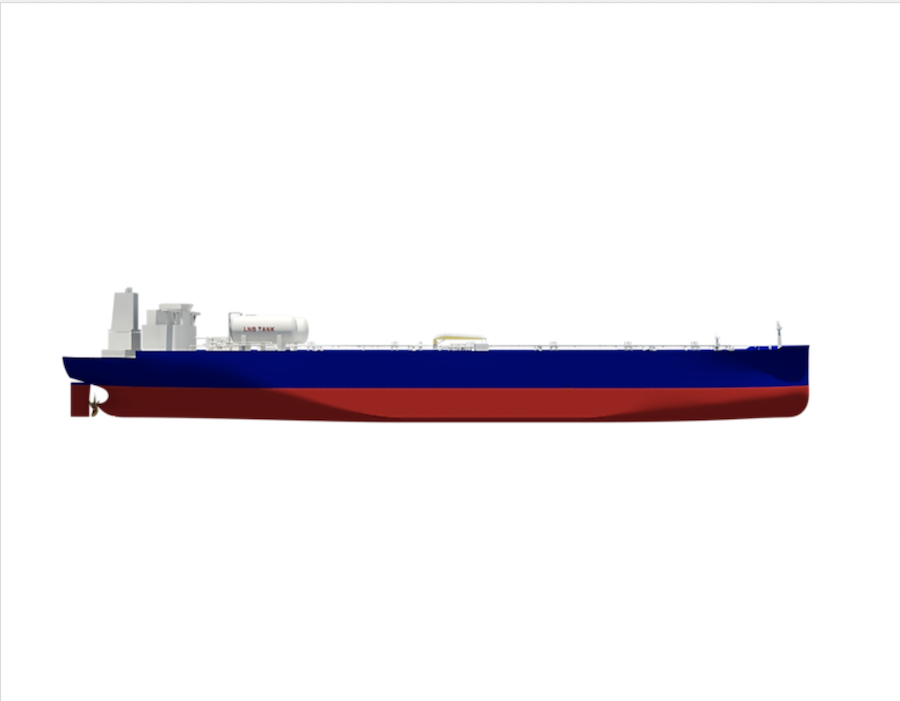
Oil major Shell on Thursday (11 March) signed agreements to charter ten new crude tankers powered by dual-fuel liquefied natural gas (LNG) engines.

Four of the very large crude carriers (VLCCs) have been chartered from Advantage Tankers, three from AET and three from International Seaways.

All 10 ships will be built in South Korea by DSME, the first operational from 2022 and will be on charter to Shell for seven years.

The main engines and vessel design chosen for the ships will mean these tankers have the lowest possible methane slip and highest fuel efficiency including on average 20% less fuel consumption compared to eco VLCC vessels on the water.

Shell will continue to significantly invest in LNG for its long-term charter fleet with 14 in service by the end of 2021, it says.

This order is expected to bring the total global dual fuel LNG fleet to 475, marking yet another important step on the predicted doubling of LNG-fuelled vessels on the water by 2023, as ship owners respond to customer calls to choose the cleanest technologies available today. 

“It is imperative that the shipping sector immediately employs the cleanest fuels available. Today and for the foreseeable future, LNG is the choice for new builds to ensure we are not adding heavier emitters into the global fleet while we work hard at developing zero-emissions fuels,” said Grahaeme Henderson, Global Head of Shell Shipping & Maritime.

“This significant commitment will see Shell hit a new milestone for our fleet decarbonisation with an average of 50% of our crude tankers on time charter powered by dual-fuel LNG engines once in service. There is real urgency to tackle emissions from this sector and adopting LNG while developing zero-emissions fuels options, will make a significant difference to cumulative emissions.”

According to Shell, the company is rapidly making LNG available on global trading routes at major ports in Europe, Asia and North America to meet customer demand with tankers and the bulk and liner segments continuing to grow uptake.

By 2023, marine LNG demand is expected to reach around 3.6 million tonnes with 45 bunker vessels expected to be in service, it notes.

“The vessels have been designed with state-of-the-art technologies and not only achieve a huge reduction in greenhouse gas emissions but are also economically viable. They have a low fuel consumption with their dual-fuel LNG engines and will bring significant benefits to both the charterer and the ship owners over the long-term,” said Sung Geun Lee, President and CEO of DSME.

AET President and CEO Captain Rajalingam Subramanian, said:

“This latest addition of LNG dual-fuel VLCCs to AET’s growing, eco-efficient fleet portfolio clearly demonstrates our continued commitment to cleaner shipping solutions that are economically viable, and our aspiration to reduce our carbon footprint in alignment with the IMO greenhouse gas (GHG) strategy.

I would like to thank Shell for the partnering opportunity in this innovative environmental solution, building on the long-term relationship we already have across many segments of our business and we look to further expand as leaders in sustainable energy transportation. My congratulations to Advantage Tankers and International Seaways for their courage and leadership in this effort, which further reinforces that the environmental agenda and commercial viability can co-exist in sustainable shipping.”

International Seaways’ President and CEO Lois K. Zabrocky, said:

“We are pleased to support Shell’s leadership in significantly reducing the carbon footprint of the maritime sector and are excited to partner with them on this critical objective,” said Lois K. Zabrocky, International Seaways’ President and CEO. “These dual-fuel LNG VLCCs fit well with our fleet and we expect them to provide significant long-term commercial advantages. Importantly, the significant environmental benefits of these state-of-the-art vessels are also consistent with Seaways’ commitment to ESG-focused corporate citizenship and advancing sustainability initiatives.”

Tugrul Tokgoz, CEO of Advantage Tankers, said:

“Advantage Tankers is very happy and proud to be part of this exciting project together with Shell. These innovative vessels will provide both economic and environmental benefits. We believe dual fuel LNG propulsion will continue to grow as our industry strives to meet long term goals for greenhouse gas emissions. LNG has the benefit of being an abundant and low-cost fuel source and importantly produces 30% less carbon emissions than alternative conventional fuel used today. We are committed to working with partners to provide clean and efficient sources of transportation.”

  •         LNG is proven, safe and the lowest carbon emitting fuel currently available to the maritime sector. Vessels using LNG as a fuel are cost competitive over their lifecycle and typically require less maintenance than those running on conventional fuels.
  •         A study by Thinkstep found that when compared with heavy fuel oil, from extraction to combustion LNG can reduce greenhouse gas emissions by up to 21% for 2-stroke slow speed engines and up to 15% for 4-stroke medium speed engines. We know that the design guarantees for these vessels deliver a minimum emission saving of 16% when compared to an eco-ship, and our operations modelling suggests considerable improvement on that figure. We look forward to measuring the performance of these vessels closely as they deliver CO2 efficiencies over the time of the charter.
  •         Shell plans to double its existing LNG bunkering infrastructure on key international trade routes by the mid-2020s. New LNG bunker vessel orders will bring the global number to 45 by 2023, matching the pace of the anticipated growth in LNG-fuelled ships.

Photo credit: Shell
Published: 12 March, 2021

Continue Reading

LNG Bunkering

Stabilis Solutions targets Q3 2028 launch for Galveston LNG bunkering facility

Firm received a LOR from US Coast Guard following a review of a LNG Facility and associated waterfront LNG loading, marine transportation, and LNG bunkering operations in the Port of Galveston.
Admin

Published

on

By

Stabilis Solutions targets Q3 2028 launch for Galveston LNG bunkering facility

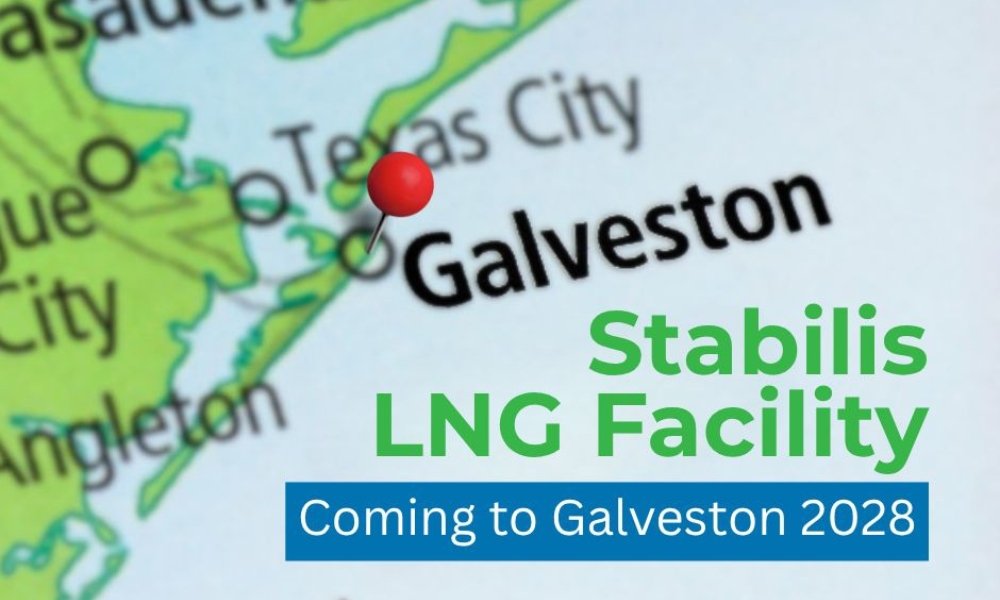
Clean energy production solutions provider Stabilis Solutions (Stabilis) on Friday (24 July) said the proposed Stabilis Galveston LNG Facility is anticipated to be in production by the third quarter of 2028. 

It will come complete with the delivery of the first new-build, dedicated Jones Act-compliant LNG bunker barge in the Galveston/Houston area.

“This is a significant regulatory and project milestone for Stabilis,” the company said. 

This comes following Stabilis receiving a Letter of Recommendation (LOR) from the US Coast Guard following their formal review of the proposed Stabilis Galveston LNG Facility and associated waterfront LNG loading, marine transportation, and LNG bunkering operations in the Port of Galveston.

“This critical endorsement of our project from the USCG Captain of the Port to the Port of Galveston and the Galveston Fire Marshal comes after a rigorous safety and security review process,” it said.

“This included a comprehensive evaluation of the potential risks, including navigation hazards, vessel traffic density impacts, emergency response capabilities, maritime security threats, and application of appropriate mitigation measures.” 

Manifold Times previously reported Stabilis terminating a previously announced 10-year agreement with a leading investment-grade global marine operator to supply LNG from the company’s proposed 350,000 gallon-per-day Galveston liquefaction facility.

As a result, the company expected delays to the anticipated final investment decision, project financing, and development timeline for the Galveston LNG facility. 

Related: Stabilis Solutions terminates 10-year LNG supply deal, expects delay in Galveston project


Photo credit: Stabilis Solutions
Published: 24 July, 2026

Continue Reading

Newbuilding

CMA CGM names second 24,000 TEU LNG dual-fuel ULCS

Group’s latest ship, “CMA CGM PANTHEON”, the sister ship to “CMA CGM NOTRE DAME”, has joined the company’s fleet under the French flag.
Admin

Published

on

By

CMA CGM names second 24,000 TEU LNG dual-fuel ULCS

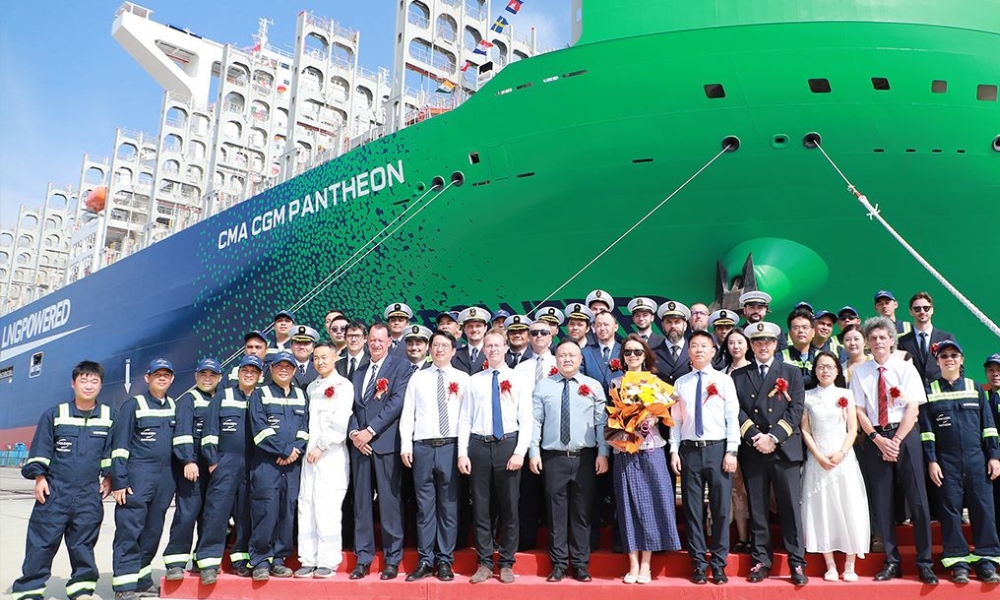
French shipping giant CMA CGM on Wednesday (22 July) said it has recently named the second ship in a series of 24,000 TEU liquefied natural gas (LNG) dual-fuel ultra-large container ships (ULCS).

The Group’s latest ship, CMA CGM PANTHEON, the sister ship to CMA CGM NOTRE DAME, has joined the company’s fleet under the French flag. 

During the ceremony, the vessel was welcomed by her Master, Captain Benoit LE DREAU, and her godmother, Ms. Xiao Wang, Director of Programming & Screening at the Shanghai International Film Festival, following maritime tradition.

“Soon to operate on the FAL1 service connecting Asia with Europe, CMA CGM PANTHEON embodies our commitment to supporting global trade while accelerating the energy transition in shipping,” the company said in a social media post. 

Related: BV classes CMA CGM’s first LNG dual-fuel ULCS in newbuild series


Photo credit: CMA CGM
Published: 24 July, 2026

Continue Reading

Bunker Fuel

Antwerp-Bruges biofuel bunker sales drops 36% on year in Q2 2026, LNG down 13.4%

Biofuel recorded 26,833 mt in Q2 2026 with 41,939 mt recorded in the same period the year before while port data showed 76,513 mt of LNG being delivered in Q2 2026, down from 88,328 mt.
Admin

Published

on

By

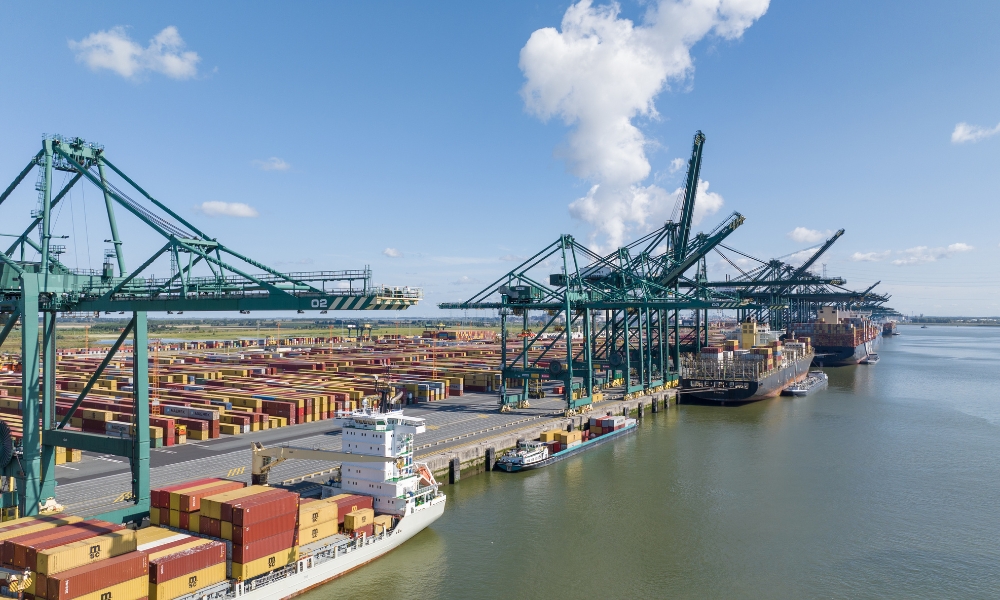
Port of Antwerp-Bruges, Deurganck Dock

The Port of Antwerp-Bruges recently published bunker fuel sales data for the second quarter (Q2) of 2026.

Total bunker sales at the port was 2.05 million metric tonnes (mt) in Q2 2026, compared to sales of 1.99 million mt (+3%) during the similar period in 2025.

Deliveries of ultra low sulphur fuel oil, very low sulphur fuel oil, high sulphur fuel oil and marine gas oil in Q2 2026 (against on year) recorded respectively 164,987 mt (+43.6%  from 114,917 mt), 537,926 mt (+12.8% from 476,746 mt), 659,182 mt (+11.6% from 590,544 mt) and 366,329 (-15.7% from 434,766 mt).

Biofuel recorded 26,833 mt in Q2 2026 with 41,939 mt (-36%) recorded in the same period the year before. 

Port data showed 76,513 mt of liquefied natural gas (LNG) being delivered as a marine fuel in Q2 2026, down by 13.4% from 88,328 mt in Q2 2025. Meanwhile, there has been no deliveries of methanol at the port for the year so far.

Related: Antwerp-Bruges biofuel bunker sales plunge 50.6% on year in Q1 2026, LNG soars 214%


Photo credit: Port of Antwerp-Bruges
Published: 23 July, 2026

Continue Reading

Trending