Connect with us

Business

IBIA: After ‘millennium virus’, bunker sector faces pressure to decarbonise

Pandemic caused some reduction in bunker demand and CO2 emission from shipping this year, but going forward the pressure to decarbonise will grow.

Admin

Published

on

IBIA

The International Bunker Industry Association (IBIA) on Thursday (17 December) published a commentary from Unni Einemo, Director at IBIA regarding how Covid-19 will impact the bunker industry’s future and what IBIA foresees for 2021:

After a year like no other, TradeWinds asked 40 shipping industry stakeholders what they see for 2021 after a year beset by the coronavirus, and how the pandemic will shape shipping’s future. Unni Einemo, director of the International Bunker Industry Association, was one of them. This is what she said:

This year has defied expectations for the bunker industry.

We went into 2020 dreading potential problems linked to the incoming 0.50% sulphur limit. Among the issues anticipated were operational problems on ships when changing to very low sulphur fuel oil, as VLSFO characteristics vary widely, meaning onboard handling becomes more complex. There were also doubts about sufficient availability of low sulphur fuels.

Overall, the transition to IMO 2020 was smoother than expected, even if we saw some of the anticipated teething problems. Some have compared it to the “millennium bug” which caused a lot of panic in advance and ended up not being a big deal. I think that does our industry a huge injustice.

Without diligent planning and preparation, the transition would have been a lot more painful and a lot more could have gone wrong. IBIA helped raise awareness of potential pitfalls, and worked relentlessly to provide advice and guidance to help the bunker and shipping industry prepare, both at the IMO and through various publications and conferences.

Then came the “millennium virus” which the world at large wasn’t prepared for. It presented practical challenges for bunker deliveries and associated exchanges of signed documentation and samples while avoiding human interactions. The industry found ways to cope, but it has demonstrated the usefulness of technology and digital solutions to facilitate remote procedures for witnessing sampling and exchange documentation.

One of the main impacts of the COVID 19 pandemic was on demand for oil products, which combined with the failure of OPEC+ to restrain oil output caused oversupply and a dramatic fall in oil prices starting early in 2020.

Rapidly declining demand for other transport fuels freed up distillates for blending into the low sulphur marine fuels pool, driving down prices. This alleviated stress on liquidity and access to sufficient credit to maintain bunkering volumes. Low sulphur fuels costs more, so the price increase associated with IMO 2020, and the increased counterparty risk it entails, was a major industry concern.

During Q2, low prices coincided with falling bunker demand, causing more intense competition and lower profit margins on bunkers.

Going forward, rising oil prices combined with economic damage from the pandemic could see credit and counterparty risk become more acute again.

The pandemic caused some reduction in bunker demand and CO2 emission from shipping this year, but going forward the pressure to decarbonise will grow.

The bunker industry is well aware of this and is looking for opportunities to play its part. IBIA will support efforts to identify the best routes by working with our members and participating in IMO meetings, where IBIA has consultative status.

Photo credit and source: IBIA
Published: 21 December, 2020


Continue Reading

Incident

MPA: 25 crew rescued after abandoning “MSC HERMES III” east of Vietnam

MRCC Singapore coordinated the rescue after receiving a distress alert at about 8.45am as the vessel was within Singapore’s Maritime Search and Rescue Region.
Admin

Published

on

By

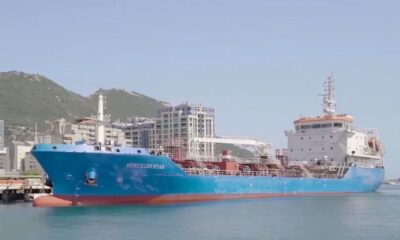
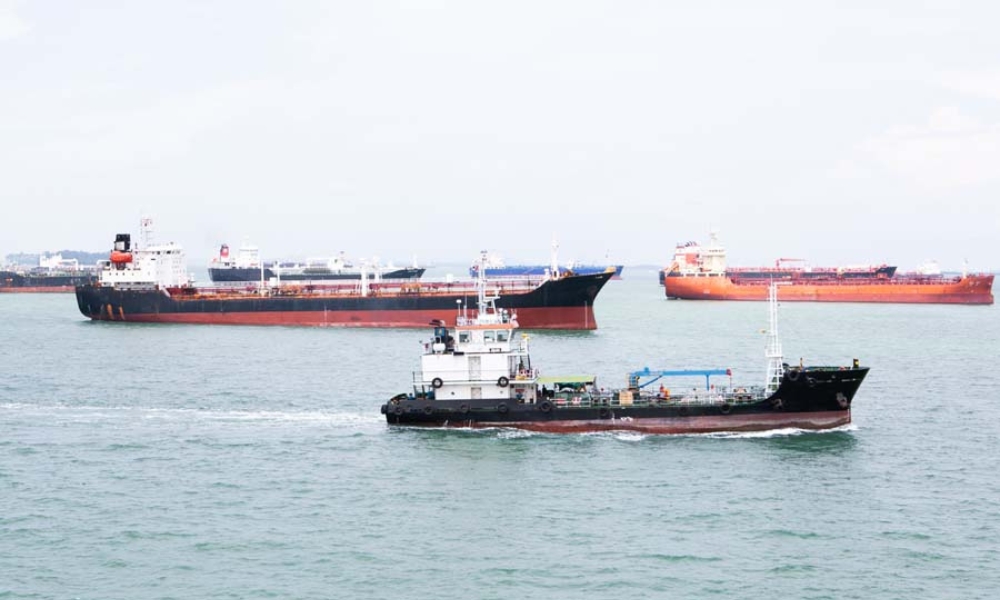
RESIZED bunker tanker singapore

The Maritime and Port Authority of Singapore (MPA) on Tuesday (22 September) said all 25 crew members from the Liberia-registered container vessel MSC HERMES III were rescued on 22 September 2026. 

The Maritime Rescue Coordination Centre (MRCC) Singapore coordinated the rescue after receiving a distress alert at about 8.45am (Singapore Time). 

“The vessel was within Singapore’s Maritime Search and Rescue Region (MSRR), about 300km east of Vietnam,” MPA said in a statement. 

MRCC Singapore immediately issued a broadcast requesting vessels in the vicinity to render assistance. Three vessels responded, and MSC RUBY recovered all 25 crew members after they had abandoned MSC HERMES III in a lifeboat. 

“All 25 crew members are safe, with no injuries reported,” MPA said. 

“MRCC Singapore is coordinating with the Vietnamese MRCC on arrangements for the rescued crew members to return safely to shore.”


Photo credit: Manifold Times
Published: 23 September, 2026

Continue Reading

Alternative Fuels

GCMD, Equinor to combine expertise on alternative bunker fuels, decarbonisation solutions

Equinor brings extensive experience to partnership as a vessel charterer and marine fuel supplier, including chartering dual-fuel LNG and methanol tankers, testing biofuels and supplying methanol.
Admin

Published

on

By

GCMD, Equinor to combine expertise on alternative bunker fuels, decarbonisation solutions

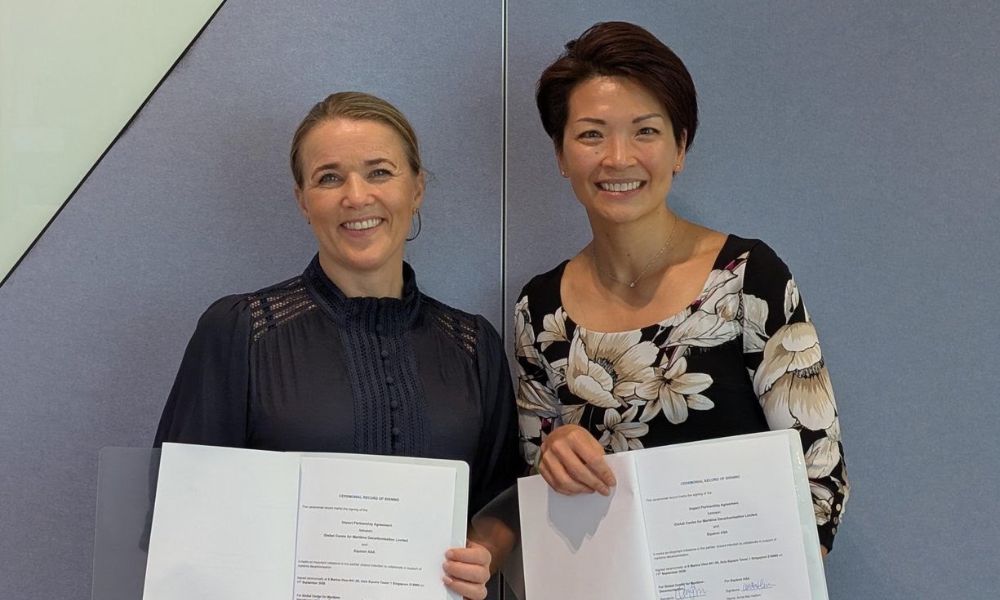
The Global Centre for Maritime Decarbonisation (GCMD) and Equinor on Tuesday (22 September) announced a five-year Impact partnership.

The partnership brings together GCMD’s capabilities in conducting real-world maritime pilots with Equinor’s experience as a charterer, energy provider and developer of low-carbon solutions.

Together, the organisations will leverage their complementary expertise to help address technical and operational gaps in scaling alternative marine fuels and supporting the development and uptake of other maritime decarbonisation solutions.

GCMD’s work on alternative fuels, including biofuels, ammonia and methanol, focuses on two critical aspects of deployment: operational safety and robust monitoring, reporting and verification (MRV). Its pilots and studies are generating operational data to support safe bunkering and handling of these fuels. 

At the same time, its assurance work seeks to strengthen confidence in quantity, quality and GHG emissions abatement.

“Equinor brings extensive experience as a vessel charterer and marine fuel supplier. This includes chartering dual-fuel LNG, LPG and methanol tankers, testing and using biofuels and supplying methanol to the maritime sector,” GCMD said.

Equinor is also piloting the use and supply of ammonia as a marine fuel, contributing to the development of associated safety, regulatory and bunkering arrangements.

Combining these perspectives can help address practical barriers to alternative fuels deployment while strengthening assurance across emerging marine fuel value chains.

Beyond alternative fuels, GCMD is working to accelerate the adoption of solutions that can reduce emissions from the existing fleet, including energy efficiency technologies (EETs) and onboard carbon capture and storage (OCCS).

GCMD’s work on EETs includes quantifying real-world fuel savings from technologies such as wind-assisted propulsion systems and developing financing mechanisms to scale their adoption. In OCCS, Project CAPTURED demonstrated an end-to-end value chain for onboard captured and liquefied CO₂, generating evidence that contributed to the recognition of captured CO2 under the EU ETS and in-principle support at the IMO for recognising carbon mineralisation as permanent storage.

Equinor brings decades of experience in offshore CO₂ storage, including its role in the development and operation of Northern Lights, the world’s first cross-border CO2 transport and storage facility, where liquefied CO₂ is transported by ship to an onshore receiving terminal before it is sent by pipeline for permanent geological storage beneath the North Sea.

Through the partnership, GCMD and Equinor will explore opportunities to combine their respective capabilities and experience to support the deployment and scaling of maritime decarbonisation solutions.


Photo credit: Global Centre for Maritime Decarbonisation
Published: 23 September, 2026

Continue Reading

Decarbonisation

Wah Kwong NatPower, AREL partner on maritime electrification in Hong Kong

Collaboration will examine opportunities to deploy shore power facilities, vessel charging infrastructure and battery energy storage solutions, alongside the development of electric vessels.
Admin

Published

on

By

Wah Kwong NatPower, AREL partner on maritime electrification in Hong Kong

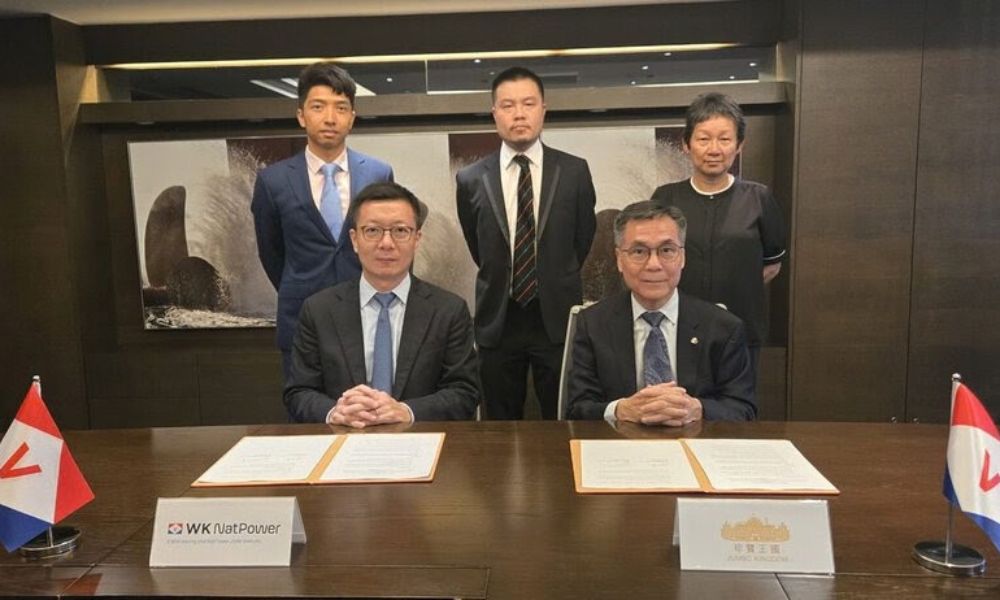
Wah Kwong NatPower (WK NatPower) on Tuesday (22 September) said it has signed a Memorandum of Understanding (MoU) with Aberdeen Restaurant Enterprises Limited (AREL) to explore the electrification of piers, vessels and supporting energy infrastructure in the Aberdeen area of Hong Kong.

Against the backdrop of the HKSAR Government’s latest policy direction to advance green shipping, smart port development and shore power infrastructure, WK NatPower and AREL will explore the development of an integrated marine electrification ecosystem in the Aberdeen and Shum Wan areas. 

The collaboration will examine opportunities to deploy shore power facilities, vessel charging infrastructure and battery energy storage solutions, alongside the development of electric vessels for future transport and tourism services.

The initiative supports Hong Kong to become a leading hub for sustainable maritime innovation while contributing to the revitalisation of one of the city’s most iconic waterfront communities. As an initial phase of the collaboration, the two parties will explore the opportunity for the construction of a series of electric vessels and transport vessels. 

The initiative will also examine the potential deployment of the ApliAber® electric vessel fleet as a new benchmark for sustainable waterfront mobility and hospitality experiences in Hong Kong.

Vincent Ni, General Manager of WK NatPower, said: “This MoU marks an important step in supporting Hong Kong’s marine energy transition. Aberdeen has long been an iconic part of Hong Kong’s maritime heritage, and we are delighted to explore opportunities to develop integrated shore power and vessel electrification solutions that can support a cleaner and more sustainable future for the harbour.”

Wong Tai Yu, Director of AREL, said: “Through this collaboration, we look forward to exploring practical ways to introduce cleaner energy, electric vessels and sustainable waterfront experiences, while supporting the revitalization of Jumbo Kingdom® for future generations.”


Photo credit: Wah Kwong NatPower
Published: 23 September, 2026

Continue Reading

Trending