Connect with us

Alternative Fuels

Aquarius Marine Renewable Energy solution undergoes feasibility study for LR2 tanker

Study undertaken in cooperation with the ship’s owner to investigate how various technologies can reduce bunker fuel consumption and emissions, it said.

Admin

Published

on

mre system banner 1c

[vc_row][vc_column][vc_column_text]Japan-based marine renewable energy technology company Eco Marine Power (EMP) on Thursday (30 April) announced it has commenced a feasibility study regarding the implementation of its Aquarius Marine Renewable Energy (Aquarius MRE®) solution onto a LR2 Tanker. 

The study is being undertaken in cooperation with the ship’s owner and will investigate how various technologies can reduce fuel consumption and emissions on-board the vessel, it said.

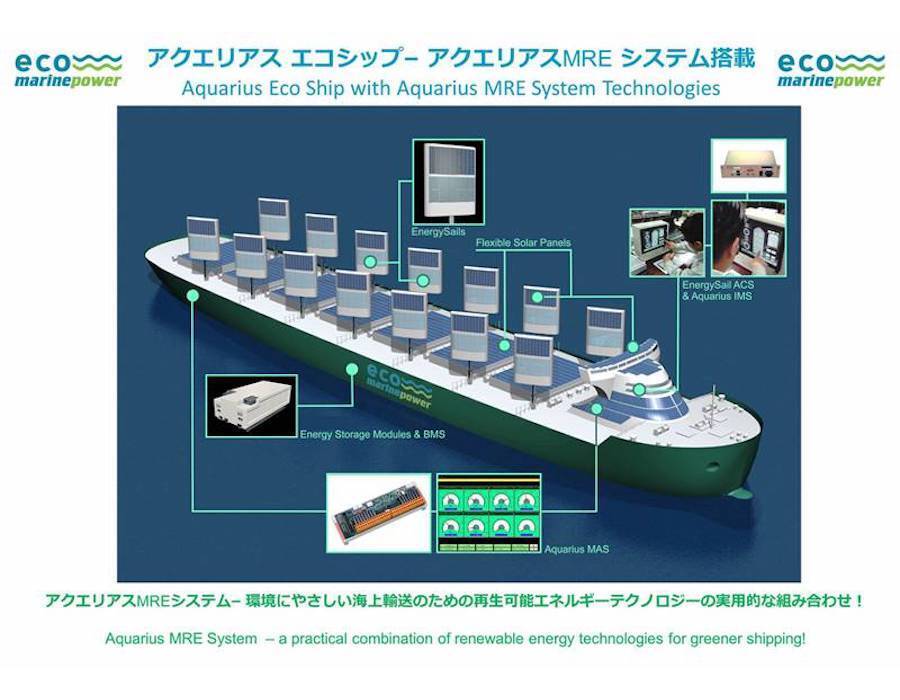
The scope of the feasibility study includes; investigating installation locations for marine-grade solar panels and frames, an energy-storage system, an automated alarm and monitoring system & the fitting of EnergySail’s onto the ship. 

Also involved in the study at this stage are Teramoto Iron Works Co. Ltd., The Furukawa Battery Company, KEI System Ltd., and Fuji Trading Co., Ltd, noted EMP.

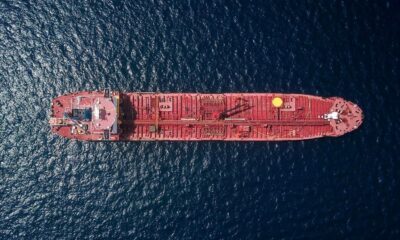
The LR2 Tanker selected for the study is approximately 240 metres in length and is the largest ship of this type that EMP has investigated the detailed installation of its complete Aquarius MRE solution. 

Aquarius MRE is a zero emissions power and propulsion system that incorporates an array of automated rigid sails, marine-grade solar panels, energy storage modules, charging equipment and computer systems, explains EMP.

Aquarius MRE enables ships to tap into renewable energy by harnessing the power provided by the wind and sun. The array of rigid sails are automatically positioned by a computer system to best suit the prevailing weather conditions and can be lowered and stored when not in use or in bad weather.

The rigid sails are based on EMP’s patented EnergySail® technology and these renewable energy devices can even be used when a ship is at anchor or in harbour. Each EnergySail can be configured with a mix of sensors, photovoltaic panels or other power generating devices.

Also included in the feasibility study will be modelling of the expected fuel consumption and emission reductions that could be achieved via the use of Aquarius MRE, plus Computational Fluid Dynamic (CFD) modelling of airflow around the ship, it said.

EMP states it is also investigating which marine-grade solar panels would be the most suitable for the project and also the feasibility of adding further equipment including low power LED lighting and other power saving devices.

It adds that preparation for the feasibility study commenced in 2019 when a vessel survey was conducted and it is expected that the feasibility study phase will be completed in early 2021. Some equipment for an initial system trial may be installed on the ship within 2020.

Related: EMP’s EnergySail® test unit unveiled for demonstrations in Japan
Related: EMP introduces automation for ship renewable energy systems


Photo credit: Eco Marine Power
Published: 6 May, 2020[/vc_column_text][/vc_column][/vc_row][vc_row][vc_column][vc_gallery type=”image_grid” images=”9889″ title=”Additional Information”][/vc_column][/vc_row]

Continue Reading

Methanol

China: Zhejiang completes first ship-to-ship methanol bunkering operation at shipyard

Zhejiang Free Trade Zone PetroChina Fuel Oil’s bunker tanker “JIA CHEN 17” supplied 795 mt of methanol to a newly built 5,900 TEU Maersk methanol dual-fuel container vessel.
Admin

Published

on

By

China: Zhejiang completes first ship-to-ship methanol bunkering at shipyard

China (Zhejiang) Pilot Free Trade Zone on Tuesday (30 June) said it has completed the province’s first ship-to-ship (STS) methanol bunkering operation at a shipyard, marking a new milestone in Zhoushan’s efforts to expand its portfolio of alternative marine fuel bunkering services.

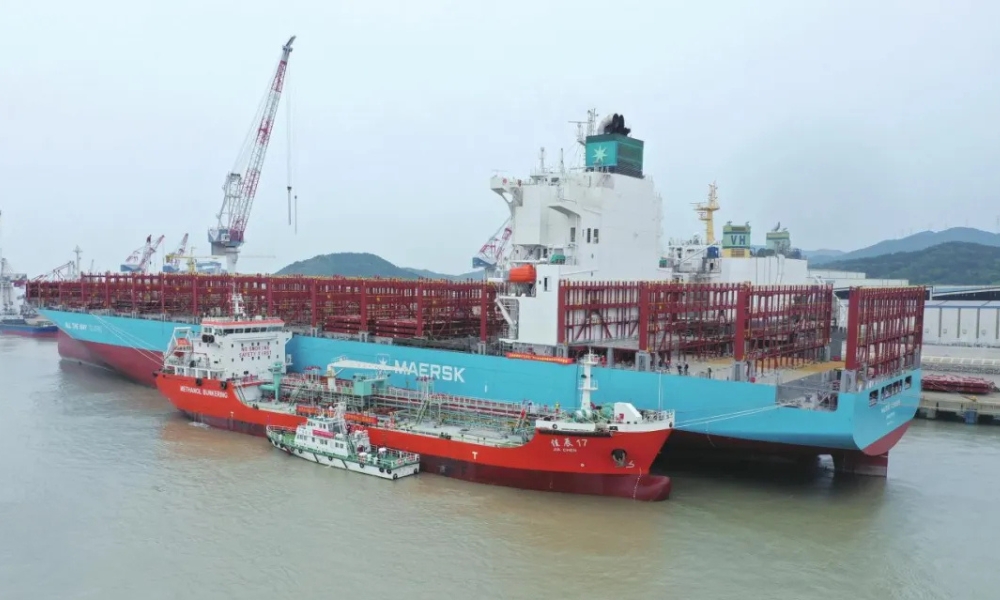
The operation took place recently at Qingshan West Berth No. 2 of Tsuneishi Group (Zhoushan) Shipbuilding, where Zhejiang Free Trade Zone PetroChina Fuel Oil’s bunker tanker JIA CHEN 17 supplied 795 metric tonnes (mt) of methanol to the newly built 5,900 TEU methanol dual-fuel container vessel MAERSK FLINDERS.

The bunkering operation was completed in approximately 5.5 hours, making it significantly more efficient than truck-to-ship methanol bunkering, which authorities said would have taken around nine times longer to deliver the same volume

According to local authorities, the operation is the first of its kind at a shipyard berth in Zhejiang Province, filling a gap in on-site bunkering capabilities for shipbuilding and repair yards. Zhoushan has previously conducted truck-to-ship methanol bunkering, truck- and ship-to-ship LNG bunkering, and blended biofuel bunkering operations.

The demonstration project forms part of Zhejiang’s strategy to develop green marine fuel bunkering under the China (Zhejiang) Pilot Free Trade Zone Bulk Commodity Resource Allocation Hub Development Plan, which calls for pilot bunkering of alternative fuels including green methanol, liquid hydrogen and ammonia.

Earlier this year, the China (Zhejiang) Pilot Free Trade Zone‘s Zhoushan Administrative Committee identified three priority projects: the world’s first anchorage ammonia bunkering operation, Zhejiang’s first shipyard-based STS methanol bunkering operation, and simultaneous LNG bunkering alongside cargo operations at Yongzhou Terminal, Ningbo-Zhoushan Port.

Authorities said the shipyard-based STS model offers operational advantages over both ship-to-ship and anchorage STS bunkering. In addition to reducing inter-island transport and lowering overall costs, conducting the operation alongside at the shipyard minimises weather-related disruptions and improves operational safety and schedule certainty.


Photo credit: China (Zhejiang) Pilot Free Trade Zone
Published: 2 July, 2026

Continue Reading

Shipping Corridor

BV and Shenzhen Port Group to advance green shipping corridor development

Through resource sharing and complementary capabilities, they will jointly develop green shipping projects to deliver replicable and scalable outcomes.
Admin

Published

on

By

BV and Shenzhen Port Group to advance green shipping corridor development

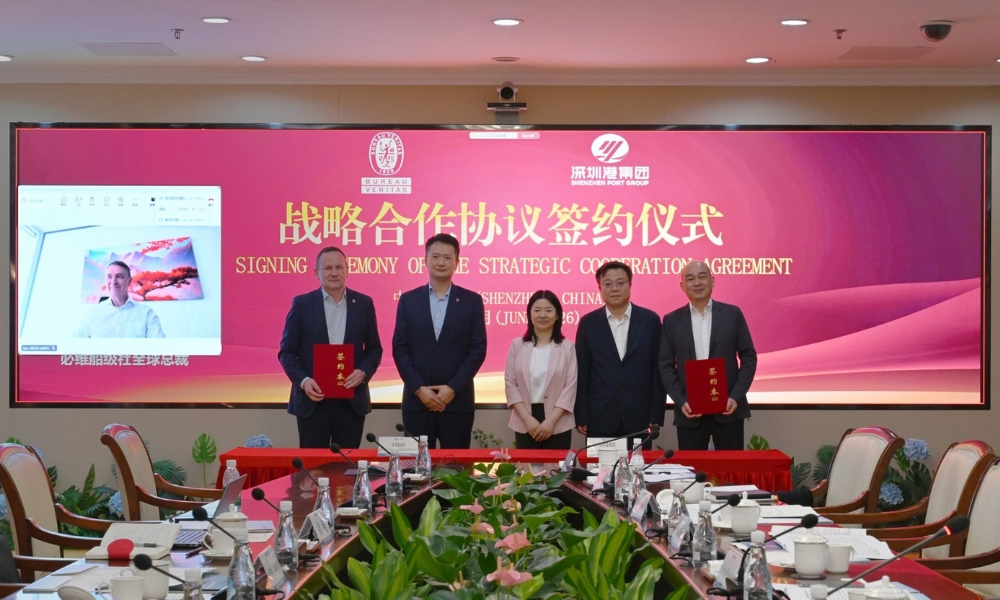
Bureau Veritas Marine & Offshore (BV) on Tuesday (30 June) said it signed a strategic cooperation agreement with Shenzhen Port Group on 29 June in Shenzhen, China.

The two parties engaged in in-depth discussions on strengthening collaboration across key sectors and jointly advancing the development of green shipping corridors.

Under the agreement, both parties will leverage their respective strengths and resources to deepen collaboration focused on the development of green shipping corridors and related businesses. Through resource sharing and complementary capabilities, they will jointly develop green shipping projects to deliver replicable and scalable outcomes.

Bureau Veritas will provide professional technical support to Shenzhen Port Group and industry players at large, helping them navigate evolving maritime regulatory policies and translate emerging international rules into practical, implementable measures to align domestic and global industry standards.

Backed by its comprehensive global business footprint, BV offers end-to-end testing, inspection and certification services covering the entire green fuel industrial chain, spanning renewable energy production to bunkering infrastructure for marine fuels. It has also built extensive hands-on experience in numerous domestic green fuel projects.

Alex Gregg-Smith, President of Bureau Veritas Marine & Offshore, said: Global decarbonization of the shipping industry requires concerted efforts and in-depth collaboration across the entire industrial value chain. 

“As a world-class port conglomerate, Shenzhen Port Group boasts strengths that are highly complementary to Bureau Veritas’s expertise in technical services and standard-setting. Deepening our partnership is of great significance for the green transition of the shipping sector. We hope this collaboration will serve as a catalyst to align domestic and international standards and jointly develop viable pathways for low-carbon maritime trade.”

Hu Zhaoyang, Secretary of the Party Committee and Chairman of the Board at Shenzhen Port Group, stated: “Bureau Veritas Marine & Offshore is a globally recognized authoritative body in the maritime sector, with a wealth of decarbonization solutions and practical experience for the global shipping industry. Its vision aligns perfectly with Shenzhen Port Group’s green development strategy. 

“Building on this agreement, we will further expand all-round cooperation across relevant fields, and maximize the combined value of Shenzhen Port Group’s diverse industrial application scenarios and BV’s authoritative technical certification capabilities to achieve mutual benefit through complementary strengths.”


Photo credit: Bureau Veritas Marine & Offshore
Published: 2 July, 2026

Continue Reading

Biofuel

MarineFifty to invest in Kvasir Technologies to scale up low-carbon, drop-in marine fuel

Kvasir has developed a proprietary process that converts abundant, non-edible biomass into a high-quality bio-oil — a drop-in replacement for fossil HFO that works with existing ship engines.
Admin

Published

on

By

MarineFifty to invest in Kvasir Technologies to scale up low-carbon bio bunker fuel

MarineFifty, the global investment business focused on maritime decarbonisation, on Wednesday (1 July) announced their intention to invest in Danish fueltech company Kvasir Technologies (Kvasir).

This follows the initial Series A financing round, announced by Kvasir on 18 June 2026, in which they raised EUR 10 million from a mix of existing and new investors. 

Subject to contract, MarineFifty intends to invest up to EUR 11 million as part of Kvasir’s Series A financing round, enabling the company to move from successful /demonstration plant operations to FID of a plant with commercial scale production.

Kvasir has developed a proprietary process that converts abundant, non-edible biomass into a high-quality bio-oil — a drop-in replacement for fossil HFO (Heavy Fuel Oil) that works with existing ship engines. By enabling shipowners to change fuel rather than engine, the technology offers a practical, scalable path to decarbonising one of the world’s hardest-to-abate sectors.

The investment reflects MarineFifty’s strategy of backing the breakthrough technologies, fuels and infrastructure that the shipping industry needs to reach net zero. An estimated 60 to 70% of the sector’s emissions reductions must come from exactly these kinds of innovations, and MarineFifty aims to provide not only capital but the technical conviction and partnership to help them reach commercial scale.

“Many of the technologies that will decarbonise shipping have already been invented. At MarineFifty, our mission is to find them, back them, and get them to scale in time to make a difference,” said Krishnan Narayanan, Chairman of MarineFifty. 

“Kvasir is exactly that kind of breakthrough – a scalable, drop-in solution that meets shipping where it is today, while pointing to a fossil-free future.”

“This investment is a strong endorsement of the technology our team has built and the path ahead of us,” said Dr. Joachim B. Nielsen, CEO and Co-Founder of Kvasir Technologies. 

“MarineFifty brings deep sector knowledge and a shared sense of urgency about decarbonising shipping. Their support helps us move faster towards commercial-scale production and towards delivering a genuine, sustainable alternative to fossil oil.”


Photo credit: Kvasir Technologies
Published: 2 July, 2026

Continue Reading

Trending