Connect with us

IMO 2020

EGSCA: Shipowners need to let stakeholders know of 2020 plans

Director discusses topics of uncertainty, information, IMO regulations and the opportunities for scrubbers.

Admin

Published

on

5af4ff12cb7cb 1526005522

The below article is written by Don Gregory, Director of the Exhaust Gas Cleaning Systems Association (EGCSA):

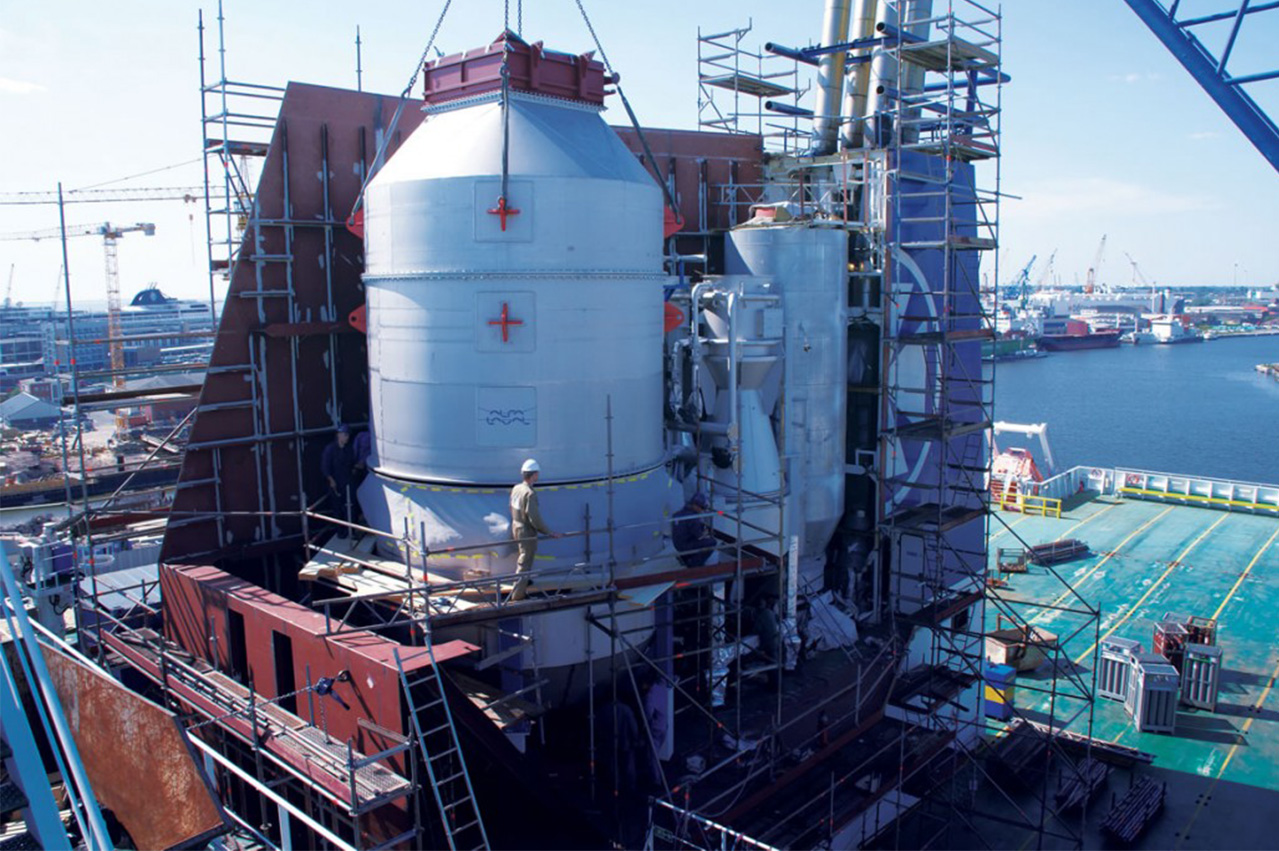
The only commercial technology solution currently available to meet compliance with MARPOL Annex VI Regulation 14 is an exhaust gas cleaning system, namely scrubbing. Remember Regulation 14 requires ships to use 0.10%S fuel in ECAs and 0.50%S fuel globally from 2020. There are also regional ECAs with slight variations. Examples include the 0.50%S in some rivers and coastal areas in China.

The EGCSA was formed in 2008 by the founding members to protect the industry in its fledgling state at the time. Today, I believe and attempt to ensure, it represents high standards, quality, ethical behaviour and honesty. EGCSA offers impartial technical information, advice and opinions on many current and future issues and challenges related to emissions reduction and in my capacity as its director that I am speaking at this conference.

There are, in reality, about 17 months left to prepare strategies and implement actions to be ready for the global Sulphur Cap around September 2019. Leave it any later than that and there is a considerable risk that a fleet will not be in compliance on 1st January 2020.

In a presentation at the 2020 Sulphur Cap Conference on 17th April, David Cox of Nord Rederei advised that his company had no idea what their compliance will look like. David’s remark is a common theme I have heard over and over again.

There are four areas that seem to be part of the reason for the continuing hiatus of activity to meet compliance. In my view, these are uncertainty, quality of information, IMO regulations and, lastly, opportunity or possibly lost opportunity.

Uncertainty

Starting with uncertainty there are many questions we continue to hear. Only on Monday, an EGCSA member emailed asking me if it was true the MEPC 72 had agreed to postpone 2020. That was a rumour in his market. Let us be clear: there is no postponement planned.

Other uncertainties include

  • Will 2020 be enforced?
  • Will High Sulphur Fuel Oil (HSFO) be available? There is no question it will be in surplus and available at rock bottom prices. However, the supply chain may have to be re-started if demand drops in 2020 and does not resume for a year or two.
  • Should we choose alternative fuels?
  • Do scrubbers work and can they really be installed in a retro-fit situation?
  • How long does a retro-fit take?
  • Aren’t scrubbers banned in open loop mode in ports in Europe and don’t they simply transfer pollution from air to sea?

Quality of information

Uncertainty can also be considered as affecting the quality of information in ship owner’s hands. It could also be labelled lack of real research on the part of ship-owners or opinion sourced data. Too often, a throw away comment such as, “open loop scrubbers are banned in Europe” becomes the factual position. The facts are that open loops scrubbers are used in all of Europe except Belgium where government legislation imposed a ban on all water discharges long before scrubbers came to the market. Germany also has a partial ban in some of its rivers but not everywhere. The facts are that there is no evidence whatsoever that scrubber discharges have or do cause harm to the aquatic environment. There is a large body of research on this from land-based scrubbers such as those at the Mongstad refinery in Norway or the scrubbers installed at Longannet Power Station in the Firth of Forth near Edinburgh.

Ship operators need to improve their information base and ensure it is reliable and factually accurate in order to make informed choices and the best decisions possible.

Some of the information they should be clear on would include;

How are scrubbers installed in a retro-fit situation? Ship operators could talk to some of the specialist installer companies and ask to see case studies. They could also talk to some of the RORO companies in Europe. What were their main problems? Are they still a risk?

When do scrubbers become cost effective? Is there an engine size or fuel consumption minimum to make the payback period for an installation cost effective? If the payback is short and there are no other downsides, then there is a real incentive to fit scrubbers.

Ethically, are scrubbers likely to be better than a fuel switch? Professor Ralf Zimmermann, Full Professor of analytical chemistry at the University of Rostock has suggested that, at worst, both solutions have similar health effects in highly populated ports. At best, scrubbers may result in slightly less harmful emissions than using 0.10%S distillate.

What are the real implications of the fuel compliance route? Is it simply using gas oil at 0.10%S for a few bunkerings. Ship owners should talk to Danny Evans of AW Shipmanagement, whose company has done the changeover for its ECA fleet. It has secured its long-term fuel supply, but it has also experienced non-compliance detentions. It is for ship owners important to examine real case studies and the facts. The fuel switch option may not be as simple as we think.

The paucity of real facts and the extent of opinion driven data is worrying. Those who don’t research the facts but rather provide their top management with information based on hearsay or assumptions may find they have made the wrong choices come 2020.

The EGCSA website can be used to source some of the information the industry may need. Access and use of the material is free to all. If data from the website is used in public, we would appreciate source acknowledgement.

IMO regulation

There has been a lot of press coverage of the ban on the carriage of High Sulphur Fuel Oil on ships not fitted with scrubbers. MARPOL Regulation 14 was poorly written in terms of compliance enforcement. The carriage ban is trying to fix that with more poor and not very well thought through regulations. The only benefit of the carriage ban is that is will give Port State Control (PSC) the legal power to tackle non-compliance rather than simply report it to the FSC. That is assuming that PSC has the resources needed to undertake the carriage ban inspection – a difficult and very demanding inspection.

As always with IMO regulations, there is an attempt to be fair and allow for circumstances outside the control of the ship operator to comply with the regulations.

This brings me on to the FONAR, the “Fuel Oil Non Availability Report”. On the face of it, it seems a simple idea to implement. All that ship owners need to do is, just state in the report why they could not obtain the compliant fuel and hand it to the PSC and FSC. Well, life it not that simple. How many ship operators accept a charter to anywhere without working out things like: is this a war zone?, can victualling be done?, are fuel and lubes available?, what are the berths like?, do we have a ship’s agent etc.? The FONAR is not a get out of jail free card and certainly needs to be used sparingly or perhaps not at all.

Just like the uncertainty surrounding ship operator decisions, the IMO has not yet prepared the ground for effectively managing the implementation of the global sulphur cap. Hence, there is a week long intersessional in July to propose, discuss and resolve the what-ifs. Ship operators and others in the industry are encouraged to contribute to the intersessional. I would therefore urge you to talk with your representing organisations and governments as soon as possible.

Opportunity

Let us finally look at the topic of opportunity.

The shipping industry lost an opportunity to make the transition to lower sulphur emissions much less painful and much more gradual. That would have been the effect if the industry had embraced an emissions trading scheme. This would have worked a little like banking and trading; a scheme that makes it possible for emissions allowances and reductions in emissions beyond the set limit to be monetised. Such a scheme would have allowed a much more cost effective and practical transition to take place.

But that is history. The opportunity we have now is a choice between ensuring that compliance choice results in, at worst, a neutral outcome, or to strive for a better outcome that results in a competitive advantage.

Conclusion

The street market trader lives on his or her knowledge of the competition and the customers.

The ship operator needs to invest in building that same awareness based upon facts and not opinion. All ship operators should:

  • Understand the most cost effective and secure method of achieving compliance for their fleet.
  • Be able to be in compliance well before the 1st January 2020.
  • Work out how they can demonstrate compliance so their ships do not need to be inspected. Emissions monitoring and the availability of that data seems a sensible and rational option.

Once the strategy and plans have been crafted and are ready for implementation, ship owners need to be sure to let their key stakeholders know. If they need HSFO in certain ports or 0.10%S fuel in others, it would be wise to advise the bunker suppliers of their estimated demand. Likewise, they may need to make changes to their lubricant stems. Ship suppliers can only make preparations if they know what is going to be required.

There is a lot more to reflect on concerning the situation we are facing as 1st January 2020 looms, but I hope the topics of uncertainty, information, IMO regulations and the real opportunities to be had provide some food for thought.

Photo credit: EGCSA
Published: 11 May, 2018

 

Continue Reading

Ammonia

AM Green plans to build green ammonia plant at Indian port

Initiative also includes development of green ammonia handling, storage and bunkering infrastructure, pilot bunkering operations, safety procedures and training programmes, says VOC Port Authority.

Admin

Published

on

By

india flag

VO Chidambaranar (VOC) Port Authority on Friday (29 May) said it has signed a Memorandum of Understanding (MoU) with India’s ammonia producer AM Green Ammonia to collaborate in the development of a green ammonia production plant.

The plant will have a capacity of one million tonnes per annum (MTPA) at Tuticorin.

The initiative also includes development of green ammonia handling, storage and bunkering infrastructure, pilot bunkering operations, safety procedures and training programmes. 

The project is expected to support the development of green fuel corridors connecting VOC Port with major ports in Europe and Asia, thereby strengthening India’s position in the global green fuels value chain.

VOC Port also signed a Memorandum of Understanding (MoU) with Bureau Veritas (India) Pvt. Ltd., to collaborate on Green Port certification, emissions accounting, ESG reporting, safety validation, development of green bunkering practices, and establishment of a Centre of Excellence for green fuels and sustainability.

The port also plans for an upcoming 750 m³ green methanol bunkering facility.


Photo credit: Naveed Ahmed on Unsplash
Published: 3 June, 2026

Continue Reading

Port & Regulatory

Study: Major drop in ship sulphur emissions confirmed following IMO regulations

National Centre for Atmospheric Science study found that the average sulphur content in ship fuel dropped nearly tenfold in open ocean areas following IMO’s 2020 regulation.

Admin

Published

on

By

shraga kopstein on Unsplash

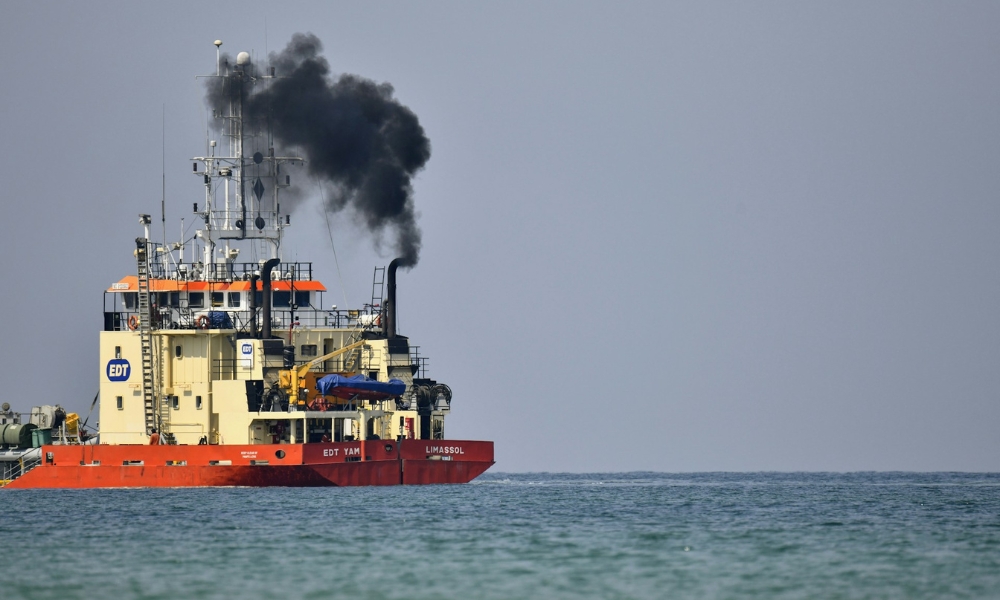
Recent global regulations have significantly reduced sulphur emissions from ships, helping to improve air quality in coastal regions – confirmed by a recent international study led by researchers at the National Centre for Atmospheric Science. 

The research, published in Environmental Science: Atmospheres, used aircraft and ground-based instruments to measure sulphur dioxide and nitrogen oxides emitted by ships in the North-East Atlantic and European coastal waters between 2019 and 2023.

The team found that the average sulphur content in ship fuel dropped nearly tenfold in open ocean areas following the International Maritime Organization’s 2020 regulation, which capped sulphur content in marine fuel at 0.5%. 

Before the change, many ships exceeded the previous 3.5% limit. After 2020, only a small number of ships were found to breach the new standard.

In European sulphur Emission Control Areas (SECAs), such as the English Channel and the Port of Tyne, sulphur levels were even lower – well below the stricter 0.1% limit. Interestingly, ports outside these zones, like Valencia in Spain, also showed low sulphur levels, likely due to EU rules requiring cleaner fuel when ships are docked for extended periods.

This is the first study to use aircraft-based measurements and predictions from the Ship Traffic Emission Assessment Model (STEAM3) to assess ship emissions outside of sulphur control zones since the 2020 regulation came into effect. The findings support the widely held view that ships now emit around seven times less sulphur than before the rule change – an important step toward cleaner air and healthier coastal environments.

Note: The research, titled ‘SO2 and NOx emissions from ships in North-East Atlantic waters: in situ measurements and comparison with an emission model’ can be found here. 


Photo credit: shraga kopstein on Unsplash
Published: 8 December, 2025

Continue Reading

Interview

IBIA Annual Convention 2025: ‘Exciting times’ for post IMO 2020 bunker suppliers, states Equatorial

Choong Sheen Mao, Chief Operating Officer, Equatorial, describes to Manifold Times the pre/post IMO 2020 challenges and evolution of bunker suppliers.

Admin

Published

on

By

Sheen Mao MT

The International Bunkering Industry Association (IBIA) will be hosting its flagship Annual Convention in Hong Kong at the Hong Kong Convention Exhibition & Convention Centre between 18 to 20 November 2025, as part of Hong Kong Maritime Week.

Choong Sheen Mao, Chief Operating Officer, Equatorial Marine Fuel Management Services (Equatorial), speaks to bunkering publication Manifold Times about the challenges of a post IMO 2020 bunker supplier.

MT: How does Equatorial continue to offer customer assurance and maintenance of marine fuel quality to ISO8217 standards despite increasing complexity of bunker fuel blends?

We maintain our focus to provide compliant, quality and competitively priced products to our customers. There is no shortcut. We source our products from a wide range of cargo producers and suppliers. We continue to be strict and vigilant with our testing programme for our products before delivering them to our customers. Equatorial has deepened our engagement with the wider industry to have a better and up-to-date understanding of the existing and new marine fuels.

MT: Can you share the evolution of commercial marine fuel procurement, blending and trading strategies on the back of increasing fuel types (pre/post IMO 2020)?

Pre IMO 2020, the main types of marine fuel procured and consumed by vessels were high-sulphur fuel oil, marine diesel oil and marine gas oil. Trading strategies were therefore closely linked to that within the oil industry.

However, many of the new fuel types are from other industries. For example, biofuels, methanol and ammonia are mainly products from the chemical and agriculture industries. There are marked differences between these industries and the energy industry (in particular, the marine fuels industry). LNG is from the gas industry which is distinct from the oil industry.

Without an existing liquid paper market for many of these commodities (especially as a marine fuel), the price risk management is less straightforward. Furthermore, commodity prices are no longer the sole consideration for price itself. The price of compliance must be considered. This could range from guaranteeing the origin of the marine fuel, its sulphur properties as well as its carbon intensity. The list goes on.

MT: Operational wise, what are the changing role and responsibilities of a bunker supplier to date, compared to before IMO 2020?

The role and responsibility of a bunker supplier have evolved. Fundamentally, it has been about providing quality marine fuels at competitive prices. Quantity assurance has been a critical concern which led to the mandatory implementation of the mass flow meter system for bunkering in the Port of Singapore. Interestingly, due to the nature of credit terms in the bunker industry, bunker suppliers also performed the role of “bankers” by extending favourable credit terms to shipowners and charterers.

These days, post IMO 2020, things have become even more complicated. Today, a bunker supplier retains the abovementioned roles and responsibilities, and much more – it has to ensure compliance with a plethora of rules and regulations. Compliance not only with sulphur cap requirements, but with international and regional sanctions and restrictions unrelated to the quality of the marine fuel itself. In fact, especially with alternative low- and zero-carbon marine fuels, this means compliance with standards, rules and regulations on sustainability such as the European Renewable Energy Directive and/or International Sustainability and Carbon Certification. There is also the need to comply with increasingly stringent safety regulations on both conventional and alternative marine fuels.

In addition to the above, a post IMO 2020 bunker supplier is still expected to supply compliant and quality fuel at competitive prices.

MT: Equatorial is Singapore’s largest local-born supplier; what is the next big thing for the company?

Equatorial continues to adapt and improve with the times, while maintaining its core values – Integrity, Teamwork, Commitment, Proficiency and Quality, and Safety and Environment. The bunker industry is a highly competitive one, and it is our intention to keep our competitive edge and remain relevant. This means that we have had to step out of our comfort zone and embrace the two mega trends of our time – digitalisation and decarbonisation.

We have been early adopters and developers of the electronic bunkering note as part of our own digital bunkering efforts. We have diversified our product offering to include low carbon marine fuels and are proud to be one of the pioneers for bunkering B100 biofuels earlier this year. This was made possible by the arrival of our IMO Type II chemical and oil bunker tankers. These same bunker tankers are also capable for carrying and delivering methanol. Equatorial has invested in an LNG bunkering vessel (LBV) newbuilding that is set to be delivered in Q3 2027. We are also involved in a study to develop low- or zero-carbon ammonia bunkering in Singapore.

These are exciting times.

Note: Choong Sheen Mao is amongst panellists featured in ‘Session Three: Bunker Sellers Panel’ at the IBIA Annual Convention 2025.

Join the Conversation

With over 300 delegates expected, the IBIA Annual Convention 2025 is set to be a defining moment for the marine fuels industry. Registration is now open via the IBIA Annual Convention website.


Photo credit: Manifold Times
Published: 31 October 2025

Continue Reading

Trending