Connect with us
DNV Decarbonization Insight Series August 2026 - What maritime professionals should know about AI Training

Business

2017: A paradigm shift in Singapore’s bunkering sector

‘MFM is more than just MFM,’ says spokesman of Singapore accredited bunker supplier.

Admin

Published

on

5a21386c8c911 1512126572

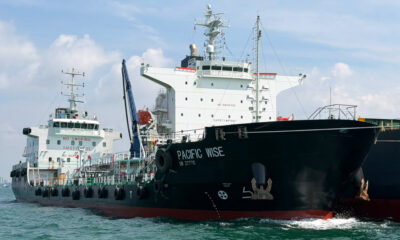
2017 has been a turning point for the Singapore bunkering industry due to mass flowmeters (MFMs), observes the Executive Director of Singapore accredited bunker supplier Equatorial Marine Fuel Management Services (EMF).

'MFM is more than just MFM; it is symbolic of the paradigm shift in bunker: We are moving towards a more transparent era which values traceability and accountability,’ said Choong Zhen Mao at IBIA Annual Convention 2017.

‘At the end of the day a lot of it is down to cost; if you know the cost, then you know what you are doing and in this kind of market you have to ask yourself where are you going to position yourself and what are you going to do as a supplier?

‘Now more than ever, service differentiates you from another supplier and I think over the last few months we have seen a few people who have decided that this market is no longer for them.

‘Of course, some companies cannot fulfil that kind of criteria and have decided that this is not their market anymore and move onto something else or do something different.

‘The ROI [return on investment] for EMF is still making sense for the company.’

He also observed an increasing focus on compliance within the Singapore bunker sector in 2017.

‘This year has been a watershed in terms of enforcement,’

‘We are quite pleased that the Maritime and Port Authority of Singapore (MPA) has taken a more proactive approach in enforcing the kind of standards that we have.’

To recap, MPA revoked the bunker craft operator licence of Panoil Petroleum in August; it also decided not to renew the bunker supplier licences of Panoil Petroleum and Universal Energy; the latest is the termination of Transocean Oil’s bunker supplier and bunker craft operator licences in November.

This means three, out of Singapore’s top ten bunker suppliers by volume, had licences removed in 2017. The Singapore market officially started MFM bunkering operations for fuel oil this year.

Incorporated in 2000, EMF is a MPA accredited physical bunker supplier. The company currently owns and operates a fleet of 13 bunker tankers, averaging a monthly bunker delivered volume of between 330,000 to 350,000 metric tonnes. It is the seventh largest bunker supplier by volume at Singapore port in 2016.

Photo credit: Freeimages.com/Mark Normand

Continue Reading

Alternative Fuels

Towngas pushes for green methanol commercialisation under Hong Kong’s Five-Year Plan

Towngas recommends making full use of Hong Kong’s advantages as an international hub by improving port facilities for green methanol bunkering.
Admin

Published

on

By

Towngas pushes for green methanol commercialisation under Hong Kong's Five-Year Plan

The Hong Kong and China Gas Company (Towngas) on Tuesday (4 August) has called for the Hong Kong government to boost the city’s green methanol bunkering capabilities as part of its first Five-Year Plan covering 2026 to 2030.

The company submitted its recommendations during the government’s public consultation on the plan, proposing measures to support low-carbon shipping in Hong Kong.

Among its key recommendations, Towngas proposes making full use of Hong Kong’s advantages as an international hub by improving port facilities for green methanol bunkering.

The company also urged the government to accelerate the commercialisation of green methanol and take the lead in developing an internationally aligned certification system for green fuels. 

Beyond green methanol, it also proposes establishing a new mechanism for trading green commodities, as well as expanding innovative financial instruments such as green infrastructure REITs, thereby consolidating Hong Kong’s position as a green finance and trading centre.

The recommendations form part of a broader package covering green energy transition, innovation and technology, and green finance, aimed at aligning Hong Kong’s development with China’s 15th Five-Year Plan while supporting the city’s long-term economic and environmental objectives.


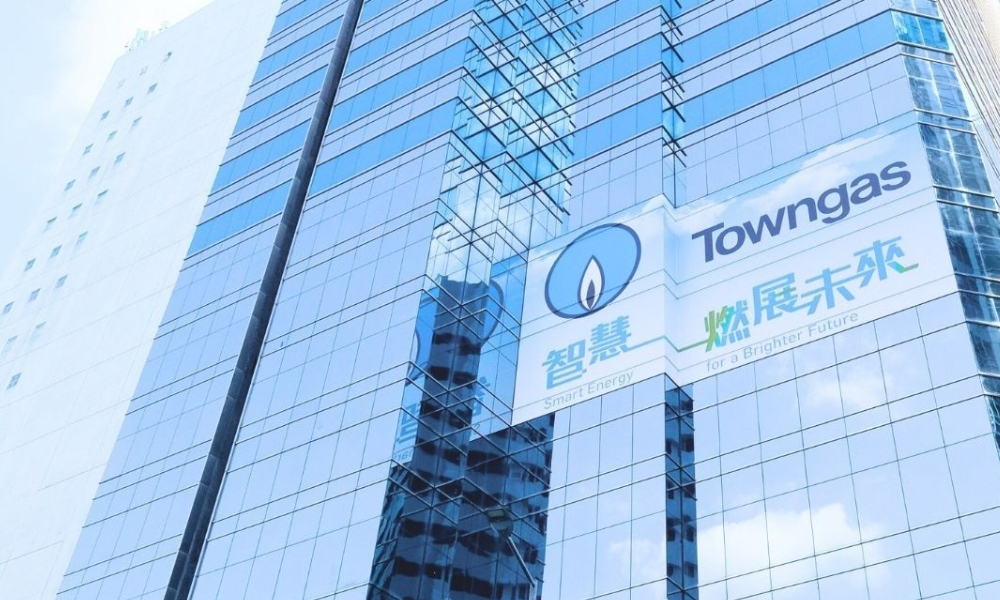
Photo credit: Hong Kong and China Gas Company
Published: 5 August, 2026

Continue Reading

Business

ZEMBA to join Center for Green Market Activation from 1 September

During its next phase of ZEMBA’s strategy, it is focused on continuing to drive innovation and economies of scale that enable deep decarbonisation in maritime transport.

Admin

Published

on

By

RESIZED CHUTTERSNAP on Unsplash

Zero Emission Maritime Buyers Alliance (ZEMBA) on Tuesday (4 August) said it will transition to become a programme of the Center for Green Market Activation (GMA) on 1 September, after three years of incubation at the Aspen Institute. 

With two completed tenders that delivered three new ultra-low-carbon fuel pathways into the maritime market and nearly 40 multi-year contracts to date, ZEMBA is focused on its next phase of scaling impact and expanding opportunities for companies to address Scope 3 transportation emissions. 

“We are deeply grateful to the Aspen Institute Energy and Environment Program for its leadership and commitment to market-based sustainable solutions,” said Ingrid Irigoyen, President and CEO of ZEMBA. 

“The Institute’s support as an administrative home during our start-up phase was tremendously successful. Now, ZEMBA is ready for the next step in our evolution, which is why we are seizing the opportunity to create multiplier effects and efficiencies across a range of hard-to-abate sectors by joining an organization specifically created for that purpose.” 

ZEMBA’s CEO and core procurement staff will transition to GMA to ensure continuity of program leadership and operations. In addition to having provided key technical support for ZEMBA since 2023, GMA is working to scale the adoption of low-carbon goods and services within a number of high-emitting industries such as aviation, trucking, cement and concrete, and chemicals. 

This transition will enable companies to participate in a coordinated suite of interventions across hard-to-abate sectors and transport modes, supported by shared infrastructure, consistent procurement approaches, and cross-sector learnings. 

ZEMBA is developing new ideas to scale impact, expand fuel and technology pathways, and engage a broader set of stakeholders worldwide. 

During this next phase of ZEMBA’s strategy, it is focused on continuing to drive innovation and economies of scale that enable deep decarbonisation in maritime transport. 

“ZEMBA looks forward to engaging stakeholders across the value chain in the coming months as it charts a course toward a sustainable future for ocean shipping,” it added.


Photo credit: CHUTTERSNAP on Unsplash
Published: 5 August, 2026

Continue Reading

Technology

ZeroNorth debuts new agentic AI partner for maritime operations

Propel will ultimately operate across voyage, vessel and fuel workflows, monitoring operations continuously, and handling actions within the boundaries operators define.
Admin

Published

on

By

ZeroNorth debuts new agentic AI partner for maritime operations

Maritime technology solutions provider ZeroNorth on Tuesday (4 August) introduced Propel by ZeroNorth, a new agentic AI partner for maritime operations. 

Propel uses AI agents to take action on repetitive manual tasks in operations, freeing operators to focus on decisions that require their judgement.

The launch comes as shipping faces growing operational complexity from geopolitical disruption, regulatory change and volatile fuel prices. Operators coordinate decisions across multiple vessels and disconnected systems, and better coordination can compound into meaningful time and fuel savings across a fleet.

At the same time, agentic AI is now making it possible for software to move beyond insight and recommendation. It can understand intent, respond to changing conditions and help carry out work across complex operational processes. Propel is designed to do exactly that.

Today, Propel takes on repetitive manual tasks related to voyage optimisation that were previously handled by operators. It generates a voyage plan, manages the communication with the master, incorporates feedback into the plan and updates it, while keeping the operator in the loop throughout.

It is always on duty and responds as conditions change, helping operators act sooner on voyage opportunities while saving hours of manual coordination across organisations’ operations teams and fleets.

The voyage optimisation agent has been in use by ZeroNorth’s Professional Services team over the past three months and ZeroNorth is now giving early-access to key customers Cargill, Ultrabulk and CMB.TECH.

New agents will be released on an ongoing basis. ZeroNorth is testing each new capability with its partners so Propel is shaped by real operational conditions across different shipping segments from the start. Propel will ultimately operate across voyage, vessel and fuel workflows, monitoring operations continuously, and handling actions within the boundaries operators define. Wider commercial availability is planned for later in 2026.

Søren Andersen, CEO of ZeroNorth, said: “Our ambition with Propel is to help change the way shipping works by changing what technology can do inside maritime operations. There is immense potential to move towards operations that are more connected, continuous and precise, where technology takes on more of the coordination work and people can focus their judgement where it creates the greatest value.”

“Cargill, Ultrabulk and CMB.TECH were among our very first customers and helped build ZeroNorth from the beginning. Now, they are partnering with us again to shape what comes next for shipping. Their experience will be invaluable in ensuring that Propel is grounded in the realities of the industry today, while helping transform how maritime operations work tomorrow.”


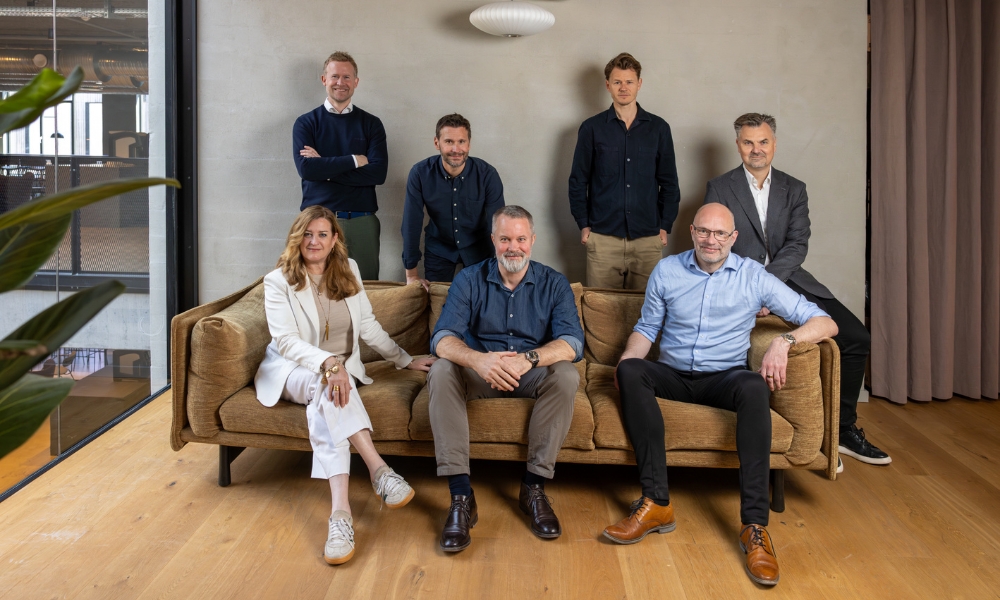
Photo credit: ZeroNorth
Published: 5 August, 2026

Continue Reading

Trending