Connect with us

Alternative Fuels

接收“Pearl Khaoyai”轮,Consort Bunkers将以IMO 2型新油轮迎向IMO 2030/2050年目标

Admin

Published

on

Pearl Khaoyai 1

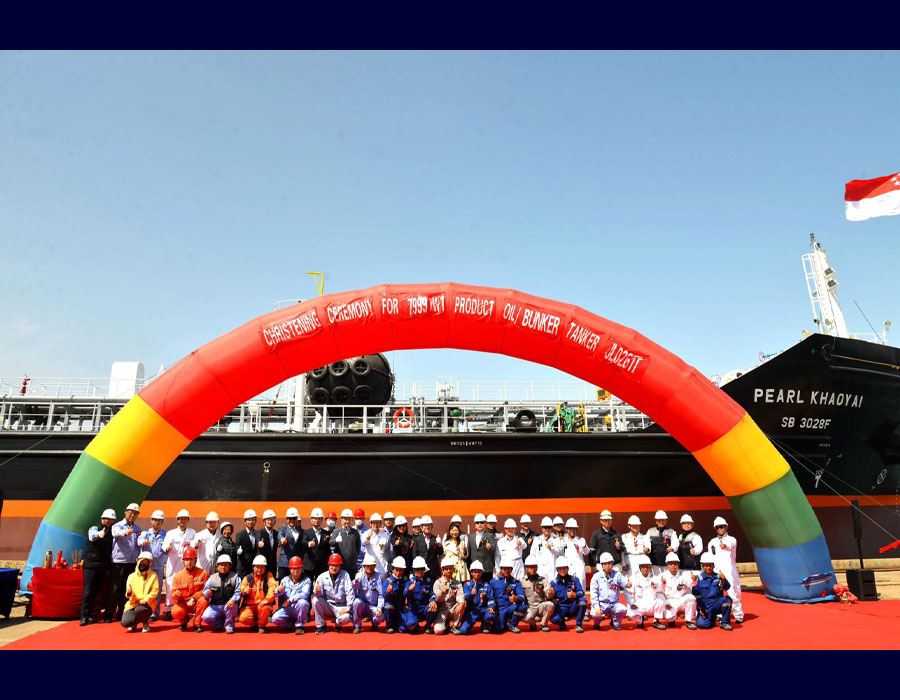
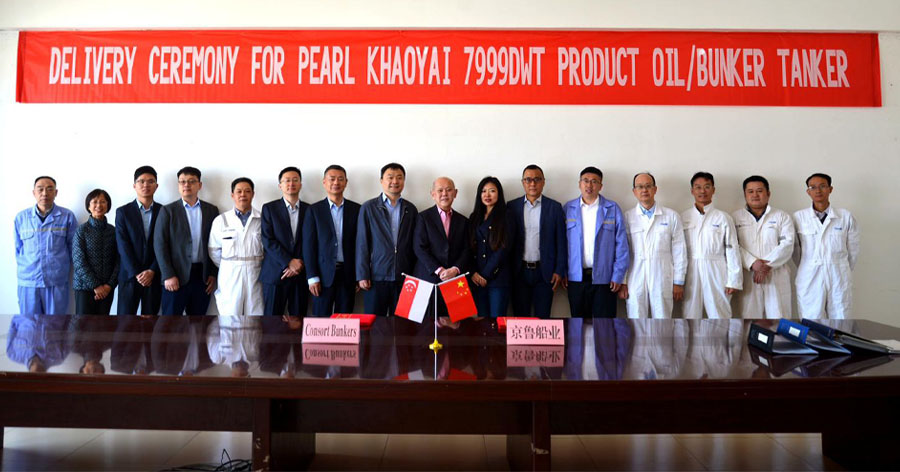
周二(4 月 18 日),新加坡燃油与物流服务提供商Consort Bunkers Pte Ltd从中国山东省的京鲁船业(蓬莱中柏京鲁船业有限公司)接收了“Pearl Khaoyai”轮。

Consort Bunkers创始人杨肃敬(SK Yeo)先生告诉《满航时报》,这艘悬挂新加坡国旗的7,999 载重吨加油船是2020年该公司订购的七艘“K”系列加油船中的第三艘,将被部署于Maersk Oil Trading的海上加油业务。

“我们‘K’系列加油船的最后一艘将升级IMO 2型化学品油轮,以部署在面向未来的加油业务,并涵盖传统船燃类以及绿色替代船燃,如生物燃料和甲醇。”杨先生分享道。

“预计,这艘船将在2024 年第一季度交付;其中,Consort Bunkers 将成为先行运营此新建IMO 2 型油轮的新加坡燃料供应商之一,并于当地提供服务。”
Pearl Khaoyai 2

借此机会,杨先生表示,作为Consort Bunkers 船队更迭计划的一部分,Consort Bunkers 也在4月初向招商局金陵船舶(南京)有限公司订购了6艘6,500载重吨的IMO 2型油轮。

这一批6,500 载重吨的新船除了能够提供各种常规船用燃料,也可以提供包含生物燃料和甲醇在内的可持续绿色燃料。

“这六艘船都属于我们的‘L’系列油轮,将于2024年至2025年之间陆续交付。”他指出,并解释,这些最新订购的升级版IMO 2型油轮将能够在即将来临的IMO 2030目标框架下提供加注服务。

“生物燃料和甲醇是当今被预测可能帮助航运业向IMO 2030/2050脱碳目标推进的替代燃料之一,同时,也都属于化学品类,其运输必须依靠配备不锈钢或涂层管道、涂层罐等其他特性的化学品油轮,以确保能够符合相关的安全规定。

“因此,我们推进航运脱碳的理念,也促成了我们决定委托金陵船厂建造新型的加油船;而这也与MPA(新加坡海事及港务管理局)去年发布的《新加坡海事脱碳蓝图》步伐一致。

“另外,我们也注意到,MPA已引入一项有关生物船燃规格的临时国家标准 (WA 2:2022),因此,我们在致力于推出新的IMO 2 型油轮时也考量了这一因素。”

展望未来,杨先生分享道,Consort Bunkers 将把2018 年建竣的“Pearl Mercury ”轮和2019年建竣的“Pearl Majestic”轮分别出售给欧洲和中东买家;这两艘8,000 载重吨的船舶是该公司2016 年向一家中国造船厂订购的七艘“M”系列船的其中姊妹船。

“从 2016 年至今 [2023 年],能够运载常规船燃的新建加油船成本已经上涨了30-40%。”杨先生发表其个人洞见。

“根据我们最新的[‘L’ 系列新造船订单] 信息,与当前的新造传统油轮价格相比,新型IMO 2型油船还得面对额外15-20% 的建造成本溢价。”

2022 年,在MPA的年度船用燃油供应商排行榜上,Consort Bunkers排名第18 位(2021 年的排名为第20 位)。

相关文章Singapore: Consort Bunkers welcomes first of seven 7,999 dwt ‘K’ series newbuild bunker tankers to bunkering fleet
相关文章Consort Bunkers acquires five bunker tankers in Q4; orders up to seven more newbuilds from China
相关文章Consort Bunkers takes productivity to new levels with latest fleet expansion
相关文章MPA blueprint prepares marine fuels sector for multi-fuel bunkering transition
相关文章Singapore: MPA maritime decarbonisation blueprint sets target for bunkering sector
相关文章MPA: Singapore bunker tanker fleet expected to run on net zero fuels by 2050
相关文章Singapore: MPA develops framework to support biofuel bunker fuel deliveries
相关文章Exclusive: Estimated marine fuel sales figures of Singapore top 10 bunker suppliers by volume in 2022

照片来源:Consort Bunkers
发布日期:2023 年 4 月 20 日

Continue Reading

Biofuel

South Korea: S-Oil launches B30-VLSFO bio bunker fuel supply

Company says it has established an integrated operating system in the Ulsan region covering the entire value chain, from feedstock procurement and blending to supply.
Admin

Published

on

By

South Korea: S-Oil launches B30-VLSFO bio bunker fuel supply

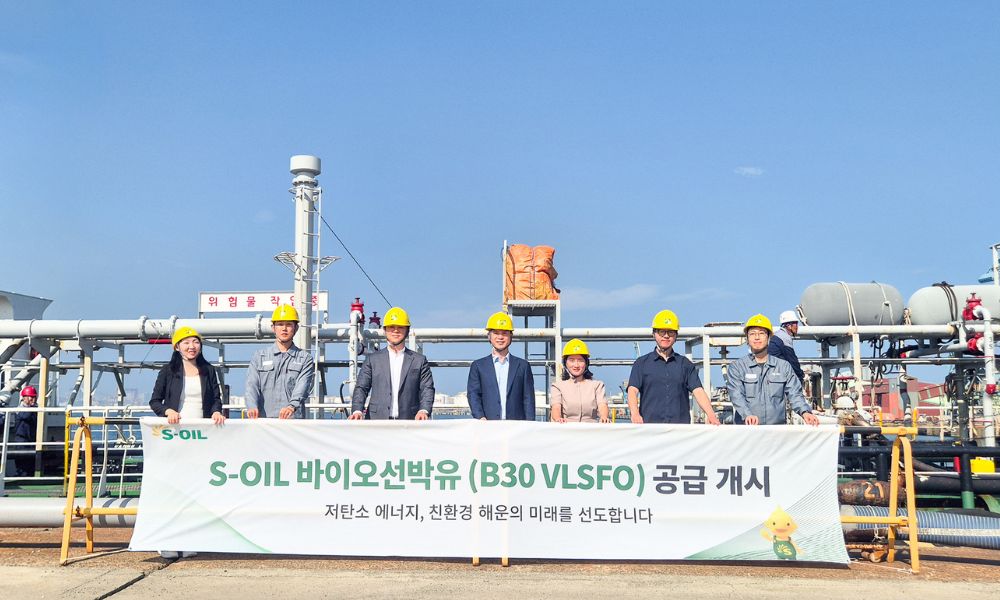
South Korean petroleum and refining company S-Oil on Wednesday (22 July) said it has started supplying B30 very low sulphur fuel oil (VLSFO), as the company seeks to support shipping’s decarbonisation efforts and growing demand for lower-carbon bunker fuels.

The company said its B30 VLSFO contains 30% sustainable biofuel blended with conventional VLSFO and can be used without requiring modifications to existing vessels, enabling shipowners to comply more readily with emissions regulations from the International Maritime Organization (IMO) and the European Union (EU).

S-Oil said it has established an integrated operating system in the Ulsan region covering the entire value chain, from feedstock procurement and blending to supply. The system combines VLSFO produced at its Onsan refinery with biofuel production facilities and storage infrastructure in the Ulsan region, allowing the entire process to be carried out within a single logistics hub.

According to the company, the integrated supply chain reduces transportation requirements during production while improving supply efficiency and reliability.

S-Oil also highlighted Ulsan Port as a strategic location for marine biofuel supply, noting the port has strong demand for bio-bunker fuels, particularly from car carriers, enabling prompt and stable deliveries to key customers.

An S-Oil official stated: “In the bio-marine fuel market, not only product quality but also securing a stable supply of raw materials and an efficient supply system are important competitive advantages.

“Based on our existing bunkering business capabilities and the excellent supply infrastructure in the Onsan area, we plan to supply stable and competitive low-carbon fuel.”


Photo credit: S-Oil
Published: 23 July, 2026

Continue Reading

Bunker Fuel

Antwerp-Bruges biofuel bunker sales drops 36% on year in Q2 2026, LNG down 13.4%

Biofuel recorded 26,833 mt in Q2 2026 with 41,939 mt recorded in the same period the year before while port data showed 76,513 mt of LNG being delivered in Q2 2026, down from 88,328 mt.
Admin

Published

on

By

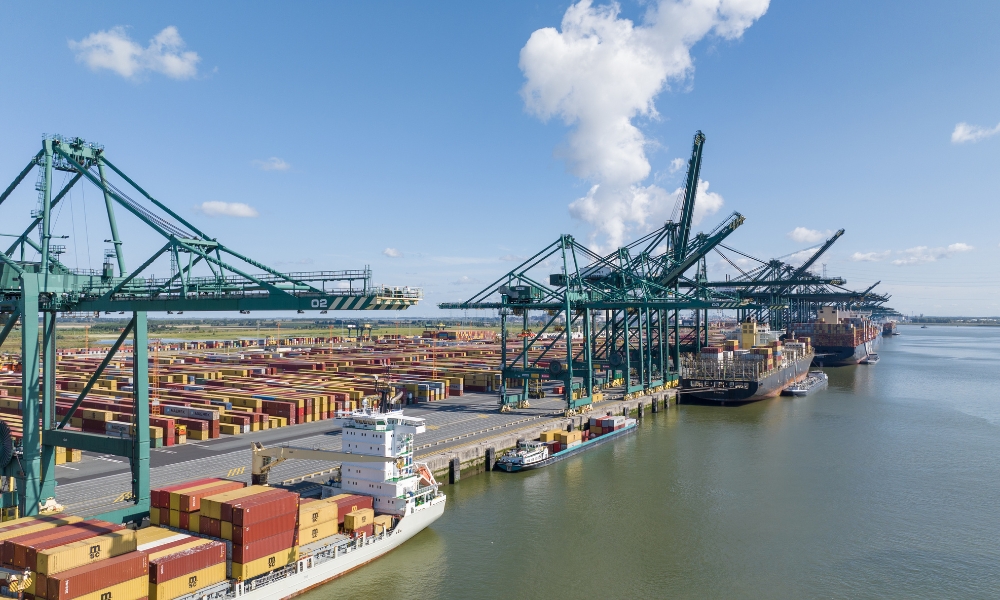
Port of Antwerp-Bruges, Deurganck Dock

The Port of Antwerp-Bruges recently published bunker fuel sales data for the second quarter (Q2) of 2026.

Total bunker sales at the port was 2.05 million metric tonnes (mt) in Q2 2026, compared to sales of 1.99 million mt (+3%) during the similar period in 2025.

Deliveries of ultra low sulphur fuel oil, very low sulphur fuel oil, high sulphur fuel oil and marine gas oil in Q2 2026 (against on year) recorded respectively 164,987 mt (+43.6%  from 114,917 mt), 537,926 mt (+12.8% from 476,746 mt), 659,182 mt (+11.6% from 590,544 mt) and 366,329 (-15.7% from 434,766 mt).

Biofuel recorded 26,833 mt in Q2 2026 with 41,939 mt (-36%) recorded in the same period the year before. 

Port data showed 76,513 mt of liquefied natural gas (LNG) being delivered as a marine fuel in Q2 2026, down by 13.4% from 88,328 mt in Q2 2025. Meanwhile, there has been no deliveries of methanol at the port for the year so far.

Related: Antwerp-Bruges biofuel bunker sales plunge 50.6% on year in Q1 2026, LNG soars 214%


Photo credit: Port of Antwerp-Bruges
Published: 23 July, 2026

Continue Reading

Methanol

World Fuel and partners complete first green methanol bunkering of car carrier in Shanghai

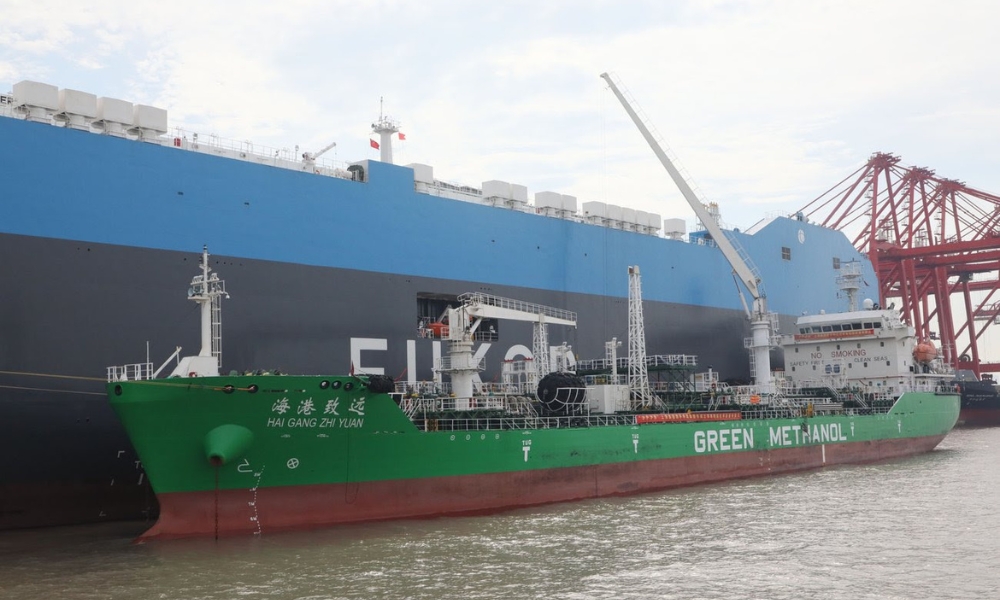
Operation involved the delivery of approximately 2,800 MT of green methanol to “Arctic Tern” via a ship-to-ship transfer using SIPG Energy’s dedicated methanol bunkering vessel “M/V Hai Gang Zhi Yuan”.
Admin

Published

on

By

World Fuel and partners complete first green methanol bunkering of car carrier in Shanghai

Marine fuel provider World Fuel on Tuesday (21 July) said it successfully completed the first green methanol bunkering of M/V Arctic Tern, with EUKOR Car Carriers and SIPG Energy at the Port of Shanghai. 

Arctic Tern is the first vessel in the new Shaper Class series of car carriers. 

The operation involved the delivery of approximately 2,800 MT of green methanol to Arctic Tern via a ship-to-ship transfer using SIPG Energy’s dedicated methanol bunkering vessel M/V Hai Gang Zhi Yuan, the largest vessel of its kind in operation. 

The bunkering operation was carried out at Haitong Terminal, Waigaoqiao Port Area, Shanghai Port, with cargo handling operations conducted simultaneously during bunkering.

This marks EUKOR Car Carriers’ first green methanol operation and the first time Arctic Tern has bunkered methanol since its delivery on 9 July. The operation marked the first bunkering at Shanghai Port of green methanol produced locally in Shanghai for an international PCTC operator. 

It also demonstrated the city’s integrated green methanol value chain, spanning local production, storage and bunkering, and established a replicable “Shanghai Model” for green methanol supply.

World Fuel arranged the supply and delivery of the fuel on behalf of EUKOR Car Carriers, working with SIPG Energy as the physical supplier at the Port of Shanghai.

The green methanol supplied was produced from municipal solid waste, ISCC-EU certified, and had a carbon intensity value below 25 gCO₂e/MJ.

Arctic Tern is the first of fourteen Shaper Class vessels ordered by Wallenius Wilhelmsen. With a capacity of 9,300 car equivalent units and methanol dual-fuel capability, the vessel will be operated by EUKOR Car Carriers, jointly owned by Wallenius Wilhelmsen and Hyundai Motor Group. Following her first green methanol bunkering, Arctic Tern will continue her maiden voyage from Asia to Europe.

Xavier Leroi, COO Shipping Services at Wallenius Wilhelmsen and CEO of EUKOR Car Carriers, said: “Completing Arctic Tern’s first green methanol bunkering shortly after delivery is a significant milestone towards our decarbonisation ambition for both EUKOR Car Carriers and Wallenius Wilhelmsen. It demonstrates how investments in next-generation vessel technology and fuel flexibility are being translated into real-world operations. 

“This achievement reflects the strong collaboration between all parties involved. Together, we have shown how partnerships across the maritime value chain can help make lower-emission fuels available and operationally viable at scale.”

Mark Tamsitt, SVP Global Marine Sales at World Fuel, said, “The first bunkering event with a new fuel is a significant moment for any shipowner, and our role is to make it as seamless as possible. By connecting EUKOR Car Carriers with SIPG Energy’s proven green methanol capability at the Port of Shanghai, we were able to deliver on reliable supply, fuel quality, and safe processes. As more of our customers bring methanol dual-fuel tonnage into service, we are committed to being the partner that makes these kinds of operations routine.”

Mr. Zhang Da, General Manager of SIPG Energy, said, “Welcoming Arctic Tern to the Port of Shanghai for her first green methanol bunkering demonstrates the strength and maturity of our supply capability. Building on our well-established methanol ship-to-ship bunkering services for container vessels, we have already extended such services to pure car and truck carriers (PCTCs). This bunkering sets a new record for the largest single SIMOPs green methanol bunkering for PCTCs in China, marking another step in building Shanghai’s position as a global green energy hub for international shipping.”

This operation follows Wallenius Wilhelmsen’s announcement on 9 July that Arctic Tern would complete her first methanol bunkering shortly after delivery. The vessel entered service on routes between Asia and Europe immediately following handover from China Merchants Jinling Shipyard in Nanjing.


Photo credit: World Fuel
Published: 22 July, 2026

Continue Reading

Trending