Connect with us

LNG Bunkering

Wärtsilä: LNG marine fuel gets a push in the United States

Initiatives slowly setting the ball rolling on LNG as a major, viable source of marine fuel for the country.

Admin

Published

on

5c2c5a1d7291d 1546410525

The following ‘LNG marine fuel gets a push in the United States’ article was first published on the Wärtsilä magazine Twentyfour 7 in late 2018:

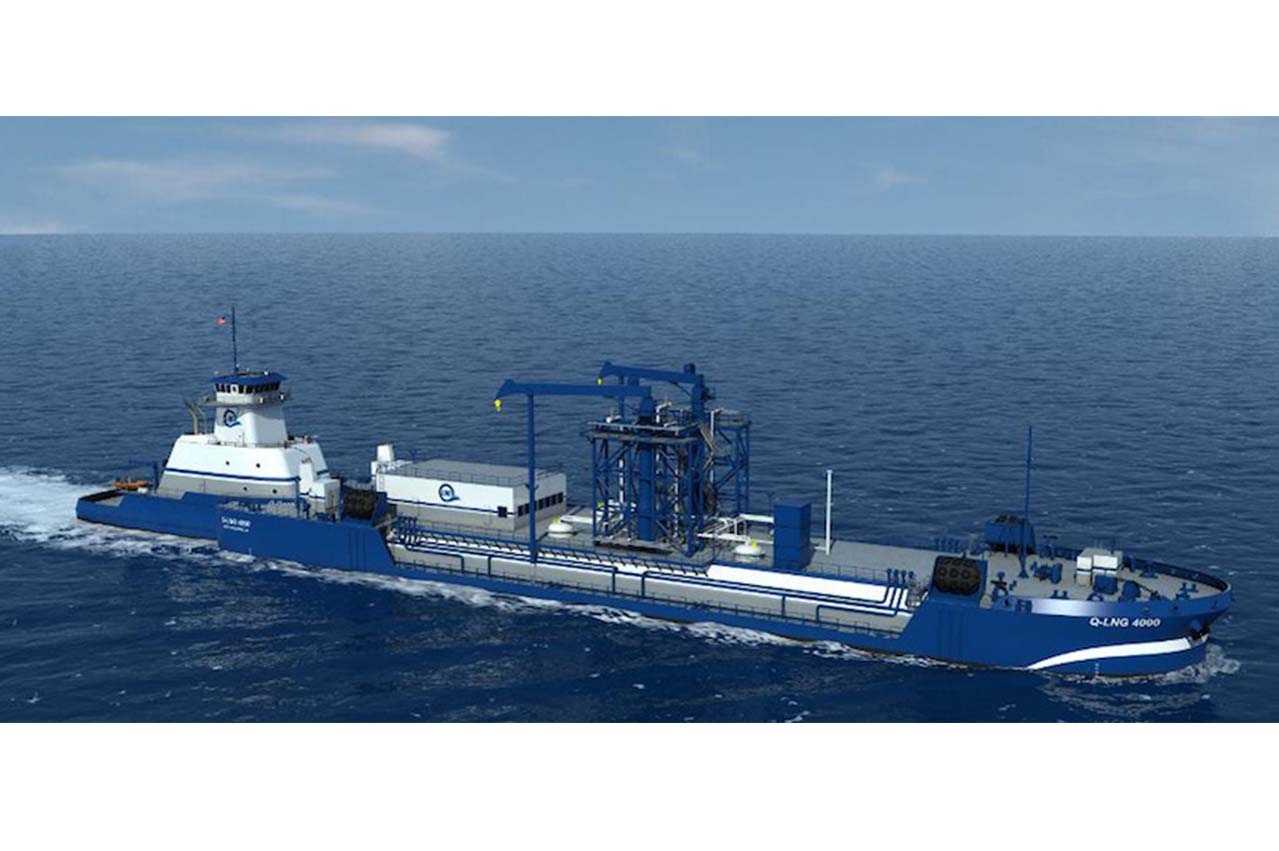
In November last year, energy supermajor Shell Global, Q-LNG, VT Halter Marine and Wärtsilä began work on an articulated tug barge (ATB). This, one commitment, managed two feats. One, Shell will soon be able to supply LNG fuel to cruise ships along the entire eastern coast of the US. More importantly, it has reaffirmed that LNG is quickly gaining a foothold as the future choice of fuel for the US marine industry.

“LNG has been developing in the Far East and Europe for some time. The development in the US has been lagging, the main reason being the lack of a reliable transportation link. The big question has always been – how am I going to get this fuel? The Q-LNG ATB is the missing link in the chain,” says Bill Amundsen, Sales Manager for Marine Solutions at Wärtsilä.

“It answers the question of where ship owners / operators are going to get the fuel. It provides a transport link from the liquefaction plant to the ship receiving the LNG, and therefore increases the viability of LNG as a fuel source,” he explains.

Shell will be taking the 4000 cubic metre ATB on long-term charter from Q-LNG. The LNG bunker barge fitted with LNG products and solutions from Wärtsilä is one in a host of recent initiatives seeking to solve the logistics and infrastructure challenges that have hindered the adoption of LNG as a marine fuel in the country.

In fact, commitments to using LNG as a marine fuel have increased in the United States in the past few years. In 2016, for example, Harvey Gulf International Marine, inaugurated its first LNG fuelling terminal in Port Fourchon, Louisiana that will service the Gulf of Mexico region. In another case, Eagle LNG, a bulk LNG provider, seeks to construct an LNG liquefaction facility in Jacksonville, Florida, from where ExxonMobil intends to supply fuel to vessels.

“I believe there is enough movement in the global market and in the use of LNG as a marine fuel today to propel people into making commitments more regularly. They’re now willing to make a capital investment because the market seems to be moving in that direction,” says Chad Verret, President of Q-LNG, and Chairman of the Board for industry body, SGMF.

So, what exactly is moving the market in this direction?    
 
Factoring in regulations and cost benefits

A key aspect is the looming International Maritime Organization (IMO) emission deadline in 2020. The IMO has set a stringent 0.5% sulphur cap on emissions from marine fuel as compared to the current 3.5%. While vessels can continue running on traditional fuel oils by employing scrubbers or exhaust gas cleaning systems, ship owners are switching to LNG instead.

“Ultra-low sulphur diesel (ULSD) is going to be very expensive because starting in 2020, the demand will increase, but the supply will be restricted as there are only so many refineries in the world that can produce it. While the price of ULSD is going to go up, at the same time, natural gas in North America is going to remain relatively flat since we have this huge amount of supply already. So we’re going to see diverging curves between the price of LNG and ULSD,” says Amundsen.

This could play out in LNG’s favour.

“The favourable cost differential plus the superior environmental factors will lead to increased demand for LNG in the North American market space. It’s a practically sulphur-free, clean, well-proven technology, easy to burn, and can lower engine maintenance costs. All of these factors make LNG much more viable as a marine fuel,” Amundsen adds.

In addition, with the help of right technology, LNG emits about 90% fewer nitrogen oxide emissions than conventional HFOs, according to industry coalition SEA/LNG. Its sulphur oxide and particulate matter emissions are next to zero, further making its case.  
  
Reduced tolerance towards pollutants

In the United States, particularly, there has also been movement on ground for the use of LNG.

In California (considered to have the worst air quality in the nation), the California Air Resources Board (CARB) has imposed a 0.1% sulphur cap on vessels operating within 24 nautical miles of its coast. In another instance, two of the busiest ports in the country, Long Beach and Los Angeles announced a USD 14 billion anti-smog plan primarily aimed at cutting greenhouse gas emissions by 80% by 2050.

“There is definitely a growing demand for LNG-powered vessels in the country. If you look at Hawaii, Pasha will be adding an LNG-powered container ship to its fleet. So yes, I believe that once there is a better understanding of the demand load in the West Coast (California especially), companies will start to put that infrastructure in place,” says Verret.

The US energy department predicts that LNG production in the country will quadruple by 2019, making it the third largest supplier of LNG in the world.

The current demand for LNG in the US stems from offshore supply vessels, container ships and passenger cruise vessels. Currently, there 13 vessels operating in the US run on LNG, with 15 more in the pipeline. Looks like there is no stopping the LNG wave.

Source and photo credit: Wärtsilä
Published: 2 January, 2019


Continue Reading

LNG Bunkering

Singapore-based EPS takes delivery of three LNG dual-fuel bulk carriers

Three vessels are the third, fourth and fifth in the company’s series of 14 Newcastlemaxes being built at the yard, and were delivered five months ahead of their contracted delivery dates.
Admin

Published

on

By

35

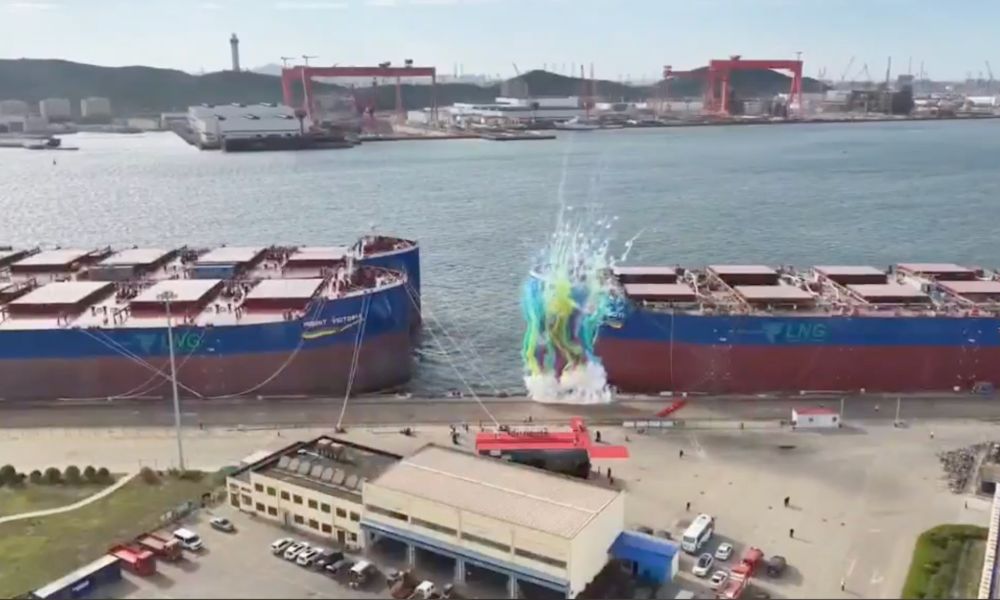
Singapore-based Eastern Pacific Shipping (EPS) on Friday (4 September) announced the naming and delivery of three new LNG dual-fuel Newcastlemax bulk carriers from China’s Qingdao Beihai Shipbuilding. 

Cyril Ducau, CEO of EPS, said the vessels were named Mount Victoria, Mount Yulong and Mount Wuyi

The three vessels are the third, fourth and fifth in the company’s series of 14 Newcastlemaxes being built at the yard, and were delivered five months ahead of their contracted delivery dates.

“A big thank you to CSSC Group and Qingdao Beihai Shipbuilding, working alongside our EPS team, for the tremendous collaboration and commitment behind this achievement,” Ducau said in a social media post.  


Photo credit: Eastern Pacific Shipping
Published: 7 September, 2026

Continue Reading

LNG Bunkering

LR awards AiP to CSSC Huangpu Wenchong for 12,500 m³ LNG bunker vessel design

Vessel design incorporates Type C LNG cargo tanks and has been evaluated against a range of class notations covering gas operations, automation, environmental performance and cyber resilience.
Admin

Published

on

By

33

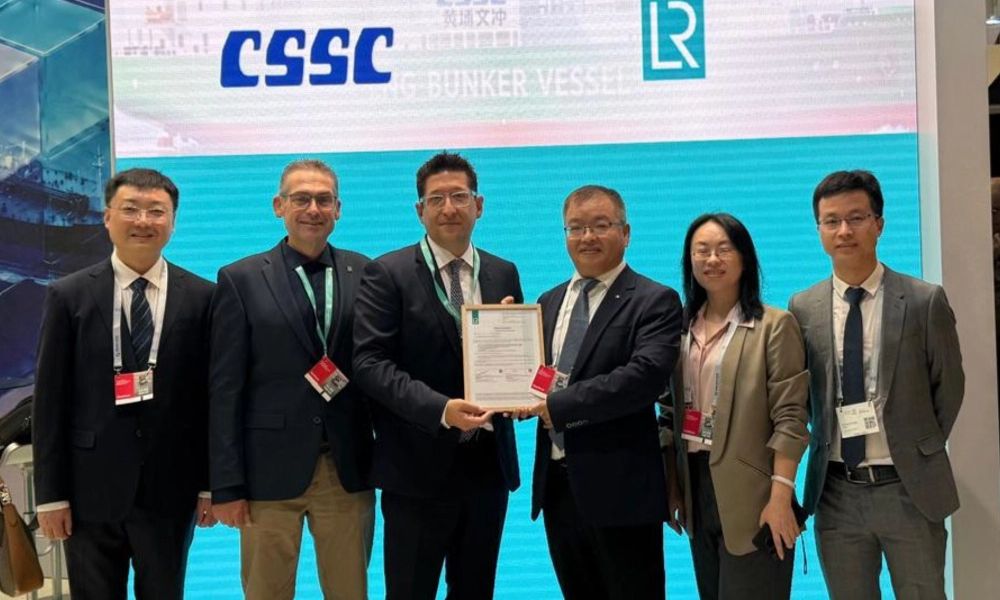
Classification society Lloyd’s Register (LR) on Thursday (3 September) said it has awarded Approval in Principle (AiP) to CSSC Huangpu Wenchong Shipbuilding Co., Ltd. for a new 12,500 m³ LNG bunkering vessel design.

The AiP was signed at SMM 2026 in Hamburg and confirms that the vessel concept has successfully completed an independent design assessment against LR’s latest classification requirements.

The new 12,500 m³ vessel design incorporates Type C LNG cargo tanks and has been evaluated against a comprehensive range of class notations covering gas operations, automation, environmental performance and cyber resilience.

LR’s assessment was carried out in accordance with its Rules and Regulations for the Classification of Ships and Rules and Regulations for the Construction and Classification of Ships for the Carriage of Liquefied Gas in Bulk.

Constantinos Chaelis, LR’s Global Gas Segment Director, said: “This project demonstrates the continued market confidence in LNG and the importance of building the supporting infrastructure that enables owners to make practical emissions reductions today, while maintaining flexibility for the future. Through early engagement between shipyard and class, we can accelerate the delivery of robust designs that meet both operational and regulatory requirements.”

A Huangpu Wenchong spokesperson, said: “This Approval in Principle from Lloyd’s Register validates the technical approach and provides a strong foundation for future development. We believe vessels of this type will play an increasingly important role in supporting the energy transition by helping ensure LNG is available where shipowners need it most.”


Photo credit: Lloyd’s Register
Published: 7 September, 2026

Continue Reading

Alternative Fuels

Yang Ming orders six LNG dual-fuel, ammonia-ready containerships from Hanwha Ocean

Each of the six new vessels will have a capacity of up to 13,650 TEU and feature LNG dual-fuel propulsion and Ammonia Fuel Ready specifications.
Admin

Published

on

By

Yang Ming orders six LNG dual-fuel, ammonia-ready containerships from Hanwha Ocean

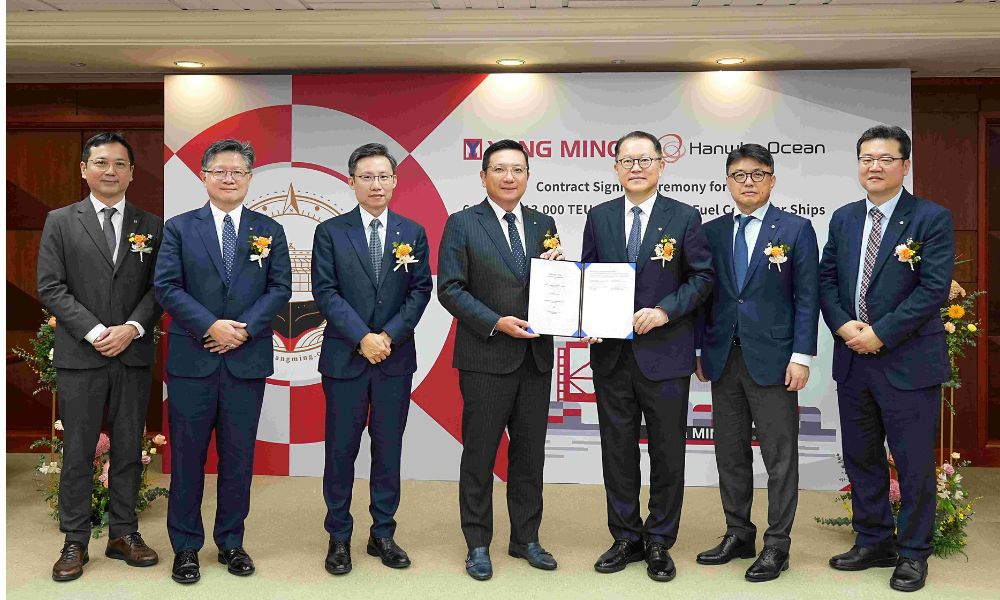
Taiwanese shipping firm Yang Ming Marine Transport Corporation (Yang Ming) and South Korean shipbuilder Hanwha Ocean on Wednesday (2 September) signed a shipbuilding contract for six 13,000 TEU class LNG dual-fuel container vessels. 

The contract was signed by Dr. Chuck Tsai, Chairman of Yang Ming, and Mr. Charles Kim, CEO of Hanwha Ocean. The vessels are scheduled for delivery between 2028 and 2029. 

They will complement Yang Ming’s existing fleet of 10,000+ TEU vessels and serve as key vessels on East-West services, with deployment flexibility across trade lanes connecting Asia with the East and West Coasts of North America, South America, and the Mediterranean. 

Each of the six new vessels will have a capacity of up to 13,650 TEU and feature LNG dual-fuel propulsion and Ammonia Fuel Ready specifications.

“As Yang Ming transitions toward net-zero emissions, LNG provides a relatively mature and economically viable alternative fuel solution, capable of reducing greenhouse gas emissions by approximately 20%,” the company said. 

“At the same time, ammonia can serve as a carbon-free fuel by utilising converted LNG storage facilities, while offering relatively lower conversion costs and comparatively well-developed supply chains and infrastructure. The Ammonia Fuel Ready design will therefore provide Yang Ming with greater flexibility in responding to increasingly stringent international regulations on greenhouse gas emissions.”

In addition, the vessels will be equipped with Type B LNG fuel tanks with a design pressure of 1.0 bar to enhance the safety and efficiency of LNG operations, together with a range of energy-saving technologies, including Wind Shields, Rudder Bulbs, Pre-Swirl Stators, and Shore Power Systems. Smart ship technologies and cybersecurity protection features will also be incorporated to enhance operational efficiency, safety, and reliability while effectively reducing fuel consumption and greenhouse gas emissions.

Deliveries under Yang Ming’s next-generation fleet optimization plan commenced earlier this year. By 2030, a total of 24 new vessels are expected to enter service. 

This includes 18 LNG dual-fuel vessels—comprising five 15,500 TEU, seven 16,000 TEU, and the six 13,000 TEU vessels under this contract—alongside six 8,000 TEU methanol dual-fuel-ready ships. 


Photo credit: Yang Ming Marine Transport
Published: 4 September, 2026

Continue Reading
Advertisement

OUR INDUSTRY PARTNERS


Trending