
Business
VLSFO: Back To Where We Started on ‘Day 1’ – What’s Next?
By definition, things can change, but the sentiment today is one of weakening bunker prices in the near term, observes Steve Christy of Integr8 Fuels.


Steve Christy of Integr8 Fuels, the bunker trading and brokerage arm of Navig8, on Wednesday (17 November) published an analysis on recent marine fuel price trends.
VLSFO prices back above $600
When VLSFO was fully introduced in December 2019/ January 2020, Singapore prices were in the range $615-660/mt; so far in November have averaged $620/mt – we are back to where it all started!

Events over the past 22 months are well documented and will be written about for many years to come. The oil industry will be a mere microcosm of all this, but when you are involved in the bunker market these oil industry details become significant.
The collapse in oil demand at the start of the pandemic led VLSFO prices down to around $250/mt. The subsequent cutbacks in OPEC+ crude production, combined with the loss of US crude supplies and the eventual rebound in oil demand have all contributed to the rise in oil prices and the reason why VLSFO has moved back above $600/mt.
The clear question is: Where do we go from here?
Analysts foresee prices falling from here
Some analysts are indicating that we are currently at a peak, and that prices will ease from here. Brent crude futures (front month) hit a high of above $86/bbl in late October and are currently trading around $82/ bbl.
The pointers now are towards $75/bbl in Q1 next year and $70/bbl by Q2. On this basis, it would imply Singapore VLSFO down from around $610/mt currently, to around $565/mt in Q1 and $530/mt by next June.
The fundamentals always ‘win out’
The recent price highs have come about as oil demand continues to rebound and OPEC+ maintain their planned, and constrained increases in production.
Despite some pressure from the US on OPEC+ to go beyond this, there has been no shift in OPEC+ (nor Saudi) policy for countries with spare capacity to raise output in light of current prices. This is despite some member countries producing below their allocated quotas because of previous low prices and a lack of spending in their upstream sectors.
This rise in demand and constraints on supply has left oil stocks at low levels, and markets fundamentally tight. Also, although US crude production is rising in the wake of higher oil prices, the gains are considered relatively low, with a number of upstream companies ‘forced’ to reduce debts or pay shareholder dividends rather than go out on a massive expansion in drilling activity.
The overall result has been that oil demand has exceeded oil supply so far this year, and we have been in an extended period of stockdraws, leaving the market tight and Brent prices well in to the $80s.
The expectations now are that oil supply will continue to increase, even under the current OPEC+ strategy. On the demand side, total consumption is now back close to pre-pandemic levels and so future gains are seen as far more modest, stalling at just above 99 million b/d through to the middle of next year.

We are moving from a position of stockdraws to stockbuilds
This means we would shift from a global stockdraw averaging around 0.7 million b/d this year, to a stockbuild of 0.6 million b/d in the first half of next year. It is this anticipated shift in oil fundamentals that forms the backdrop to lower price forecasts through to the middle of next year.

Subject to change: here are some of the known unknowns
In addition to this ‘base’ position, there is also a possibility of developments and an agreement in the US-Iran nuclear talks, which resume at end November.
The next 6 months may be too soon to see any material increase in oil supplies, but if sanctions on Iran are lifted, the expectations are that they could increase production and exports by 1.0- 1.5 million b/d.
There are clearly a number of other variables that could affect this base case, not least with the pandemic (positive or negative), but also the extent of the northern hemisphere winter; any further demands on oil into power generation; what may happen to US production; and the OPEC+ strategy.
Finally, the economy, high prices and inflation can cause trigger responses, such as a reduction in oil demand and the release of strategic oil reserves (although the use of reserves usually has little long-term effect on oil prices). Any of these factors could lead to analysts changing their views.
Today’s mood is bearish on price
Working within the base case, analysts are indicating Brent prices falling back down to around $70/bbl by the middle of next year, as stocks build and tightness eases.

We have often outlined that the crude price largely sets the absolute level of bunker prices, but with VLSFO and HSFO also having relative strengthening or weaking positions against crude, driven by what is happening in:
- the refining sector with margins and maintenance
- supply and demand developments for other oil products
- or at extremes, even what is happening to natural gas prices (as highlighted in one of our reports last month).
In the first instance here, we have taken a fixed relationship with crude prices, to at least show the extend of bunker price movements based on analysts’ current expectations for Brent. In subsequent reports we will return to looking at the relative shifts in bunker prices versus crude oil and other product prices.
From this, current bunker prices are seen as towards their highs and that some downwards movement is expected. In this case it shows bunker prices will ease back towards levels seen at during the first half of this year, with Singapore VLSFO in the low $500s by the middle of next year. This is around $100/mt lower than today. On the same basis, Singapore HSFO would be around $380/mt by mid-2022.

The relative price of bunkers can easily shift, with any extreme cold weather ‘pulling’ more HSFO into power generation (such as in Pakistan, or in S. Kora/Japan) and giving relative strength to HSFO prices.
Conversely, if global oil demand is stronger than forecast coming out of the northern hemisphere winter, we could expect higher refinery throughputs and more HSFO supplies, putting relative downwards pressure on HSFO prices.
Typically, higher global oil demand would lead to a relative strengthening in VLSFO pricing (and vice versa). These are nuances around the underlying price of bunkers, but still important.
By definition, things can change, but the sentiment today is one of weakening bunker prices in the near term.
Photo credit: Chris Pagan from Unsplash
Published: 18 November, 2021
Technology
Singapore: MPA working with industry on next phase of digital bunkering, says Deputy CE
‘We are now working with industry on the next phase, trialling capabilities to further strengthen the integrity and quality of bunker data shared between stakeholders and MPA,’ says David Foo.

Financial Result
Singapore-based Uni-Fuels H1 2026 net income jumps 1,415% to USD 1.4 million
Company delivered record first-half financial results, achieving its highest first-half revenue, gross profit, income from operations, net income and EBITDA since its inception.

Incident
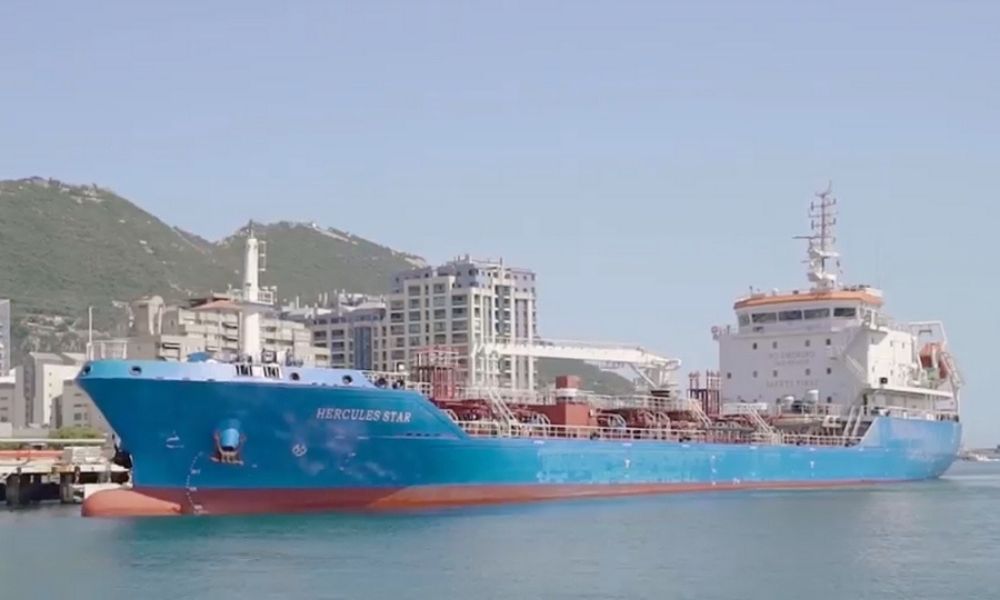
Peninsula confirms one fatality, crew member missing from bunker tanker “Hercules Star”
Firm says one member of the crew is missing following an incident whilst at anchorage off Dubai and a specialist team is working to locate them.

OUR INDUSTRY PARTNERS

Singapore: MPA working with industry on next phase of digital bunkering, says Deputy CE

Singapore-based Uni-Fuels H1 2026 net income jumps 1,415% to USD 1.4 million

Peninsula confirms one fatality, crew member missing from bunker tanker “Hercules Star”

DNV report: LNG bunker fleet may need to more than double by 2030 to meet demand

Burando Energies wraps up first physical bunker operation in Norway

KPI OceanConnect on EUAs: September is the deadline, but strategy is the bigger story

Europe & Africa Fuel Availability Outlook (9 Sep 2026)

China’s bunker market reshaped by tax rebates, trade flows and refining changes, says economist

Rajah & Tann: Bunker disputes are won in the first 48 hours

Singapore: Notices of annual meeting issued for Vroon Shipping Asia and related firms

Malaysia: MMEA detains two vessels over suspected illegal ship-to-ship transfer off Johor

NAPA: Why operational efficiency remains shipping’s golden ticket

Singapore strengthens LNG bunkering framework with new SS 727 standard

Ahti Climate and DNV connect verified emissions data to FuelEU pooling platform
-
 Interview2 weeks ago
China’s bunker market reshaped by tax rebates, trade flows and refining changes, says economist
-
 Bunker Claim1 week ago
Rajah & Tann: Bunker disputes are won in the first 48 hours
-
 Winding up2 weeks ago
Singapore: Notices of annual meeting issued for Vroon Shipping Asia and related firms
-
 Vessel Arrest1 week ago
Malaysia: MMEA detains two vessels over suspected illegal ship-to-ship transfer off Johor
-
 Decarbonisation2 weeks ago
NAPA: Why operational efficiency remains shipping’s golden ticket
-
 LNG Bunkering1 week ago
Singapore strengthens LNG bunkering framework with new SS 727 standard
-
 FuelEU1 week ago
Ahti Climate and DNV connect verified emissions data to FuelEU pooling platform
-

 Alternative Fuels7 days ago
Yang Ming orders six LNG dual-fuel, ammonia-ready containerships from Hanwha Ocean