Connect with us

Ammonia

Trafigura, TFG Marine and CF Industries to advance ammonia as a marine fuel

Trio signed a MoU establishing a framework for the parties to work together on advancing low-carbon ammonia as a marine fuel, supporting the global shipping industry’s emissions-reduction efforts.

Admin

Published

on

Trafigura, TFG Marine and CF Industries to advance ammonia as a marine fuel

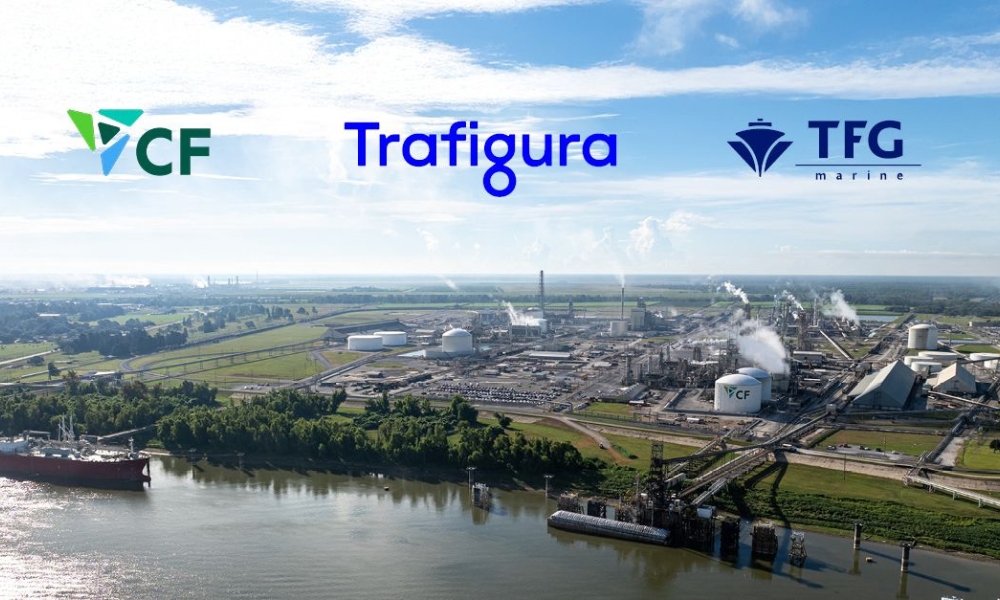
Global manufacturer of hydrogen and nitrogen products CF Industries Holdings, Trafigura and marine fuel supplier TFG Marine on Thursday (15 January) announced the signing of a Memorandum of Understanding (MOU) to facilitate the adoption of low-carbon ammonia as a marine fuel.

Building on the successful collaboration between CF Industries and Trafigura in the shipment of low-carbon ammonia, this agreement establishes a framework for the parties to work together on advancing low-carbon ammonia as a marine fuel, supporting the global shipping industry’s emissions-reduction efforts.

Under the MOU, CF Industries, Trafigura and TFG Marine will collaborate on key initiatives to facilitate the adoption of low-carbon ammonia as a marine fuel, including market development, stakeholder engagement, and bunkering logistics planning. The collaboration will initially focus on the U.S. Gulf Coast and Northwest Europe.

CF Industries will leverage its low-carbon ammonia production and export capabilities at its Donaldsonville, Louisiana, complex. Trafigura will contribute its expertise in commodity logistics and market development, while TFG Marine, a joint venture between Trafigura, Frontline and Golden Ocean Group, will leverage its global marine fuel supply network and bunkering capabilities to support last-mile delivery solutions, coordinate ammonia bunkering demand, and transport ammonia to bunkering hubs globally.

“We are pleased to collaborate with industry leaders such as Trafigura and TFG Marine to establish the supply chain necessary to meet the expected transition of the marine shipping industry to low-carbon ammonia as a fuel,” said Bert Frost, Executive Vice President and Chief Commercial Officer, CF Industries.

“This agreement brings together the critical components needed to advance low-carbon ammonia as a viable marine fuel,” said Patricio Norris, Global Head of Ammonia and LPG at Trafigura. “Through this collaboration with CF Industries and TFG Marine, we are combining world-class production capabilities with our global logistics and bunkering network to support the maritime industry’s transition to cleaner fuels.”

“Our global bunkering infrastructure and operational expertise position us to play a key role in delivering low-carbon ammonia fuel solutions to the shipping industry. This collaboration with CF Industries and Trafigura enables us to develop the supply chain and logistics capabilities needed to make low-carbon ammonia bunkering a commercial reality for vessel operators worldwide,” said Kenneth Dam, Executive Director of TFG Marine.


Photo credit: TFG Marine
Published: 19 January, 2026

Continue Reading

Alternative Fuels

Yang Ming orders six LNG dual-fuel, ammonia-ready containerships from Hanwha Ocean

Each of the six new vessels will have a capacity of up to 13,650 TEU and feature LNG dual-fuel propulsion and Ammonia Fuel Ready specifications.
Admin

Published

on

By

Yang Ming orders six LNG dual-fuel, ammonia-ready containerships from Hanwha Ocean

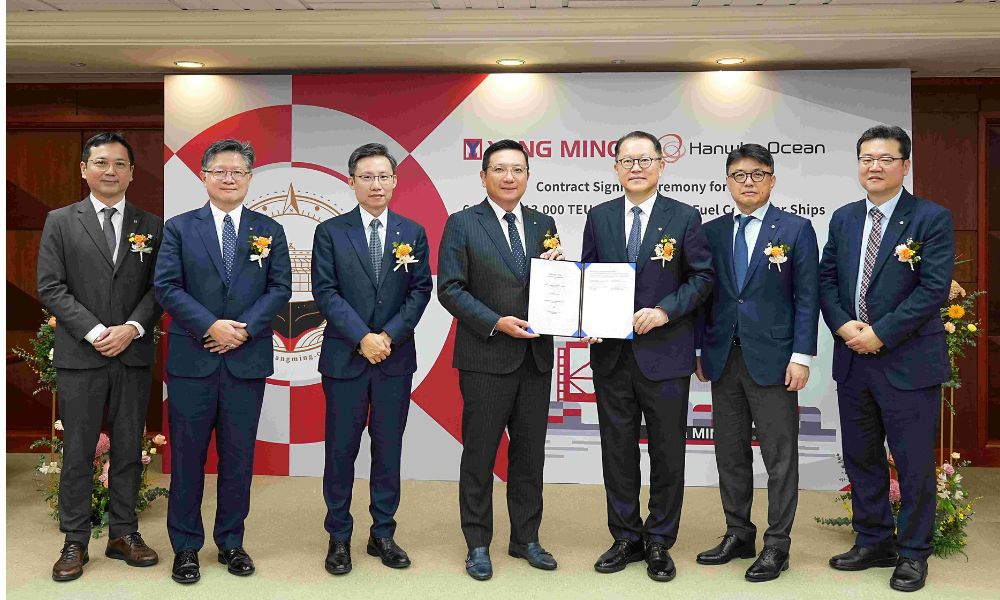
Taiwanese shipping firm Yang Ming Marine Transport Corporation (Yang Ming) and South Korean shipbuilder Hanwha Ocean on Wednesday (2 September) signed a shipbuilding contract for six 13,000 TEU class LNG dual-fuel container vessels. 

The contract was signed by Dr. Chuck Tsai, Chairman of Yang Ming, and Mr. Charles Kim, CEO of Hanwha Ocean. The vessels are scheduled for delivery between 2028 and 2029. 

They will complement Yang Ming’s existing fleet of 10,000+ TEU vessels and serve as key vessels on East-West services, with deployment flexibility across trade lanes connecting Asia with the East and West Coasts of North America, South America, and the Mediterranean. 

Each of the six new vessels will have a capacity of up to 13,650 TEU and feature LNG dual-fuel propulsion and Ammonia Fuel Ready specifications.

“As Yang Ming transitions toward net-zero emissions, LNG provides a relatively mature and economically viable alternative fuel solution, capable of reducing greenhouse gas emissions by approximately 20%,” the company said. 

“At the same time, ammonia can serve as a carbon-free fuel by utilising converted LNG storage facilities, while offering relatively lower conversion costs and comparatively well-developed supply chains and infrastructure. The Ammonia Fuel Ready design will therefore provide Yang Ming with greater flexibility in responding to increasingly stringent international regulations on greenhouse gas emissions.”

In addition, the vessels will be equipped with Type B LNG fuel tanks with a design pressure of 1.0 bar to enhance the safety and efficiency of LNG operations, together with a range of energy-saving technologies, including Wind Shields, Rudder Bulbs, Pre-Swirl Stators, and Shore Power Systems. Smart ship technologies and cybersecurity protection features will also be incorporated to enhance operational efficiency, safety, and reliability while effectively reducing fuel consumption and greenhouse gas emissions.

Deliveries under Yang Ming’s next-generation fleet optimization plan commenced earlier this year. By 2030, a total of 24 new vessels are expected to enter service. 

This includes 18 LNG dual-fuel vessels—comprising five 15,500 TEU, seven 16,000 TEU, and the six 13,000 TEU vessels under this contract—alongside six 8,000 TEU methanol dual-fuel-ready ships. 


Photo credit: Yang Ming Marine Transport
Published: 4 September, 2026

Continue Reading

Alternative Fuels

LR, China’s MARIC unveil tanker concept ready for three future bunker fuels

Both secured AiP for a new 114,000 DWT product and crude oil tanker designed to accommodate future conversion to LNG, methanol or ammonia.
Admin

Published

on

By

LR, China’s MARIC unveil tanker concept ready for three future bunker fuels

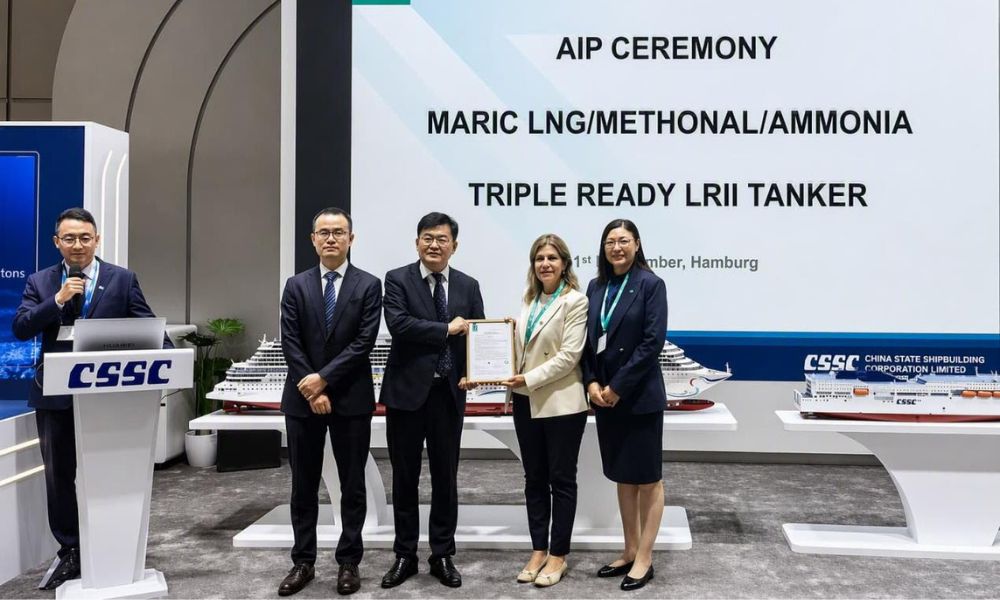
Lloyd’s Register (LR) and the Marine Design and Research Institute of China (MARIC) on Thursday (3 September) have secured Approval in Principle (AiP) for a new 114,000 DWT product and crude oil tanker designed to accommodate future conversion to LNG, methanol or ammonia.

Announced at SMM 2026, the concept addresses one of the biggest investment challenges facing shipping today: the need to develop vessels and capabilities that can support a range of alternative fuel options and pathways as technologies, infrastructure and regulations evolve.

While LNG is already a mature fuel pathway, methanol and ammonia remain at an earlier stage of development, with questions around global fuel availability, infrastructure development, economics and long-term adoption.

The 114,000 DWT tanker concept has been designed as a product and crude oil carrier that can accommodate future conversion to LNG, methanol or ammonia as technologies, regulations and fuel supply chains mature. By incorporating conversion readiness at the design stage, the concept aims to reduce future retrofit complexity and provide owners with greater confidence when planning long-term fleet investments.

The design concept was reviewed against LR’s July 2026 class rules and regulations, including requirements relating to ships using gases and other low-flashpoint fuels, alongside relevant IACS Common Structural Rules for oil tankers. Final classification and statutory approval remain subject to full compliance with all applicable rules and regulations.

Theo Kourmpelis, Global Business Director for Tankers, Lloyd’s Register, said: “Shipowners are being asked to make major investment decisions today despite continued uncertainty around which fuels will dominate in the decades ahead. Alternative fuel solutions each offer potential pathways to compliance, but fuel infrastructure, regulation and economics continue to evolve at different speeds around the world.

“Designs that preserve flexibility will be critical in helping owners manage risk while preparing for multiple future scenarios.”

Si Nan, Marine & Offshore Marketing Department Vice Director, MARIC, said: “As the industry explores different decarbonisation pathways, shipowners need vessel designs that can adapt alongside technological and regulatory developments. This concept was developed specifically to provide greater fuel flexibility and long-term resilience, allowing owners to respond to changing market requirements without being locked into a single fuel strategy.

“Receiving Approval in Principle from Lloyd’s Register is an important milestone that validates the design concept and supports its future development.”


Photo credit: Lloyd’s Register
Published: 4 September, 2026

Continue Reading

Ammonia

Mitsui E&S commercialises ammonia dual-fuel engines and fuel supply systems

Company says it has established a supply framework for marine propulsion systems aimed at the practical implementation of ammonia-fuelled vessels.
Admin

Published

on

By

Mitsui E&S commercialises ammonia dual-fuel engines and fuel supply systems

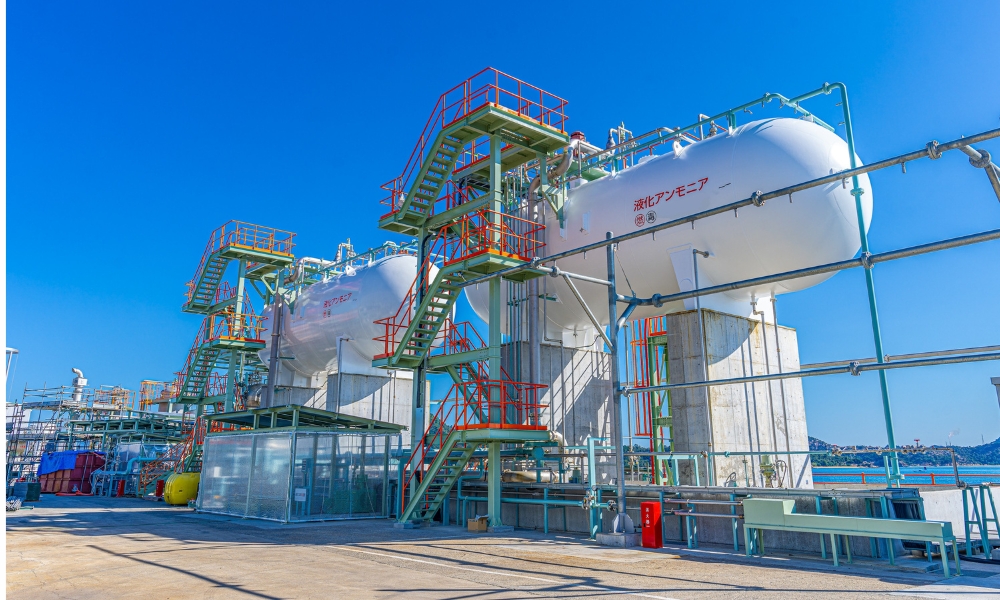
Mitsui E&S on Thursday (20 August) said it has completed the commercialisation of large ammonia dual-fuel marine engines and ammonia fuel supply systems (AFSS).

As the only company in Japan manufacturing both ammonia dual fuel engines and AFSS, the company said it has established a supply framework for marine propulsion systems aimed at the practical implementation of ammonia-fuelled vessels.

“While ammonia holds promise as a next-generation fuel that emits no carbon dioxide during combustion, it is difficult to ignite and poses risks related to toxicity and corrosiveness; therefore, ensuring safety, reliability, and environmental performance is crucial for its practical implementation in society,” it said. 

In February, Mitsui E&S conducted land-based tests involving the integrated operation of the Ammonia dual fuel engine MITSUI-Everllence B&W 7S60ME-C10.5-LGIA-HPSCR and the AFSS, witnessed by ClassNK (Nippon Kaiji Kyokai), and verified their performance. 

Following the completion of the tests and the subsequent review, Mitsui E&S confirmed the completion of onshore testing in accordance with classification society rules and verified compliance with International Maritime Organization (IMO) NOx regulations through NOx certification. 

“Consequently, we have finalised the commercialisation of the ammonia dual fuel engines and the AFSS and are now able to supply it for actual vessels,” it added. 

Mitsui E&S said it has already decided to expand its land-based testing facilities for AFSS compatible with both Everllence and WinGD licensed engines. 

“In conjunction with this, we will establish a mass-production system for both the engines and the AFSS to meet the anticipated rise in demand,” it said. 

Mitsui E&S added the company is expanding its engine lineup to accommodate a diverse range of next-generation marine fuels, including ammonia, by offering ammonia-fuelled engines and AFSS as an integrated package.


Photo credit: Mitsui E&S
Published: 24 August, 2026

Continue Reading
Advertisement

OUR INDUSTRY PARTNERS


Trending