Connect with us

Port & Regulatory

Singapore: MPA issues circular on resolutions adopted at IMO MEPC 83

Circular informs shipping community of the resolutions including guidelines for the development of a SEEMP related to fuel oil consumption and urges it to prepare for implementation of these resolutions.

Admin

Published

on

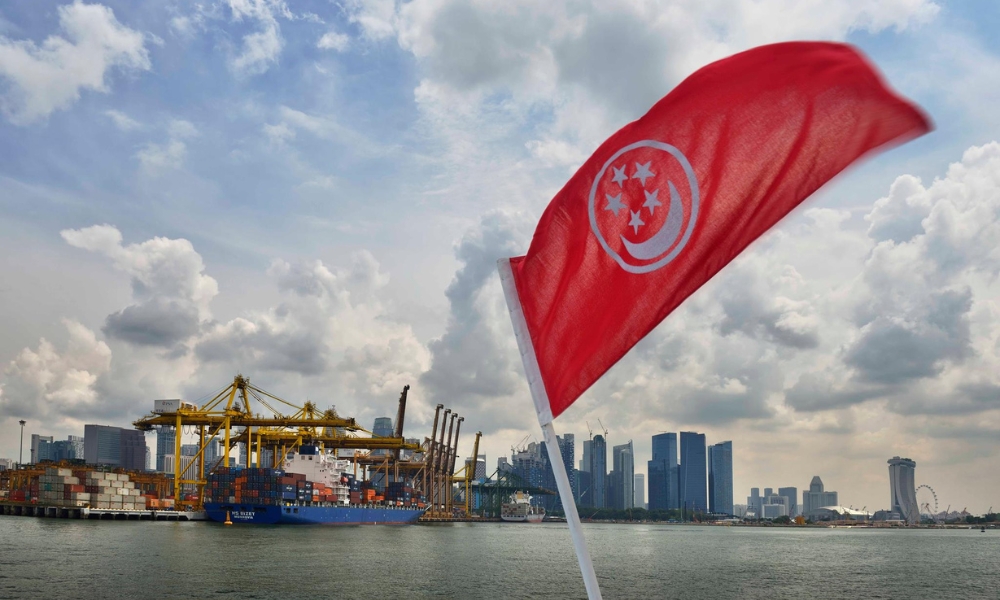
Higher quality MPA singapore flag

The Maritime and Port Authority of Singapore (MPA) on Thursday (17 July) issued Shipping Circular No. 4 of 2025 regarding resolutions adopted by the 83rd session of the Maritime Safety Committee (MEPC83) of the International Maritime Organization (IMO), which was held from 7 to 11 April 2025:

This circular informs the shipping community of the resolutions adopted by MEPC 831 and urges the shipping community to prepare for the implementation of these resolutions.

MEPC 83 adopted the following mandatory resolutions:

Resolution MEPC.397(83) – Amendments to the NOX Technical Code 2008 (Use of multiple engine operational profiles for a marine diesel engine, including clarifying engine test cycles)

This resolution adopts amendments to the NOX Technical Code 2008, concerning the use of multiple engine operational profiles for a marine diesel engine, including clarifying engine test cycles. The amendments will enter into force on 1 March 2027 and will be given effect through the Prevention of Pollution of the Sea (Air) Regulations.

Notably, the amendments shall enter into effect as follows:

  • for a new individual engine or a parent engine of an engine family or engine group that has not been previously certified, the said amendments apply no later than 1 January 2028, based on the issue date of the Engine International Air Pollution Prevention (EIAPP) Certificate for the individual engine or parent engine;
  • in the case of a new member engine to an engine family or engine group for which the parent engine was certified before 1 January 2028, prior to the certification of that member engine it would need to be shown that the engine family or engine group complied with the said amendments no later than 1 January 2030 based on the issue date of the EIAPP Certificate for that member engine;
  • the said amendments do not apply to a marine diesel engine which already has an EIAPP Certificate except:
  • in the case of an engine that is subject to substantial modification on or after 1 January 2028, the said amendments would apply as specified in the definitions of “substantial modification” set out in amended paragraph 1.3.2 of the NOx Technical Code 2008 based on the issue date of the EIAPP Certificate for that engine; and
  • in the case of an identical replacement engine installed on or after 1 January 2028, the version of the NOx Technical Code 2008 at the time of issuance of the EIAPP Certificate to the original engine

applies, unless the replaced engine is already equipped with multiple engine operational profiles, in which case the provisions of the new chapter 8 of the NOx Technical Code 2008 apply.

Resolution MEPC.398(83) – Amendments to the NOX Technical Code 2008 (Certification of an engine subject to substantial modification or being certified to a Tier to which the engine was not certified at the time of its installation)

This resolution adopts amendments to the NOX Technical Code 2008 concerning the certification of an engine subject to substantial modification or being certified to a tier to which the engine had not been certified at the time of its installation. The amendments will enter into force on 1 September 2026 and will be given effect through the Prevention of Pollution of the Sea (Air) Regulations.

MEPC 83 also adopted the following resolutions:

Resolution MEPC.399(83) – 2025 Guidelines on Selective Catalytic Reduction (SCR) Systems

This resolution adopts the 2025 Guidelines on SCR systems. These Guidelines supersede the 2017 SCR Guidelines, adopted by resolution MEPC.291(71) and amended by resolution MEPC.313(74).

Resolution MEPC.400(83) – Amendments to the 2021 Guidelines on the Operational Carbon Intensity Reduction Factors Relative to Reference Lines (CII Reduction Factors Guidelines, G3) (Resolution MEPC.338(76))

This resolution adopts amendments to the 2021 Guidelines on the operational carbon intensity reduction factors relative to reference lines (CII reduction factors guidelines, G3), updating the reduction factors for the required annual operational CII of ship types including for years 2027 to 2030.

Resolution MEPC.401(83) – Amendments to the 2024 Guidelines for the Development of a Ship Energy Efficiency Management Plan (SEEMP) (Resolution MEPC.395(82))

This resolution adopts amendments to the 2024 Guidelines for the development of a SEEMP, in relation to the methodology for collecting data on fuel oil consumption, distance travelled and hours under way and other items.

Resolution MEPC.402(83) – Guidelines for Test-Bed and Onboard Measurements of Methane (CH4) and/or Nitrous Oxide (N2O) Emissions from Marine Diesel Engines

This resolution adopts the Guidelines for test-bed and onboard measurements of CH4 and/or N2O emissions from marine diesel engines.

Resolution MEPC.403(83) – Amendments to the 2022 Guidelines on Survey and Certification of the Energy Efficiency Design Index (EEDI)

This resolution adopts amendments to the 2022 Guidelines on survey and certification of the EEDI, updating the references to the International Towing Tank Conference Recommended Procedure 7.5-04-01-01.1 Preparation, Conduct and Analysis of Speed/Power Trials 2024 edition and ISO 15016: 2025 edition.

Resolution MEPC.405(83) – Amendments to the 2023 Guidelines for the Development of the Inventory of Hazardous Materials (Resolution MEPC.379(80))

This resolution adopts amendments to the 2023 Guidelines for the development of the Inventory of Hazardous Materials, clarifying the relevant threshold values in respect of cybutryne when samples are directly taken from the hull or when samples are taken from wet paint containers.

Any queries relating to this circular should be directed to MPA Shipping Division via email at [email protected].


Photo credit: Maritime and Port Authority of Singapore
Published: 18 July, 2025

Continue Reading

Alternative Fuels

MPA and MSC ink MoU to support adoption of alternative bunker fuels

MPA and MSC will explore new routes and services to strengthen connectivity, support the adoption of alternative marine fuels such as bio-LNG, and advance technologies to improve vessel energy efficiency.

Admin

Published

on

By

MPA and MSC ink MoU to support adoption of alternative bunker fuels

The Maritime and Port Authority of Singapore (MPA) on Wednesday (3 June) said it signed a Memorandum of Understanding (MoU) with MSC Mediterranean Shipping Company to strengthen collaboration in maritime decarbonisation, digitalisation, innovation, and manpower development. 

The MoU was signed on 25 May 2026 by Mr Ang Wee Keong, Chief Executive of MPA, and Mr Soren Toft, Chief Executive Officer of MSC.

The MoU underscores the shared commitment of MPA and MSC to foster a sustainable, digital, and future-ready maritime sector, while enhancing MSC’s operational and business activities in Singapore. This year also marks the 30th anniversary of MSC establishing its Asia Regional Office and local office in Singapore.

Under the MoU, MPA and MSC will explore new routes and services to strengthen connectivity, support the adoption of alternative marine fuels such as bio-LNG, and advance technologies to improve vessel energy efficiency and operational performance.

MPA and MSC will also collaborate on maritime digitalisation initiatives to improve operational efficiency, including streamlining vessel arrivals and port operations. 

On manpower development, MSC will support internship and scholarship opportunities through Singapore Maritime Foundation’s Maritime Outreach Network (MaritimeONE) platform, an industry-led tripartite partnership comprising industry, government and institutes of higher learning that aims to raise awareness of the maritime industry and attract quality talent into the maritime sector.

Mr Ang Wee Keong, Chief Executive of MPA, said: “This partnership reflects the strong collaboration between MPA and MSC in driving sustainability and digitalisation in the maritime sector. By working together on decarbonisation, operational efficiency and talent development, we aim to strengthen Maritime Singapore’s position as a trusted and future-ready global maritime hub.”

Mr Soren Toft, Chief Executive Officer of MSC, said: “Singapore is a strategically important hub for MSC and a key gateway to the broader Asia region. As we mark 30 years in Singapore, this MOU reinforces our long-term commitment to strengthening our presence here. MSC and Singapore are closely aligned on the priorities shaping the future of global shipping, and we look forward to deepening this partnership to drive the continued growth and resilience of the maritime industry.”


Photo credit: Maritime and Port Authority of Singapore
Published: 4 June, 2026

Continue Reading

Emissions reporting

StormGeo and OceanScore link emissions data, compliance workflows

Cooperation combines StormGeo’s expertise in operational vessel and emissions data with OceanScore’s expertise in emissions compliance workflows across EU ETS, FuelEU Maritime and UK ETS requirements.

Admin

Published

on

By

StormGeo and OceanScore link emissions data, compliance workflows

Weather intelligence and decision support solutions provider StormGeo and Hamburg-based technology platform OceanScore on Wednesday (3 June) said they have deepened their ongoing cooperation through the signing of a collaboration agreement during Posidonia 2026 in Athens on 2 June.

The cooperation combines StormGeo’s expertise in operational vessel and emissions data with OceanScore’s expertise in emissions compliance workflows across EU ETS, FuelEU Maritime and upcoming UK ETS requirements.

Together, the companies aim to help shipping companies seamlessly navigate increasing regulatory complexity more efficiently — from emissions reporting and data validation to compliance exposure management, pooling and financial settlement.

As emissions regulation becomes an increasingly important part of commercial shipping operations, the need for reliable operational data and streamlined compliance processes continues to grow. The cooperation between StormGeo and OceanScore is designed to support shipping companies with more connected, transparent and actionable processes across operational and commercial teams.

“From the outside, companies like StormGeo and OceanScore may sometimes be perceived as competitors because both operate around emissions and compliance workflows,” said Albrecht Grell, Managing Director at OceanScore. 

“But in reality, the industry increasingly needs both perspectives working together: trusted operational emissions data on one side and commercial compliance execution on the other. Our cooperation reflects that shipping companies are no longer looking for isolated solutions — they need connected processes, automated across different systems and reliable decision-making throughout the full compliance chain.”

By connecting validated operational emissions data with commercial compliance management, the cooperation supports workflows across:

  • emissions reporting and validation 
  • compliance management across EU ETS, FuelEU Maritime and upcoming UK ETS requirements
  • exposure visibility and cost transparency
  • pooling, settlement and financial processes 

The cooperation also aims to improve commercial transparency and coordination across operational and commercial stakeholders.

“StormGeo plays a central role in helping shipping companies turn operational vessel and emissions data into trusted, decision-ready insights,” said Espen Martinsen, Chief Commercial Officer at StormGeo. 

“As emissions regulations become more complex, this data is essential for transparent and efficient compliance management. By working with OceanScore, we can help customers connect StormGeo’s validated operational data with commercial compliance processes, creating a more integrated and practical approach to emissions management.”

The signing ceremony took place at the StormGeo booth during Posidonia 2026 in Athens and was attended by representatives from both companies.

Both companies expect the cooperation to continue evolving alongside upcoming regulatory developments, including FuelEU Maritime, EU ETS, the upcoming UK ETS and future emissions-related frameworks affecting global shipping.


Photo credit: StormGeo
Published: 4 June, 2026

Continue Reading

Methanol

Seaspan and Hapag-Lloyd complete first of five methanol vessel retrofit

Following “Seaspan Yangtze”, the remaining vessels planned for retrofit under the methanol retrofit programme are “Seaspan Amazon”, “Seaspan Ganges”, “Seaspan Thames”, and “Seaspan Zambezi”.

Admin

Published

on

By

Seaspan and Hapag-Lloyd complete first of five methanol vessel retrofit

Seaspan Corporation (Seaspan) and Hapag-Lloyd on Wednesday (3 June) announced the successful completion of the first of the five vessel conversions under their methanol retrofit programme with the delivery of Seaspan Yangtze.

From the early SAVER (Seaspan Action for Vessel Energy Reduction) programme to today’s CleanBlue initiative, Seaspan has committed over USD 230 USD million across 86 vessels, executing more than 550 efficiency and retrofit projects.

Following Seaspan Yangtze, the remaining vessels planned for retrofit under the programme are Seaspan Amazon, Seaspan Ganges, Seaspan Thames, and Seaspan Zambezi. Each retrofit is expected to reduce well-to-wake CO₂e emissions by approximately 30,000 to 50,000 metric tonnes per vessel annually when operating on low-carbon methanol, while also extending vessel lifespan and enhancing fuel flexibility.

“Decarbonisation is not just about building the fleet of tomorrow, it is also about unlocking the full potential of the fleet we have today. Retrofitting and upgrades on existing fleets play a practical, immediate, and economical role in accelerating shipping’s decarbonization journey,” said Bing Chen, Chairman, President and CEO of Seaspan. 

“Project SAVER CleanBlue highlights Seaspan’s strong customer partnerships, deep technical expertise, and unique platform integrated with JV partners, such as WattSpan Maritime Technology, in executing complex and large-scale retrofit projects.”

“The successful conversion of the Seaspan Yangtze together with the planned retrofit of its four sister vessels is another important step on our ambitious path towards net-zero fleet operations by 2045,” said Silke Lehmköster, Managing Director, Fleet, Hapag-Lloyd. 

“Together with Seaspan, we are demonstrating that retrofitting existing vessels for low-carbon methanol can be a practical way to reduce emissions in shipping.”


Photo credit: Seaspan
Published: 4 June, 2026

Continue Reading

Trending