Connect with us
DNV Decarbonization Insight Series August 2026 - What maritime professionals should know about AI Training

Alternative Fuels

Singapore: Companies collaborate to explore hydrogen as low-carbon fuel

Five Singapore and two Japanese companies sign MoU to explore commercial feasibility of hydrogen as fuel to reduce the energy sector’s carbon footprint.

Admin

Published

on

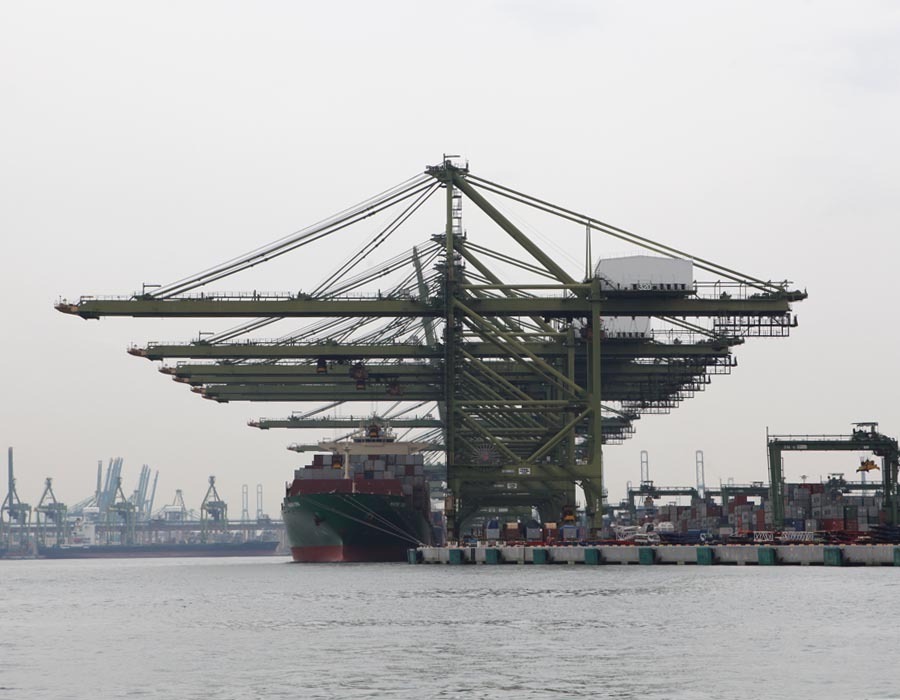
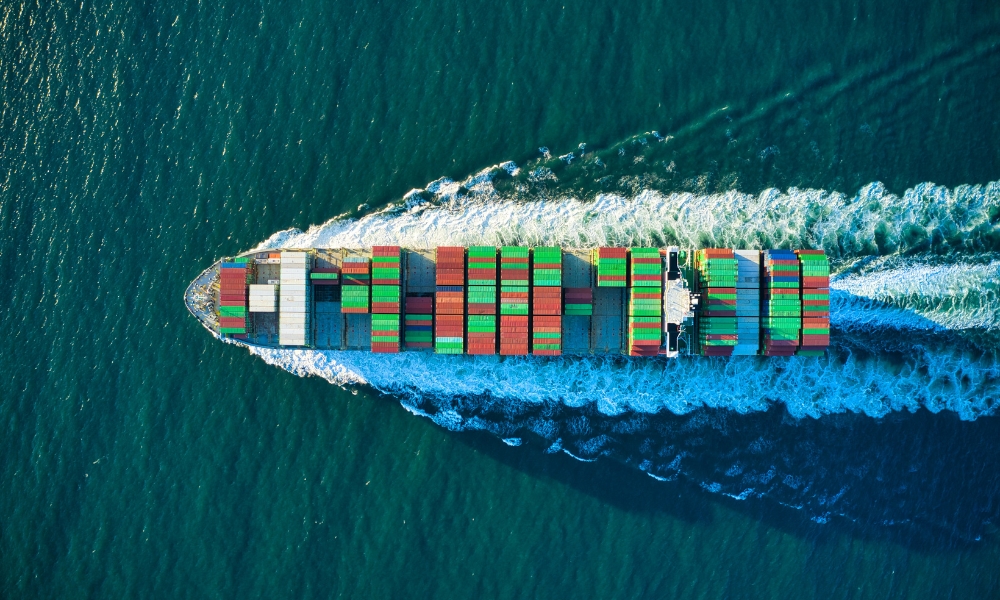
Container ship loading Photo by Manifold Times

Singapore-based port operator Jurong Port Pte Ltd on Monday (30 March) said it has joined a group of Singapore and Japanese companies to sign a Memorandum of Understanding (MoU) to study how hydrogen can contribute to a clean and sustainable energy future for Singapore.  

The group, in a joint press release, said its aim is to capture the opportunities offered by low-carbon alternatives as emerging low-carbon alternatives can help to power Singapore’s energy future. 

Under the MOU, PSA Corporation Limited (PSA), Jurong Port Pte Ltd (Jurong Port), City Gas Pte Ltd, Sembcorp Industries Ltd, Singapore LNG Corporation Pte Ltd, Chiyoda Corporation (Chiyoda) and Mitsubishi Corporation (Mitsubishi) will develop ways to utilise hydrogen as a green energy source.

This involves the research and development of technologies related to the importation, transportation and storage of hydrogen, it said.

Working closely with Chiyoda, a key technology and supply chain solution partner, the companies said they will identify and demonstrate use cases using Chiyoda’s SPERA Hydrogen, Liquid Organic Hydrogen Carrier (LOHC) technology to allow hydrogen to be safely transported in chemical tankers at normal atmospheric temperature and pressure. 

Mitsubishi stated it will support this development as the main shareholder of Chiyoda. 

The five Singapore companies said they will work closely with Chiyoda and Mitsubishi to evaluate the technical and commercial feasibility of hydrogen usage, to develop a business case for hydrogen import and utilisation in Singapore.

“We are delighted to be underlining PSA’s commitment to green initiatives with the signing of this MOU. Lowering carbon emissions to reduce the impact of climate change is a vital pillar of our business, and the direct impact of reducing our carbon footprint through this project is exciting,” said Ong Kim Pong, Regional CEO Southeast Asia, PSA International. 

“Powering our horizontal transport with hydrogen is just the beginning, and we will see its application expanding in the future, playing a part in our Smart Grid systems with EMA, and augmenting business adjacencies in our future Tuas Ecosystem.”  

“Jurong Port is working with Chiyoda as we believe that the port is well placed to accelerate the development of hydrogen as a viable fuel option for power generation in Singapore’s transition to a low-emissions future”, said Ooi Boon Hoe, Chief Executive Officer, Jurong Port.

“As the producer and retailer of piped town gas for more than 860,000 homes and businesses, City Gas believes in harnessing green energy and technology to support eco-conscious manufacturing and operations,” added Kenny Tan, Chief Executive Officer, City Gas.

“We look forward to study and develop the viability of using green hydrogen in the town gas manufacturing process to further lower carbon emissions.” 

 “Sembcorp has long held a strong commitment to sustainability and has made it central to our business strategy and operations,” said Neil McGregor, Group President & CEO, Sembcorp Industries “

“Sembcorp’s experience in the region as a provider of renewable energy and sustainability solutions, coupled with our deep technology integration know-how will greatly support the development of the hydrogen economy in Singapore.”

“This MOU marks an important first step towards making another sustainable energy option, namely hydrogen, available for Singapore. SLNG is pleased to be a part of this pioneering and very exciting collaboration, through seeking synergistic ways of using our terminal infrastructure,” commented Tan Soo Koong, CEO, SLNG. 

“We are in the midst of a global energy transition, and SLNG is committed to doing what we can to facilitate and catalyse this process.”

Prompted by the very real challenge of climate change, the Singapore Government has been engaging various stakeholders to co-create solutions for Singapore’s Energy Story, said the group.

It adds that the National Research Foundation (NRF) Singapore will also work with the Maritime and Port Authority of Singapore (MPA) to tackle the maritime decarbonisation challenge through research and technology development.  

“Singapore needs to stay ahead in the research and development of alternative energy sources in our transition towards a low-carbon and low-emission economy,” added Professor Low Teck Seng, Chief Executive Officer, NRF

“We are encouraged that companies are coming together, leveraging each other’s expertise, to study how hydrogen can be used as an emissions-free alternative to existing carbon sources.  

“These companies will work alongside our researchers to look at how technologies in this area – such as catalysis and membrane technologies – can be further developed for the production and distribution of hydrogen. 

“This effort will be supported by public sector agencies, to accelerate the potential use of hydrogen as a low-carbon solution that will reduce Singapore’s carbon footprint.”


Photo credit: Manifold Times
Published: 31 March, 2020  


Continue Reading

Alternative Fuels

ClassNK updates safety guidelines for alternative-fuelled ships

The classification society says it has revised the safety requirements within its guidelines for ships using methanol, ethanol and hydrogen as marine fuels.
Admin

Published

on

By

RESIZED Venti Views on Unsplash

Classification society ClassNK on Tuesday (18 August) said it has revised the safety requirements within its guidelines for ships using methanol, ethanol and hydrogen as marine fuels. 

In Part D of the guidelines, covering hydrogen-fuelled ships, the revision incorporates the Interim Guidelines for the Safety of Ships Using Hydrogen as Fuel (MSC.1/Circ.1701) issued by the IMO this year, and additionally introduces a hydrogen leak frequency table that can be used for the safety assessments required under the IMO guidelines. 

In Part A, covering methanol and ethanol-fuelled ships, new structural strength requirements for methanol/ethanol fuel tanks—which are not addressed in the IMO guidelines—have been established. 

“Through this revision, shipyards, designers, and shipowners can carry out design and safety assessments in line with the latest international standards, and by utilizing ClassNK’s own leak frequency estimates and the relevant requirements, they can proceed the development of alternative-fuelled ships in a more rationally,” ClassNK said in a statement. 

As the building of alternative-fuelled ships advances in response to the global challenge of reducing GHG emissions, ClassNK has comprehensively compiled the safety requirements for ships using methanol, ethanol, LPG, ammonia, and hydrogen—fuels regarded as promising alternatives—and has issued the guidelines. 

“Taking into account the risks that the use of alternative fuels poses to the environment, seafarers, and ships, the guidelines set out requirements for equipment, controls, and safety devices to minimize such risks,” it added. 

With the issuance of the IMO guidelines for hydrogen-fueled ships (MSC.1/Circ.1701), ClassNK said it has fully incorporated the IMO guidelines to make the guidelines more user-friendly for shipyards, designers, and shipowners, while also enhancing the requirements serving as design and assessment guidance for other alternative fuels. 

In the development of the IMO guidelines, now reflected in Part D, ClassNK participated as a member of the Japanese delegation to the IMO Sub-Committee CCC 11 and contributed to the discussions.

Note: The Guidelines for Ships Using Alternative Fuels (Edition 3.1)  can be viewed under “Guidelines” on My Page by registering as a user on the ClassNK website. 


Photo credit: Venti Views on Unsplash
Published: 20 August, 2026

Continue Reading

Decarbonisation

CSA and MFA partner to support shipowners, bunker suppliers on emissions compliance

Clean Shipping Alliance and the Marine Fuels Alliance signed a MoU to also advance transition to alternative bunker fuels and emissions reduction technologies.
Admin

Published

on

By

CSA and MFA partner to support shipowners, bunker suppliers on emissions compliance

The Clean Shipping Alliance (CSA) and the Marine Fuels Alliance (MFA) on Wednesday (19 August) said they have signed a Memorandum of Understanding (MoU) to support the shipping industry and bunker suppliers in meeting regulatory requirements on emissions, and to advance the transition to alternative fuels and emissions reduction technologies.

The agreement will see CSA’s expertise in exhaust gas cleaning systems and marine environmental technology brought together with MFA’s network and knowledge across the marine fuels supply chain. 

Both organisations share an interest in supporting the maritime industry’s transition toward a sustainable, compliant and lower-emission future, and the agreement sets out a structure for the two bodies to share technical insight and coordinate on regulatory pathways.

Through the collaboration, the two associations intend to encourage dialogue between technology providers, fuel suppliers and ship operators, share technical insights and support the development of practical regulatory pathways.

Under this framework, the two associations will:

  • Share technical data and research: on MARPOL compliance, alternative fuels and emissions reduction technologies.
  • Coordinate joint advocacy: including at the International Maritime Organization (IMO) level and alongside sessions of the IMO’s Marine Environment Protection Committee (MEPC).
  • Support industry events: on fleet modernisation, retrofitting and fuel quality standards.
  • Develop practical operational guidance: linking technology providers, fuel suppliers and ship operators.

Andreas Chrysostomou, Executive Director of the Clean Shipping Alliance, said: “Shipping’s compliance and availability challenges won’t be solved by one technology or one fuel. It needs ongoing communication between different elements of the value chain, and that’s why CSA and MFA have signed this MoU. Technologies, fuels and regulation cannot be considered in isolation, and by working together we can bring together complementary expertise, improve the exchange of technical knowledge and contribute to solutions that are both environmentally effective and operationally realistic.”

Anthony Mollet, Executive Officer of the Marine Fuels Alliance, said: “The CSA brings a wealth of technical knowledge and first-hand industry experience, particularly in relation to emissions, environmental regulation and the technologies being adopted by shipowners and operators. This partnership will give our members an important additional source of expertise and insight, helping them better understand the challenges facing the industry and make informed decisions as the transition towards cleaner shipping continues.

“For companies across the contractual chain in bunkers, it is increasingly important to understand the decisions being made by shipowners and operators around fuel choice, emissions technologies and the future fuels they intend to use. 

“The selection of a particular fuel grade or technology can have significant implications throughout the bunker supply chain, from contractual arrangements and fuel specifications to supply and operational considerations. This is a key area of focus for the MFA, and we are committed to providing our members with clear, practical and relevant resources to help them navigate these developments.”

The non-binding MoU will initially remain in effect for two years, with both associations designating points of contact to coordinate joint initiatives and regularly review the collaboration.


Photo credit: Clean Shipping Alliance and Marine Fuels Alliance
Published: 20 August, 2026

Continue Reading

LNG Bunkering

Bunkering vessel “Avenir Advantage” completes first LNG delivery to cruise ship

Ship delivered LNG to Royal Caribbean Group’s “Icon of the Seas” in Honduras, marking its first LNG bunkering operation for the cruise line and expanding small-scale LNG supply in the Caribbean.
Admin

Published

on

By

Bunkering vessel “Avenir Advantage” completes first LNG delivery to cruise ship

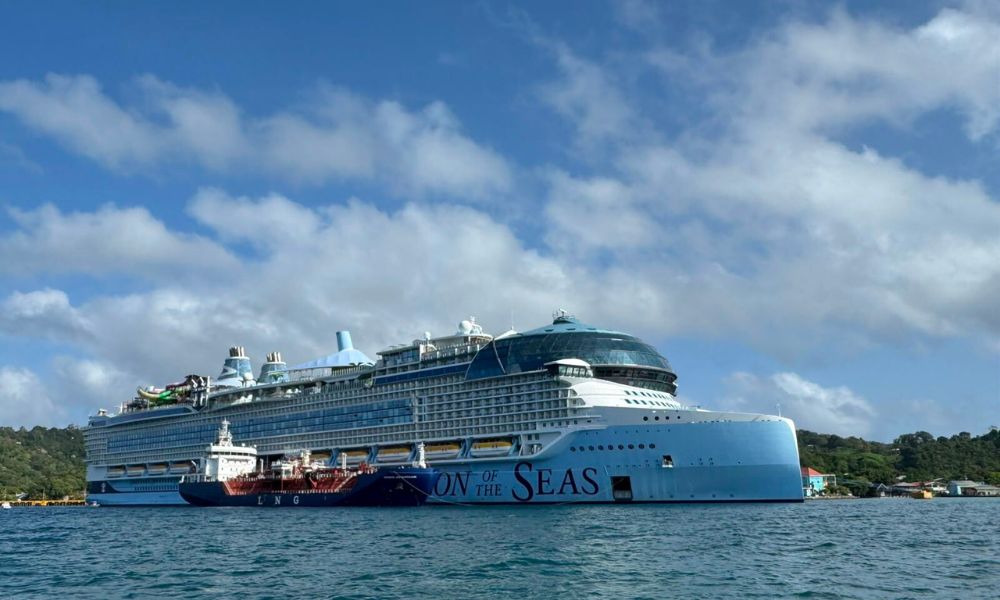
Bunker supplier Avenir LNG on Wednesday (19 August) said its bunkering vessel Avenir Advantage has completed its first LNG bunkering delivery to Royal Caribbean Group’s cruise ship, Icon of the Seas in Honduras, marking a milestone for the company’s LNG supply operations in the Caribbean.

The company said the operation supports the cruise industry’s transition towards lower-emission marine fuels while demonstrating the flexibility of small-scale LNG infrastructure in the region.

Avenir LNG thanked Axpo Group, the vessel’s crew, shore teams, port stakeholders and other partners involved in the operation.

The company added that it aims to support further safe and reliable LNG deliveries in the future. 


Photo credit: Avenir LNG
Published: 20 August, 2026

Continue Reading

Trending