
Analysis
Refinitiv: Fuel oil market to remain tight for medium term, forecasts leading analyst
‘Based on current fundamentals, we do not see any downside below $100/bbl,’ concludes Yaw Yan Chong, the Director of Oil Research at Refinitiv.


The global fuel oil market is expected to remain tight for the medium term due to the effects of the Russo-Ukrainian war, observes Yaw Yan Chong, the Director of Oil Research, at financial markets and infrastructure data provider Refinitiv.
Refinitiv published the Oil Special Report: Oil on the Boil – Crude, gasoil most impacted by Russian invasion of Ukraine on Friday (18 March) which discussed the war’s effects on the crude, diesel, low sulphur fuel oil (LSFO) and gasoline markets.
“Since Russia invaded Ukraine in late February, oil price benchmarks surged to multi-year highs and hit unprecedented levels in some cases in the immediate aftermath, with the crude and diesel markets being the most impacted,” notes Yaw.
“They have since come off these stratospheric levels but remain high, and crucially above pre-invasion levels.”
LSFO – Cracks hit daily record-high
Low-sulfur fuel oil cracks to Dubai hit a daily record high of $31.79/bbl post-invasion and have averaged at a monthly record-high of $26.88/bbl, while high-sulfur fuel oil cracks, normally at discounts to crude, surged to the black at a 30-month high of $1.51/bbl on Mar 11.


Russia is the world’s largest exporter of fuel oil, with most of its 2.5-3.0 million mt/month of outflows headed to Europe, mainly as refinery feedstock and marine fuels blendstocks. Asia typically receives about 300,000-400,000 mt/month, mostly for bunker-blending, while small volumes of about 40,000/mt from its Far East refineries are taken as feedstocks by refiners in the US, China and South Korea.

The potential loss of 2.0-2.5 million mt of Russian fuel oil into Europe, like for gasoil, will force buyers there to look for alternatives, likely to buy up domestic European output and from the Middle East.
This will have a knock-on impact of supply into Asia, the world’s largest consumer of the product, especially for Western arbitrage cargoes coming from Europe. Arrivals are already tight pre-invasion, averaging at 1.65 million mt/month for the three months of 2022, down from the 2021 average of 2.12 million mt/month.
These arrivals to Asia comprise of both low- and high-sulfur cargoes, mostly for blending in the marine fuels market in Singapore, the world’s largest, at over 4 million mt/month.
The LSFO market was already tight before the invasion, from around November, when its cracks started strengthening and hitting a 24-month peak of $17.59/bbl in February, just before the invasion. It jumped another $10/bbl after.
The tightness, pre-invasion, was due to a lack of available gasoil as blendstock, as supply of the middle distillate was diverted to its own diesel market when margins became more economically lucrative than the bunker blending market.
The invasion made the supply situation worse, as European buyers scramble for alternative barrels, creating a supply vacuum in Asia that will likely be felt harder in April.
Refinitiv Oil Research expects overall fuel oil flows into Asia to fall below 2021 levels of 5.19 million mt/month from April, though March arrivals are assessed above that at 5.26 million mt, lifted by five-month high arrivals of mostly high-sulfur barrels, including straight-run cargoes, from the Middle East at 2.76 million mt.

Europe is also expected to source replacement straight-run cargoes as feedstock from the Middle East, likely from Iraq, competing with Asian refiners who are also increasing their appetite for these barrels because of high crude prices.
Like gasoil, the displaced Russian barrels are unlikely to be fully replaced especially since Western arbitrage parcels flow east. Most of the bunker blending are done by large, mostly Western trading houses who are likely to be constrained by financing of Russian-origin cargoes.
We expect the fuel oil market to stay tight in the medium term, despite the fall in fixed price levels since crude hit a 14-year high of $139/bbl in intraday trading on Mar 8 but have since retreated to around $100/bbl levels.
Final conclusion – Fundamentals remain bullish and volatile
Despite the recent corrections, most price benchmarks remain well-above pre-invasion levels. Refinitiv Oil Research believes that the recent downward correction is a false dawn and that fundamentals are bullish and volatile, as they have been since the invasion started.
The war does not look like it will end anytime soon or diplomatically, given that both sides are far apart in terms of their end goals. Russia wants a change in government in Ukraine that will be sensitive to its national security interests; the current Ukraine government has vowed it will fight to the end.
In any case, the sanctions are here to stay. While there are no direct sanctions on Russia’s energy exports, except for the US, the sanctions on its financial system and companies have created widespread disruption to the flow of Russian oil. International banks have refused to finance trading of Russia-origin cargoes, some large ship-owners have refused to transport Russian barrels and some major oil companies, for example Shell, have stopped taking Russian cargoes.
We believe the market’s momentum to be upward in the short-term. Based on current fundamentals, we do not see any downside below $100/bbl. For prices to drop further, fundamentals will have to change – the war will have to end and sanctions on Russia will need to be lifted, or there will have to be a glut of crude supply. We do not see this happening anytime soon.
Photo credit: Refinitiv
Published: 22 March, 2022
Bunker Fuel Quality
FOBAS report warns of growing operational risks from ISO-compliant bunker fuels
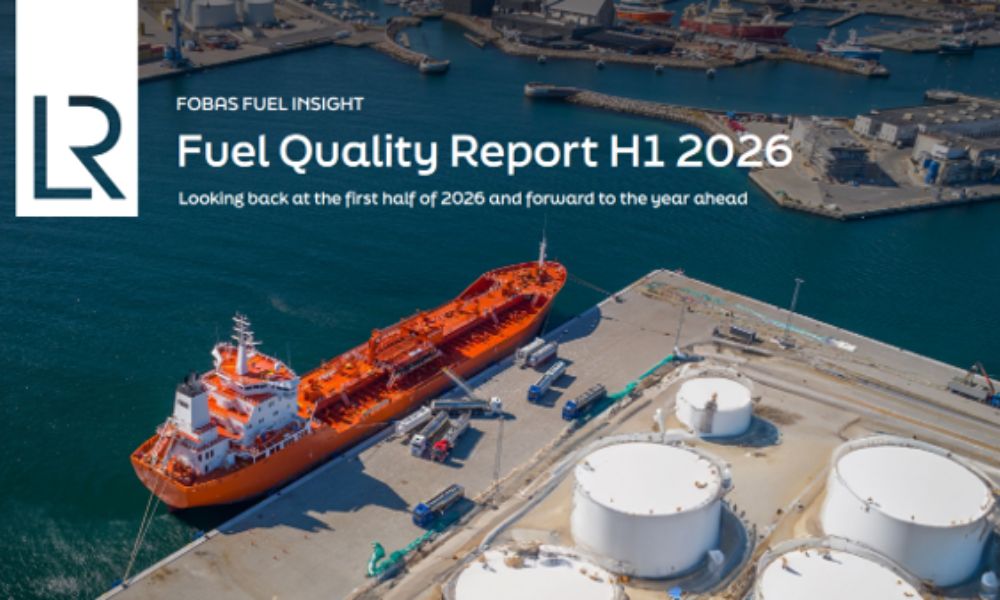
LR’s latest FOBAS Fuel Quality Report reveals that the biggest fuel quality risks are no longer confined to off-specification fuels, with some compliant fuels creating operational challenges.
Interview
Interview: Alkagesta navigates risk from bunkering ops during turbulent times
As the industry navigates this period of uncertainty, the key question is no longer ‘what will fuel cost?’ but rather ‘will fuel be available?’, highlights Mithat Çiftçioğlu.

Analysis
T&E: Overreliance on traditional bunker fuels costs shipping USD 395 million a day due to Iran conflict
Development has made alternative fuels increasingly more competitive, states Eloi Nordé, shipping policy officer at T&E.
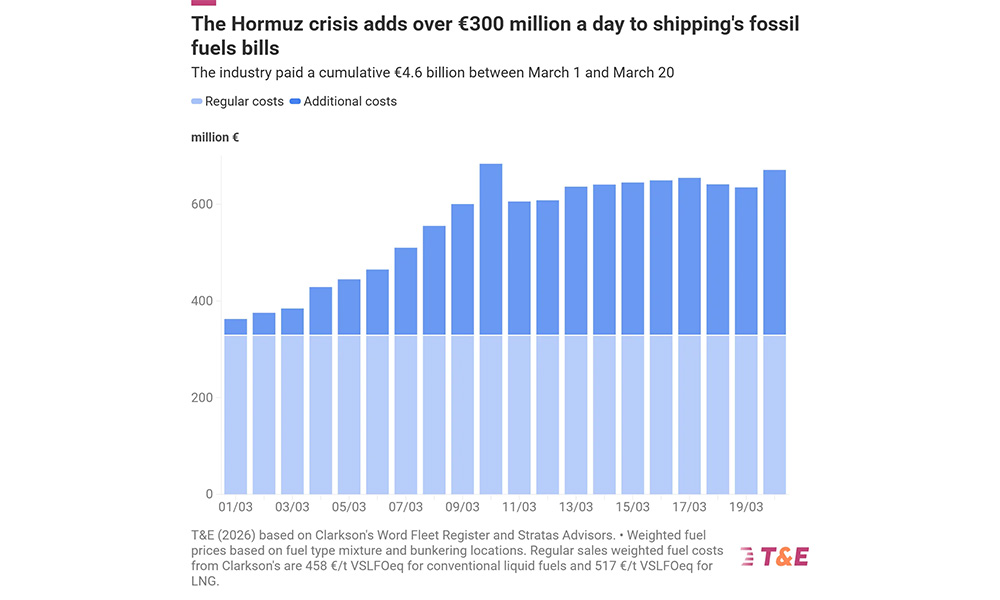
The European Federation for Transport and Environment (T&E) on 27 March highlighted the adoption of green marine fuels would reduce the shipping industry’s exposure to fuel price shocks in future.
It noted shipping companies are spending an extra €340 million (USD 394.74 million) a day in additional fuel costs as a result of the latest conflict in the Gulf.
As 99% of the global fleet runs on fossil fuels, the industry is directly exposed to fuel price volatility and supply disruptions. Efficiency measures, electrification and e-fuels would reduce the industry’s exposure to price fluctuations.
According to T&E, marine fuel prices have escalated rapidly, with VLSFO reaching €941 per tonne in Singapore, up 223% since the start of 2026. At the same time, LNG prices have risen by 72% since early March. Since February 28, shipping companies have incurred more than €4.6 billion in additional fuel costs.
The development has made alternative fuels increasingly more competitive. As fossil fuel prices reach record highs again, the cost gap with e-fuels is narrowing.
T&E’s research shows that the cost gap between marine gas oil – one of the more expensive fossil fuels – and e-fuels has shrunk to near parity (+5%) in some ports.
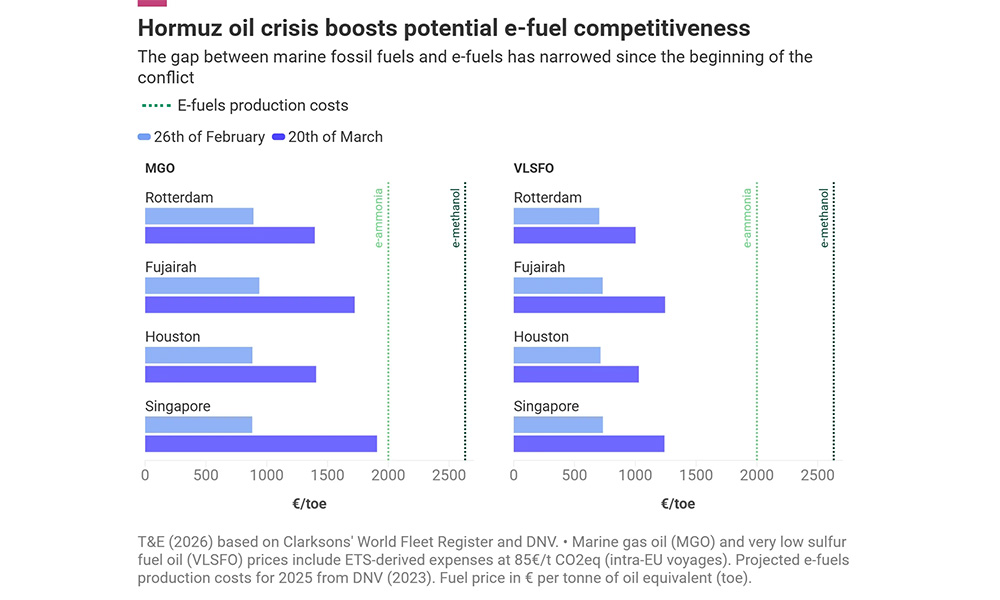
While the trend may be temporary, it shows that the volatility of fossil fuel markets offsets much of the structural cost disadvantage of clean fuels.
“Chaos in the Strait of Hormuz is putting global maritime trade under the spotlight. But it’s on the oil markets where its impact will be felt the most. The war is costing the industry millions every day,” said Eloi Nordé, shipping policy officer at T&E.
“Some governments and parts of the industry have spent the last year bashing green maritime measures as being too expensive, yet those costs pale in comparison to this super-disruption.
“If anything, this crisis should be the catalyst for more investment in European e-fuels and greater uptake of energy efficiency measures to avoid fossil fuel shocks in the future.”
Photo credit: European Federation for Transport and Environment
Published: 2 April 2026

OUR INDUSTRY PARTNERS

Singapore: High Court to hear Norvic Shipping Asia winding up application on 31 July

World Fuel and partners complete first green methanol bunkering of car carrier in Shanghai

HPA and MB Energy develop safety concept for STS ammonia bunkering

GCMD: Project CAPTURED achieves two regulatory milestones for onboard captured CO2

Alkagesta highlights key insights of Malta bunkering market in 2026

ENGINE: East of Suez Fuel Availability Outlook (22 July 2026)

Singapore: Ofiniti, ONE trial direct platform integration to streamline bunker workflows

ENGINE: Europe and Africa Fuel Availability Outlook (8 July 2026)

Malaysia: Maharani Freeport to implement MFM and e-BDN technologies for enhanced bunkering transparency

Evergreen Marine director questioned, offices searched in Taiwan insider trading probe

Singapore retains world’s leading maritime centre ranking in 2026 ISCD Index

Singapore: MPA issues circular on resolutions adopted by IMO MEPC 84

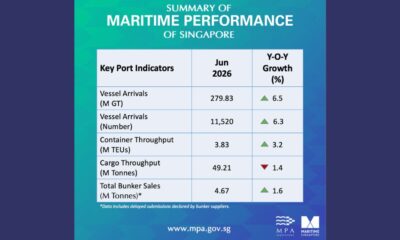
Singapore: Bunker fuel sales up by 1.6% on year in June 2026

Malaysia: MMEA detains tugboat with undocumented 10,000 litres of diesel in Kuala Langat
-
 Bunker Fuel Availability2 weeks ago
ENGINE: Europe and Africa Fuel Availability Outlook (8 July 2026)
-
 Technology1 week ago
Malaysia: Maharani Freeport to implement MFM and e-BDN technologies for enhanced bunkering transparency
-
 Legal2 weeks ago
Evergreen Marine director questioned, offices searched in Taiwan insider trading probe
-
 Business2 weeks ago
Singapore retains world’s leading maritime centre ranking in 2026 ISCD Index
-
 Port & Regulatory1 week ago
Singapore: MPA issues circular on resolutions adopted by IMO MEPC 84
-
 Bunker Fuel1 week ago
Singapore: Bunker fuel sales up by 1.6% on year in June 2026
-
 Vessel Arrest1 week ago
Malaysia: MMEA detains tugboat with undocumented 10,000 litres of diesel in Kuala Langat
-
 Alternative Fuels1 week ago
Port of Santos hosts Brazil’s first bioethanol bunkering of deep-sea containership