Connect with us

Analysis

MPGC 2022 on schedule for January 2022 launch, says organiser Conference Connection

Middle East Petroleum Gas Conference (MPGC) to take place on 24-25 January 2022 in Kingdom of Bahrain; more than 30 key speakers to address ten sessions.

Admin

Published

on

MPGC

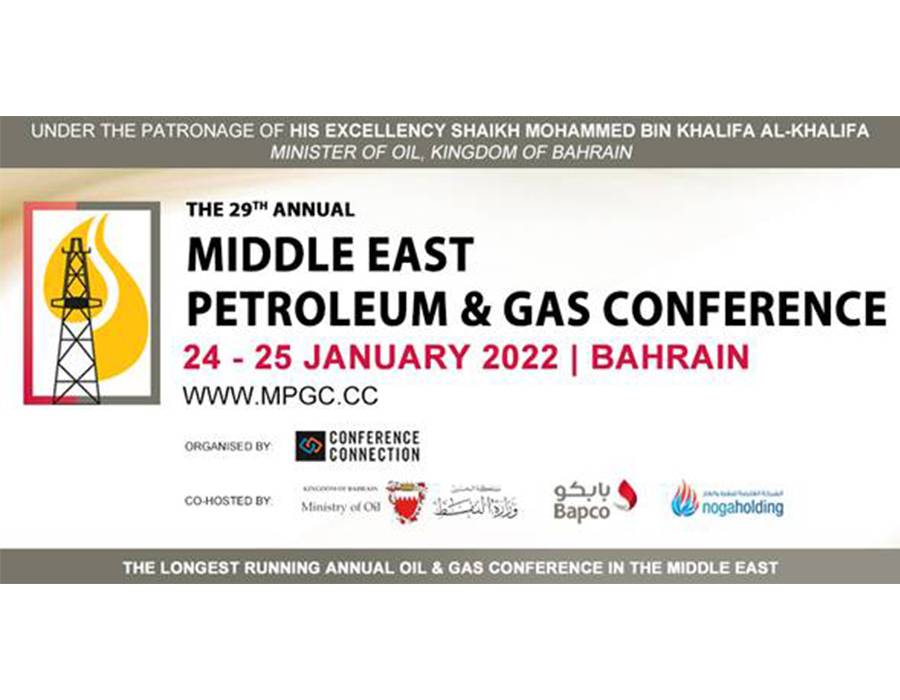
The 29th annual Middle East Petroleum Gas Conference (MPGC) event is scheduled to take place on 24-25 January 2022 in the Kingdom of Bahrain.

  • MPGC 2022 official opening and ministerial address by His Excellency Shaikh Mohammed Bin Khalifa Al-Khalifa, Minister of Oil, Kingdom of Bahrain commencing at 09:00 am on 24 January.
  • More than 30 key speakers to address ten sessions on 24 and 25 January including MPGC 2022 Crystal Ball, Keynote Addresses, All-Star Analysts Panel, MPGC Hard Talk, Refining and Natural Gas Trading.
  • Bapco, Saudi Aramco and Vitol to host Official Functions at MPGC 2022.
  • MPGC 2022 Agenda to include first time session on “Future Fuels & Energy Transition” on January 25.

Jointly hosted by Ministry of Oil, The Bahrain Petroleum Company (Bapco) and nogaholding, the 29th Annual Middle East Petroleum & Gas Conference (MPGC 2022) to be held in the Kingdom of Bahrain, is rapidly gathering steam with the participation of super major CEOs, top Wall Street analysts, oil and gas visionaries, global traders, refiners and other industry specialists.

MPGC will commence on 24 January with the official opening, to be graced by His Excellency Shaikh Mohammed Bin Khalifa Al-Khalifa, Minister of Oil, Kingdom of Bahrain, with the presence of His Excellency Abdulla Jehad Al Zain, Chairman of the Board of Directors and Dr. Abdulrahman Jawahery, CEO of Bapco. 

The opening session will feature the eagerly awaited annual MPGC 2022 Crystal Ball to be followed by Keynote Addresses on the Energy Markets delivered by Mr. Alan Haywood, BP plc’s SVP for ESG transformation, TOTSA TotalEnergie’s Head of Trading and Shipping, Mr. Thomas Waymel and Vitol Asia’s President, Mr. Mike Muller.

Official functions hosted by sponsors, including lunch by Saudi Aramco, coffee breaks by Vitol, the Bapco Gala Dinner and numerous hospitality suites, will provide extended opportunities for one to one and group networking in one location for all stakeholders, anxious to catch up with industry contacts, to resume business discussions and interactions, which are disrupted and long delayed by the pandemic.

The overarching MPGC 2022 theme Diverse Perspectives: Transitioning Towards a Carbon Constrained World” will find its way into ten agenda sessions, including a first-time panel on Future Fuels and Energy Transition.

A luncheon Address by Mr. Ahmed Al-Subaey, Vice President of Marketing, Sales & Supply Planning of Saudi Aramco on 24 January will also highlight how Saudi Aramco will position itself for sustainable value and success in a carbon constrained world.

The path-breaking MPGC “All-Star” Analysts Panel with the global heads of research of leading commodity houses, will be repeated by popular demand, on the MPGC 2022 agenda, with Dr. Jeffrey R. Currie of Goldman Sachs International, Dr. Edward L. Morse of Citigroup and Dr. Paul Horsnell of Standard Chartered. 

The closing session for day one will be the one not to be missed “MPGC Hard Talk and Dialogue” on the Middle East pricing and trading transformation with oil and product traders from Bapco, ICE, Vitol and the DME. 

The day’s sessions will culminate with the MPGC 2022 Gala Dinner, hosted by Bapco.

Discussions on liquefied natural gas (LNG) Trading, the Refining Landscape, and the first-time panel on Energy Transition, which will address the prospects for the oil and gas ecosystem shifting to a lower carbon future, will continue on Day Two, January 25 with the participation of ADNOC LNG, Shell LNG Marketing, BP IST Middle East, TotalEnergies Gas & Power, Cheniere Marketing, Bapco, Tecnicas Reunidas, Samsung Engineering, Technip Energies and Vitol.

Co-Hosts Bapco will take a high profile over both days of MPGC 2022, with Mr. Hafedh Al Qassab, Acting Deputy CE Co-Chairing with Dr. Fereidun Fesharaki, participation by Shaikh Ebrahim Bin Khalid Al-Khalifa, Head of Business Development, Marketing Division and Mr. Khalid Buhazza, General Manager Marketing on the MPGC International Advisory Committee and other speakers and chairs on the Trading, Refining and Future Fuels Panels, including Mr. Irfanullah Khan, Risk Manager, Lead Marketing.

Commenting on the significance of the timing, Dr. Fereidun Fesharaki, Co-Chairman MPGC 2022 and Chairman of FGE said: “This is an exceptional environment in the oil and gas industry, where COP26 seemed to want to see the end of fossil fuels, whilst oil and gas prices have reached historical highs and refining margins made great gains.” 

“This shows that despite the politically inspired wish to bring fossil fuels to an end, the demand side remains robust and the transition will be slow and challenging. Oil and gas is a huge business and it cannot simply be switched off. Oil demand will peak in the 2030’s but gas demand will be unlikely to peak before the late 2040’s. Until then the decline in demand will be extremely slow. 

“The energy transition will need to take into account the realities of demand and the needs for economic growth in Asia, the Middle East, Africa and Latin America. MPGC 2022 will provide the framework for all key players in the oil and gas business, to discuss the evolving strategies, commercial realities and the investment decisions that need to be made to achieve this”

MPGC 2022 has received outstanding support from leading oil market brands as sponsors, with Chevron and S&P Global Platts as platinum sponsors and Bapco, ICE, Kpler, Saudi Aramco, Samsung Engineering, Shell, Technip Energies, Tecnicas Reunidas, Uniper and Vitol as corporate sponsors. More than 450 global brands have supported MPGC in its 29-year history. 

The 2022 event is also supported by the Bahrain-based Gulf Downstream Association and Middle East Gases Association (MEGA).

A spokesperson from Conference Connection, organisers for MPGC said: “Wide participation is expected from key oil trading and producing destinations in the Gulf, and MENA, Europe, the Americas and Asia at MPGC 2022, which will be one of the oil industry’s first in-person events in 2022.”

“MPGC 2022 sessions will be delivered over two-days on 24-25 January in both roundtable discussion panels and presentations, with other pre and post executive briefings on oil and gas, as well as training courses and site visits on oil trading, refining and blending, spread over MPGC Week 2022 from 22-27 January, 2022.”

MPGC Week 2022, running from 22 – 27 January, 2022 will bring together five executive briefings, courses and technical workshops, with MPGC as the anchor event for the week. 

The activities will run back-to-back in one location within the week, delivering extensive learning, knowledge sharing and networking opportunities to the MPGC community.


Photo credit: Conference Connection
Published: 7 December, 2021

Continue Reading

Bunker Fuel Quality

FOBAS report warns of growing operational risks from ISO-compliant bunker fuels

LR’s latest FOBAS Fuel Quality Report reveals that the biggest fuel quality risks are no longer confined to off-specification fuels, with some compliant fuels creating operational challenges.
Admin

Published

on

By

New FOBAS report warns growing operational risks from ISO-compliant bunker fuels

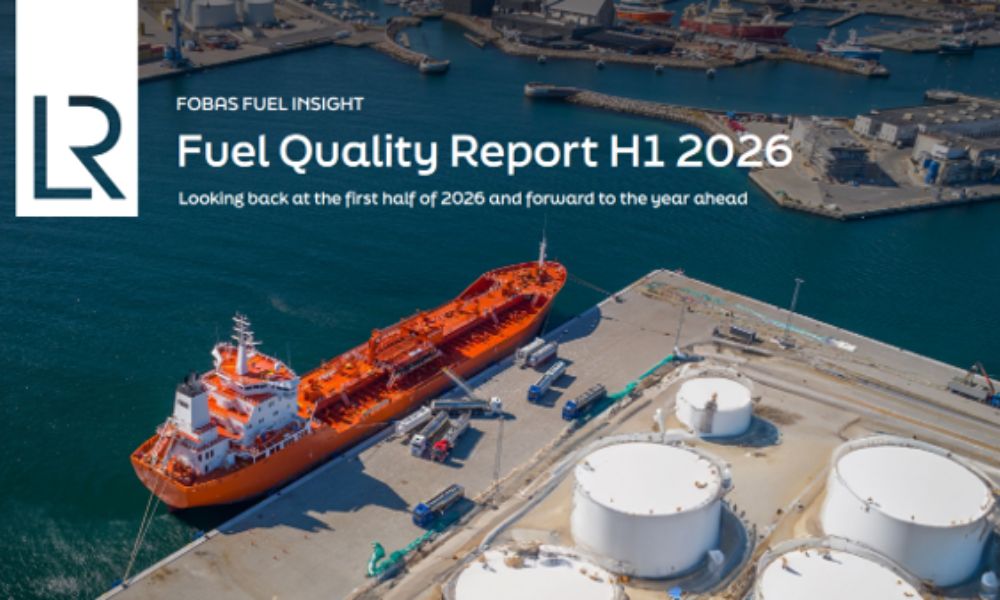
Classification society Lloyd’s Register (LR) on Tuesday (14 July) warned that ship operators are facing a growing risk from fuels that appear compliant under routine ISO 8217 testing but still present operational risks once onboard.

According to LR’s latest Fuel Oil Bunker Analysis and Advisory Service (FOBAS) Fuel Quality Report, covering the first half of 2026, off-specification fuels remain a persistent challenge. 

However, some of the most disruptive cases now involve fuels that pass routine compliance testing but show poor stability or compatibility, or contain non-conventional blend components that are only identified through more detailed investigative analysis.

Several incidents investigated highlighted this trend. In March and April, a number of vessels reported operational difficulties after bunkering fuel in a major bunkering hub. Further forensic analysis found that many of the fuels contained elevated concentrations of Estonian shale oil, in some cases estimated to be around 10-15%.

While shale oil is recognised within ISO 8217 as an acceptable blend component, FOBAS investigations found that higher concentrations can be associated with fuel instability and operational issues affecting filters, separators and fuel pumps.

The report also shows that fuel quality variability remains stubbornly high. Off-specification cases remained elevated throughout the first six months of 2026, suggesting that quality issues are no longer isolated events but a more persistent feature of today’s marine fuel supply chain.

The most common recurring issues included sulphur exceedances, excessive water content, sediment and stability problems, elevated catalytic fines, sodium contamination and low flash point distillate fuels.

At the same time, biofuels (especially FAME blends) are continuing to grow without being a primary source of quality issues. Where issues occurred in blended fuels, they were generally associated with the conventional VLSFO component rather than the FAME fraction.

The report concluded that operators will need to adopt a more proactive approach to fuel management as marine fuels become more diverse and fuel quality risks become harder to identify through routine compliance testing alone.

Greater emphasis on fuel stability, compatibility and understanding fuel composition will be critical to reducing operational disruption and maintaining vessel performance.

Murray Kirkwood, Fuel Specialist Consultant, Lloyd’s Register, said: “The findings from our latest report show that fuel quality risk is evolving. The challenge is no longer simply identifying fuels that fail specification. Increasingly, operators are encountering fuels that meet the required limits but still create operational difficulties once they are stored, handled and used onboard.

“As fuel blending becomes more complex, the distinction that matters is increasingly not between on-spec and off-spec fuel, but between fuels that are operationally resilient and fuels that are operationally fragile. Understanding that difference is becoming essential for shipowners and operators.”

The latest findings reinforced FOBAS’ long-standing view that effective fuel management increasingly depends on understanding fuel behaviour rather than relying solely on pass-or-fail specification testing.

By combining routine fuel quality monitoring with forensic investigation of operational incidents, FOBAS provides shipowners with a clearer understanding of emerging fuel quality risks as the industry continues its transition to a more diverse and complex fuel landscape.

Note: The FOBAS Fuel Insight: Fuel Quality Report H1 2026 is available at FOBAS Fuel Insight: Fuel quality reports | LR


Photo credit: Lloyd’s Register
Published: 15 July, 2026

Continue Reading

Interview

Interview: Alkagesta navigates risk from bunkering ops during turbulent times

As the industry navigates this period of uncertainty, the key question is no longer ‘what will fuel cost?’ but rather ‘will fuel be available?’, highlights Mithat Çiftçioğlu.

Admin

Published

on

By

Mithat MT

Mithat Çiftçioğlu, Marine Fuels Director at Alkagesta, shared his opinion on risk management for bunkering operations under current geopolitical tensions through the April edition of shipping magazine Deniz Ticaret.

The maritime publication, part of the Turkish Chamber of Shipping (İMEAK Deniz Ticaret Odası), has given Manifold Times permission to republish the article:

Fueling Ships in Turbulent Times

From Oil Shock to Fuel Access Crisis: A New Risk Map for Maritime 2026

The final weeks of the first quarter of 2026 mark one of the most complex periods in recent years for global energy and maritime markets. The sharp rise in oil and refined product prices since February 28 may look like a classic energy shock at first glance, but developments in the maritime sector point to a far deeper structural rupture.

What is being debated in the market today is no longer just oil prices. For traders and shipowners operating in the maritime sector and bunker market, the real issue is not the price of fuel — it is access to fuel. The fundamental question in the market has shifted: not what will the price of fuel be, but will fuel even be available?

In light of the Force Majeure cancellations at Asian ports over the past two weeks, another question must also be considered: Will pre-agreed bunker supply contracts actually be delivered?

From Oil Prices to Logistical Reality

Tensions in the Middle East have created a strong geopolitical risk premium in the oil market. Brent crude briefly surpassed the $100 per barrel mark, triggering a search for a new equilibrium across markets. This will inevitably bring inflation and recession back onto the global agenda in the months ahead.

But the rise in oil prices does not only reflect the risk of supply disruption — it also signals the return of one of the most fragile chokepoints in global energy trade:

The Strait of Hormuz

Approximately one-third of the world’s oil trade passes through this narrow waterway. Around 20 million barrels of oil and petroleum products transit Hormuz daily. Any disruption here would therefore affect not only oil prices, but also global refined product flows and the bunker market directly.

Why Strategic Oil Reserves Are Not the Solution

A commonly proposed solution in energy crises is the release of strategic petroleum reserves. However, releasing these reserves does not directly resolve a bunker crisis. Strategic reserves consist of crude oil. To produce bunker fuel, the following chain must be completed:

Crude oil → Refinery → Product logistics → Bunker port

This process takes time. Strategic reserves can temporarily stabilize oil prices, but they cannot solve the access problem in the bunker market in the short term.

Furthermore, the announced reserve release of 400 million barrels, to be drawn down at a rate of 2.5–3 million barrels per day, can only cover a small fraction of the estimated daily loss from the Middle East — optimistically 8–10 million barrels, pessimistically 18–20 million barrels per day.

A Historic Surge in Bunker Fuel Prices

The per-ton price of VLSFO (0.5% sulfur) bunker fuel has surpassed $1,000, reaching approximately double pre-war levels. This also represents some of the highest prices seen since July 2022.

While prices at bunker hubs such as Singapore and Fujairah are approaching $1,100 per ton, European markets have remained comparatively lower.

The Real Problem Is Not Price — It Is Fuel Access

Obtaining bunker quotes for April has become increasingly difficult, particularly at Asian ports. Even where shipowners and traders can secure quotes, the absence of supply guarantees makes pricing extremely challenging.

A senior executive at Oldendorff Carriers summarized the situation in these words:

“We cannot price cargo because we cannot calculate fuel costs; we cannot calculate fuel costs because there is no supply guarantee.”

The CEO of Maersk has compared the current situation to the pandemic era, stating that companies are attempting to source fuel through methods they have never tried before in order to keep global shipping networks supplied.

While supply is tight and prices are near their peak in Singapore and Fujairah, Rotterdam appears relatively more balanced. However, as the conflict drags on, risk perception in European markets is also rising.

The surge in bunker prices will not only increase costs — it will also affect global maritime transport capacity. Ships are expected to reduce their speeds to conserve fuel. This could lead to a reduction in effective carrying capacity, creating new logistical bottlenecks in global trade.

The importance of working with reliable, long-term partners has never been more apparent than during a crisis such as this.

The Widening Price Spread Between Fuel Types

A notable development in the bunker market in recent weeks is the rapid widening of price differentials between different fuel types. Two spreads in particular have expanded significantly:

  • Marine Gas Oil (MGO) – VLSFO
  • VLSFO – HSFO

Rising demand for distillate products, refinery production balances, and regional supply tightness are all contributing to this widening. As a result, bunker purchases have become not merely a matter of price level, but a strategic decision tied to product type and port selection.

An Unexpected Development: Biofuels Becoming Competitive

Another noteworthy development in the bunker market is that biofuels have remained at relatively competitive price levels. This creates two important opportunities for shipowners.

On one hand, biofuels remain competitively priced in certain markets. On the other, they offer a means of compliance with new regulations entering into force in Europe — particularly the FuelEU Maritime and EU ETS frameworks, which require reductions in carbon intensity. In this context, biofuels have become a strategic option for many shipowners.

Conclusion: Active Bunker Management Is The New Normal

The 2026 bunker market presents one of the most complex energy trading environments in recent years. The rise in oil prices, geopolitical risk at the Strait of Hormuz, tightness in physical fuel supply, and widening price spreads between fuel types have made bunker fuel management more critical than ever.

The prevailing view in energy markets is that as long as the risk at the Strait of Hormuz persists, turbulence in the bunker market will persist with it. As time passes, the depletion of commercial stocks may deepen the existing supply tightness further.

For this reason, the current situation is viewed not merely as an energy crisis, but as a new stress scenario testing the logistical infrastructure of global trade.

The view increasingly heard across energy markets is this:

“As long as Hormuz remains closed, it will not be oil prices but fuel access that constitutes the defining risk for global shipping.”

Finally, for shipowners and operators, bunker strategies are shifting away from a passive purchasing approach toward a model grounded in active risk management.


Photo and article credit: Deniz Ticaret
Published: 7 May 2026

Continue Reading

Analysis

T&E: Overreliance on traditional bunker fuels costs shipping USD 395 million a day due to Iran conflict

Development has made alternative fuels increasingly more competitive, states Eloi Nordé, shipping policy officer at T&E.

Admin

Published

on

By

The Hormuz crisis adds over 300 million a day to shippings fossil fuels bills

The European Federation for Transport and Environment (T&E) on 27 March highlighted the adoption of green marine fuels would reduce the shipping industry’s exposure to fuel price shocks in future.

It noted shipping companies are spending an extra €340 million (USD 394.74 million) a day in additional fuel costs as a result of the latest conflict in the Gulf.

As 99% of the global fleet runs on fossil fuels, the industry is directly exposed to fuel price volatility and supply disruptions. Efficiency measures, electrification and e-fuels would reduce the industry’s exposure to price fluctuations.

According to T&E, marine fuel prices have escalated rapidly, with VLSFO reaching €941 per tonne in Singapore, up 223% since the start of 2026. At the same time, LNG prices have risen by 72% since early March. Since February 28, shipping companies have incurred more than €4.6 billion in additional fuel costs.

The development has made alternative fuels increasingly more competitive. As fossil fuel prices reach record highs again, the cost gap with e-fuels is narrowing.

T&E’s research shows that the cost gap between marine gas oil – one of the more expensive fossil fuels – and e-fuels has shrunk to near parity (+5%) in some ports.

Hormuz oil crisis boosts potential e fuel competitiveness

While the trend may be temporary, it shows that the volatility of fossil fuel markets offsets much of the structural cost disadvantage of clean fuels.

“Chaos in the Strait of Hormuz is putting global maritime trade under the spotlight. But it’s on the oil markets where its impact will be felt the most. The war is costing the industry millions every day,” said Eloi Nordé, shipping policy officer at T&E.

“Some governments and parts of the industry have spent the last year bashing green maritime measures as being too expensive, yet those costs pale in comparison to this super-disruption.

“If anything, this crisis should be the catalyst for more investment in European e-fuels and greater uptake of energy efficiency measures to avoid fossil fuel shocks in the future.”


Photo credit: European Federation for Transport and Environment
Published: 2 April 2026

Continue Reading

Trending