Connect with us

Bunker Fuel

Minerva Bunkering launches Mauritania operations in West Africa push

New operation establishes Minerva’s presence across Mauritanian waters and national ports, with activity initially centred on Nouadhibou and Nouakchott.

Admin

Published

on

Minerva Bunkering launches Mauritania operations in West Africa push

Independent bunker supplier Minerva Bunkering on Wednesday (6 May) said it launched a new bunkering service in Mauritania after being awarded a license by the National Hydrocarbons Commission (CNHY), marking a further step in the company’s expansion into West Africa.

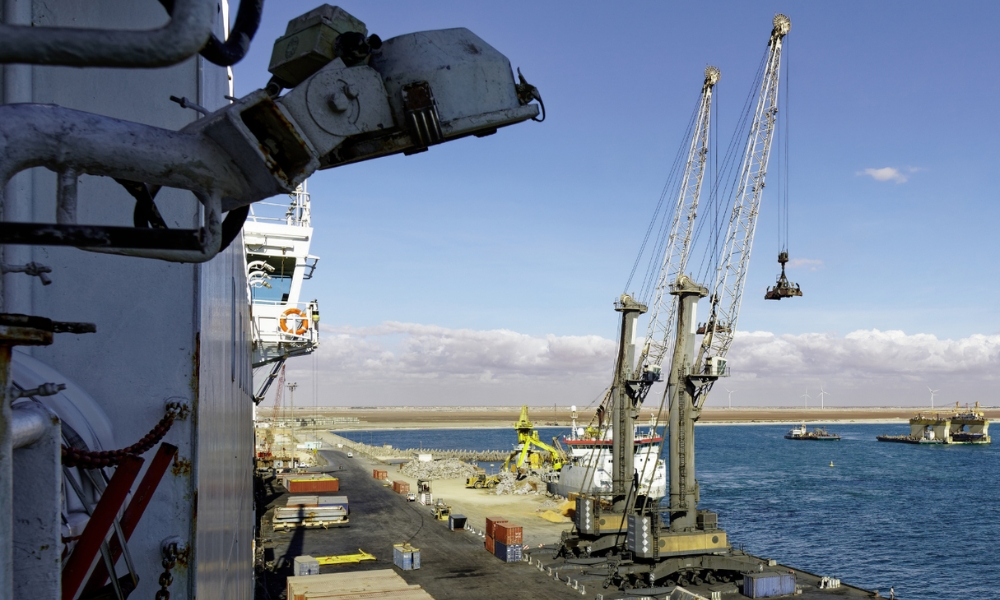
The new operation establishes Minerva’s presence across Mauritanian waters and national ports, with activity initially centred on Nouadhibou and Nouakchott. From these locations, the company will supply commercial vessels, as well as offshore oil and gas installations operating in the region.

Tyler Baron, Chief Executive Officer of Minerva Bunkering, said: “Minerva’s new operation in Mauritania is consistent with our strategy of increasing the density of the industry’s largest physical supply network. 

“Our mission is to lower our clients’ total cost of bunkers by leveraging supply chain efficiency and providing unmatched performance on fuel quality and quantity – we are excited to now bring this value proposition to vessels operating in Mauritanian waters.”

Mauritania is a growing bunkering market, with an active fishing fleet and increasing offshore oil and gas as well as regional trading activity.

Minerva sources multiple grades of marine fuels across a range of required viscosities from its hub in Las Palmas, enabling the company to leverage its existing infrastructure to ensure supply chain reliability.  

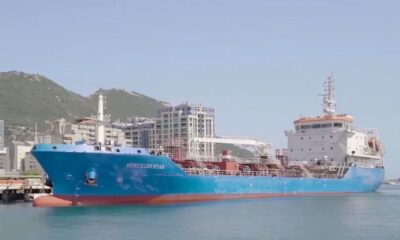
Bunkering tankers from Minerva’s fleet serving the Mauritania operation include MT Symi, MT Tethys and MT Karpathos.

Related: Minerva Bunkering adds barge “MT Mars” to Las Palmas operations


Photo credit: Minerva Bunkering
Published: 7 May, 2026

Continue Reading

LNG Bunkering

Dan-Bunkering supports Sallaum Lines with LNG bunkering operation in China

“Ocean Express” is one of six newbuilds in the series and represents the fourth supply opportunity Dan-Bunkering has supported so far.

Admin

Published

on

By

Dan-Bunkering supports Sallaum Lines with LNG bunkering operation in China

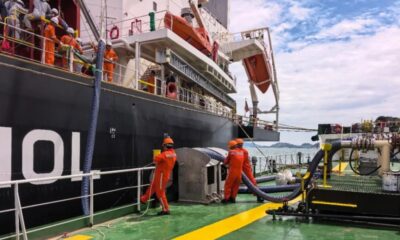
Global bunker supplier Dan-Bunkering on Friday (19 June) said it has recently concluded an LNG delivery in China for Sallaum Lines’ newbuild Pure Car and Truck Carrier (PCTC), Ocean Express

The delivery involved approximately 1,400 metric tonnes (mt) of LNG bunker fuel. 

This delivery is the outcome of a development process that began around April 2025, during which Dan-Bunkering worked with Sallaum Lines to evaluate several LNG supply opportunities in China linked to the company’s newbuild programme. 

Ocean Express is one of six newbuilds in the series and represents the fourth supply opportunity Dan-Bunkering has supported so far.

For this delivery, Dan-Bunkering said it secured a ship-to-ship supply solution aligned with the vessel’s operational requirements. The solution was made possible through close cooperation with supply partner SIPG Energy.

“This is a great example of what it takes to support clients in the transition to alternative fuels,” said James Shiller, Global Lead of New Fuels at Dan-Bunkering, and continues:

“LNG bunkering is not always straightforward, particularly during a first full bunker operation. Success depends on local knowledge and persistent cooperation across teams. Sallaum Lines trusted us and SIPG Energy to keep working the options, and we are proud that all involved teams turned a challenging situation into a successful delivery. We value the relationship and look forward to supporting their remaining newbuild deliveries.”

The company added that the delivery was made possible through close coordination across Dan-Bunkering and the wider Group, including Dan-Bunkering’s Netherlands office, Bunker Holding’s specialists and sourcing team.


Photo credit: Dan-Bunkering
Published: 22 June, 2026

Continue Reading

Bunker Fuel Quality

Fuel quality issues drive 50% rise in bunker claims, says Gard

Gard says bunker-related claims increased significantly in between January and May 2026, with over 70 cases recorded – a 50% rise compared to 2025 and notes that most claims involve fuel quality.

Admin

Published

on

By

RESIZED Shaah Shahidh on Unsplash

Maritime protection and indemnity (P&I) club Gard on Friday (19 June) released a report on practical observations from recent cases of bunker-related claims, highlighting recurring challenges and essential considerations for managing fuel quality issues effectively:

Key findings

  • Sharp rise in bunker claims and geopolitics: Bunker-related claims increased significantly in early 2026, with over 70 cases recorded – a 50% rise compared to 2025. Most claims involved fuel quality, with a noticeable uptick following the escalation of the Middle East conflict.
  • Global risk profile with concentration driven by supply volumes: Bunker quality incidents were recorded worldwide, reflecting a broadly dispersed and global risk environment rather than a localized issue. Higher numbers of claims at major hubs such as Singapore, Houston, and ARA mainly reflect their large bunkering volumes
  • VLSFO remains the primary source of claims: Very Low Sulphur Fuel Oil (VLSFO) accounts for the vast majority of bunker quality claims. Its complex blended nature increases the likelihood of variability and contamination, making it more prone to quality issues. This reinforces that VLSFO continues to be the key technical risk area in marine fuel usage.
  • ISO 8217 compliance does not guarantee fuel suitability: A significant proportion of cases involved fuels that met ISO 8217 Table 2 parameters but still caused operational issues and damage to machinery. This underscores the growing importance of Clause 5, which focuses on whether fuel is fit for use and free from harmful substances. Standard testing alone is often insufficient, requiring more advanced analysis to identify problematic contaminants.
  • Claims are driven by both technical and contractual challenges: Bunker disputes are often complex due to misaligned contractual relationships between owners, charterers, and suppliers. Issues related to binding sample, parameter(s) to be tested, time bars and evidentiary requirements frequently complicate claims resolution.
  • Operational impact is often underestimated compared to headline casualties: While no major casualties were directly linked to poor fuel in this dataset, several vessels were disabled or required towage. These incidents can create high exposure when occurring in congested or coastal waters. The absence of catastrophic outcomes should not obscure the underlying operational risk.

This report draws on Gard’s claims data from the first five months of 2026, with additional data contributions from VPS.

Note: The full report titled ‘Beyond Specification: Bunker claims insights in early 2026’ can be found here


Photo credit: Shaah Shahidh on Unsplash
Published: 22 June, 2026

Continue Reading

Alternative Fuels

Repsol launches commercial co-processed marine fuel supply in Algeciras

Firm said this marked the deployment of immediate solutions produced by integrating renewable content directly into conventional refinery processes.

Admin

Published

on

By

Repsol launches commercial co-processed marine fuel supply in Algeciras

Spanish energy company Repsol on Thursday (18 June) said it has started the commercial supply of co-processed marine fuels with renewable content in the port of Algeciras, one of the main bunkering hubs in the Mediterranean. 

The company said this marked the deployment of immediate solutions produced by integrating renewable content directly into conventional refinery processes, supporting the decarbonisation of maritime transport.

Last week, Repsol launched the first commercial voyage of its new generation bunkering vessel Bahía Candela. During this first voyage, the vessel loaded co-processed fuel at Repsol’s Petronor refinery in Bilbao, reinforcing the company’s end-to-end supply capability by integrating refining, logistics, and delivery.

Repsol reportedly chartered the bunkering vessel from shipowner Mureloil. 

Designed specifically for marine fuel supply, Bahía Candela features multiproduct capabilities and is prepared to operate with low-emission energy solutions. Its diesel-electric propulsion system and advanced energy storage enable optimised efficiency and reduced emissions during operations.

“This milestone marked Repsol’s entry into the supply of low-carbon marine fuels in Algeciras, leveraging its integrated value chain and expanding its multi-energy offering in the maritime sector, combining conventional products with low-carbon alternatives, thus, strengthening its ability to adapt to the diverse needs of its customers,” Repsol said in a statement. 

Co-processing enables the integration of renewable feedstocks, such as oils and residues, alongside conventional streams within refining processes. 

This generates fuels with a low-carbon footprint and supports a gradual transition towards solutions that will help to decarbonise the sector, providing a cost-efficient and scalable pathway to supply low-carbon fuels that are fully compatible with existing engines and infrastructure, without requiring changes to vessels or port assets, and using current industrial assets.

Related: Mureloil deploys hybrid chemical tanker for bunkering and terminal transport


Photo credit: Repsol
Published: 22 June, 2026

Continue Reading

Trending