Connect with us

Alternative Fuels

Methanol Institute publishes first complete guide to methanol as a marine fuel

Report addresses topics including regulatory drivers, environmental performance, engines and fuel systems, bunkering, handling and safety characteristics as well as costs and pricing.

Admin

Published

on

286

The Methanol Institute (MI) on Tuesday (30 May) said it has published the first comprehensive guide to methanol as a marine fuel. 

As the shipping industry continues its transition towards net carbon neutral operations, MI said owners are increasingly choosing methanol as a bunker fuel that can help them progressively reduce emissions in line with regulatory targets.

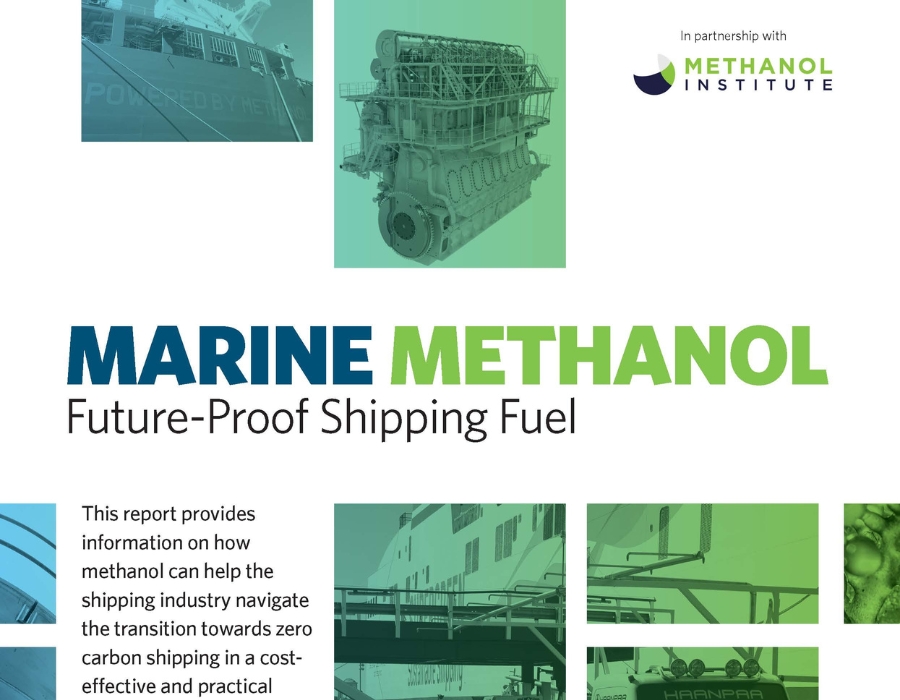
‘MARINE METHANOL Future-Proof Shipping Fuel’ has been produced to help stakeholders across the industry access the information they need to support decision-making on which alternative fuel is right for their fleet, MI added. 

Sections of the report address regulatory drivers, environmental performance, engines and fuel systems, bunkering, handling and safety characteristics, costs and pricing, availability and feedstocks for conventional and renewable product. Also included are case studies on first movers including AP Moller-Maersk, Waterfront Shipping, Proman Stena Bulk and the conversion of ropax ferry Stena Germanica.

The orderbook for methanol fuelled ships has grown rapidly with owners and operators specifying the fuel for use on ships from the largest containerships to small pilot boats. In between is the growing fleet of methanol carriers, bunker tankers, bulk carriers, heavylift vessels, cruiseships, ferries and superyachts.

Approved for use as fuel under the IMO’s IGF Code, the momentum for methanol as fuel has increased as studies, analysis and guidance – much of it supported by the Methanol Institute – has been published. This includes early guidance for bunkering operations developed with Lloyd’s Register and subsequent work with the ports of Shanghai, Singapore and Rotterdam.

Propulsion systems include tried and tested two-stroke main engines, four stroke units, and fuel cells using methanol for conversion to hydrogen. Main engine manufacturers report considerable order backlogs and are developing ever larger, higher capacity units. Studies and pilots continue to prove the effectiveness of converting smaller main engines to methanol operations.

“Methanol has staked a significant claim to be among the serious fuel choices for vessel designers, owners and operators looking to make a start on their transition to sustainable operations,” said MI Chief Executive Officer Greg Dolan. “While there won’t be a single decarbonization solution, it is clear that methanol has advantages that combine to provide a pathway to lower carbon and ultimately carbon-neutral operations; This report provides a clear roadmap for this journey.”

“Shipowners have recognised that methanol provides them with huge flexibility in introducing a low-pollution, lower carbon fuel which is closest to a drop-in available in the market,” said MI Chief Operating Officer Chris Chatterton. “The decision by more and more leading shipping companies to adopt methanol as fuel signals that the industry recognises the need to start its transition to net carbon neutrality now; this publication can support their decision-making process.”

Note: ‘MARINE METHANOL Future-Proof Shipping Fuel’ guide can be downloaded here.

Related: Methanol Institute publishes list of methanol-fuelled vessels to date
Related: Methanol Institute: ‘Plausible’ business opportunity, lower barriers to entry for methanol bunkering first movers
Related: Methanol Institute: ‘Turning point’ for methanol as bunker fuel reached with A.P. Moller – Maersk leading change
Related: Methanol Institute: Europe’s shipping sector needs certainty for renewables transition
Related: China: Chimbusco releases methanol bunkering code of practice draft to industry
Related: Sea Commerce: ‘Why the time has come for Methanol as a marine fuel’
Related: Wartsila: Methanol as marine fuel – is it the solution you are looking for?
Related: Maersk unveils design of its new methanol dual fuel container ship
Related: CMA CGM plans to order six more methanol-fuelled boxships from China
Related: ONE orders 10 new methanol and ammonia-ready large container ships


Photo credit: Methanol Institute
Published: 30 May, 2023

Continue Reading

Biofuel

South Korea: S-Oil launches B30-VLSFO bio bunker fuel supply

Company says it has established an integrated operating system in the Ulsan region covering the entire value chain, from feedstock procurement and blending to supply.

Admin

Published

on

By

South Korea: S-Oil launches B30-VLSFO bio bunker fuel supply

South Korean petroleum and refining company S-Oil on Wednesday (22 July) said it has started supplying B30 very low sulphur fuel oil (VLSFO), as the company seeks to support shipping’s decarbonisation efforts and growing demand for lower-carbon bunker fuels.

The company said its B30 VLSFO contains 30% sustainable biofuel blended with conventional VLSFO and can be used without requiring modifications to existing vessels, enabling shipowners to comply more readily with emissions regulations from the International Maritime Organization (IMO) and the European Union (EU).

S-Oil said it has established an integrated operating system in the Ulsan region covering the entire value chain, from feedstock procurement and blending to supply. The system combines VLSFO produced at its Onsan refinery with biofuel production facilities and storage infrastructure in the Ulsan region, allowing the entire process to be carried out within a single logistics hub.

According to the company, the integrated supply chain reduces transportation requirements during production while improving supply efficiency and reliability.

S-Oil also highlighted Ulsan Port as a strategic location for marine biofuel supply, noting the port has strong demand for bio-bunker fuels, particularly from car carriers, enabling prompt and stable deliveries to key customers.

An S-Oil official stated: “In the bio-marine fuel market, not only product quality but also securing a stable supply of raw materials and an efficient supply system are important competitive advantages.

“Based on our existing bunkering business capabilities and the excellent supply infrastructure in the Onsan area, we plan to supply stable and competitive low-carbon fuel.”


Photo credit: S-Oil
Published: 23 July, 2026

Continue Reading

Bunker Fuel

Antwerp-Bruges biofuel bunker sales drops 36% on year in Q2 2026, LNG down 13.4%

Biofuel recorded 26,833 mt in Q2 2026 with 41,939 mt recorded in the same period the year before while port data showed 76,513 mt of LNG being delivered in Q2 2026, down from 88,328 mt.

Admin

Published

on

By

Port of Antwerp-Bruges, Deurganck Dock

The Port of Antwerp-Bruges recently published bunker fuel sales data for the second quarter (Q2) of 2026.

Total bunker sales at the port was 2.05 million metric tonnes (mt) in Q2 2026, compared to sales of 1.99 million mt (+3%) during the similar period in 2025.

Deliveries of ultra low sulphur fuel oil, very low sulphur fuel oil, high sulphur fuel oil and marine gas oil in Q2 2026 (against on year) recorded respectively 164,987 mt (+43.6%  from 114,917 mt), 537,926 mt (+12.8% from 476,746 mt), 659,182 mt (+11.6% from 590,544 mt) and 366,329 (-15.7% from 434,766 mt).

Biofuel recorded 26,833 mt in Q2 2026 with 41,939 mt (-36%) recorded in the same period the year before. 

Port data showed 76,513 mt of liquefied natural gas (LNG) being delivered as a marine fuel in Q2 2026, down by 13.4% from 88,328 mt in Q2 2025. Meanwhile, there has been no deliveries of methanol at the port for the year so far.

Related: Antwerp-Bruges biofuel bunker sales plunge 50.6% on year in Q1 2026, LNG soars 214%


Photo credit: Port of Antwerp-Bruges
Published: 23 July, 2026

Continue Reading

Methanol

World Fuel and partners complete first green methanol bunkering of car carrier in Shanghai

Operation involved the delivery of approximately 2,800 MT of green methanol to “Arctic Tern” via a ship-to-ship transfer using SIPG Energy’s dedicated methanol bunkering vessel “M/V Hai Gang Zhi Yuan”.

Admin

Published

on

By

World Fuel and partners complete first green methanol bunkering of car carrier in Shanghai

Marine fuel provider World Fuel on Tuesday (21 July) said it successfully completed the first green methanol bunkering of M/V Arctic Tern, with EUKOR Car Carriers and SIPG Energy at the Port of Shanghai. 

Arctic Tern is the first vessel in the new Shaper Class series of car carriers. 

The operation involved the delivery of approximately 2,800 MT of green methanol to Arctic Tern via a ship-to-ship transfer using SIPG Energy’s dedicated methanol bunkering vessel M/V Hai Gang Zhi Yuan, the largest vessel of its kind in operation. 

The bunkering operation was carried out at Haitong Terminal, Waigaoqiao Port Area, Shanghai Port, with cargo handling operations conducted simultaneously during bunkering.

This marks EUKOR Car Carriers’ first green methanol operation and the first time Arctic Tern has bunkered methanol since its delivery on 9 July. The operation marked the first bunkering at Shanghai Port of green methanol produced locally in Shanghai for an international PCTC operator. 

It also demonstrated the city’s integrated green methanol value chain, spanning local production, storage and bunkering, and established a replicable “Shanghai Model” for green methanol supply.

World Fuel arranged the supply and delivery of the fuel on behalf of EUKOR Car Carriers, working with SIPG Energy as the physical supplier at the Port of Shanghai.

The green methanol supplied was produced from municipal solid waste, ISCC-EU certified, and had a carbon intensity value below 25 gCO₂e/MJ.

Arctic Tern is the first of fourteen Shaper Class vessels ordered by Wallenius Wilhelmsen. With a capacity of 9,300 car equivalent units and methanol dual-fuel capability, the vessel will be operated by EUKOR Car Carriers, jointly owned by Wallenius Wilhelmsen and Hyundai Motor Group. Following her first green methanol bunkering, Arctic Tern will continue her maiden voyage from Asia to Europe.

Xavier Leroi, COO Shipping Services at Wallenius Wilhelmsen and CEO of EUKOR Car Carriers, said: “Completing Arctic Tern’s first green methanol bunkering shortly after delivery is a significant milestone towards our decarbonisation ambition for both EUKOR Car Carriers and Wallenius Wilhelmsen. It demonstrates how investments in next-generation vessel technology and fuel flexibility are being translated into real-world operations. 

“This achievement reflects the strong collaboration between all parties involved. Together, we have shown how partnerships across the maritime value chain can help make lower-emission fuels available and operationally viable at scale.”

Mark Tamsitt, SVP Global Marine Sales at World Fuel, said, “The first bunkering event with a new fuel is a significant moment for any shipowner, and our role is to make it as seamless as possible. By connecting EUKOR Car Carriers with SIPG Energy’s proven green methanol capability at the Port of Shanghai, we were able to deliver on reliable supply, fuel quality, and safe processes. As more of our customers bring methanol dual-fuel tonnage into service, we are committed to being the partner that makes these kinds of operations routine.”

Mr. Zhang Da, General Manager of SIPG Energy, said, “Welcoming Arctic Tern to the Port of Shanghai for her first green methanol bunkering demonstrates the strength and maturity of our supply capability. Building on our well-established methanol ship-to-ship bunkering services for container vessels, we have already extended such services to pure car and truck carriers (PCTCs). This bunkering sets a new record for the largest single SIMOPs green methanol bunkering for PCTCs in China, marking another step in building Shanghai’s position as a global green energy hub for international shipping.”

This operation follows Wallenius Wilhelmsen’s announcement on 9 July that Arctic Tern would complete her first methanol bunkering shortly after delivery. The vessel entered service on routes between Asia and Europe immediately following handover from China Merchants Jinling Shipyard in Nanjing.


Photo credit: World Fuel
Published: 22 July, 2026

Continue Reading

Trending