Connect with us

Business

INTERVIEW: Bunkering sector undergoing through exciting technological transformation, observes Teekay Tankers

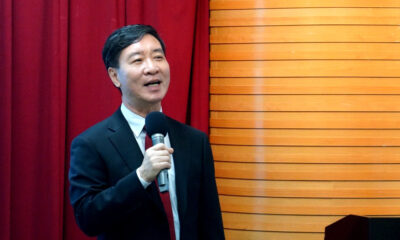
Mads Bjornebye, Manager of Bunker Services at Teekay Tankers Ltd, shares about the company’s perspective of e-BDNs, bunker purchasing & planning tools, while offering his thoughts on future marine fuels.


Admin

Published

on

Mads MT

The following interview arranged by Conference Connection is part of pre-event coverage for the upcoming 12th International Fujairah Bunkering & Fuel Oil Forum (FUJCON 2021), where Manifold Times is an official media partner. Readers can register for the virtual event by clicking on the link here

The bunkering industry is currently undergoing through an exciting transformation due to the introduction of new technologies, believes the Manager of Bunker Services at Teekay Tankers Ltd, UK.

Teekay, the largest operator of mid-sized tankers including suezmax, aframax, and long range two (LR2) vessels, is currently looking at various technologies to optimise its marine refuelling operations, shares Mads Bjornebye.

“The biggest one is E-BDN’s. We would like to see this rolled out by suppliers as soon as possible. E-BDN’s will enable a much quicker invoicing process, no longer waiting weeks for invoices and suppliers will also benefit as invoicing can be automated,” he told Singapore bunkering publication Manifold Times.

“Delivered quantities can also be automatically updated in the vessel management software systems of owners with very little, if any, manual intervention.

“E-BDN’s are something that only suppliers can implement, but Teekay as an owner welcomes any technology that helps the whole bunkering process, so it is an exciting future for the industry.”

Bjornebye, meanwhile, notes technology has already helped in the bunker enquiry process.

Platforms, such as ClearLynx, have made it much easier for owners to get their bunker inquiries out to the market; it also lets bunker buyers cover the whole market as well as be informed about new suppliers, he adds.

“It is great to see so many different companies trying out different technologies in this space. There are bunker planning tools, tools to monitor the oil markets and place stems at the right time etc,” says Bjornebye.

“Having tools that enable you to see prices, avails etc are the next step and it is coming sooner rather than later, indeed some of these tools are already available from the different bunker management software offerings.

“Some suppliers even have platforms where you can see which barge is assigned to your bunker stem, where it is and when you can expect the barge alongside. This is a great development as it means buyers are kept informed during the whole process. This allows us to keep an eye on the delivery and contact the supplier if we see delays etc happening.

“The more we as owners know about the bunker delivery, the more we can plan our voyage and make sure we are on time, the better it is for our customers as well as us. Technology can also help suppliers check where vessels have called and check for any possible sanction violations which is great for suppliers.”

Though it seems technology is great for bunkering, Bjornebye was quick to point out a major hurdle it currently faces.

“The biggest challenge is the fear of change I would say. Bunkering, and shipping to an extent, is a conservative industry and change can sometimes be slow. There is good reason for this of course as costs of change can be high, whilst shipping markets are also volatile,” he explains.

“The bunkering industry is also still operating in much the same way it has been for many years. For example, we still have paper BDN’s in the 21st century. That to me is surprising as well as frustrating. We have been looking at E-BDN’s more and more over the last year, and would really like to see this technology implemented across the industry.

“We have also seen Singapore lead the way with the introduction of MFM’s, yet the rest of the world has been slow to change. Singapore is also looking at digitising the bunker industry so once again leading the way for our industry, hopefully other ports will follow their lead.

“Change and innovation is vitally important, the biggest barrier to change is the thinking that we don’t need to change and innovate. The technology is there; we just have to want to change for the better.”

Moving forward, Bjornebye notes the next big step forward will be the types of bunker fuels chosen by the maritime and shipping sector as part of IMO 2030 and IMO 2050.

“Teekay has been following the developments in the future fuels arena with great interest, it really is one of the most important challenges facing all ship owners at present. How will we fuel our vessels over the next 30 years and beyond?” He asks.

“The challenge is really made up of two parts; how do we manage our emissions in the short and medium term, and what fuel or fuels will be the zero carbon fuel of choice for our industry in the long term?

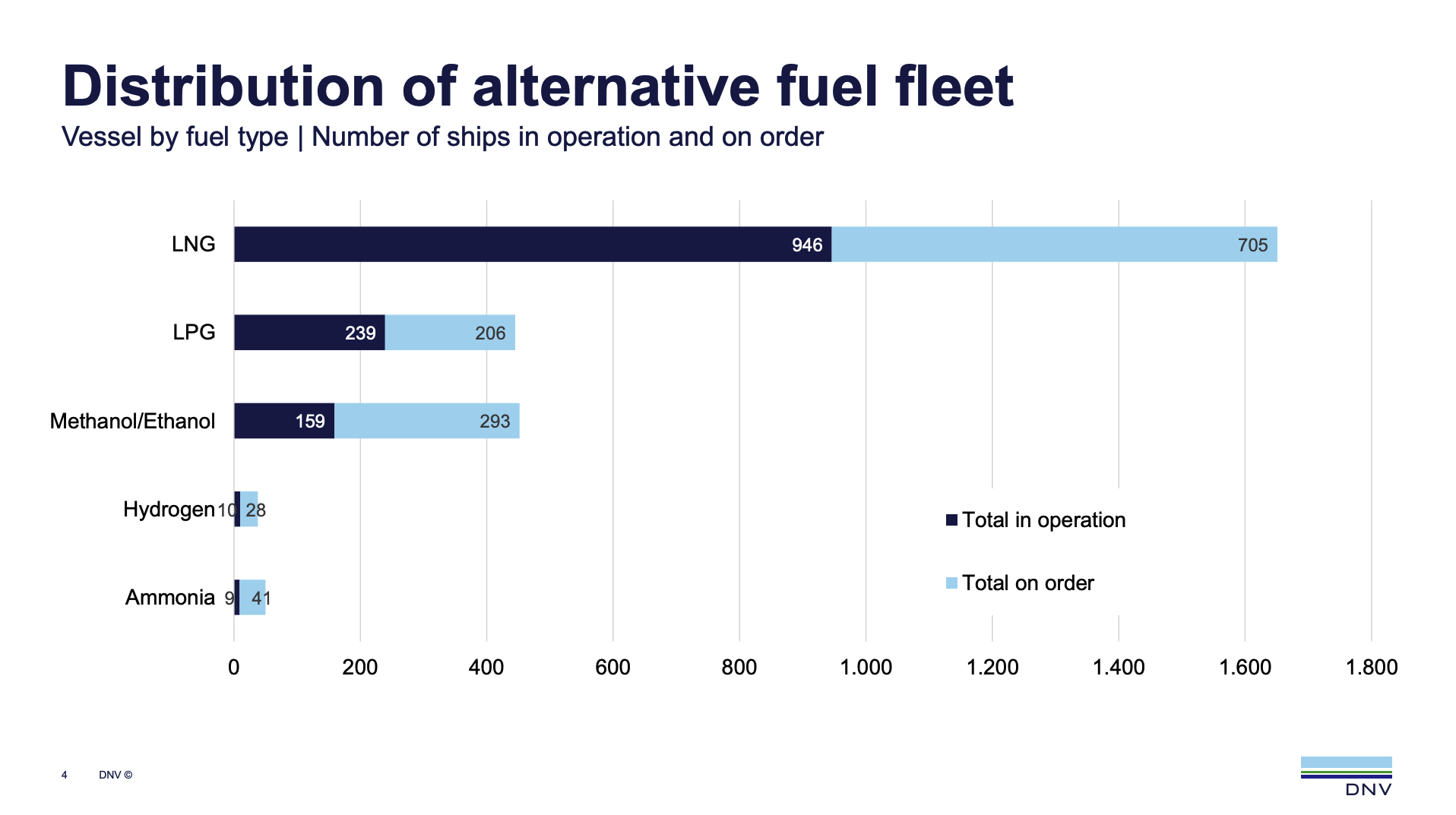
“If we look at the next decade, LNG is clearly the front runner as no other alternative fuel has the infrastructure or supply in place to be a viable option at present.

“Other fuels, such as ammonia, methanol etc are not in the same position, and most likely will not be a viable option until much later this decade or perhaps not until 2030 and beyond.

“This means that for owners who would like to order new vessels over the next few years, have to consider their options carefully.”

Bjornebye explains a conventionally fuelled vessel ordered today may undergo a massive depreciation after 15 years; unlike a newbuilding which has the capability to burn an alternative fuel. Other factors include CAPEX and OPEX costs which need to be competitive in order for shipowners to jump on the alternative marine fuels bandwagon.

“LNG will have a place as a bridging fuel between now and when the zero carbon fuels are ready both in terms of supply, as well as infrastructure for our vessels to be able to tramp around the globe with adequate access to these fuels in the right locations,” he notes.

“For Teekay, we haven’t made any firm decision just yet as to how this [fuel choices for newbuilds] will be implemented.

“However, we are looking at several options so that when we do come to renew our fleet we are well versed in the pro’s and con’s of the various options. We have to consider how we trade our vessels and what is available at the time as well as the cost of course.”

Note: Mads Bjornebye will be speaking at Session 1: Shipping Outlook Post 2020/Cpovid-19; Opportunities & Challenges at FUJCON 2021.


Published: 23 March, 2021

Continue Reading

Methanol

China launches methanol shipping supply chain alliance to accelerate green transition

Marine fuel suppliers in the alliance include Sinopec Fuel Oil Sales, China Marine Bunker (PetroChina), SIPG Energy (Shanghai), and Shenzhen Port Energy Development.

Admin

Published

on

By

China Flag

China Waterborne Transport Research Institute under the Ministry of Transport and China Transport News recently jointly launched a Methanol Fuel Shipping Supply Chain Innovation Alliance with 20 organisations spanning the shipping, port, energy, equipment, research and industry association sectors.

The alliance was officially announced during the main event of China Maritime Day 2026 on 11 July, where members also released a joint initiative to develop a collaborative methanol-fuelled shipping supply chain.

The alliance aims to implement China’s national strategy for green economic transformation and support the Ministry of Transport’s “One Network, Four Modernisations” initiative by building a safe, efficient, economical and reliable methanol marine fuel supply chain

Under the joint initiative, alliance members pledged to align with China’s national decarbonisation strategy by promoting methanol as a key pathway for the shipping sector’s green transition and optimising the industry’s energy mix.

The members also pledged to strengthen collaboration across the supply chain to improve coordination between bunker fuel production, transportation and end users while advancing technological innovation.

Lastly, the alliance will support the development of policies, planning and technical standards, promote resource sharing and joint research, and accelerate the large-scale adoption of methanol as a marine fuel.

The alliance brings together companies and organisations representing the entire methanol shipping supply chain.

Members include shipping and port members such as China Changjiang National Shipping (Group) Corporation, COSCO Shipping Bulk Co., Ltd., Shandong Port Group, and Wuhan Chuangxin Jianghai Shipping Co., Ltd.

Energy companies in the alliance include Sinopec Chemical Commercial Holding Company Limited and Methanex Corporation.

Marine fuel suppliers including Sinopec Fuel Oil Sales, China Marine Bunker (PetroChina), SIPG Energy (Shanghai) Co Ltd and Shenzhen Port Energy Development Co Ltd are also part of the alliance. 

Equipment manufacturers in the alliance are CSSC 711th Research Institute, CSSC Power (Group) Corporation Ltd and Chongqing Hongjiang Machinery Co Ltd.

Research, media and industry organisations participating in the alliance include the China Waterborne Transport Research Institute, China Transport News, and the Methanol Institute.

The Methanol Institute said methanol is moving beyond individual projects towards coordinated action across the entire value chain. 

“And China continues to play a leading role in advancing methanol as a marine fuel,” it said in a social media post.  

“We’re proud to work alongside our fellow alliance members to help strengthen the methanol supply chain and support the continued growth of methanol as a marine fuel.”


Photo credit: David Yu from Pixabay
Published: 17 July, 2026

Continue Reading

Alternative Fuels

KR, HD Hyundai tap first ammonia dual-fuel sea trial to develop vessel operating standards

Trial generated data on the vessel’s fuel supply system and engine, which will provide a technical foundation for KR’s future development of domestic guidelines for ammonia-fuelled ships.

Admin

Published

on

By

KR, HD Hyundai tap first ammonia dual-fuel sea trial to develop vessel operating standards

Korean Register (KR) on Tuesday (14 July) said it is collaborating with HD Hyundai Heavy Industries (HHI) to establish a domestic operating environment for ammonia-fuelled vessels under the Ministry of Oceans and Fisheries’ Green Shipping Corridor Construction Support Project. 

The initiative supports the development of ammonia as one of the most promising next-generation marine fuels.

HHI recently conducted a sea trial of Korea’s first ammonia dual-fuel propulsion vessel. The trial generated operational data on the vessel’s fuel supply system and engine, which will provide a valuable technical foundation for KR’s future development of domestic guidelines for environmentally friendly vessel operations and supporting wider maritime decarbonisation efforts.

A spokesperson for HD Hyundai, said: “Drawing on our group’s R&D capabilities and on-site technical expertise, we have made meaningful progress in advancing the application of ammonia as a marine fuel. We expect this to help enhance a sustainable maritime ecosystem while strengthening the competitiveness of Korea’s shipbuilding industry.”

Kim Daeheon, Executive Vice President of KR’s R&D Division, added: “The close collaboration between KR and HD Hyundai has enabled us to build the technical foundation for introducing ammonia-fueled vessels in Korea. We will continue to drive national projects forward together with HD Hyundai and establish technical standards befitting the era of Green Shipping Corridors.”


Photo credit: HD Hyundai Heavy Industries
Published: 17 July, 2026

Continue Reading

Wind-assisted

DNV awards TADC to Econowind for VentoFoil 3-Series

System actively harnesses wind power to generate forward thrust, helping to reduce bunker fuel consumption and mitigate FuelEU penalties.

Admin

Published

on

By

DNV awards TADC to Econowind for VentoFoil 3-Series

Dutch wind-assisted propulsion technology firm Econowind on Wednesday (15 July) said it has received a Type Approval Design Certificate (TADC) from classification society DNV for its VentoFoil 3-Series boundary layer suction wing. 

The company said the certification confirms compliance with DNV’s ST-0511 standard for Wind-Assisted Propulsion Systems and enables easier integration of VentoFoils on DNV-classed vessels worldwide. 

Econowind added that the approval accelerates the deployment of wind propulsion across the shipping industry.

“DNV is one of the world’s leading classification societies. This TADC gives DNV-classed shipowners confidence that VentoFoils meet the highest industry standards,” said Chiel de Leeuw, Chief Commercial Officer at Econowind. 

“It simplifies the approval process for both retrofits and newbuilds. VentoFoils are ideal for late-stage design integration and retrofit projects. This is an important milestone for Econowind and for the wider adoption of wind-assisted ship propulsion.”

The 3-Series VentoFoil is Econowind’s best-selling suction wing to date, with over 150 units sold. The system actively harnesses wind power to generate forward thrust, helping to reduce fuel consumption and mitigate FuelEU penalties. The system includes a tilting foundation, allowing the wings to be tilted down during port operations or in adverse weather conditions, making it a flexible solution.

The TADC applies to the 16-meter VentoFoil 3-Series product design and supports easy integration into DNV-classed vessels without repeating the full design assessment process. This enables shipowners, shipyards, and project teams to move more efficiently from concept to installation, reducing project complexity and accelerating deployment. 

Hasso Hoffmeister, Senior Principal Engineer at DNV Maritime, said: “It is a great pleasure to award Econowind this new certificate. WAPS have been going from strength to strength over the past few years, from 2022 the number of vessels in operation has increased five times, and we’ve now topped the century mark. 

“And with the current advances in technology, materials, and production capacity in the segment, we expect this to accelerate. So, while the wind always changes, the shipping industry is likely to be sailing strong for years to come.”

Econowind expects the DNV Type Approval Design Certificate to accelerate adoption of the VentoFoil, particularly among shipowners seeking proven, independently certified technology that can support fuel savings, emissions reductions, and decarbonization goals.

MS Heinz of HS Schiffahrt is among the first vessels to sail under this TADC.The company said the approval builds on Econowind’s growing installed base and further strengthens confidence in wind-assisted ship propulsion as a practical solution to address energy scarcity and high fuel prices. 

In addition to the 3-Series, Econowind offers the 5-Series for the deep-sea market.


Photo credit: Econowind
Published: 17 July, 2026

Continue Reading

Trending