Connect with us

Analysis

IBIA: IMO to develop guidelines for dealing with ‘off-spec’ flashpoint incidents

A fuel with flashpoint below 60°C is not only outside the ISO 8217 specification; it is also a breach of SOLAS regulations and hence is regarded as a critical parameter.

Admin

Published

on

IBIA

The International Bunker Industry Association (IBIA) on Monday (7 June) published an update from discussions at the 103rd session of Maritime Safety Committee over the management of marine fuels with a flashpoint of below 60°C:

A fuel with flashpoint below 60°C is not only outside the ISO 8217 specification, it is also a breach of SOLAS regulations, and hence is regarded as a critical parameter, with ‘off-specs’ getting a lot of attention.

The IMO’s Maritime Safety Committee (MSC), which currently has an agenda item called “Development of further measures to enhance the safety of ships relating to the use of oil fuel,” is working on additional regulation to prevent fuels with flashpoint below the SOLAS threshold from being supplied to ships.

In connection with this, it is also working on developing “guidelines for ships to address situations where indicative test results suggest that the oil fuel supplied may not comply with SOLAS regulation II-2/4.2.1 (which says that no fuel oil with a flashpoint lower than 60 degrees Centigrade shall be used, unless specifically permitted).”

IBIA, with the assistance of our Technical Working Group, has been closely involved in these discussions at IMO meetings, in IMO working groups and in IMO correspondence groups throughout, most recently at the 103rd session of MSC (MSC 103) in May 2021.

At MSC 103, progress was made on the regulatory aspects, while discussion on the guidelines resulted mainly in defining further work and aspects to consider.

IBIA has contributed to the draft elements of such guidelines in a correspondence group, providing pragmatic suggestions for dealing with cases where the initial indicative test result is only slightly below the limit.

At MSC 103, IBIA told the committee: “Fuels testing below 60°C are relatively rare and, unless the flashpoint is significantly below the 60°C limit, normal safety procedures prevent accidents. To our knowledge, no accidents have been reported as a result of a flashpoint measured a few degrees below 60°C. When fires or explosions have occurred, it has been due to other factors. Moreover, safety procedures and equipment must surely be designed to tolerate flashpoint slightly below the limit, in the same way that all safety systems are designed to withstand conditions beyond a specified limit. You would not expect an elevator with a sign that its maximum capacity is 1200 kg to suddenly start falling dangerously fast if the load goes to 1300 kg.

“In fact, when ship operators receive a test result indicating a flashpoint slightly below 60°C they see the risk as manageable. Their main concern is that they are now potentially in breach of the SOLAS regulation. This puts the ship in a very difficult position as it has implications for the ship’s insurance and class status.

“With this in mind, we urge the Committee to develop guidelines in line with pragmatic and workable measures which are already widely used, in cases where ships have indicative test results suggesting that the fuel as supplied is slightly below the limit. Debunkering is not a trivial matter and could in fact create a bigger risk to the safety of the ship and crew than venting the tank to allow the volatile elements causing the flashpoint to test below the limit to safely evaporate. In the majority of cases, venting and then retesting of fuel in the tank onboard has been shown to bring the flashpoint into compliance with the SOLAS limit. We strongly believe this would be in the best interest of all parties concerned. We believe this approach would also address the concerns raised in paragraph 8 to 10 of MSC 103/6 and the proposal in paragraph 16 of MSC 102/6/1.”

The comments IBIA referred to from MSC 103/6 said: “Japan is specifically concerned that some required measures may cause deviation of the shipʹs voyage from the planned route or undue delay of the voyage resulting in a negative incentive for carrying out the ship’s voluntary tests,” which would be undesirable, and so “measures taken in case of indicative test results obtained from the ship’s own tests, should be thoroughly deliberated “. Meanwhile, paragraph 16 of MSC 102/6/1 by China, noted “the possible implementation difficulties in de-bunkering non-compliant fuel oil” and that a proposal requiring to debunker non-compliant fuel oil needs to be carefully considered.

The guidelines will be further considered in the Fuel Oil Safety correspondence group, which IBIA participates in. In addition to IBIA’s pragmatic proposal, the working group on fuel oil safety at MSC 103 prepared a list of items to be addressed by the guidelines. They include Proof of non-compliance (e.g. second independent test, testing plan) communication (what information, who must be informed) and relations with various authorities. There list also includes items such as fuel handling, fuel properties and hazards.

The working group agreed that provisions on measures that could affect the planned voyage of a ship should be considered carefully, taking into account the severe implications for the ship, crew and owner as well as the actual risk emanating from the use of fuel with a flashpoint below 60°C in the specific case.

Following discussion, MSC 103 endorsed an updated work plan aiming to complete measures related to the flashpoint of fuel oil at MSC 105, including draft amendments to SOLAS and the above-mentioned guidelines. The work will be done in an IMO correspondence group which will report to MSC 105, which is expected to take place toward late in the first half of 2022.


Photo credit and source: International Bunker Industry Association
Published: 14 June, 2021

Continue Reading

Bunker Fuel Quality

FOBAS report warns of growing operational risks from ISO-compliant bunker fuels

LR’s latest FOBAS Fuel Quality Report reveals that the biggest fuel quality risks are no longer confined to off-specification fuels, with some compliant fuels creating operational challenges.
Admin

Published

on

By

New FOBAS report warns growing operational risks from ISO-compliant bunker fuels

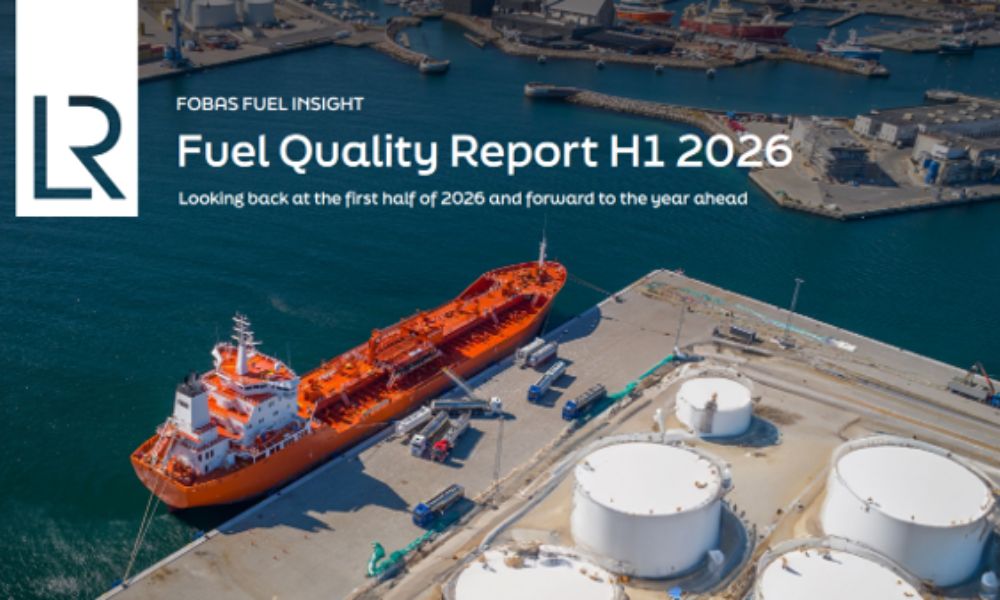
Classification society Lloyd’s Register (LR) on Tuesday (14 July) warned that ship operators are facing a growing risk from fuels that appear compliant under routine ISO 8217 testing but still present operational risks once onboard.

According to LR’s latest Fuel Oil Bunker Analysis and Advisory Service (FOBAS) Fuel Quality Report, covering the first half of 2026, off-specification fuels remain a persistent challenge. 

However, some of the most disruptive cases now involve fuels that pass routine compliance testing but show poor stability or compatibility, or contain non-conventional blend components that are only identified through more detailed investigative analysis.

Several incidents investigated highlighted this trend. In March and April, a number of vessels reported operational difficulties after bunkering fuel in a major bunkering hub. Further forensic analysis found that many of the fuels contained elevated concentrations of Estonian shale oil, in some cases estimated to be around 10-15%.

While shale oil is recognised within ISO 8217 as an acceptable blend component, FOBAS investigations found that higher concentrations can be associated with fuel instability and operational issues affecting filters, separators and fuel pumps.

The report also shows that fuel quality variability remains stubbornly high. Off-specification cases remained elevated throughout the first six months of 2026, suggesting that quality issues are no longer isolated events but a more persistent feature of today’s marine fuel supply chain.

The most common recurring issues included sulphur exceedances, excessive water content, sediment and stability problems, elevated catalytic fines, sodium contamination and low flash point distillate fuels.

At the same time, biofuels (especially FAME blends) are continuing to grow without being a primary source of quality issues. Where issues occurred in blended fuels, they were generally associated with the conventional VLSFO component rather than the FAME fraction.

The report concluded that operators will need to adopt a more proactive approach to fuel management as marine fuels become more diverse and fuel quality risks become harder to identify through routine compliance testing alone.

Greater emphasis on fuel stability, compatibility and understanding fuel composition will be critical to reducing operational disruption and maintaining vessel performance.

Murray Kirkwood, Fuel Specialist Consultant, Lloyd’s Register, said: “The findings from our latest report show that fuel quality risk is evolving. The challenge is no longer simply identifying fuels that fail specification. Increasingly, operators are encountering fuels that meet the required limits but still create operational difficulties once they are stored, handled and used onboard.

“As fuel blending becomes more complex, the distinction that matters is increasingly not between on-spec and off-spec fuel, but between fuels that are operationally resilient and fuels that are operationally fragile. Understanding that difference is becoming essential for shipowners and operators.”

The latest findings reinforced FOBAS’ long-standing view that effective fuel management increasingly depends on understanding fuel behaviour rather than relying solely on pass-or-fail specification testing.

By combining routine fuel quality monitoring with forensic investigation of operational incidents, FOBAS provides shipowners with a clearer understanding of emerging fuel quality risks as the industry continues its transition to a more diverse and complex fuel landscape.

Note: The FOBAS Fuel Insight: Fuel Quality Report H1 2026 is available at FOBAS Fuel Insight: Fuel quality reports | LR


Photo credit: Lloyd’s Register
Published: 15 July, 2026

Continue Reading

Interview

Interview: Alkagesta navigates risk from bunkering ops during turbulent times

As the industry navigates this period of uncertainty, the key question is no longer ‘what will fuel cost?’ but rather ‘will fuel be available?’, highlights Mithat Çiftçioğlu.

Admin

Published

on

By

Mithat MT

Mithat Çiftçioğlu, Marine Fuels Director at Alkagesta, shared his opinion on risk management for bunkering operations under current geopolitical tensions through the April edition of shipping magazine Deniz Ticaret.

The maritime publication, part of the Turkish Chamber of Shipping (İMEAK Deniz Ticaret Odası), has given Manifold Times permission to republish the article:

Fueling Ships in Turbulent Times

From Oil Shock to Fuel Access Crisis: A New Risk Map for Maritime 2026

The final weeks of the first quarter of 2026 mark one of the most complex periods in recent years for global energy and maritime markets. The sharp rise in oil and refined product prices since February 28 may look like a classic energy shock at first glance, but developments in the maritime sector point to a far deeper structural rupture.

What is being debated in the market today is no longer just oil prices. For traders and shipowners operating in the maritime sector and bunker market, the real issue is not the price of fuel — it is access to fuel. The fundamental question in the market has shifted: not what will the price of fuel be, but will fuel even be available?

In light of the Force Majeure cancellations at Asian ports over the past two weeks, another question must also be considered: Will pre-agreed bunker supply contracts actually be delivered?

From Oil Prices to Logistical Reality

Tensions in the Middle East have created a strong geopolitical risk premium in the oil market. Brent crude briefly surpassed the $100 per barrel mark, triggering a search for a new equilibrium across markets. This will inevitably bring inflation and recession back onto the global agenda in the months ahead.

But the rise in oil prices does not only reflect the risk of supply disruption — it also signals the return of one of the most fragile chokepoints in global energy trade:

The Strait of Hormuz

Approximately one-third of the world’s oil trade passes through this narrow waterway. Around 20 million barrels of oil and petroleum products transit Hormuz daily. Any disruption here would therefore affect not only oil prices, but also global refined product flows and the bunker market directly.

Why Strategic Oil Reserves Are Not the Solution

A commonly proposed solution in energy crises is the release of strategic petroleum reserves. However, releasing these reserves does not directly resolve a bunker crisis. Strategic reserves consist of crude oil. To produce bunker fuel, the following chain must be completed:

Crude oil → Refinery → Product logistics → Bunker port

This process takes time. Strategic reserves can temporarily stabilize oil prices, but they cannot solve the access problem in the bunker market in the short term.

Furthermore, the announced reserve release of 400 million barrels, to be drawn down at a rate of 2.5–3 million barrels per day, can only cover a small fraction of the estimated daily loss from the Middle East — optimistically 8–10 million barrels, pessimistically 18–20 million barrels per day.

A Historic Surge in Bunker Fuel Prices

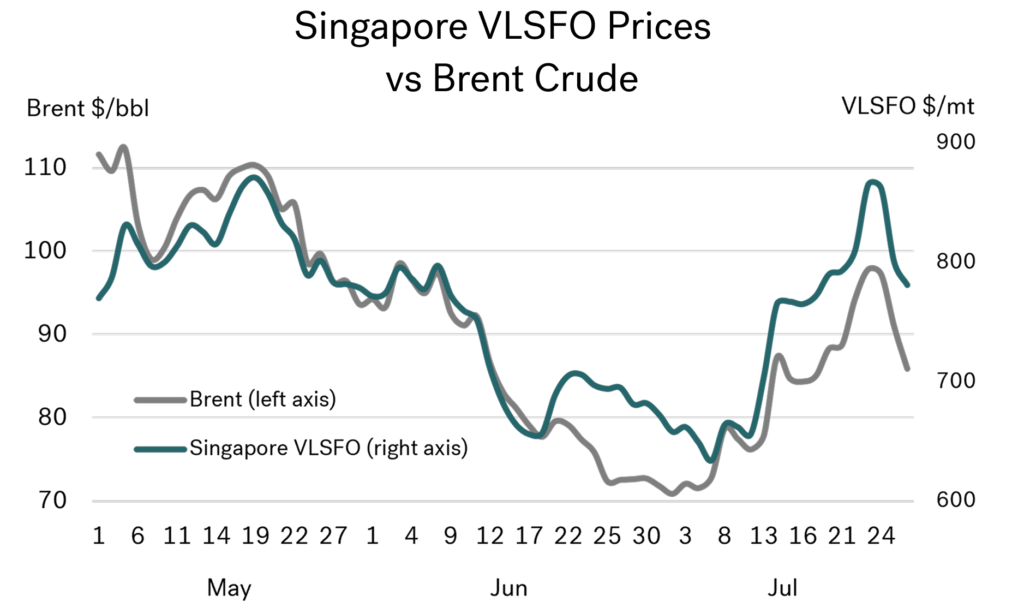
The per-ton price of VLSFO (0.5% sulfur) bunker fuel has surpassed $1,000, reaching approximately double pre-war levels. This also represents some of the highest prices seen since July 2022.

While prices at bunker hubs such as Singapore and Fujairah are approaching $1,100 per ton, European markets have remained comparatively lower.

The Real Problem Is Not Price — It Is Fuel Access

Obtaining bunker quotes for April has become increasingly difficult, particularly at Asian ports. Even where shipowners and traders can secure quotes, the absence of supply guarantees makes pricing extremely challenging.

A senior executive at Oldendorff Carriers summarized the situation in these words:

“We cannot price cargo because we cannot calculate fuel costs; we cannot calculate fuel costs because there is no supply guarantee.”

The CEO of Maersk has compared the current situation to the pandemic era, stating that companies are attempting to source fuel through methods they have never tried before in order to keep global shipping networks supplied.

While supply is tight and prices are near their peak in Singapore and Fujairah, Rotterdam appears relatively more balanced. However, as the conflict drags on, risk perception in European markets is also rising.

The surge in bunker prices will not only increase costs — it will also affect global maritime transport capacity. Ships are expected to reduce their speeds to conserve fuel. This could lead to a reduction in effective carrying capacity, creating new logistical bottlenecks in global trade.

The importance of working with reliable, long-term partners has never been more apparent than during a crisis such as this.

The Widening Price Spread Between Fuel Types

A notable development in the bunker market in recent weeks is the rapid widening of price differentials between different fuel types. Two spreads in particular have expanded significantly:

  • Marine Gas Oil (MGO) – VLSFO
  • VLSFO – HSFO

Rising demand for distillate products, refinery production balances, and regional supply tightness are all contributing to this widening. As a result, bunker purchases have become not merely a matter of price level, but a strategic decision tied to product type and port selection.

An Unexpected Development: Biofuels Becoming Competitive

Another noteworthy development in the bunker market is that biofuels have remained at relatively competitive price levels. This creates two important opportunities for shipowners.

On one hand, biofuels remain competitively priced in certain markets. On the other, they offer a means of compliance with new regulations entering into force in Europe — particularly the FuelEU Maritime and EU ETS frameworks, which require reductions in carbon intensity. In this context, biofuels have become a strategic option for many shipowners.

Conclusion: Active Bunker Management Is The New Normal

The 2026 bunker market presents one of the most complex energy trading environments in recent years. The rise in oil prices, geopolitical risk at the Strait of Hormuz, tightness in physical fuel supply, and widening price spreads between fuel types have made bunker fuel management more critical than ever.

The prevailing view in energy markets is that as long as the risk at the Strait of Hormuz persists, turbulence in the bunker market will persist with it. As time passes, the depletion of commercial stocks may deepen the existing supply tightness further.

For this reason, the current situation is viewed not merely as an energy crisis, but as a new stress scenario testing the logistical infrastructure of global trade.

The view increasingly heard across energy markets is this:

“As long as Hormuz remains closed, it will not be oil prices but fuel access that constitutes the defining risk for global shipping.”

Finally, for shipowners and operators, bunker strategies are shifting away from a passive purchasing approach toward a model grounded in active risk management.


Photo and article credit: Deniz Ticaret
Published: 7 May 2026

Continue Reading

Analysis

T&E: Overreliance on traditional bunker fuels costs shipping USD 395 million a day due to Iran conflict

Development has made alternative fuels increasingly more competitive, states Eloi Nordé, shipping policy officer at T&E.

Admin

Published

on

By

The Hormuz crisis adds over 300 million a day to shippings fossil fuels bills

The European Federation for Transport and Environment (T&E) on 27 March highlighted the adoption of green marine fuels would reduce the shipping industry’s exposure to fuel price shocks in future.

It noted shipping companies are spending an extra €340 million (USD 394.74 million) a day in additional fuel costs as a result of the latest conflict in the Gulf.

As 99% of the global fleet runs on fossil fuels, the industry is directly exposed to fuel price volatility and supply disruptions. Efficiency measures, electrification and e-fuels would reduce the industry’s exposure to price fluctuations.

According to T&E, marine fuel prices have escalated rapidly, with VLSFO reaching €941 per tonne in Singapore, up 223% since the start of 2026. At the same time, LNG prices have risen by 72% since early March. Since February 28, shipping companies have incurred more than €4.6 billion in additional fuel costs.

The development has made alternative fuels increasingly more competitive. As fossil fuel prices reach record highs again, the cost gap with e-fuels is narrowing.

T&E’s research shows that the cost gap between marine gas oil – one of the more expensive fossil fuels – and e-fuels has shrunk to near parity (+5%) in some ports.

Hormuz oil crisis boosts potential e fuel competitiveness

While the trend may be temporary, it shows that the volatility of fossil fuel markets offsets much of the structural cost disadvantage of clean fuels.

“Chaos in the Strait of Hormuz is putting global maritime trade under the spotlight. But it’s on the oil markets where its impact will be felt the most. The war is costing the industry millions every day,” said Eloi Nordé, shipping policy officer at T&E.

“Some governments and parts of the industry have spent the last year bashing green maritime measures as being too expensive, yet those costs pale in comparison to this super-disruption.

“If anything, this crisis should be the catalyst for more investment in European e-fuels and greater uptake of energy efficiency measures to avoid fossil fuel shocks in the future.”


Photo credit: European Federation for Transport and Environment
Published: 2 April 2026

Continue Reading

Trending