Connect with us

Alternative Fuels

ENGINE on Fuel Switch Snapshot: LNG-VLSFO premiums double in a month

LNG premiums have soared; Singapore’s LNG up to premium over B24-LSMGO; bio-bunker prices drop in key bunker ports.

Admin

Published

on

ENGINE on Fuel Switch Snapshot: LNG-VLSFO premiums double in a month

Once a week, bunker intelligence platform ENGINE will publish a snapshot of alternative and conventional bunker fuel prices in the world’s two biggest bunkering hubs. The following is the latest snapshot:

9 December 2024

  • LNG premiums have soared
  • Singapore’s LNG up to premium over B24-LSMGO
  • Bio-bunker prices drop in key bunker ports

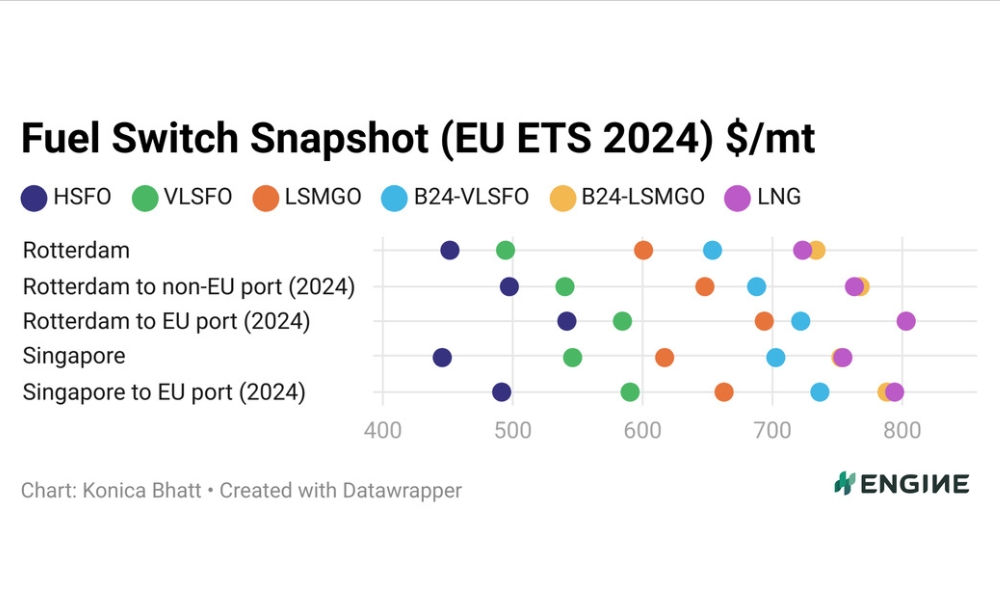
While VLSFO-equivalent prices for LNG and B24-VLSFO have shown little change over the past week, they have shifted sharply in the past month. LNG, which previously traded at a discount to B24-VLSFO, now commands a substantial premium in major ports like Rotterdam and Singapore.

Rotterdam’s LNG holds a significant $70/mt premium over its B24-VLSFO HBE price, compared to a $61/mt discount last month. Similarly, Singapore’s LNG has flipped from a $52/mt discount to an identical $52/mt premium over its B24-VLSFO UCOME price in the past month.

Singapore’s LNG has even climbed to a narrow $1/mt premium over its B24-LSMGO grade, a reversal from its $20/mt discount last week and $89/mt discount last month.

Meanwhile, LNG now stands at a whopping $228/mt premium over pure VLSFO in Rotterdam. In Singapore, LNG is $208/mt more expensive than pure VLSFO. LNG’s premiums have jumped by more than $100/mt in a month.

VLSFO

VLSFO prices in Singapore and Rotterdam have remained almost unchanged in the past week. Rotterdam has seen a $3/mt gain, while Singapore has witnessed a $4/mt drop.

Availability of VLSFO remains tight in Singapore, where 10 days of lead time is recommended.

Supply pressures have eased slightly across VLSFO, LSMGO and HSFO grades in the ARA this week, a trader told ENGINE. VLSFO availability has returned to normal in the past week, with lead times of 3-5 days advised for the grade.

Biofuels

Singapore’s B24-VLSFO UCOME price has shed $3/mt in the past week, while its B24-LSMGO UCOME price has decreased by a sharp $15/mt. The bigger drop in the B24-LSMGO price is partly because of a $19/mt decline in the underlying ENGINE conventional LSMGO price.

The strengthening of used cooking oil (UCO) prices in China has exerted upward pressure on UCOME export prices, PRIMA Markets said.

Rotterdam biofuel benchmarks have almost mirrored the declines seen in Singapore. The B30-VLSFO HBE price in Rotterdam has edged down by $3/mt, while the B30-LSMGO HBE price has declined by a sharp $17/mt.

LNG

Rotterdam’s LNG bunker price has dropped by $8/mt to $877/mt in the past week. The downward trend reflects a corresponding decrease in the underlying Dutch TTF Natural Gas contract. While European gas prices have dipped, colder-than-average temperatures across Northern Europe are expected to limit further price drops.

Singapore’s LNG bunker price has gained by $6/mt in the past week, tracking gains in the NYMEX Japan/Korea Marker (JKM) contract. Despite a forecast for colder weather in Northeast Asia next week, demand prospects remains subdued for the near term.

By Konica Bhatt, Nithin Chandran and Debarati Bhattacharjee


Photo credit and source: ENGINE
Published: 10 December, 2024

Continue Reading

Alternative Fuels

Auramarine: Marine fuel flexibility will be key to shipping’s energy transition

Operators who adapt best will be the ones who built in the flexibility to their marine fuel strategy to respond as conditions change, says CEO John Bergman.
Admin

Published

on

By

31 1

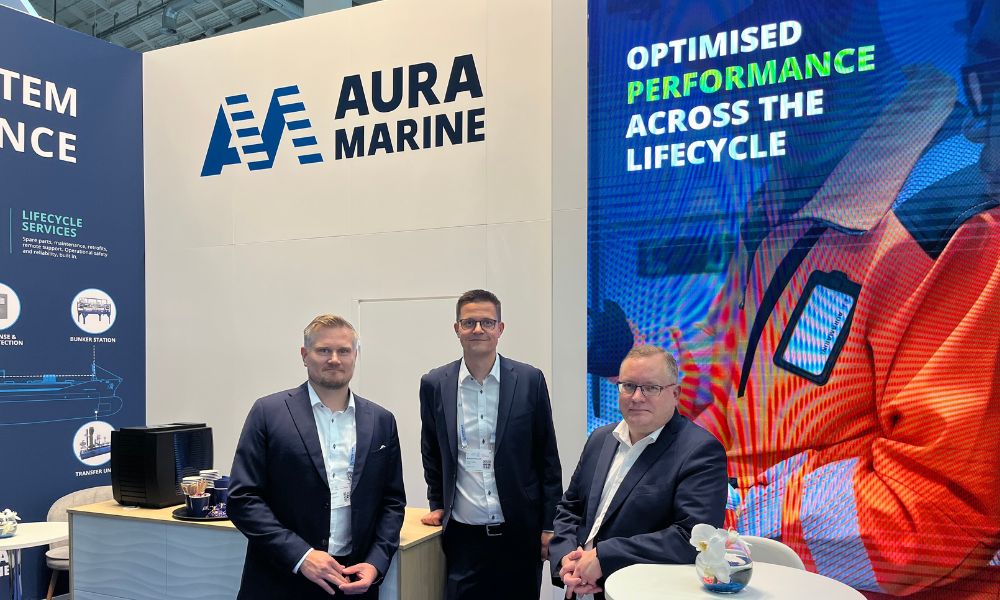
Finland-based fuel supply systems provider Auramarine on Wednesday (2 September) said it believes shipping’s energy transition is entering a phase where flexibility, not fuel choice, will determine which operators adapt successfully. 

With fuel price volatility, inconsistent alternative availability and tightening environmental regulation at different speeds across regions, Auramarine argued that the right approach to fuel supply infrastructure is now as strategically important as the fuel itself.

“The industry has spent years asking which fuel will win,” said John Bergman, CEO, Auramarine. 

“That may be the wrong question. No operator today can predict with confidence what will be available, compliant or commercially viable in five years. The operators who adapt best will be the ones who built in the flexibility to their fuel strategy to respond as conditions change.”

Auramarine’s own fuel split technology, first delivered in 2019 and now installed on around 20 vessels, reflects this thinking in practice. The retrofit system adds a fuel booster module onboard, allowing a ship to run different fuels through the same engine without the extended changeover procedures dual-fuel systems typically require.

This lets operators switch to MGO or biofuel, for example, to meet an ECA requirement, support maintenance schedules, or respond to fuel pricing shifts, without taking a vessel out of service. Delivered in sections through existing doors and hatches, it can be retrofitted to vessels already in operation.

Bergman sees this need for adaptability sharpening in sectors under the most operational and regulatory pressure. 

“Cruise and ferry operators feel this earliest and most acutely,” he said. 

“These vessels constantly move between regulatory zones and environmentally sensitive waters, so the ability to switch fuel supply without disrupting a schedule is an operational necessity. What’s notable is how many operators in this space still don’t know infrastructure like this exists, despite how directly it addresses what they’re already dealing with.”

Reliable flexibility requires a tailored approach, not just adding equipment. “The best results come from scoping flexibility to an owner’s actual fuel strategy, not adding complexity for its own sake,” Bergman added. 

Automated fuel changeover systems are designed to keep multi-fuel operations straightforward for crews, while a structured maintenance approach ensures inspection, testing and servicing can be carried out safely throughout the vessel’s lifecycle. This is where Auramarine’s lifecycle services play a central role, supporting operators well beyond initial installation with the ongoing servicing, spares and technical support needed to keep flexible fuel systems performing reliably for the long term, whatever the fuel landscape looks like in years to come.

“Over the next few years, operators who succeed will be the ones who stopped waiting for certainty and started building optionality instead,” Bergman added

“In a transition this uncertain, adaptability matters more than any single fuel bet. That’s the conversation we want the industry to have.”


Photo credit: Auramarine
Published: 7 September, 2026

Continue Reading

Alternative Fuels

Yang Ming orders six LNG dual-fuel, ammonia-ready containerships from Hanwha Ocean

Each of the six new vessels will have a capacity of up to 13,650 TEU and feature LNG dual-fuel propulsion and Ammonia Fuel Ready specifications.
Admin

Published

on

By

Yang Ming orders six LNG dual-fuel, ammonia-ready containerships from Hanwha Ocean

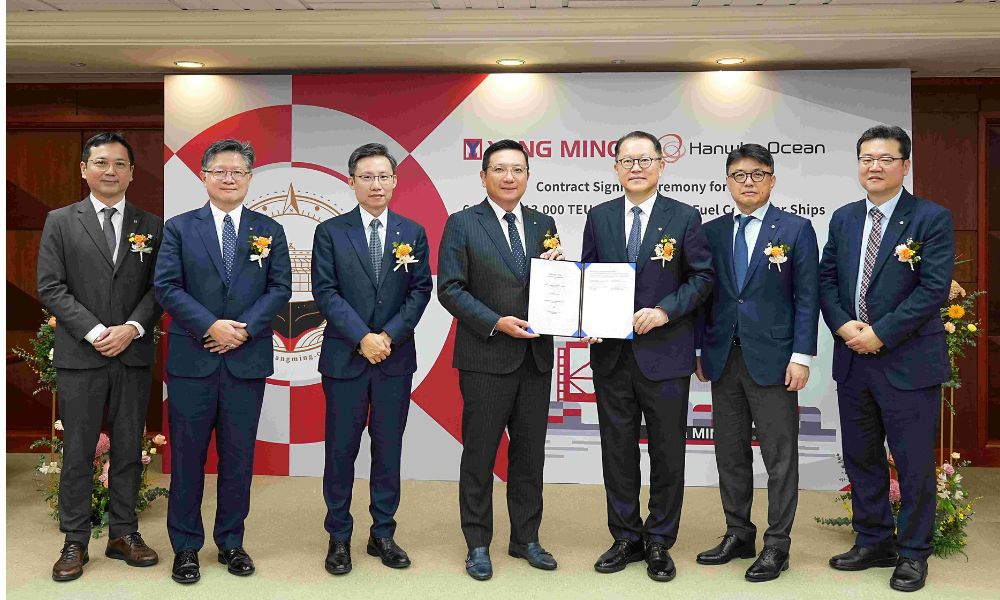
Taiwanese shipping firm Yang Ming Marine Transport Corporation (Yang Ming) and South Korean shipbuilder Hanwha Ocean on Wednesday (2 September) signed a shipbuilding contract for six 13,000 TEU class LNG dual-fuel container vessels. 

The contract was signed by Dr. Chuck Tsai, Chairman of Yang Ming, and Mr. Charles Kim, CEO of Hanwha Ocean. The vessels are scheduled for delivery between 2028 and 2029. 

They will complement Yang Ming’s existing fleet of 10,000+ TEU vessels and serve as key vessels on East-West services, with deployment flexibility across trade lanes connecting Asia with the East and West Coasts of North America, South America, and the Mediterranean. 

Each of the six new vessels will have a capacity of up to 13,650 TEU and feature LNG dual-fuel propulsion and Ammonia Fuel Ready specifications.

“As Yang Ming transitions toward net-zero emissions, LNG provides a relatively mature and economically viable alternative fuel solution, capable of reducing greenhouse gas emissions by approximately 20%,” the company said. 

“At the same time, ammonia can serve as a carbon-free fuel by utilising converted LNG storage facilities, while offering relatively lower conversion costs and comparatively well-developed supply chains and infrastructure. The Ammonia Fuel Ready design will therefore provide Yang Ming with greater flexibility in responding to increasingly stringent international regulations on greenhouse gas emissions.”

In addition, the vessels will be equipped with Type B LNG fuel tanks with a design pressure of 1.0 bar to enhance the safety and efficiency of LNG operations, together with a range of energy-saving technologies, including Wind Shields, Rudder Bulbs, Pre-Swirl Stators, and Shore Power Systems. Smart ship technologies and cybersecurity protection features will also be incorporated to enhance operational efficiency, safety, and reliability while effectively reducing fuel consumption and greenhouse gas emissions.

Deliveries under Yang Ming’s next-generation fleet optimization plan commenced earlier this year. By 2030, a total of 24 new vessels are expected to enter service. 

This includes 18 LNG dual-fuel vessels—comprising five 15,500 TEU, seven 16,000 TEU, and the six 13,000 TEU vessels under this contract—alongside six 8,000 TEU methanol dual-fuel-ready ships. 


Photo credit: Yang Ming Marine Transport
Published: 4 September, 2026

Continue Reading

Alternative Fuels

LR, China’s MARIC unveil tanker concept ready for three future bunker fuels

Both secured AiP for a new 114,000 DWT product and crude oil tanker designed to accommodate future conversion to LNG, methanol or ammonia.
Admin

Published

on

By

LR, China’s MARIC unveil tanker concept ready for three future bunker fuels

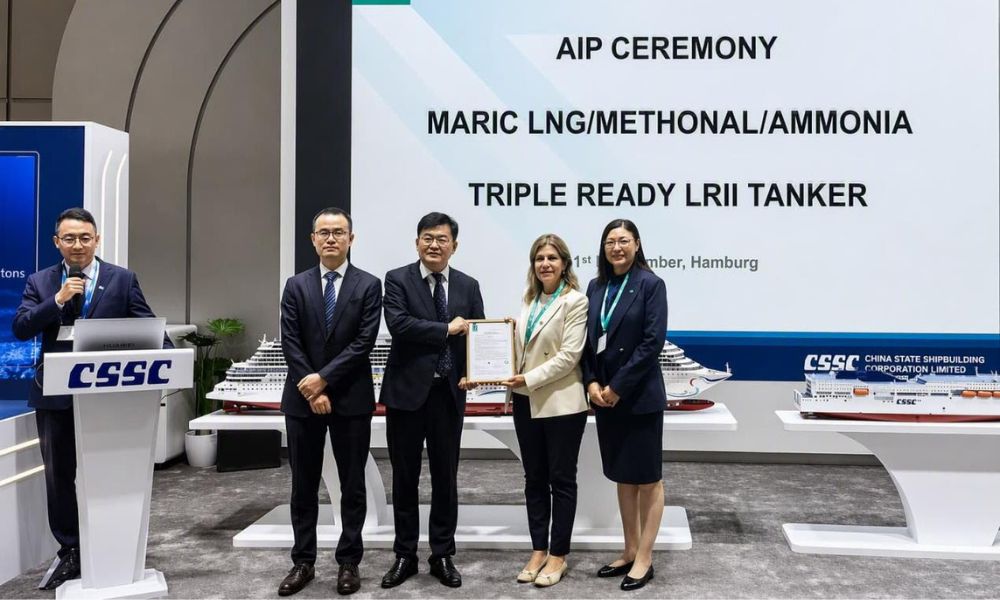
Lloyd’s Register (LR) and the Marine Design and Research Institute of China (MARIC) on Thursday (3 September) have secured Approval in Principle (AiP) for a new 114,000 DWT product and crude oil tanker designed to accommodate future conversion to LNG, methanol or ammonia.

Announced at SMM 2026, the concept addresses one of the biggest investment challenges facing shipping today: the need to develop vessels and capabilities that can support a range of alternative fuel options and pathways as technologies, infrastructure and regulations evolve.

While LNG is already a mature fuel pathway, methanol and ammonia remain at an earlier stage of development, with questions around global fuel availability, infrastructure development, economics and long-term adoption.

The 114,000 DWT tanker concept has been designed as a product and crude oil carrier that can accommodate future conversion to LNG, methanol or ammonia as technologies, regulations and fuel supply chains mature. By incorporating conversion readiness at the design stage, the concept aims to reduce future retrofit complexity and provide owners with greater confidence when planning long-term fleet investments.

The design concept was reviewed against LR’s July 2026 class rules and regulations, including requirements relating to ships using gases and other low-flashpoint fuels, alongside relevant IACS Common Structural Rules for oil tankers. Final classification and statutory approval remain subject to full compliance with all applicable rules and regulations.

Theo Kourmpelis, Global Business Director for Tankers, Lloyd’s Register, said: “Shipowners are being asked to make major investment decisions today despite continued uncertainty around which fuels will dominate in the decades ahead. Alternative fuel solutions each offer potential pathways to compliance, but fuel infrastructure, regulation and economics continue to evolve at different speeds around the world.

“Designs that preserve flexibility will be critical in helping owners manage risk while preparing for multiple future scenarios.”

Si Nan, Marine & Offshore Marketing Department Vice Director, MARIC, said: “As the industry explores different decarbonisation pathways, shipowners need vessel designs that can adapt alongside technological and regulatory developments. This concept was developed specifically to provide greater fuel flexibility and long-term resilience, allowing owners to respond to changing market requirements without being locked into a single fuel strategy.

“Receiving Approval in Principle from Lloyd’s Register is an important milestone that validates the design concept and supports its future development.”


Photo credit: Lloyd’s Register
Published: 4 September, 2026

Continue Reading
Advertisement

OUR INDUSTRY PARTNERS


Trending