Connect with us

Bunker Fuel

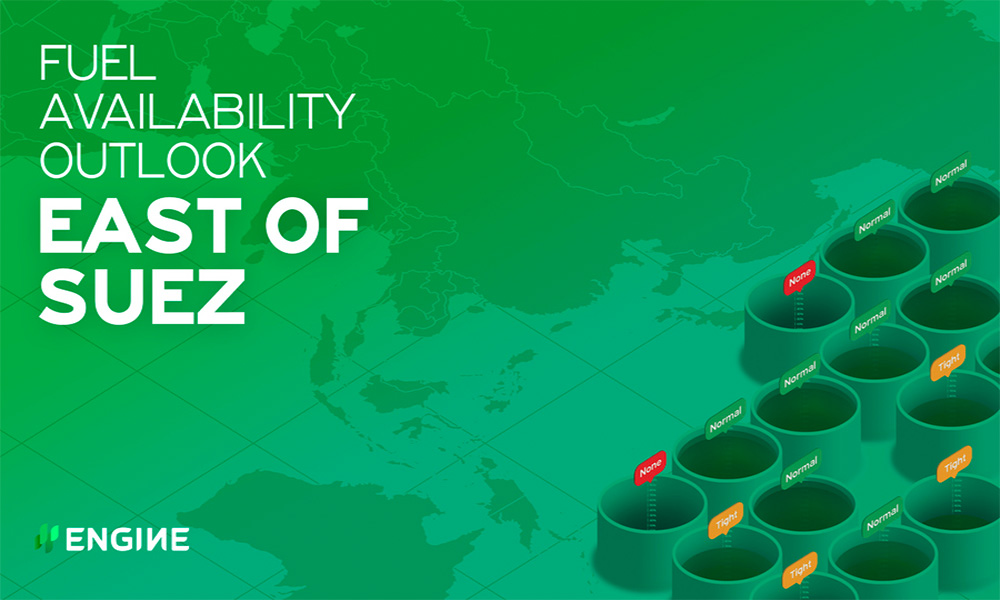
ENGINE: East of Suez Bunker Fuel Availability Outlook (30 June 2026)

VLSFO availability tight in Singapore; availability good across several Sri Lankan ports; bunker demand picks up in Fujairah.

Admin

Published

on

ENGINE East of Suez 1

The following article regarding regional bunker fuel availability outlook for the East of Suez region has been provided by online marine fuels procurement platform ENGINE for publication on Singapore bunkering publication Manifold Times:

  • VLSFO availability tight in Singapore
  • Availability good across several Sri Lankan ports
  • Bunker demand picks up in Fujairah

Singapore and Malaysia

VLSFO availability in Singapore remains under strain, with recommended lead times continuing to vary widely across suppliers. While some suppliers can deliver in around nine days, others are quoting lead times of more than four weeks. Although the lower end of the range is unchanged, the upper end has extended further from around three weeks previously.

Recommended lead times for HSFO have narrowed to 7–11 days, compared with 5–13 days last week. For LSMGO, suppliers are advising lead times of 3–8 days, versus 6–10 days a week ago.

The port’s residual fuel oil inventories have averaged 18% lower so far in June than across May, according to the latest data from Enterprise Singapore. Stocks have fallen below 17 million bbls amid a sharp 37% drop in Singapore’s net fuel oil imports so far this month. Imports declined by 849,000 bbls, while exports increased by a modest 127,000 bbls.

Singapore’s middle distillate inventories have also continued to decline, averaging 7.89 million bbls so far this month. Stocks are 14% below previous levels, leaving inventories at multi-year lows.

Bunker fuel availability in Malaysia’s Port Klang remains mixed. VLSFO supply is generally sufficient, particularly for smaller prompt stems. However, LSMGO availability remains constrained, while HSFO continues to face supply pressure, leaving both grades relatively tight.

East Asia

Despite subdued bunker demand, VLSFO availability in Zhoushan remains under pressure. Recommended lead times have lengthened from 7–10 days last week to 7–12 days, contributing to the recent increase in the benchmark price. Lead times for both LSMGO and HSFO have extended to 5–7 days, up from just three days previously.

Bunker fuel supply across northern China presents a mixed picture. Suppliers in Dalian and Qingdao have ample stocks of VLSFO and LSMGO, although HSFO availability in Qingdao remains limited. In Tianjin, all major bunker grades continue to face supply constraints, while VLSFO and HSFO availability is tight in Shanghai. LSMGO supply in Shanghai, however, remains relatively stable.

Supply tightness also persists across several ports in southern China. Both VLSFO and LSMGO remain constrained in Fuzhou. Xiamen has adequate VLSFO availability but tighter LSMGO supply, while both grades remain constrained in Yangpu and Guangzhou.

Hong Kong’s bunker market remains stable, with recommended lead times for all major bunker grades holding at around seven days, broadly unchanged in recent weeks.

Meanwhile, bunker fuel availability remains steady across Taiwan’s key ports of Hualien, Keelung, Taichung and Kaohsiung. Recommended lead times for both VLSFO and LSMGO remain at around two days across all four ports, largely unchanged from last week.

Demand in South Korea’s bunker market has softened recently, according to a local trader. Across the country’s southern ports – including Busan, Ulsan, Masan, Onsan, Yeosu and Kwangyang – recommended lead times for VLSFO and LSMGO have narrowed to 4–6 days, from 4–9 days last week. HSFO lead times have also shortened to 4–6 days, compared with 4–9 days a week earlier.

Supply conditions have also improved at western ports, including Incheon, Daesan, Dangjin, Pyeongtaek and Taean. Recommended lead times for VLSFO and LSMGO have narrowed to 4–6 days, down from 4–9 days last week. HSFO availability remains stable, with lead times reduced to 4–6 days from 4–9 days previously.

Weather-related disruptions remain a concern across South Korea. Delays are forecast at Busan, Ulsan and Yeosu on 1 and 5 July, and at Daesan on 4 July.

In Japan, bunker demand has strengthened as expected, supported by some of the most competitive bunker prices in Asia. Enquiries have risen sharply, according to a Japan-based trader. VLSFO availability remains extremely tight, with limited supply capacity for July, while MGO availability has tightened suddenly and significantly.

The trader advised buyers to secure spot requirements immediately due to the severe supply squeeze and limited July allocations, with Japanese refineries expected to prioritise domestic energy demand.

At major Japanese ports including Tokyo, Chiba, Kawasaki, Kashima, Nagoya, Yokkaichi and Oita, VLSFO and LSMGO remain in short supply, with only a limited number of suppliers able to offer these grades. HSFO is comparatively more available, with recommended lead times of around 7–10 days.

VLSFO and LSMGO availability remains tight in Osaka, Kobe and Mizushima. Recommended lead times for these grades are around 7–10 days, while HSFO requires around 5–7 days.

Indonesia’s bunker market, by contrast, remains well supplied. VLSFO availability is stable across Jakarta, Surabaya, Balikpapan and Cigading, where suppliers are generally quoting lead times of around 2–3 days.

Oceania

A temporary fuel excise cut introduced to help shield Australians from the impact of the oil crisis is set to expire on 30 June. From 1 July, fuel excise rates will increase. However, the change will affect only vessels operating domestically, as international vessels remain fully exempt from fuel excise and GST, according to an Australia-based trader.

In Western Australia, VLSFO availability remains steady at Kwinana and Fremantle, where suppliers are generally recommending lead times of around seven days. Bunker operations at both ports continue to be supported by a single supplier, with deliveries carried out exclusively by barge.

Supply conditions along Australia’s east coast differ by port. In New South Wales, Port Kembla can facilitate VLSFO deliveries by either truck or pipeline, while suppliers in Sydney have adequate stocks of both VLSFO and LSMGO. HSFO supply remains comparatively tighter in Sydney, with suppliers typically requesting around seven days of advance notice.

In Queensland, VLSFO and LSMGO remain readily available in Brisbane and Gladstone, with recommended lead times of around seven days.

Further south, suppliers in Melbourne and Geelong continue to hold healthy VLSFO inventories. However, bunker operations at both ports rely on a single barge, resulting in lead times of approximately one week.

HSFO availability is becoming increasingly constrained in both Melbourne and Brisbane.

One supplier is currently offering all bunker grades in Brisbane, Sydney and Melbourne with lead times of around five days. In Dampier, bunker deliveries continue to rely on truck-assisted pipeline operations, making advance scheduling and berth confirmation particularly important, according to a market source.

Across the Tasman Sea, bunker fuel availability in New Zealand remains broadly stable. VLSFO is readily available in Tauranga and Auckland, where suppliers are recommending lead times of about four days. At Marsden Point, both VLSFO and LSMGO can be delivered directly to vessels via pipeline infrastructure.

Weather continues to pose an operational risk across New Zealand. Bunker deliveries are particularly vulnerable to disruption in Wellington and ports across the South Island, where adverse weather conditions can periodically affect supply operations.

South Asia

The onset of the monsoon is expected to disrupt bunker operations at several Indian ports in the coming days, with weather-related delays likely to affect delivery schedules. Disruptions are forecast at Kandla and Sikka between 1–4 July, while rough sea conditions could hamper bunker operations at Mumbai, Cochin and Visakhapatnam from 30 June to 4 July.

In Sri Lanka, bunker market conditions remain stable, with sufficient inventories of all major bunker fuel grades in Colombo and Hambantota. At least one supplier is recommending lead times of around six days.

Rough weather conditions may intermittently disrupt bunker operations at Colombo and Trincomalee between 1–4 July, potentially affecting bunker delivery schedules.

Middle East

Bunker fuel availability has improved across all major grades in Fujairah, with several suppliers now able to accommodate prompt delivery requests. The improvement follows the signing of a memorandum of understanding between Iran and the US that includes the reopening of the Strait of Hormuz.

Before the agreement, suppliers were grappling with tight cargo availability as lower imports restricted replenishment volumes for bunker barges. The supply situation has since eased following the arrival of a small batch of cargoes in recent days, with additional deliveries expected shortly, according to a Middle East-based source.

Bunker demand in Fujairah has also picked up, the source added.

Most suppliers in Fujairah are currently able to offer prompt VLSFO stems, while a smaller number have LSMGO available. HSFO remains comparatively tight, although some suppliers continue to offer the grade.

Supply conditions have also improved at the neighbouring UAE bunker hub of Khor Fakkan, where both VLSFO and HSFO availability has strengthened.

Elsewhere in the UAE, port operations at Jebel Ali, Hamriyah, Dibba and Sharjah are continuing without disruption, according to Inchcape Shipping. Ports in Ras Al Khaimah are also operating normally, although the RAK Ports Authority has continued to impose a marine risk surcharge on vessels calling at its ports, harbours and anchorages since March.

In Kuwait, operations at the ports of Shuaiba and Shuwaikh continue uninterrupted.

No official operational advisories have been issued by Saudi Arabian ports. In Jeddah, VLSFO and LSMGO availability remains relatively stable. However, adverse weather conditions could disrupt bunker operations in Jeddah on 1 July and in Yanbu between 1–3 July.

In Qatar, all ports remain operational, according to Inchcape Shipping. However, VLSFO and LSMGO continue to be in tight supply at Ras Laffan.

“Regional ports remain operational with no major port closures reported. Shipping activity through the Strait of Hormuz is gradually recovering following the recent de-escalation; however, some owners and operators remain cautious, and occasional schedule adjustments may still occur,” an Oman-based trader said.

Oman continues to offer strong prompt availability of LSMGO. One supplier is recommending lead times of just 2–3 days at the major ports of Duqm, Muscat, Sohar and Salalah. However, high wave activity forecast in Salalah between 30 June and 4 July could temporarily disrupt bunkering operations, according to a source.

In Egypt, port operations remain normal. At Port Suez, HSFO inventories are tight, while VLSFO stocks are close to depletion.

Further south, both VLSFO and LSMGO remain difficult to secure in Djibouti. Meanwhile, port and bunker operations across Jordan, Iraq, Cyprus, Pakistan and Lebanon continue to run normally, according to shipping agency Inchcape Shipping.

By Tuhin Roy


Photo credit and source: ENGINE
Published: 1 July, 2026

Continue Reading

Fuel Testing

VPS strengthens China presence with new Shanghai marine fuel testing facility

Investment in the new testing laboratory comes as marine fuel volumes in Chinese ports continue to grow and customers increasingly demand faster testing and advisory services.

Admin

Published

on

By

VPS strengthens China presence with new Shanghai marine fuel testing facility

Marine fuels testing company VPS on Tuesday (1 July) announced the opening of its brand new testing laboratory in Shanghai, China.

The company said this strategic investment strengthens VPS’ global laboratory network and reinforces the company’s commitment to delivering faster, locally-based testing services to customers operating in one of the world’s most important maritime markets. 

“Shanghai has emerged as one of the fastest growing marine bunkering hubs and is expected to play a major role in the future supply of both traditional fossil fuels and emerging low-to-zero carbon fuels,” it said in a statement. 

“The new Shanghai laboratory will provide comprehensive marine fuel testing services, enabling customers to benefit from further improved turnaround times and enhanced operational decision making.”

The facility will support vessel owners, operators, charterers and fuel suppliers, with rapid, independent analysis and technical expertise, helping stakeholders to manage fuel quality risks, protect assets and maintain regulatory compliance.

Dr. Malcolm Cooper, CEO at VPS, said: “VPS is pleased to announce the opening of our new Shanghai Laboratory, which will provide fuel quality testing for bunker fuels including methanol. China is central to the global shipping industry being the world’s largest shipbuilder, producer of shipping containers and operator of the biggest commercial fleet. Shanghai is therefore the perfect home for our latest laboratory, as VPS is the world’s leading fuel testing company”.

The investment comes as marine fuel volumes in Chinese ports continue to grow and customers increasingly demand faster testing and advisory services. The new facility further enhances the VPS global footprint, which already includes laboratories in Rotterdam, Singapore, Fujairah, Houston and Manchester, supported by an international team of technical experts, sales professionals and customer service specialists.

In addition to supporting conventional marine fuels, the Shanghai laboratory will provide testing and advisory services relevant to the industry’s growing adoption of low-to-zero carbon fuels, assisting customers to navigate emerging fuel quality performance and compliance challenges.

Andrew Morton, VPS MD-AMEA, stated: “The opening of our new laboratory in Shanghai’s Lingang New Area, positions VPS at the heart of one of China’s most important maritime and industrial growth hubs. This investment reflects our confidence in the Chinese maritime market, our commitment to supporting customers closer to where they operate and our belief that Asia will remain at the forefront of shipping’s energy transition.”

The Shanghai laboratory will serve both domestic and international customers operating throughout China and across the wider Asia-Pacific region, supporting ongoing growth in marine fuel testing demand and providing a platform for future expansion of VPS services within the Chinese maritime sector.


Photo credit: VPS
Published: 1 July, 2026

Continue Reading

Bunker Fuel

AD Ports Group and IRH Global Trading to advance bunkering at Khalifa Port

Both signed a MoU, outlining potential collaboration in bunkering services to vessels calling at Khalifa Port and the development of alternative bunker fuels such as LNG, biofuels, and methanol.

Admin

Published

on

By

AD Ports Group and IRH Global Trading to advance bunkering at Khalifa Port

AD Ports Group on Tuesday (30 June) said it has signed a Memorandum of Understanding (MoU) with IRH Global Trading Ltd. to explore strategic cooperation in bunkering services and alternative marine fuels at Khalifa Port.

The MoU outlines potential collaboration across a range of areas, including the provision of bunkering services to vessels calling at Khalifa Port, the development of alternative fuel solutions such as Liquefied Natural Gas (LNG), biofuels, and methanol, and the exploration of opportunities related to fuel storage infrastructure, terminal facilities, and fuel sampling and testing capabilities.

Saif Al Mazrouei, CEO, Ports Cluster – AD Ports Group, said: “This collaboration reflects our commitment to forging strategic alliances that create long-term, sustainable value. 

“By working alongside trusted partners such as IRH, we are enhancing our capabilities and supporting the development of future-ready infrastructure and services that reinforce the UAE’s position as a leading global trade and logistics hub, in line with the vision of our wise leadership.”

Ali Rashed Alrashdi, Group CEO – International Resources Holding, said: “This collaboration with AD Ports Group reflects IRH’s commitment to build strategic partnerships that drive real economic impact. 

“As we continue to develop our global energy trading platform, bunkering and alternative marine fuels represent a high-potential area of growth. We see Khalifa Port as an ideal base from which to explore these opportunities, and we look forward to working closely with AD Ports Group to bring them to life.”

Through this collaboration, AD Ports Group and IRH Global Trading aim to further enhance Khalifa Port’s value proposition as a multi-purpose, deep-water port that supports efficient, sustainable, and future-oriented maritime operations.

IRH Global Trading is a global commodities trading firm with interests across the mining and energy value chain and plans to build a diversified global minerals and energy trading platform, including LNG, Liquefied Petroleum Gas (LPG), crude oil, and petroleum products. 


Photo credit: AD Ports Group
Published: 1 July, 2026

Continue Reading

Biofuel

Arkas Bunker delivers 15,000 mt of biofuel in Turkey over two years

Seçkin Gül, General Manager of Arkas Bunker said during that period, the company supplied more than 15,000 mt of biofuel and achieved an emissions reduction of 14,500 mt.

Admin

Published

on

By

Arkas Bunker delivers 15,000 mt of biofuel in Turkey over two years

Turkey-based marine fuel supplier Arkas Bunker on Tuesday (30 June) said it has completed 60 biofuel bunkering operations across 32 different vessel types over the past two years in the country. 

Seçkin Gül, General Manager of Arkas Bunker said during that period, the company supplied more than 15,000 metric tonnes (mt) of biofuel and achieved an emissions reduction of 14,500 mt.

He said this during the Biofuels in Shipping seminar held in Istanbul, where the company and DB Tarımsal Enerji addressed the use of biofuels in shipping through the lenses of sustainability, technical compatibility, regulations, and field experience.

“The transition to low-carbon fuels in shipping is no longer a long-term goal—it is today’s priority. At Arkas Bunker, we view biofuel not merely as an environmental alternative, but as a solution that is compatible with existing vessel infrastructure, proven in real-world operations, and supportive of the sector’s compliance with regulations, Gül said. 

Drawing attention to the growing role of carbon intensity in vessel operations, Gül stated: “Carbon cost will increasingly influence a wide range of areas—from fuel selection to route planning, and from customer preferences to financing conditions. 

“For this reason, access to low-carbon fuels will not only be an environmental responsibility for the maritime sector, but also a key component of commercial competitiveness. Strengthening Türkiye’s capabilities in production, supply, and bunkering, as well as strengthening collaboration among producers, suppliers, and end-users, is of great importance for regional competitiveness.”

The seminar also highlighted Turkey’s potential to become a regional supply hub for low-carbon marine fuels.

“With its strategic geographic location, strong port infrastructure, advanced logistics network, maritime expertise, and domestic biofuel production capacity, Türkiye is well positioned to play a significant role across Mediterranean, Black Sea, and European trade routes,” the companies said. 


Photo credit: Arkas Bunker
Published: 1 July, 2026

Continue Reading

Trending