Connect with us

Business

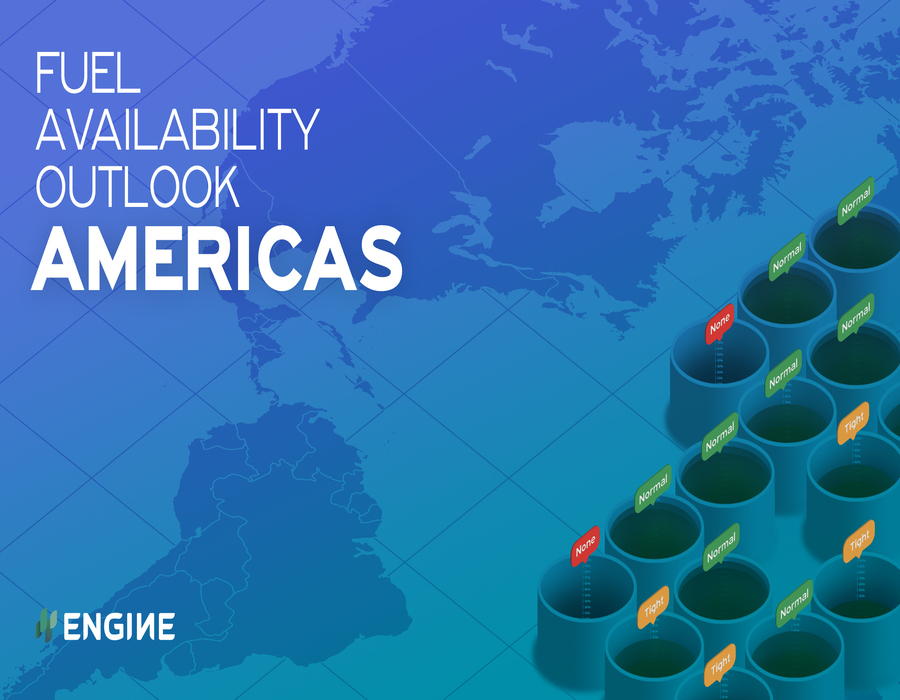
ENGINE: Americas Bunker Fuel Availability Outlook

Bunker supply improves in Houston area; bad weather still disrupting GOLA bunkering; VLSFO and LSMGO supply normal in Zona Comun.

Admin

Published

on

post 56182

The following article regarding bunker fuel availability in the Americas region has been provided by online marine fuel procurement platform ENGINE for post on Singapore bunkering publication Manifold Times:

  • Bunker supply improves in Houston area
  • Bad weather still disrupting GOLA bunkering
  • VLSFO and LSMGO supply normal in Zona Comun


North America

VLSFO and LSMGO availability has improved in the Houston area and bunker locations off the US Gulf Coast. A lead time of 3-5 days is generally recommended, down from last week’s 5-8 days.

But securing stems for very prompt dates (0-3 days) can be harder in Houston as some suppliers have packed delivery schedules, a source says. Demand for prompt stems has been slower this week, while many buyers have been rushing to secure bunkers for dates further out.

On 28 January, Valero’s 255,000 b/d nameplate capacity Houston refinery started a 35-day turnaround period for four processing units, according to market intelligence provider Industrial Info Resources (IIR). The refinery produces bunker fuels, ultra-low sulphur diesel, gasoline and other products.

Valero was unable to comment on the refinery maintenance when ENGINE reached out to. However, sources have informed that Valero has been offering VLSFO and LSMGO grades as normal in the Houston bunker market in recent days, a source said. 

VLSFO and LSMGO availability is said to be normal in the East Coast port of New York. Recommended lead times are about four days for both grades.

Rough weather continues to disrupt bunkering in the Galveston Offshore Lightering Area (GOLA). Most suppliers have pulled back prompt offers due to intermittent bad weather conditions, a trader says.

GOLA is currently experiencing wind gusts of 25 knots, with winds forecasted to intensify to gale-force on Friday and Saturday.

All grades remain tight for prompt delivery dates in the West Coast ports of Long Beach and Los Angeles. A long lead time of at least 10-12 days is generally recommended for VLSFO and LSMGO. But some suppliers can supply LSMGO stems of 500 mt or less in Long Beach with shorter lead times.  

Bunker fuel availability remains normal in Mexico’s Manzanillo. Recommended lead times are about five days for HSFO, VLSFO and LSMGO.


Caribbean and Latin America

Securing VLSFO and LSMGO for very prompt dates (0-3 days) can be possible in Panama’s Balboa and Cristobal, but these offers are generally quoted on a subject to enquiry basis, a source says. However, securing larger quantities of 500 mt or above can be difficult on a very prompt basis.

Certain suppliers can deliver VLSFO stems in Balboa with lead times of 6-7 days, while LSMGO stems can be delivered within three days. Another supplier’s earliest delivery date is 13 days out in Balboa. And yet another will need a lead time of four days to deliver in Cristobal.

The low sulphur grades are also tight with a supplier in Jamaica’s Kingston, which has its earliest delivery date 11-12 days out.

VLSFO and LSMGO availability is normal for deliveries in Trinidad. Very prompt deliveries with a lead time of 2-3 days are possible in the port.

Availability is also normal for deliveries at Argentina’s Zona Comun anchorage. One supplier requires four days of lead time to deliver VLSFO and LSMGO stems. However, strong wind gusts are forecast in Zona Comun and could disrupt bunker deliveries over the weekend.

By Nithin Chandran and Debarati Bhattacharjee


Photo credit and source: ENGINE
Published: 10 February, 2023

Continue Reading

Alternative Fuels

Yang Ming orders six LNG dual-fuel, ammonia-ready containerships from Hanwha Ocean

Each of the six new vessels will have a capacity of up to 13,650 TEU and feature LNG dual-fuel propulsion and Ammonia Fuel Ready specifications.
Admin

Published

on

By

Yang Ming orders six LNG dual-fuel, ammonia-ready containerships from Hanwha Ocean

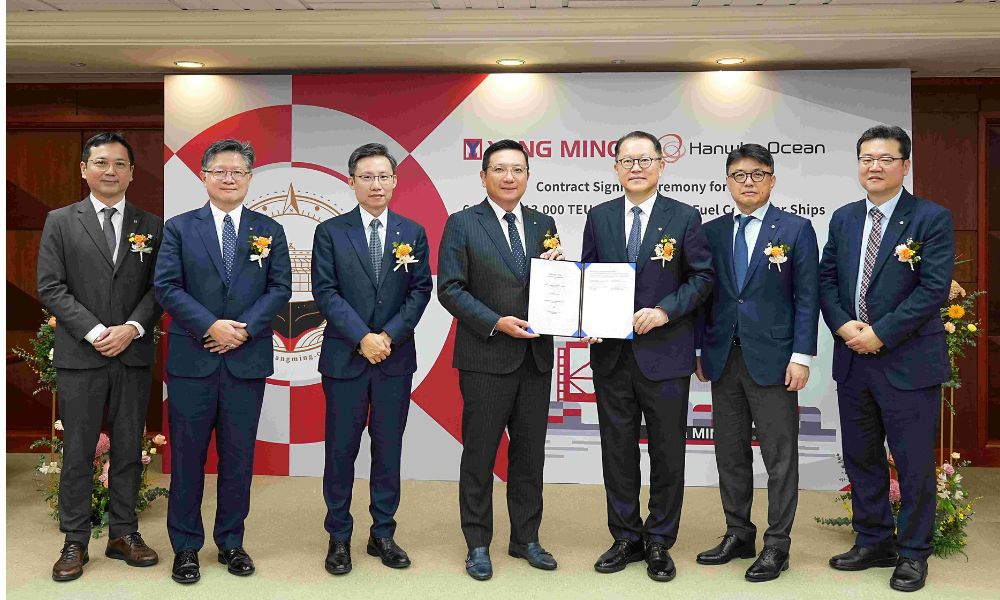
Taiwanese shipping firm Yang Ming Marine Transport Corporation (Yang Ming) and South Korean shipbuilder Hanwha Ocean on Wednesday (2 September) signed a shipbuilding contract for six 13,000 TEU class LNG dual-fuel container vessels. 

The contract was signed by Dr. Chuck Tsai, Chairman of Yang Ming, and Mr. Charles Kim, CEO of Hanwha Ocean. The vessels are scheduled for delivery between 2028 and 2029. 

They will complement Yang Ming’s existing fleet of 10,000+ TEU vessels and serve as key vessels on East-West services, with deployment flexibility across trade lanes connecting Asia with the East and West Coasts of North America, South America, and the Mediterranean. 

Each of the six new vessels will have a capacity of up to 13,650 TEU and feature LNG dual-fuel propulsion and Ammonia Fuel Ready specifications.

“As Yang Ming transitions toward net-zero emissions, LNG provides a relatively mature and economically viable alternative fuel solution, capable of reducing greenhouse gas emissions by approximately 20%,” the company said. 

“At the same time, ammonia can serve as a carbon-free fuel by utilising converted LNG storage facilities, while offering relatively lower conversion costs and comparatively well-developed supply chains and infrastructure. The Ammonia Fuel Ready design will therefore provide Yang Ming with greater flexibility in responding to increasingly stringent international regulations on greenhouse gas emissions.”

In addition, the vessels will be equipped with Type B LNG fuel tanks with a design pressure of 1.0 bar to enhance the safety and efficiency of LNG operations, together with a range of energy-saving technologies, including Wind Shields, Rudder Bulbs, Pre-Swirl Stators, and Shore Power Systems. Smart ship technologies and cybersecurity protection features will also be incorporated to enhance operational efficiency, safety, and reliability while effectively reducing fuel consumption and greenhouse gas emissions.

Deliveries under Yang Ming’s next-generation fleet optimization plan commenced earlier this year. By 2030, a total of 24 new vessels are expected to enter service. 

This includes 18 LNG dual-fuel vessels—comprising five 15,500 TEU, seven 16,000 TEU, and the six 13,000 TEU vessels under this contract—alongside six 8,000 TEU methanol dual-fuel-ready ships. 


Photo credit: Yang Ming Marine Transport
Published: 4 September, 2026

Continue Reading

Alternative Fuels

LR, China’s MARIC unveil tanker concept ready for three future bunker fuels

Both secured AiP for a new 114,000 DWT product and crude oil tanker designed to accommodate future conversion to LNG, methanol or ammonia.
Admin

Published

on

By

LR, China’s MARIC unveil tanker concept ready for three future bunker fuels

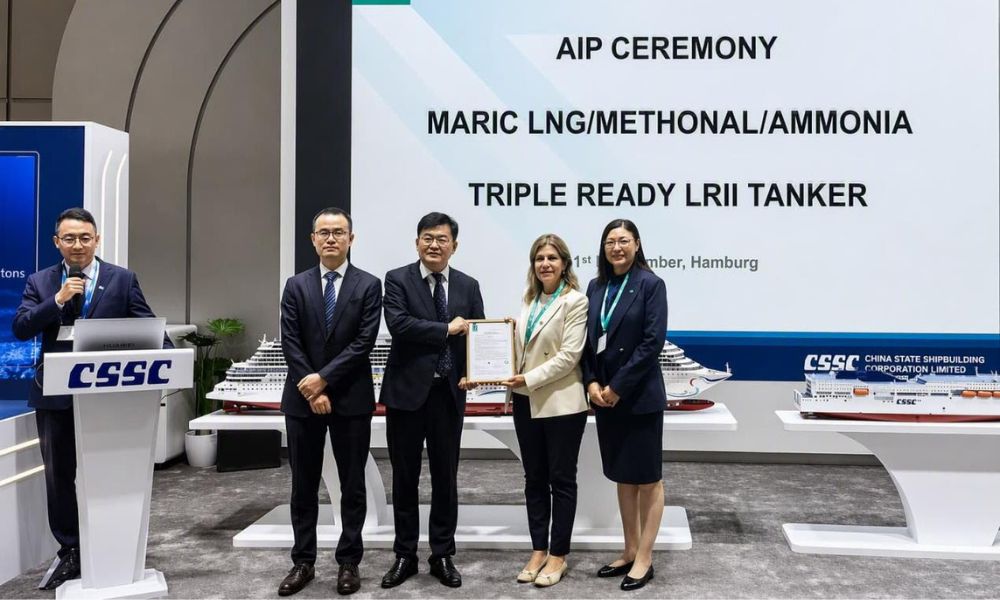
Lloyd’s Register (LR) and the Marine Design and Research Institute of China (MARIC) on Thursday (3 September) have secured Approval in Principle (AiP) for a new 114,000 DWT product and crude oil tanker designed to accommodate future conversion to LNG, methanol or ammonia.

Announced at SMM 2026, the concept addresses one of the biggest investment challenges facing shipping today: the need to develop vessels and capabilities that can support a range of alternative fuel options and pathways as technologies, infrastructure and regulations evolve.

While LNG is already a mature fuel pathway, methanol and ammonia remain at an earlier stage of development, with questions around global fuel availability, infrastructure development, economics and long-term adoption.

The 114,000 DWT tanker concept has been designed as a product and crude oil carrier that can accommodate future conversion to LNG, methanol or ammonia as technologies, regulations and fuel supply chains mature. By incorporating conversion readiness at the design stage, the concept aims to reduce future retrofit complexity and provide owners with greater confidence when planning long-term fleet investments.

The design concept was reviewed against LR’s July 2026 class rules and regulations, including requirements relating to ships using gases and other low-flashpoint fuels, alongside relevant IACS Common Structural Rules for oil tankers. Final classification and statutory approval remain subject to full compliance with all applicable rules and regulations.

Theo Kourmpelis, Global Business Director for Tankers, Lloyd’s Register, said: “Shipowners are being asked to make major investment decisions today despite continued uncertainty around which fuels will dominate in the decades ahead. Alternative fuel solutions each offer potential pathways to compliance, but fuel infrastructure, regulation and economics continue to evolve at different speeds around the world.

“Designs that preserve flexibility will be critical in helping owners manage risk while preparing for multiple future scenarios.”

Si Nan, Marine & Offshore Marketing Department Vice Director, MARIC, said: “As the industry explores different decarbonisation pathways, shipowners need vessel designs that can adapt alongside technological and regulatory developments. This concept was developed specifically to provide greater fuel flexibility and long-term resilience, allowing owners to respond to changing market requirements without being locked into a single fuel strategy.

“Receiving Approval in Principle from Lloyd’s Register is an important milestone that validates the design concept and supports its future development.”


Photo credit: Lloyd’s Register
Published: 4 September, 2026

Continue Reading

Alternative Fuels

DNV: Alternative-fuelled vessel orders hit highest monthly level since October 2024

LNG-fuelled vessels accounted for the vast majority of August activity while the strong summer performance marked a significant acceleration in ordering activity after a relatively slow start to the year.
Admin

Published

on

By

DNV: Alternative-fuelled vessel orders hit highest monthly level since October 2024

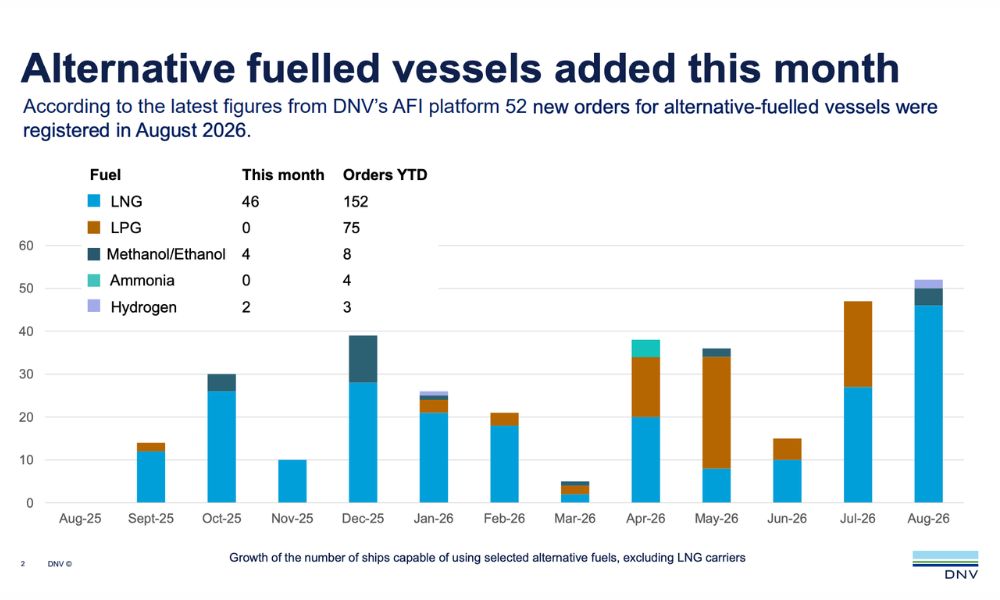
Latest data from classification society DNV’s Alternative Fuels Insight (AFI) platform alternative-fuelled vessel ordering was strong in August, with 52 new vessels added to the platform.

This is the highest monthly total since October 2024 and follows another active month in July, when 47 vessels were added to the database.

LNG-fuelled vessels accounted for the vast majority of August activity, with 46 orders recorded. The container segment led the way with 30 orders, while the car carrier segment contributed a further 12 LNG-fuelled vessels. In addition, four ethanol-fuelled bulk carriers and two hydrogen-powered bulk carriers were added during the month, as well as one LNG bunker vessel.

The strong summer performance marked a significant acceleration in ordering activity after a relatively slow start to the year. In total, 242 alternative-fuelled vessel orders have been placed in the first eight months of 2026, representing a 27% increase compared with the same period in 2025.

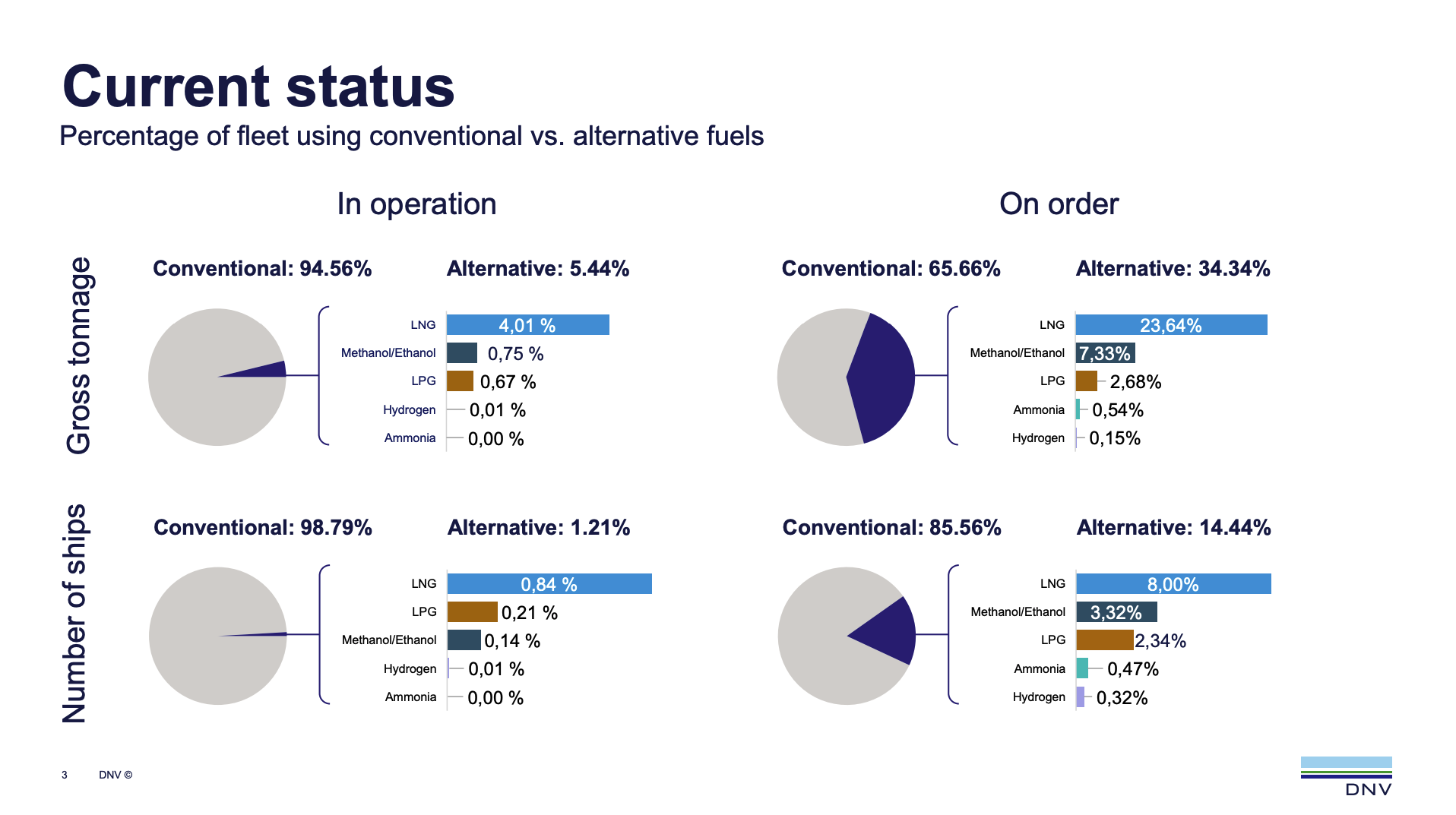
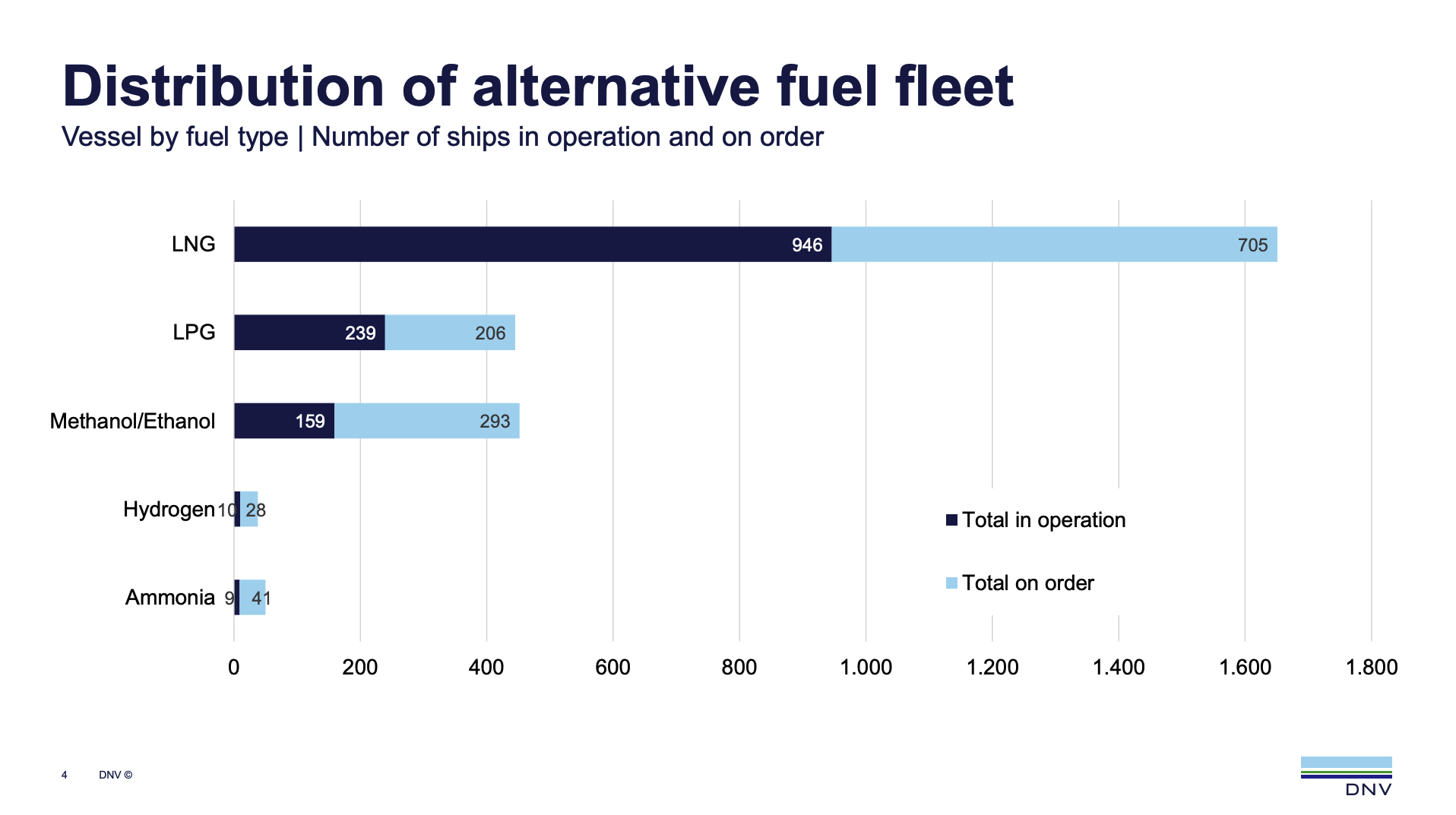
LNG remains the dominant fuel choice, accounting for 63% of all alternative-fuelled vessel orders registered so far this year. Container vessels represent the largest share of these LNG orders (59%), followed by car carriers (30%).

Jason Stefanatos, Global Decarbonization Director at DNV Maritime, said: “The past two months have been particularly strong for alternative-fuelled vessel ordering, with August recording the highest monthly total we’ve seen since October 2024. This has helped lift year-to-date orders to a level well above the same period last year.

“LNG remains the leading fuel choice, driven largely by activity in the container and car carrier segments. These sectors have been among the earliest adopters of alternative fuels, supported by predictable liner operations and increasing demand from cargo owners to reduce emissions across supply chains. 

“For many owners, LNG offers a combination of emissions reductions, fuel availability and future flexibility while the longer-term fuel landscape continues to evolve. 

“At the same time, the latest figures include orders for ethanol- and hydrogen-fuelled vessels, highlighting that owners continue to explore a range of decarbonization pathways. Different segments are making different fuel choices, but the overall level of activity demonstrates continued investment in lower-emission shipping.”
Screenshot 2026 09 04 at 12.29.26 PM Screenshot 2026 09 04 at 12.29.36 PM


Photo credit: DNV
Published: 4 September, 2026

Continue Reading
Advertisement

OUR INDUSTRY PARTNERS


Trending