Connect with us

Battery

Echandia delivers 3 MWh battery system for tugboat in Singapore

Battery system will have a lifespan of at least 25 years and is part of Singapore’s ambitious plan to electrify its harbor craft fleet by 2030, says the maritime battery systems provider.

Admin

Published

on

Echandia delivers 3 MWh battery system for tugboat in Singapore

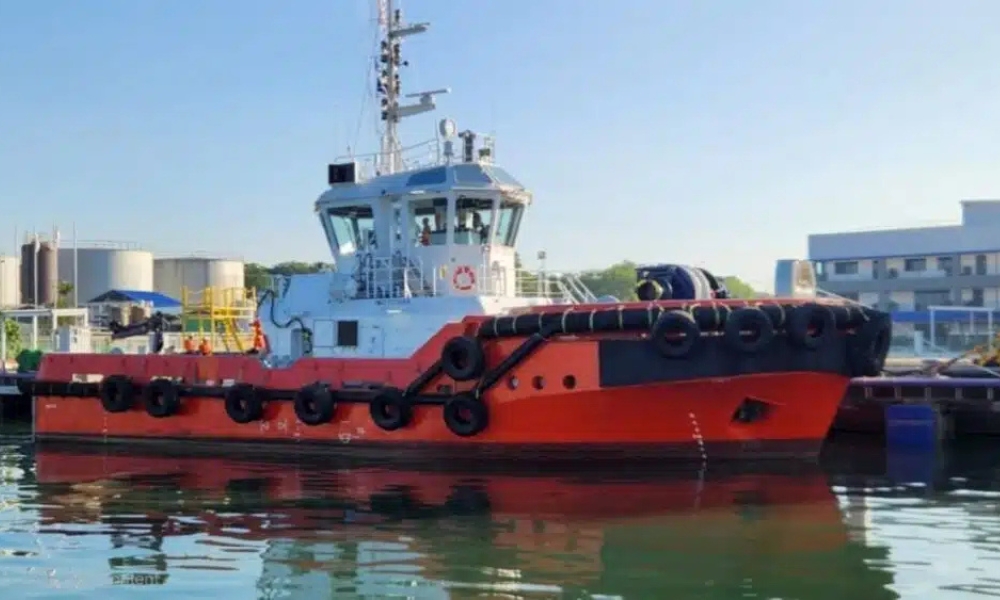
Safe maritime battery systems provider Echandia on Thursday (22 January) said it supplied a battery system for a tugboat operating in Singapore’s harbour. 

The battery system will have a lifespan of at least 25 years and is part of Singapore’s ambitious plan to electrify its harbor craft fleet by 2030.

The order is for a 3 MWh battery system, and the agreement includes an option for an additional system. The contract was signed with a large shipyard and shipowner based in Singapore.

“The electrification of maritime transport in Singapore is really gaining momentum, and it’s important for us at Echandia to be part of this transition. This project not only strengthens our presence in Asia but also solidifies Echandia’s role as a global leader in the transition to zero-emission maritime solutions“, said Torbjörn Bäck, CEO at Echandia.

Echandia was selected for this project because of the long lifespan and proven reliability of its LTO battery system, which stands out in the maritime industry. The battery system is designed to last the entire lifetime of the tugboat, eliminating the need for replacements and ensuring a very low total cost of ownership. 

Since the battery system experiences minimal degradation over time, it provides predictable performance and simplifies planning and management of the tugboat’s daily operations.

“The combination of durability and operational efficiency played a key role in securing this contract, as customers seek solutions that not only meet but exceed the rigorous requirements of modern shipping and sustainability goals”, Torbjörn Bäck continued.

Echandia has rapidly grown to become one of the world’s leading maritime battery system providers, having sold over 100 systems for electrification projects globally.


Photo credit: Echandia
Published: 23 January, 2026

Continue Reading

Battery

WK NatPower expands inland shipping electrification drive into Jiangsu

WK NatPower and Jiangsu Port Investment will strengthen collaboration across the maritime, port and clean energy sectors, bringing together expertise in shipping, port infrastructure and electrification technologies.
Admin

Published

on

By

WK NatPower expands inland shipping electrification drive into Jiangsu

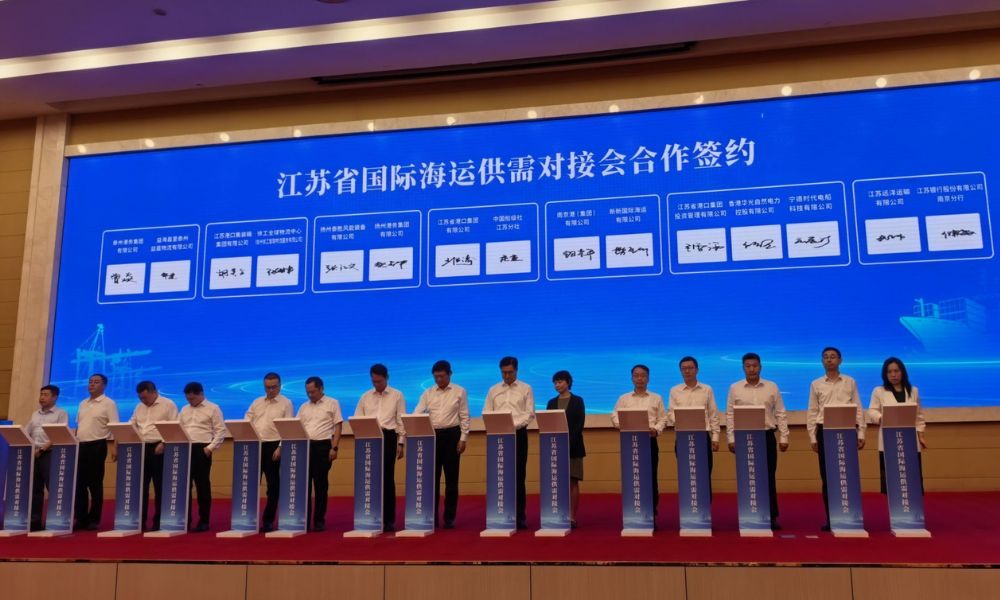
Wah Kwong NatPower (WK NatPower) on Wednesday (2 September) said it signed a Memorandum of Understanding (MoU) with Jiangsu Port Group Investment Management Co Ltd (Jiangsu Port Investment), a wholly owned subsidiary of Jiangsu Port Group, at the Jiangsu International Maritime Conference in Nanjing. 

The company said the MoU strengthens collaboration across the maritime, port and clean energy sectors, bringing together expertise in shipping, port infrastructure and electrification technologies.

As China’s leading province for inland waterway transport, with the country’s largest inland waterway network, Jiangsu plays a critical role in the nation’s shipping and logistics system. 

“The partnership represents a strategic step in WK NatPower’s China strategy,” the company said in a statement. 

Building on the momentum of its Zhejiang projects, WK NatPower is extending its footprint further into one of the country’s most significant inland shipping areas. By leveraging the strengths of their respective parent companies, Jiangsu Port Group, Wah Kwong Maritime Transport and NatPower, the parties will also establish a cooperation mechanism to explore opportunities for deeper collaboration and enhance the complementary use of global maritime and port resources.

From a technological perspective, WK NatPower is evolving from individual charging infrastructure towards integrated energy systems combining charging, battery storage and battery-swapping solutions capable of serving a broader range of operational scenarios. 

By combining the international experience and global network of WK NatPower and its partner NatPower Marine, with Jiangsu Port Group’s local resources and project delivery capabilities, the partnership will promote coordinated regional development. 

It also demonstrates WK NatPower’s commitment to the electrification of China’s inland waterway transport sector.


Photo credit: Wah Kwong NatPower
Published: 3 September, 2026

Continue Reading

Battery

Port electrification could cut 10% of international shipping emissions, study finds

Finding offered hope that the 10% of international shipping emissions which occur within port areas, can be effectively mitigated via electrification technologies such as cold ironing at berth.
Admin

Published

on

By

RESIZED Chris Pagan

UCL Shipping and Oceans Research Group on Thursday (27 August) said new research has suggested that 10% of international shipping emissions occur within port areas globally. 

The finding offered hope that these emissions can be effectively mitigated via electrification technologies such as cold ironing at berth, switching to battery electric propulsion whilst idling or manoeuvring at port and converting vessels engaged with short-sea routes to battery-operated electric vessels. 

Presented as an interactive tool on the UCL Shipping and Oceans Research Group website, the ‘Shipping GHG Emissions Explorer’ aims to improve the evidence base supporting IMO negotiations due to resume next week on the adoption of the Net Zero Framework (NZF). 

Built using a dataset of 1.2 million voyages undertaken by over 43,000 unique vessels across a single year, the tool offers IMO delegations visibility on which of 575 million tonnes of CO2e emissions generated by international shipping can be attributed to their country’s economic activity.

James Stewart, Research Fellow in the Analytics of Energy and Transport at the UCL Shipping and Oceans Research Group, said: “Although imperfect, AIS-centred big data approaches have revolutionised our ability to understand key trends in the energy demands and GHG emissions associated with international shipping activity. The tool offers users the chance to benefit from this unprecedented clarity by downloading aggregate data directly from the platform, where interested parties are encouraged to explore and validate available statistics with any complementary datasets they may have access to.”

The tool offers energy demand and GHG emission statistics during port and voyage phases alongside disaggregation possibilities by vessel type, port and maritime trade partner, enabling users to explore key trends in international shipping activity. Future updates to the tool slated for release in September will provide users with additional statistics on state-level seaborne trade volumes and potential economic impacts of the proposed amendments to the IMO NZF ahead of their potential for adoption later in  the year.

Yoseph Ismail, Research Assistant at the UCL Shipping and Oceans Research Group, said: “Having the ability to breakdown international voyages by their ‘In port’ and ‘In voyage’ emissions has given us significant insight into what benefits electrification in port could bring. Our granular approach has allowed us to discover key trends in the country data. 

“For instance, 7 out of 10 countries in Latin America/Caribbean and 8 out of 10 in East Asia Pacific that have the highest in port emissions are small island nations. These countries emissions, are all well above global and regional averages, and often above 20%. Further analysis into the reasons for this could go a long way towards finding the most cost-effective solutions to bring down emissions.”

Note: The Shipping GHG Emissions Explorer can be found here.


Photo credit: Chris Pagan on Unsplash
Published: 31 August, 2026

Continue Reading

Alternative Fuels

Baltic Workboats delivers biomethane-powered multi-purpose workboat

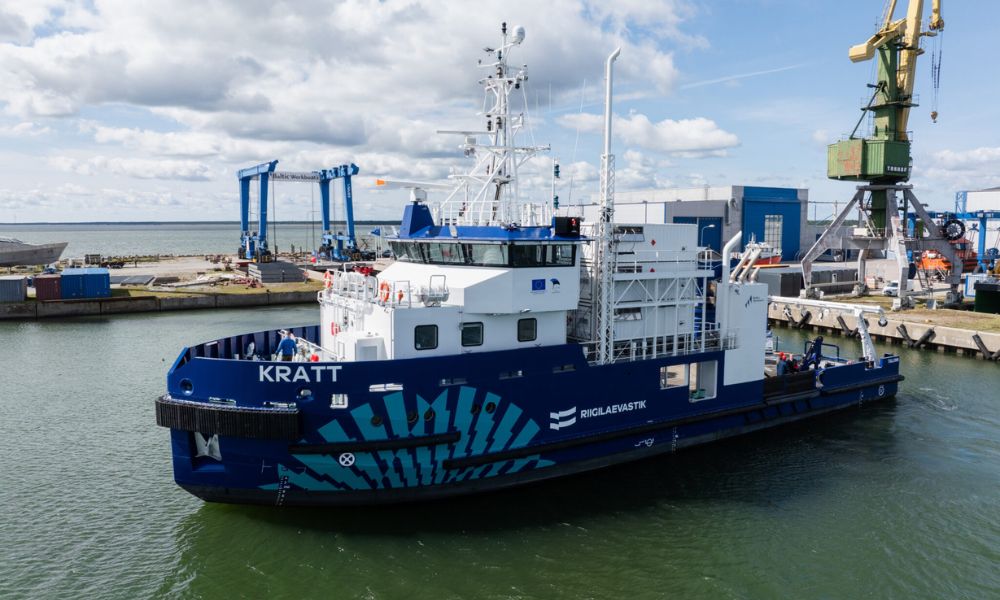
“KRATT” is Estonia’s first large workboat to use biomethane as its primary fuel and is also equipped with a 400 kWh battery bank for electric propulsion.
Admin

Published

on

By

Baltic Workboats delivers biomethane-powered multi-purpose workboat

Baltic Workboats recently said a new 38-metre multi-purpose workboat, KRATT, built for the Estonian State Fleet, has been christened at its Nasva shipyard in Saaremaa on 12 August. 

KRATT is Estonia’s first large workboat to use biomethane as its primary fuel and is also equipped with a 400 kWh battery bank for electric propulsion. 

On biomethane, the vessel can travel up to 1,000 nautical miles at a speed of seven knots. On battery power, it can operate for up to two hours at five knots. The battery bank also allows the vessel to use electric power for up to ten hours while at anchor, reducing the need to run auxiliary engines as well as fuel consumption, emissions and noise levels.

From autumn, the vessel will carry out a wide range of maritime tasks in Estonian waters, from buoy handling and fairway maintenance to marine research, pollution response and rescue operations.

According to Andres Laasma, Director General of the Estonian State Fleet, the gradual renewal of the state-owned fleet is essential to ensure the country’s ability to carry out its maritime duties.

“Our main workboats today are on average 30-40 years old, and maintaining their reliability is becoming more difficult and costly year by year. The new workboat KRATT will help ease this situation, as it is a multi-purpose vessel capable of performing a wide range of tasks,” Laasma said.

KRATT is the first major workboat ordered by the state in the past ten years.


Photo credit: Baltic Workboats
Published: 19 August, 2026

Continue Reading
Advertisement

OUR INDUSTRY PARTNERS


Trending