Connect with us

Environment

Clean Arctic Alliance welcomes IMO agreement to cut black carbon impacts on Arctic

But expressed disappointment in watering down resolution in order to reach consensus and placate a small but vocal group of opposing countries.

Admin

Published

on

post 56055

Clean Arctic Alliance, a coalition made of non-profit organisations (NGO), on Friday (26 November) said it welcomes the adoption of an International Maritime Organization (IMO) resolution to cut the climate impacts of black carbon emissions by shipping on the Arctic.

But the group expressed disappointment in watering down its substance in order to reach consensus and placate a small but vocal group of opposing countries.

Proposed during a recent week’s Marine Environment Protection Committee (MEPC 77) by Canada, Finland, France, Germany, Iceland, Netherlands, Norway, Solomon Islands, Sweden, UK, and US, the resolution calls for support of  “voluntary use of cleaner fuels by ships operating in or near the Arctic” (MEPC 77/9).

On 25 November, some 27 countries (France, Sweden, Slovenia, Norway, Finland, US, Canada, Netherlands, Germany, Poland, Vanuatu, Spain, Monaco, Iceland, Italy, Croatia, Solomon Islands, Tuvalu, Belgium, Marshall Islands, Mexico, Palau, Tonga, Ireland, Fiji, Iran, Portugal) spoke in favour of paper MEPC 77/9, with more than 30 delegations backing it in total. 

A small group of countries spoke in opposition, including Russia, China, India, Japan, Saudi Arabia, UAE and Angola. During an informal working group to refine and finalise the resolution, the wording was systematically and meticulously watered down by opposing countries and shipping interests.  This version was adopted during plenary on 26 November (MEPC 77-J-9).

“While the Clean Arctic Alliance is pleased the IMO finally discussed and accepted the proposal for a black carbon resolution, which received support from over 30 delegations in plenary, including 27 IMO Member States, we are disappointed that in the effort to placate a small but vocal coterie of opposing countries, important substance was lost from the original draft resolution, leaving us with a watered down version,” said Dr Sian Prior, Lead Advisor to the Clean Arctic Alliance.

“However, what is important is that this resolution now sends a strong message that domestic and regional action to reduce black carbon emissions from ships should proceed.”

“It was confirmed by a number of interventions from delegations during MEPC 77 that a switch to distillate, or other cleaner fuels and forms of propulsion by ships operating in and near the Arctic, will reduce black carbon emissions in the region,” she added.

“The Clean Arctic Alliance is confident that today’s adoption of the resolution on reducing black carbon emissions is the first step towards reducing the impact of the shipping sector on Arctic ecosystems and for Indigenous and local communities.

“If all shipping currently using heavy fuel oils while in the Arctic were to switch to distillate fuel, there would be an immediate reduction of around 44% in black carbon emissions from these ships. If particulate filters were installed on board these vessels, black carbon emissions could be reduced by over 90%.”

Black carbon is a short-lived climate force responsible for 20% of shipping climate impact (on a 20-year basis). When black carbon settles onto snow and ice, melting accelerates, and the loss of reflectivity creates a feedback loop exacerbating global heating. Black carbon emissions from shipping in the Arctic increased 85% between 2015 and 2019.

Although progress was made during MEPC 77 to address emissions of black carbon from ships, the Clean Arctic Alliance noted the disappointing lack of support from IMO Members for a proposed resolution from South Pacific islands states – Kiribati, Marshall Islands and Solomon Islands – recognising the need to reach zero greenhouse gas emissions no later than 2050 (MEPC 77/7/3).

“Reducing black carbon emissions is imperative for the shipping industry in the short term, but must happen in parallel with measures to reduce greenhouse gas emissions from shipping if it is to play its part in slowing down the loss of Arctic snow and ice,” she continued.

“It has long been recognised that what happens in the Arctic, doesn’t stay in the Arctic, and will have repercussions elsewhere through sea level rise and changing weather patterns. In light of this, the lack of support for the proposed resolution from vulnerable low-lying island states is an unacceptable response to the climate crisis.”

The Clean Arctic Alliance also welcomed progress made during MEPC 77 on the consideration of the use of scrubbers and scrubber discharges, but stressed the urgency for the work proposed to be completed during 2022 as an increasing number of scrubbers are being installed and being used each year, since the IMO’s cap on the sulphur content on fuel oil came into effect in 2020 (MEPC 77/9/1).

“Removing sulphur in exhaust emissions to then dump them into the ocean is completely unacceptable. Scrubbers and scrubber discharges should not be allowed in the Arctic or elsewhere,” said Prior.

Related: ‘Missed opportunity’ to decarbonise shipping at MEPC 77, says ICS
Related: Clean Shipping Coalition: UN shipping agency climate talks again held back by handful of blockers
Related: MEPC 77: For climate progress, shipping needs action from IMO member states on concrete initiatives
Related: INTERCARGO supports IMO’s MEPC 77 shipping decarbonisation goals by 2050
Related: INTERCARGO: Global challenges require global solutions to achieve zero-emission shipping by 2050
Related: Royal Belgian Shipowners’ Association: MEPC 77 needs to deliver concrete actions
Related: IBIA: ECGS guidelines and discharge policy on MEPC 77 agenda
Related: IBIA: MEPC 77 to discuss mandatory flashpoint on the BDN
Related: MEPC 77: Governments to decide on ICS USD 5 billion R&D fund to accelerate decarbonisation goals


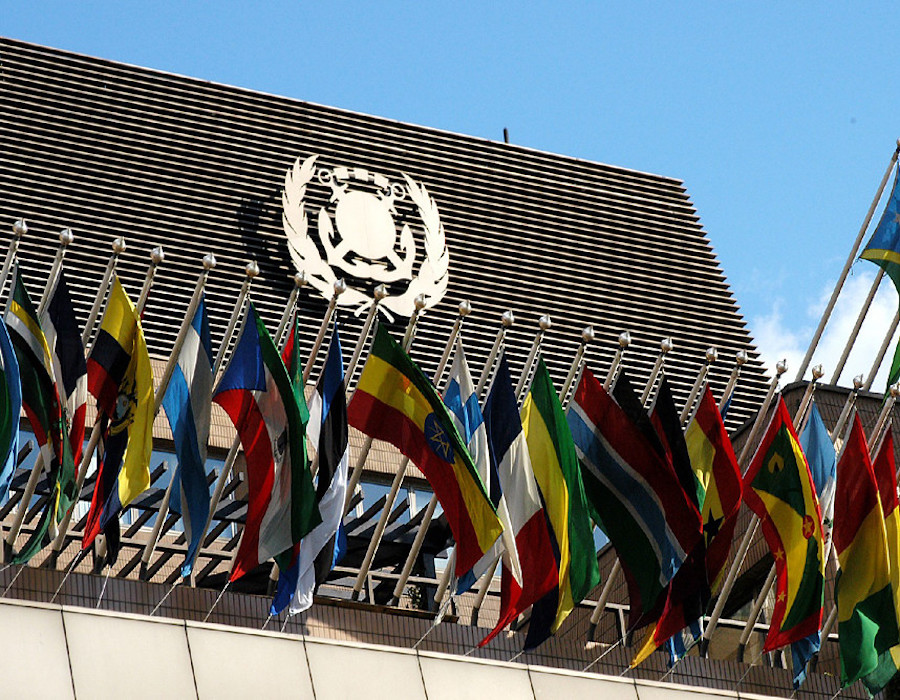
Photo credit: International Maritime Organization
Published: 30 November, 2021

Continue Reading

Environment

Indonesia to expedite removal of sunken Malaysia-flagged tanker “Silver Sincere”

Vessel sank while carrying about 1,000 mt of waste oil on 12 January 2025; the wreck was discovered in March 2025 and was found to have drifted about 13 nautical miles from its original sinking site.
Admin

Published

on

By

Indonesia to expedite removal of sunken Malaysia-flagged tanker “Silver Sincere”

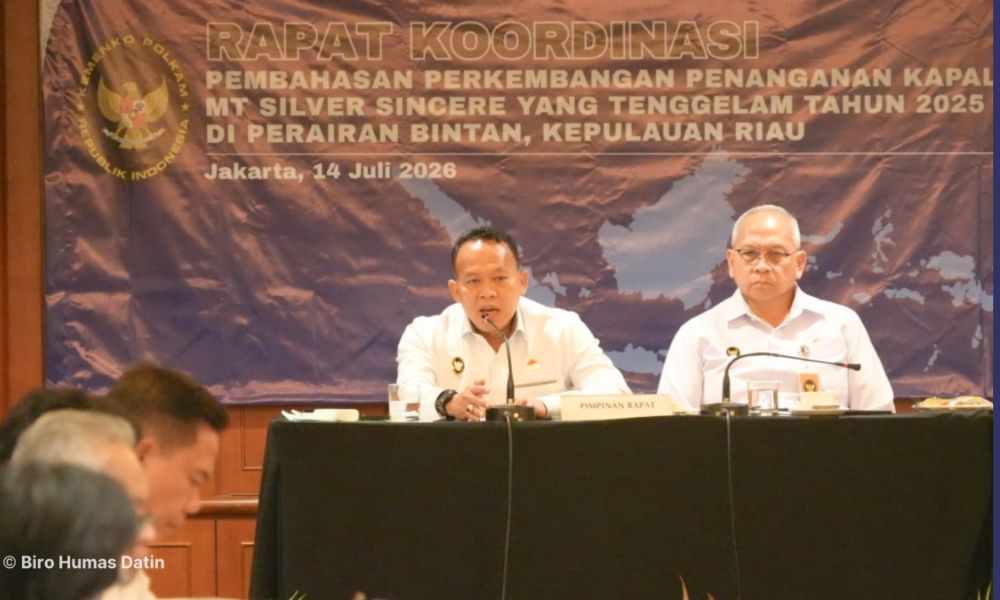
Indonesia’s Coordinating Ministry for Political and Security Affairs on Tuesday (14 July) held a cross-agency coordination meeting to expedite efforts in handling the Malaysian-flagged tanker Silver Sincere that sank off Bintan Regency, Riau Islands.

The vessel sank while carrying about 1,000 metric tonnes (mt) of waste oil on 12 January 2025. 

According to authorities, the ship sank within Indonesian waters. After several surveys, the wreck was finally discovered in March 2025 and it was found to have shifted approximately 13 nautical miles from the initial sinking location.

The meeting was aimed to align cross-ministerial and institutional measures to expedite the handling of the Silver Sincere wreck while minimising risks to shipping safety, the marine environment, and national interests.

Deputy for Coordination of State Defense and National Unity Purwito Hadi Wardhono emphasised that the handling of the impact of the Silver Sincere sinking was the first case to be comprehensively coordinated, serving as a model for handling foreign vessels sinking within Indonesian jurisdiction.

Through this cross-sectoral coordination, the government will establish a clear and measurable framework that can serve as a reference for resolving similar cases in the future, while minimising state losses due to environmental pollution, damage to underwater ecosystems and infrastructure, and disruption to shipping lanes.

“The most important thing is to immediately stop and prevent the negative impacts of this ship sinking,” Purwito said.

“Therefore, a coordinating role is crucial, as maritime security governance involves various ministries and institutions with varying authorities, allowing for faster, more integrated, and more effective response,” he said. 

He added that the Silver Sincere was a Malaysian-flagged vessel that sank within Indonesian jurisdiction, and therefore, all handling processes must comply with the provisions of Indonesian laws and regulations.

In the meeting, Prof. Eko Ganis Sukoharsono, representing the SAE Energy Consulting Team, presented the results of an analysis based on 14 observation periods using Sentinel-1 Synthetic Aperture Radar (SAR) satellite imagery. 

The analysis results showed strong indications of a waste oil spill that has resulted in marine pollution, damage to the seabed due to shifting shipwrecks, disruption of coastal ecosystems and fishing grounds, and potentially threatening the livelihoods of fishing communities around the Riau Islands. 

Purwito added these findings further emphasise the importance of accelerating the removal of the shipwrecks to prevent widespread environmental impacts, maintain shipping safety, and avoid the potential for greater state losses.

The meeting brought together representatives of related ministries and institutions including the Ministry of Foreign Affairs, Ministry of Defense, Ministry of Transportation, Ministry of Maritime Affairs and Fisheries, Ministry of Environment, Attorney General’s Office.  

Related: MPA: Malaysia-registered tanker “Silver Sincere” sinks off Pedra Branca


Photo credit: MarineTraffic / Julian T
Published: 20 July, 2026

Continue Reading

Methanol

China launches methanol shipping supply chain alliance to accelerate green transition

Marine fuel suppliers in the alliance include Sinopec Fuel Oil Sales, China Marine Bunker (PetroChina), SIPG Energy (Shanghai), and Shenzhen Port Energy Development.
Admin

Published

on

By

China Flag

China Waterborne Transport Research Institute under the Ministry of Transport and China Transport News recently jointly launched a Methanol Fuel Shipping Supply Chain Innovation Alliance with 20 organisations spanning the shipping, port, energy, equipment, research and industry association sectors.

The alliance was officially announced during the main event of China Maritime Day 2026 on 11 July, where members also released a joint initiative to develop a collaborative methanol-fuelled shipping supply chain.

The alliance aims to implement China’s national strategy for green economic transformation and support the Ministry of Transport’s “One Network, Four Modernisations” initiative by building a safe, efficient, economical and reliable methanol marine fuel supply chain

Under the joint initiative, alliance members pledged to align with China’s national decarbonisation strategy by promoting methanol as a key pathway for the shipping sector’s green transition and optimising the industry’s energy mix.

The members also pledged to strengthen collaboration across the supply chain to improve coordination between bunker fuel production, transportation and end users while advancing technological innovation.

Lastly, the alliance will support the development of policies, planning and technical standards, promote resource sharing and joint research, and accelerate the large-scale adoption of methanol as a marine fuel.

The alliance brings together companies and organisations representing the entire methanol shipping supply chain.

Members include shipping and port members such as China Changjiang National Shipping (Group) Corporation, COSCO Shipping Bulk Co., Ltd., Shandong Port Group, and Wuhan Chuangxin Jianghai Shipping Co., Ltd.

Energy companies in the alliance include Sinopec Chemical Commercial Holding Company Limited and Methanex Corporation.

Marine fuel suppliers including Sinopec Fuel Oil Sales, China Marine Bunker (PetroChina), SIPG Energy (Shanghai) Co Ltd and Shenzhen Port Energy Development Co Ltd are also part of the alliance. 

Equipment manufacturers in the alliance are CSSC 711th Research Institute, CSSC Power (Group) Corporation Ltd and Chongqing Hongjiang Machinery Co Ltd.

Research, media and industry organisations participating in the alliance include the China Waterborne Transport Research Institute, China Transport News, and the Methanol Institute.

The Methanol Institute said methanol is moving beyond individual projects towards coordinated action across the entire value chain. 

“And China continues to play a leading role in advancing methanol as a marine fuel,” it said in a social media post.  

“We’re proud to work alongside our fellow alliance members to help strengthen the methanol supply chain and support the continued growth of methanol as a marine fuel.”


Photo credit: David Yu from Pixabay
Published: 17 July, 2026

Continue Reading

Wind-assisted

DNV awards TADC to Econowind for VentoFoil 3-Series

System actively harnesses wind power to generate forward thrust, helping to reduce bunker fuel consumption and mitigate FuelEU penalties.
Admin

Published

on

By

DNV awards TADC to Econowind for VentoFoil 3-Series

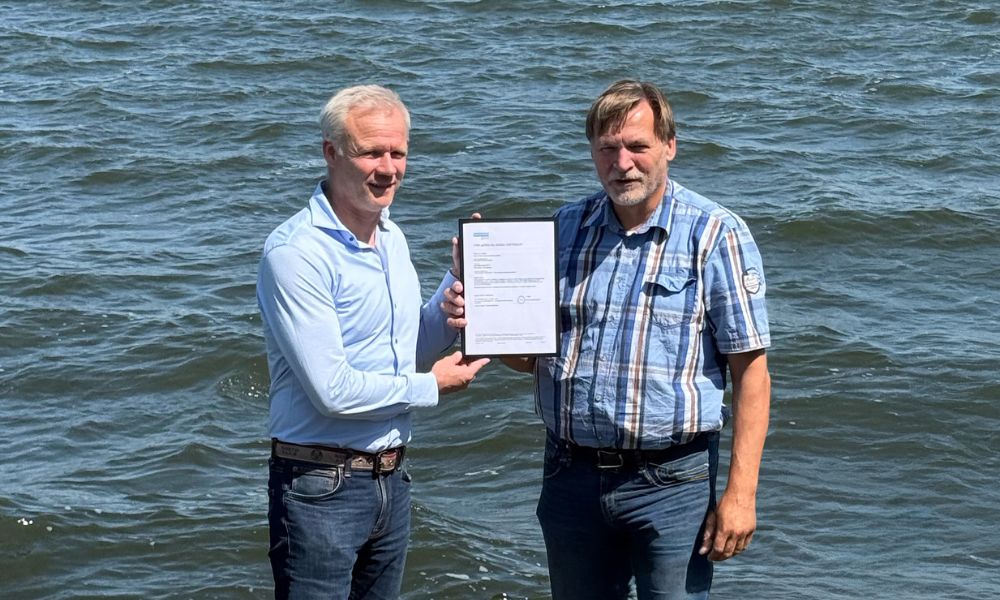
Dutch wind-assisted propulsion technology firm Econowind on Wednesday (15 July) said it has received a Type Approval Design Certificate (TADC) from classification society DNV for its VentoFoil 3-Series boundary layer suction wing. 

The company said the certification confirms compliance with DNV’s ST-0511 standard for Wind-Assisted Propulsion Systems and enables easier integration of VentoFoils on DNV-classed vessels worldwide. 

Econowind added that the approval accelerates the deployment of wind propulsion across the shipping industry.

“DNV is one of the world’s leading classification societies. This TADC gives DNV-classed shipowners confidence that VentoFoils meet the highest industry standards,” said Chiel de Leeuw, Chief Commercial Officer at Econowind. 

“It simplifies the approval process for both retrofits and newbuilds. VentoFoils are ideal for late-stage design integration and retrofit projects. This is an important milestone for Econowind and for the wider adoption of wind-assisted ship propulsion.”

The 3-Series VentoFoil is Econowind’s best-selling suction wing to date, with over 150 units sold. The system actively harnesses wind power to generate forward thrust, helping to reduce fuel consumption and mitigate FuelEU penalties. The system includes a tilting foundation, allowing the wings to be tilted down during port operations or in adverse weather conditions, making it a flexible solution.

The TADC applies to the 16-meter VentoFoil 3-Series product design and supports easy integration into DNV-classed vessels without repeating the full design assessment process. This enables shipowners, shipyards, and project teams to move more efficiently from concept to installation, reducing project complexity and accelerating deployment. 

Hasso Hoffmeister, Senior Principal Engineer at DNV Maritime, said: “It is a great pleasure to award Econowind this new certificate. WAPS have been going from strength to strength over the past few years, from 2022 the number of vessels in operation has increased five times, and we’ve now topped the century mark. 

“And with the current advances in technology, materials, and production capacity in the segment, we expect this to accelerate. So, while the wind always changes, the shipping industry is likely to be sailing strong for years to come.”

Econowind expects the DNV Type Approval Design Certificate to accelerate adoption of the VentoFoil, particularly among shipowners seeking proven, independently certified technology that can support fuel savings, emissions reductions, and decarbonization goals.

MS Heinz of HS Schiffahrt is among the first vessels to sail under this TADC.The company said the approval builds on Econowind’s growing installed base and further strengthens confidence in wind-assisted ship propulsion as a practical solution to address energy scarcity and high fuel prices. 

In addition to the 3-Series, Econowind offers the 5-Series for the deep-sea market.


Photo credit: Econowind
Published: 17 July, 2026

Continue Reading

Trending