Connect with us

Alternative Fuels

CE Delft studies availability and cost of LBM and LSM as viable bunker fuel

Study finds both could become ‘available in sufficient quantities’ to be an alternative for bunker fuel, without costs being much higher than other options.

Admin

Published

on

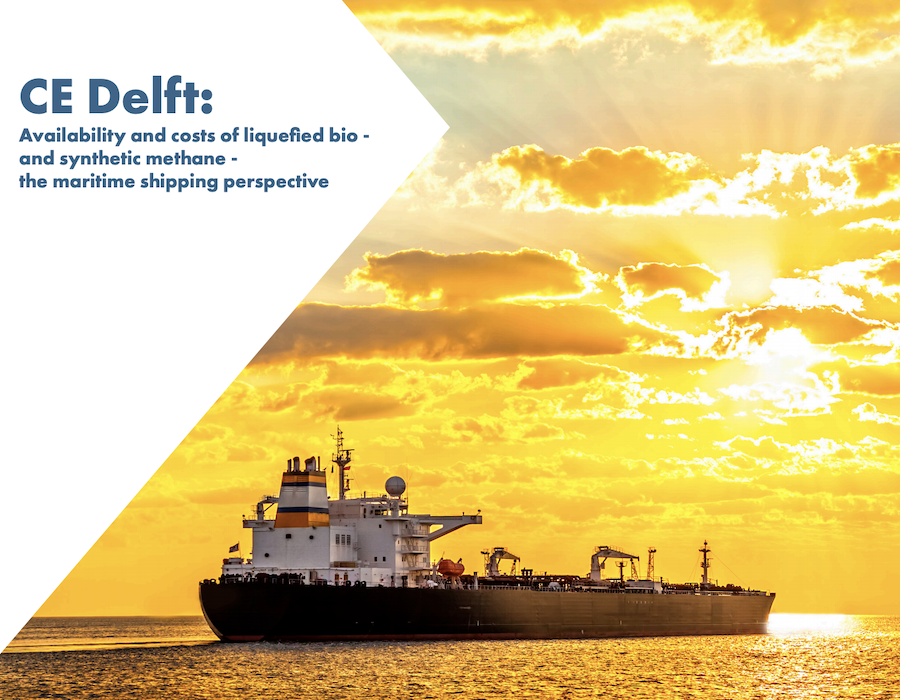
Sea LNG CE Delft report

Global multi-sector industry coalition SEA-LNG on Wednesday (25 March) released the latest in its series of independently conducted reports.

The CE Delft study analyses the availability and costs of Liquefied Bio Methane (LBM) and Liquefied Synthetic Methane (LSM) and concludes that both could become available in sufficient quantities to make a contribution towards future decarbonisation for the shipping industry, and that the costs need not be significantly higher than those of other low- and zero-carbon fuels.

The study explores the potential availability and cost of LBM and LSM produced from renewable electricity with the aim of providing industry-leading, timely, and proven analysis to support the growing case for LBM and LSM in driving forward LNG as a decarbonisation solution towards 2030, 2050, and beyond, said  SEA-LNG.

The findings are that both LBM and LSM are scalable solutions for the maritime sector, with estimated sustainable global supplies potentially exceeding the demands of shipping in the future, and likely to be commercially competitive relative to other low- and zero-carbon fuels. 

Further, the growing LNG-fuelled fleet could use LBM or LSM without requiring major modifications, and the existing supply infrastructure will remain fit for bunkering purposes with either fuel.

The study was conducted by independent research and consultancy organisation CE Delft and commissioned by SEA-LNG. 

“Based on an extensive review of the global availability of biomass, and the maturity of technologies to produce biomethane and synthetic methane, we conclude that, in principle, sufficient amounts could be produced to fuel the shipping sector,” Dagmar Nelissen, Senior Researcher, CE Delft.

“However, other sectors are also likely to demand methane, and there needs to be significant investments in production capacity”.

Analysis of the global sustainable biomass resource shows that biomethane from energy crops, agricultural residues, forestry products and residues could significantly exceed the global total energy demand of the maritime sector. 

The sustainable potential for LBM could be substantially higher in 2050 compared to 2030, even when excluding aquatic biomass, which has the potential to play a dominant role in the long term.

The production costs of LBM and LSM could be broadly comparable to other renewable fuels like green hydrogen and ammonia.  

Compared to those fuels, LBM and LSM have the advantage that they can be transported, stored and bunkered, utilising existing and technically matured LNG infrastructure.

“The shipping industry faces unprecedented challenges if it is to meet the IMO’s decarbonisation targets,” commented Peter Keller, Chairman, SEA-LNG. 

“Confusing and countering claims abound for different zero-emissions technologies – all of which require decades of research and development before they are proven safe for marine operations, globally available, and commercially viable.

“In combination, the studies we have commissioned definitely proves that, through LBM and LSM, LNG offers a clear pathway to net zero-carbon emissions from shipping while also future-proofing ship owners’ investments. 

“By investing in LNG-fuelled vessels now, ship owners can realise immediate GHG benefits – up to 21% on a Well-to-Wake basis and 28%, Tank-to-Wake, including the impact of methane emissions. 

“These LNG-based assets can use non-fossil fuel methane such as LBM and LSM with little to no modifications. As LBM and LSM become available at scale, the carbon-free future will become reality.”

The full study is available for download here.


Photo credit: SEA/LNG
Published: 26 March, 2020

Continue Reading

Biofuel

Petrochina International blends over 30,000 mt of marine biofuel since March

Company has been developing marine biofuel blending operations at China (Zhejiang) Pilot Free Trade Zone, leveraging storage and logistics facilities at its Aoshan base.
Admin

Published

on

By

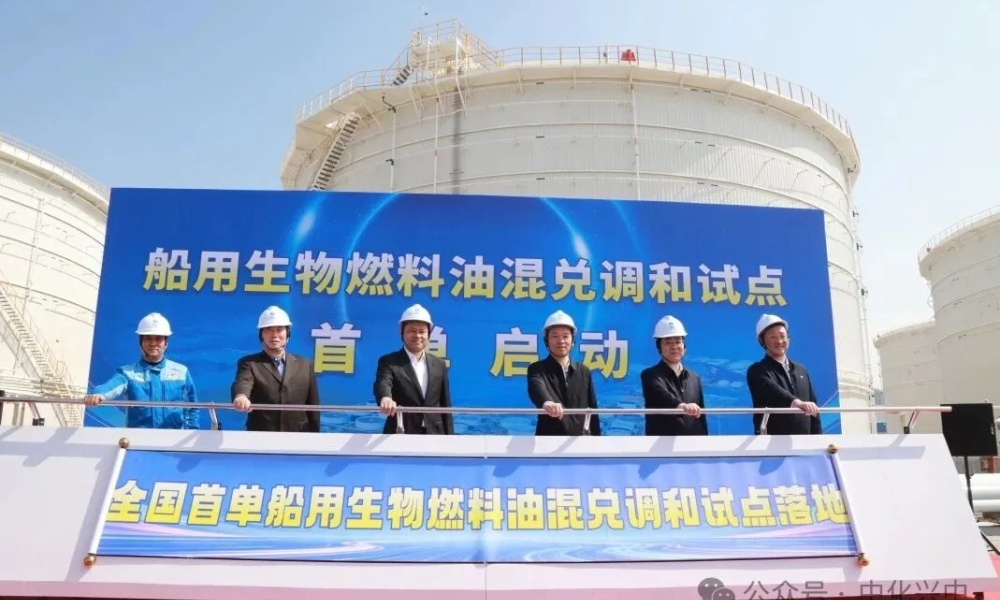
Zhoushan completes China’s first batch of marine biofuel blending under pilot programme

Petrochina International Co Ltd recently said it has blended more than 30,000 metric tonnes (mt) mt of biofuel since completing the country’s first biofuel marine fuel blending operation on 13 March.

The company said the milestone demonstrates its ability to conduct continuous and large-scale biofuel marine fuel blending operations.

The company has been developing marine biofuel blending operations at China (Zhejiang) Pilot Free Trade Zone, leveraging storage and logistics facilities at its Aoshan base.

Its latest product, B24 marine fuel containing 24% biofuel component, meets relevant International Maritime Organization (IMO) requirements and marine fuel standards, according to the company. It said the product can be supplied for bunkering vessels operating on international routes.

It has used its global trading network to secure feedstock supplies and support cost control and supply security for the blending operations, it added.

The company said the large-scale blending of its marine biofuel products marks a development in China’s marine biofuel blending market.

It plans to work with upstream and downstream businesses within its group to support the development of Zhoushan Port as a major bonded marine fuel bunkering hub and contribute to its parent group’s transition towards lower-carbon energy.

Manifold Times previously reported China (Zhejiang) Pilot Free Trade Zone launching the first pilot programme for marine biofuel blending in China with the completion of the first batch of B24-HSFO. 

The launch was marked with the blending of 2,000 mt of biodiesel and 6,300 mt of high sulphur fuel oil (HSFO) in storage tank F-02 of Sinochem-Xingzhong Oil Staging (Zhoushan), producing 8,300 mt of B24-HSFO. 

Manifold Times also reported the first cross-regional bonded bunkering operation of blended biofuel in East China was successfully completed at the Meishan Port Area of ​​Ningbo-Zhoushan Port. 

The B24-HSFO used in the bunkering operation was supplied by the Aoshan Petroleum Base in Zhoushan from the first pilot programme for marine biofuel blending in China. 

Related: Zhoushan completes China’s first batch of marine biofuel blending under pilot programme
Related: Ningbo wraps up East China’s first cross-regional biofuel blending and bunkering
Related: China debuts first marine biofuel blending pilot programme in Zhoushan
Related: China’s first batch of domestically blended marine biofuel delivered to Qingdao for bunkering


Photo credit: Sinochem-Xingzhong Oil Staging (Zhoushan)
Published: 21 September, 2026

Continue Reading

Ammonia

NYK wraps up first STS ammonia bunkering operation in Japan

Ammonia fuel was transferred from the ammonia carrier “Shoei Maru” via the STS method to an ammonia-fuelled medium gas carrier, scheduled for delivery in November 2026.
Admin

Published

on

By

NYK wraps up first STS ammonia bunkering operation in Japan

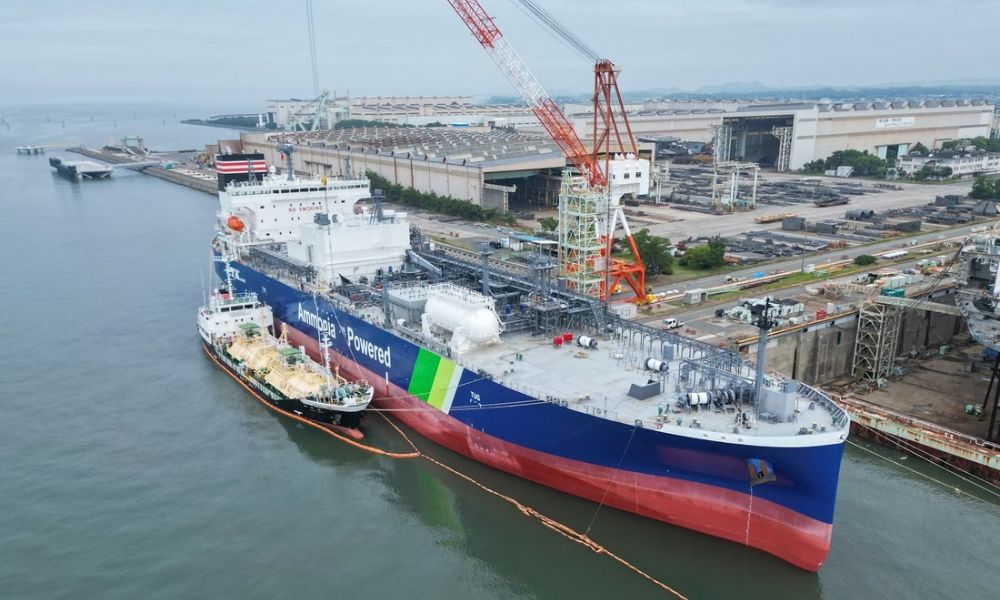
NYK Line, on Thursday (17 September) with Japan Marine United Corporation, Nihon Shipyard Co Ltd, Mitsubishi Gas Chemical Company, and Kokuka Sangyo Co Ltd, has completed the world’s first ship-to-ship (STS) ammonia bunkering operation to an ammonia-fuelled vessel. 

At a quay within Japan Marine United Corporation’s Ariake Shipyard, ammonia fuel was transferred from the ammonia carrier Shoei Maru via the STS method to an ammonia-fuelled medium gas carrier (AFMGC) scheduled for delivery in November 2026. 

The operation was conducted in preparation for sea trials of the AFMGC using fuel ammonia.

“This achievement represents an important initiative that has put into practice an operation essential for the future practical deployment of ammonia-fuelled vessels,” the company said. 

The bunkering operation was conducted following extensive discussions among the companies involved. Safe operating procedures and work processes were established prior to the operation, enabling the transfer to be completed safely. Through this initiative, we have accumulated practical insights regarding safe fuel supply operations.

This operation serves as a pioneering example of the fuel-supply framework that will be required for the widespread adoption of ammonia-fuelled vessels. 

The AFMGC is currently in the final stage of construction and is scheduled for delivery in November 2026. 

“The successful completion of this operation marks a significant milestone toward the broader commercial use of fuel ammonia and the practical deployment of ammonia-fuelled vessels. It also represents an important step forward in establishing an ammonia supply chain,” the company added. 


Photo credit: NYK
Published: 21 September, 2026

Continue Reading

Ammonia

Azane secures ammonia bunker fuel supply from Yara

Yara will supply ammonia to Azane through its established production and logistics network, and Azane will sell the ammonia to end clients in the maritime fuel market.
Admin

Published

on

By

Azane secures ammonia bunker fuel supply from Yara

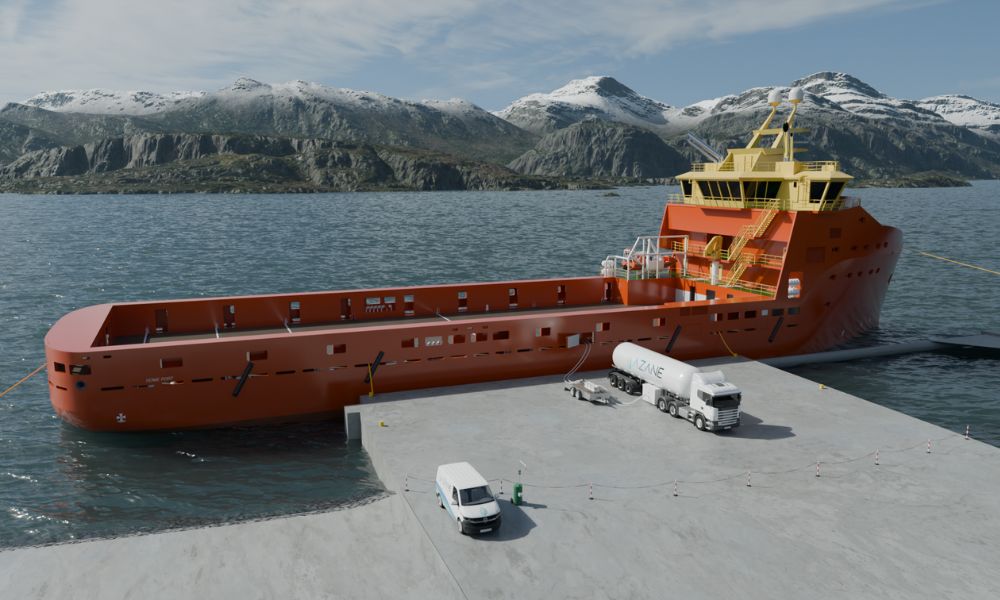
Azane Fuel Solutions AS (Azane) on Friday (18 September) said it has signed an ammonia supply agreement with Yara Norge AS (Yara), securing access to ammonia for Azane’s marine fuel activities. 

The company said the agreement represents an important step in establishing a reliable ammonia supply chain to support the maritime sector’s transition towards lower-emission operations.

“The agreement strengthens the ammonia value chain and supports Azane’s ambition to deliver reliable and scalable ammonia solutions for the shipping industry,” it said in a statement.  

Under the agreement, Yara will supply ammonia to Azane through its established production and logistics network, and Azane will sell the ammonia to end clients in the maritime fuel market – such as the recently announced agreement with Equinor.

“Securing access to ammonia from a leading global producer is a key milestone for Azane,” said Steinar Kostøl, CEO of Azane Fuel Solutions. 

“As interest in ammonia as a marine fuel continues to grow, strong partnerships across the value chain are essential to ensuring a safe, reliable and commercially viable fuel supply.”

“Ammonia is recognized as a promising low-emission fuel alternative for shipping and offshore operations, and we are pleased to support Azane’s efforts to pilot ammonia supply solutions,” said Gunner Sørensen, Senior Sales Manager, Yara Industrial Solutions. 

“As a leading global producer and supplier of ammonia, Yara is well positioned to provide reliable supply to customers across a range of industries, including emerging applications such as maritime fuel.”

Related: Azane signs ammonia bunkering deal with Equinor, first deliveries due in H2 2026


Photo credit: Azane Fuel Solutions
Published: 21 September, 2026

Continue Reading

Trending