Connect with us

Business

Article: Is LNG Shipping’s Long Term Answer to Climate Change?

Pacific Green Technologies informs on the issues of using LNG as a marine fuel by the shipping industry.


Admin

Published

on

5dd4c974773cf 1574226292

Scrubber technology firm Pacific Green Technologies (PGT) on Tuesday (19 November) published the following article informing the shipping industry on the issues of using LNG as a marine fuel by the shipping industry:

Experience tells us that popular opinion is rarely correct. It’s too black and white, too lacking in nuance and interest in the nitty gritty world of detail and fact.

Popular opinion, for instance, says that low sulphur fuel oil (LSFO) is a much safer bet for ships to burn. It claims that alternative fuels, like liquefied natural gas (LNG), are the safest of all.

Of course, it’s good that there is a debate being had – even an occasionally misinformed one.

After all, the International Maritime Organisation’s (IMO’s) new sulphur oxide and nitrous oxide emissions standards is scheduled to take effect on 1 January 2020.

These laws had to be passed. The global shipping industry is one of the largest producers of greenhouse gases (GHG) and the damage done to human health by high SOx emissions, especially, has been increasingly significant.

But the move towards IMO 2020-compliant solutions has seen a trend towards overkill driven by emotion and the belief that the further one moves from burning HSFO the better for the environment.

If LNG is the answer, we’re asking the wrong question

Though it seems fair to assume that burning LSFO is better for the environment than burning HSFO, it isn’t. With the responsible use of an exhaust gas cleaning system, HSFO has been shown to outperform LSFO in toxic emissions, particulate matter (PM) and carbon footprint.

Similarly, the claims that LNG is the best fuel for marine de-carbonisation appear plausible on the surface. Yet, closer scrutiny reveals that LNG is not the panacea it is promoted to be.

Though most of the noise over the last 18 months in the maritime sector has been about IMO 2020, these regulatory changes are part of a broader IMO strategy. Envisaged legislation aims to reduce shipping output of particulate matter, and cut the industry’s CO2 emissions in half by 2050.

SEA/LNG, the industry coalition tasked with advocating the use of LNG fuel, rightly acknowledges this.

“Modern ships have a life expectancy of around a quarter of a century,” says SEA/LNG Chairman, Peter Keller.

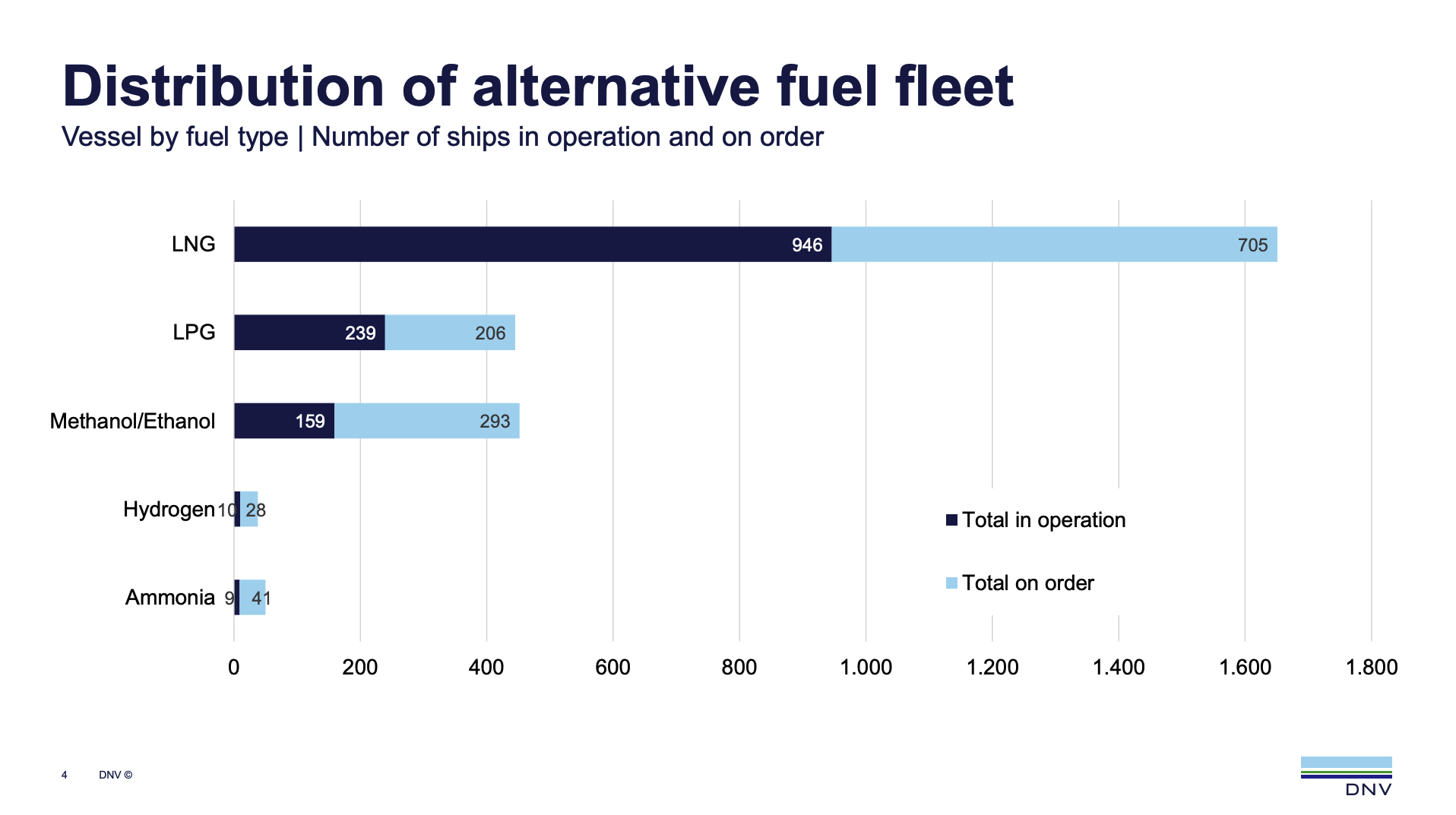
Methane accounts for approximately 95% of the LNG used in marine propulsion

“Investors need to know how the capital expenditures for installed engines and their operational costs, including choice of fuel, will be impacted by current and future environmental legislation.”

However, it is primarily this scale of timeframe that counts against LNG.

Though LNG has a lower carbon impact than oil-based fuels, it is not as pronounced as common sense science suggests it might be (LNG only provides a 20-25% reduction in CO2 emissions compared to diesel).

This difference could be even less depending on how the lifecycle of fuel is measured from well to wake.

A solid argument exists for writing off the GHG emissions associated with HSFO production, as this residual fuel oil is essentially a byproduct of the manufacturing process for lighter fuels like diesel. SEA/LNG disagrees.

Then there’s the methane problem.

Methane accounts for approximately 95% of the LNG used in marine propulsion. Though most of it is combusted, some of it escapes during fuel consumption in a phenomenon known as ‘methane slip’.

Though slipped amounts are small, they have a disproportionately high impact on climate change. Methane has a global warming potential which is 28 times higher than that of CO2 over a 100 year perspective, and 84 times higher over 20 years.

Methane slippage can therefore reduce, or even negate, the potential gains for LNG from lower CO2 emissions.

This flips the claim that LNG offers decarbonisation benefits that accrue in proportion to its representative mix within existing vessel fleets: the more LNG vessels, this views maintains, the greater the benefits.

But, if burning LNG actually has a marginally detrimental effect on our climate, then the more LNG ships we see the more we need to worry.

“I think people automatically say that we can go to LNG and clean up the environment,” says Jose Femenia, Professor of Engineering at the United States Merchant Marine Academy at Kings Point, N.Y. "You have to take that with a grain of salt."

LNG gases are also not free of particulate matter. A study for the European Commission found that, though LNG particle emissions were lower by volume than oil-based fuels, they were concentrated in the ultrafine range.

According to the research, ultrafine particles can penetrate the respiratory system and be transported to other parts of the body via the blood, where they can cause widespread inflammation.

“Very small particles may also play a role in atmospheric processes, dictating the amount and lifetime of clouds, which can influence climate.”

On the spectrum of potential alternative energy sources there are a number, like hydrogen or battery power, that promise greater long-term benefits. The only factor counting in LNG’s favour is that it is a more mature technology with more established supply side actors.

Whether LNG is a fuel for 2050 is questionable.

It is for these various reasons that University Maritime Advisory Services (UMAS) has concluded that the European Union’s (EU) projected spending on LNG bunkering infrastructure would have no significant climate benefits.

Marine exhaust gas scrubbers, however, do have a positive short-, medium-, and long-term effect.

In the move towards long-term alignment with climate policy, LNG is in danger of being a diversion. And, with the amount of money that needs to be spent to develop the currently sparse global LNG bunkering infrastructure, that diversion could be very costly.

Source: Pacific Green Technologies
Published: 20 November, 2019


Continue Reading

Legal

Singapore withdraws remaining 127 charges against Hin Leong founder OK Lim

Lim Oon Kuin, also known as OK Lim, was issued a stern warning and a district court granted him a discharge amounting to an acquittal for these charges on 17 July.

Admin

Published

on

By

RESIZED Sora Shimazaki on Pexels

Founder of collapsed oil trader Hin Leong Trading, Lim Oon Kuin, also known as OK Lim, has had the remaining 127 charges against him withdrawn, according to The Straits Times on Monday (20 July). 

OK Lim was issued a stern warning and a district court granted him a discharge amounting to an acquittal for these charges, including those for cheating, on 17 July. The discharge means Lim cannot be prosecuted again for the same offences.

Lim, 84, is currently serving a 13½-year prison sentence after the High Court reduced his original 17½-year jail term in March 2026. He was convicted in 2024 on two cheating charges and one count of abetting forgery in a case prosecutors described as one of Singapore’s most serious trade finance frauds.

Lim was convicted in May 2024 of two charges of cheating the Hongkong and Shanghai Banking Corporation (HSBC) and one count of abetting forgery that proceeded to trial out of a total of 130 criminal charges.

He was first charged in court on 14 August 2020, and was subsequently handed further charges in court on 25 September 2020, 30 April 2021 and 24 June 2021 for his role in perpetuating fraud on various financial institutions. 

A total of 130 charges were eventually brought against him for cheating and forgery-related offences.

Related: Singapore: Hin Leong Founder OK Lim gets jail term slashed to 13.5 years


Photo credit: Sora Shimazaki
Published: 21 July, 2026

Continue Reading

Winding up

Singapore: Coastal Logistics Pte Ltd to be wound up voluntarily

Coastal Logistics was reportedly affiliated with troubled Singapore bunker player Coastal Oil (Singapore) Pte Ltd.

Admin

Published

on

By

RESIZED Drew Beamer

Several resolutions for Coastal Logistics Pte Ltd were made during an extraordinary general meeting held on 14 July, according to a notice in the Government Gazette on Friday (4 July).

The following resolutions were duly passed during the meeting:

As Special Resolution

  • That it has been proved to the satisfaction of the meeting that the Company cannot by reason of its liabilities continue its business and accordingly the Company be wound up voluntarily pursuant to Section 160(1)(b) of the Insolvency, Restructuring and Dissolution Act 2018 (No. 40 of 2018);

As Ordinary Resolutions

  • that Mr. Wong Pheng Cheong Martin and Ms. Koay May Yee, both care of FTI Consulting (Singapore) Pte Ltd, One Raffles Quay, #27-10 South Tower, Singapore 048583 be appointed as the joint and several Liquidators of the Company for the purpose of such winding up; and
  • that the Liquidators be at liberty to open, maintain and operate any bank account(s) or account(s) for monies received by them as Liquidators with such bank(s) as they deem fit; and
  • that a Committee of Inspection will not be formed.

Manifold Times previously reported Nicholas James Gronow, director of Heng Tong Fuels & Shipping and Coastal Logistics, filed statutory declarations for both companies stating the firms cannot continue their businesses due to liabilities.

Both companies were reportedly affiliated with troubled Singapore bunker player Coastal Oil (Singapore) Pte Ltd. 

In 2019, several vessels owned by both firms entered the sale & purchase (S&P) market in Singapore.

Related: Singapore: Director declares Heng Tong Fuels & Shipping’s inability to continue business
Related: Heng Tong Fuels & Shipping in court over DBS Bank bunker tanker loan
Related: Singapore: Bunker tanker “Coastal Neptune” arrested
Related: Heng Tong Fuels & Shipping, Coastal Logistics tankers enter S&P market


Photo credit: Drew Beamer
Published: 21 July, 2026

Continue Reading

LNG Bunkering

PIL’s LNG dual-fuel boxship “Kota Elok” arrives in Singapore on maiden call

As the first of 13 new 13,000 TEU vessels joining its fleet, Kota Elok is equipped to operate on LNG and low-sulphur fuel oil that helps reduce our greenhouse gas emissions.

Admin

Published

on

By

PIL's LNG dual-fuel boxship “Kota Elok” arrives in Singapore on maiden call

Singapore-based Pacific International Lines Pte Ltd on Monday (20 July) said its first 13,000 TEU LNG dual-fuel container vessel, Kota Elok, recently made her maiden call to Singapore on 15 July.

As the first of 13 new 13,000 TEU vessels joining its fleet, Kota Elok is equipped to operate on liquefied natural gas (LNG) and low-sulphur fuel oil that helps reduce our greenhouse gas emissions. 

The vessel also incorporated energy-saving features and digital technologies to reduce fuel consumption and enhance operational performance, as well as a bow windshield to improve aerodynamics, contributing to improved fuel efficiency and lower emissions over the course of long-haul voyages.

“Following Singapore, Kota Elok will continue her voyage on our East Coast Service 1 (ES1) route to South America, calling at ports in Brazil, Uruguay, and Argentina before returning to Asia,” the company said in a social media post. 

Kota Elok also became PIL’s first vessel to receive Lloyd’s Register certification for compliance with the IACS UR E26 and UR E27 cyber security requirements.

Developed by the International Association of Classification Societies (IACS), UR E26 and UR E27 are mandatory cyber resilience requirements for newbuild vessels contracted from 1 July 2024. 


Photo credit: Pacific International Lines
Published: 21 July, 2026

Continue Reading

Trending