
Environment
Why new VLSFO 0.5% Sulphur fuels may emit higher Black Carbon Emissions
IMO claims the new VLSFOs are blends with a high content of aromatics hydrocarbons and that this was the reason behind the BC emissions; Aderco thinks otherwise.

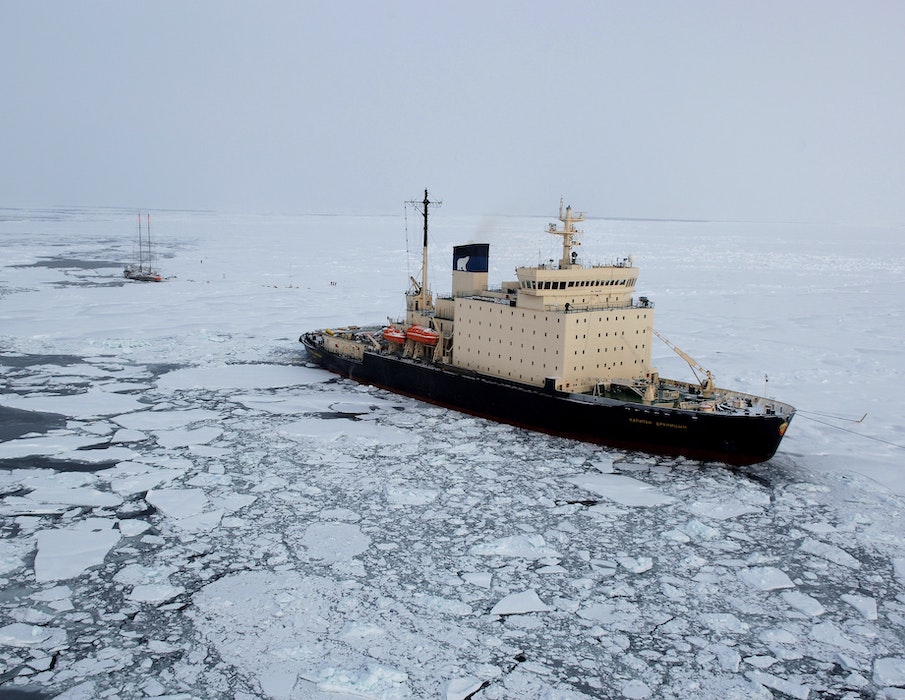
Francisco Malta of VM Industrials Australia, a distributor for Aderco additives on Thursday (9 July) published an article explaining why new low sulphur shipping fuels may be emitting higher Black Carbon Emissions in the Arctic, drawing similarities from controversies caused by diesel in the automotive industry in 2011:
Recently I attended the 9th Sulphur Roundtable organised by the Australian Maritime Safety Authority AMSA and the Maritime Industry Australia Limited MIAL.
The purpose of the roundtables is for those in shipping and impacted by the IMO 2020 sulphur limit changes to understand the new rules and regulations, to have a voice in IMO discussions, and assure a safe transition on the 1st of January to VLSFO 0.5% Sulphur.
As a whole, Australia and shipping have managed relatively well with only minor glitches and without too much disruption.
One topic raised at this roundtable is something being discussed extensively since the introduction of Very Low Sulphur Fuel Oil (VLSFO 0.5% sulphur). It is a concern in the possible increase in black carbon emissions. Particularly noticeable in the Arctic with its snow-white landscape.
The Clean Arctic Alliance CAA has called for immediate action to stop the soot landing on ice, as the soot retains heat from the sun and speeds up the melting of the Arctic.
The IMO (SUB-COMMITTEE ON POLLUTION PREVENTION AND RESPONSE 7th session Agenda item 8) made a claim that the new VLSFOs are blends with a high content of aromatics hydrocarbons and that this was the reason behind the BC emissions.
However, we have found this to be the opposite, and VLSFOs are actually comprised of more paraffinic fuels. The International Bunker Industry Association IBIA has also debunked the IMO’s aromatic theory confirmed the majority of new O.5% fuels are mostly paraffinic and should emit less BC emissions.

Believe it or not, today, paraffinic hydrocarbons in VLSFOs could actually be a reason for black carbon emission.
As puzzling as it may seem, the realisation of this phenomenon dates back to the automotive diesel-gate fiasco of 2011.
As countries in the western world began gradually reducing sulphur limits for fuels used in vehicles, a change came about in the method to “economically” produce ultra-low sulphur fuels (ULSFs), with as little as 10 and 15ppm (0.01%-0.015%) in sulphur content.
These fuels were no longer refined in one location and delivered to the fuel supplier or fuel user. This was too costly. A study prepared for the ICCT The International Council On Clean Transportation in 2012 concluded the cost to desulphurise fuel at a single refinery was anywhere between 0.8 cents and 3.2 cents per litre.
The estimated national average costs of producing 10 ppm ULSD (in order of increasing costs) are in the ranges of 0.8¢ to 1.1¢/liter (India), 1.7¢ to 2.2¢/liter (China), 2.0¢ to 2.7¢/liter (Brazil) and 2.5¢ to 3.2¢/liter (Mexico). 2012 study for ICCT.
This marked the beginning of the mass blending of crudes and fuel batches from all sources and regions, and the same is happening with VLSFOs.

As seen above fuel producers began to blend batches of refined fuels from different sources, regions, and refineries to economically achieve the new ULSFO’s.
Where did things go wrong?

The images above right show a hydrocarbon chain fractioned into many smaller chains to produce lighter fuels with a higher value from a barrel of crude oil. These processes are not new in refining, they have been tried and improved over many years, dating right back to the beginning of refining fossil fuels, however, they play an important role in the issues today.
Notice on the left of the image above the hydrocarbon chain is completely circled by hydrogens and as the chain is fractioned as seen on the right there are not enough hydrogens to completely encircle the smaller chains.
In a controlled environment, the fractioned chains are hydrogenated, this means adding the missing hydrogen molecules to avoid the double-bond effect seen on the right with the pointing red arrows. When hydrogenated the fractioned chains are re-stabilised.
This would be the normal process in a refinery without blending.
However, if hydrogenation does not take place the fractioned chains remain double-bonded, incomplete, and unstable. Their electronegativity increases and the chains become magnetic, they attract other hydrogens from other chains and hydrogens from water (H2O) droplets, present in fuels from condensation.
Unfortunately, when blending batches from many different refineries and sources this process is no longer taking place on every batch. As this is at such a molecular level and does not change the fuel specification, the batches with a shortage in hydrogens are not even identifiable.

The image above on the left is of a stable and complete hydrocarbon and the image on the right of an incomplete hydrocarbon has a magnetic effect as it searches hydrogen atoms to become complete again.

The other negative factor with double bonds is their bonds have twice the strength and therefore require twice the energy to combust.
So, in simple terms, the fuels are now magnetic and holding on to other hydrocarbons and water droplets – remembering that water is made of two hydrogens and one oxygen.
The result is a far heavier agglomeration of multiple paraffinic chains with water, requiring far more energy to combust. Therefore the combustion results in unburnt hydrocarbons that exit as BC black smoke emissions.

The image above shows hydrocarbon and water agglomerations requiring exponentially more energy to combust.
In modern cars, BC emissions were not visible because most cars had Diesel Particulate Filters (DPFs) to capture these un-burnt particles… but they were problematic and car DPFs were filling up more rapidly than they could regenerate.

As the unstable hydrocarbons continue to agglomerate on the left of the image above, the fuels become heavier than what they were intended to be, they continue to be “On Specification” however, complete combustion is now far more difficult for an engine to achieve.
Back to shipping
The irony is that HFO 3.5% S containing asphaltenes often have a number with highly electronegative hydrocarbons, that attract and agglomerate other asphaltene molecules. The difference is that when these agglomerate they become so heavy they drop from suspension and end up as sludge in tanks, they rarely ever make their way to combustion unless singular.
In this new VLSFO scenario, the agglomerations of paraffinic molecules remain light enough and suspended and do make their way to the combustion chamber.
The automotive by-pass, resulting in Diesel-gate and the fuel fix resulting in premium fuels.
Some car manufacturers resigned to fitting devices that switched off the Exhaust Gas Recirculation (EGR) allowing an increase in burn temperatures (therefore emitting higher nitric oxides) to achieve the temperature required to fully combust.
However, as these practices became exposed, many had no option than to give up on diesel and start to plan for an electric future.
What wasn’t understood was how much the impact of ULSF blending would have on the automotive industry… and this is now fairly clear and confirmed, as every major fuel supplier’s offer special premium fuel – the fix!
These premium fuel solutions come in different forms of additives from solvent-based combustion improvers that alter fuel specifications to reach complete combustion. To non-solvent green technologies that physically neutralise the electronegative effect without altering the fuel specifications – As shown in the image below.

In all cases, the desired outcome is complete combustion without leaving the excess in partially burnt fuel resulting in Black Carbon emissions.
BC emissions are most prevalent at low engine speeds when the combustion is most difficult, this may explain why so much is present in the Arctic, not only is the black on the white landscape visibly obvious, it is likely the ships are operating at low loads with caution to avoid and navigate icebergs. This would not be exclusive to the Arctic, given the same fuel, engine and operating conditions BC could happen in any location.
In conclusion
Blending is here to stay, there is no turning back, “that ship has sailed“. Blending is the only economical method to produce low sulphur fuels and just as the automotive industry found, the shipping industry may not be able to operate without excessive black carbon emissions if fuel stability is not addressed.
Thanks to the automotive industry, the advantage of shipping is that we may know the why and how to fix it.
References
IBIA – https://ibia.net/black-carbon-misunderstandings-thoroughly-discussed-and-addressed/
Photo credit: Aderco / NOAA
Published: 14 July, 2020
Methanol
GENA Solutions: Total renewable and low-carbon methanol project pipeline increases from 61.8 to 62.2 Mt by 2032
Information shared by MI – the Global Methanol Alliance meant to assist the maritime industry in the adoption of methanol as a mainstream marine fuel heading into IMO 2030/2050.
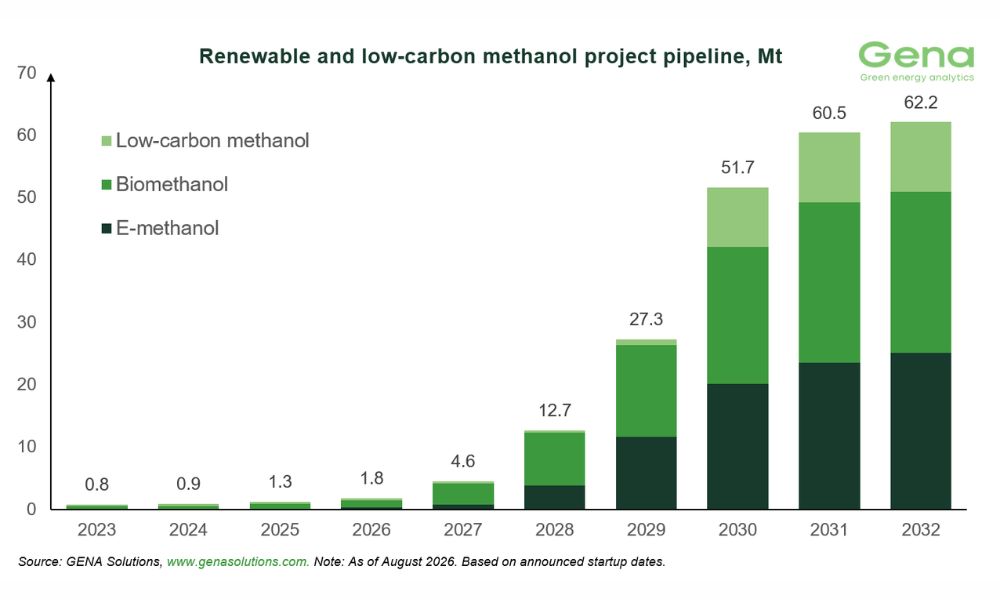
MI – the Global Methanol Alliance recently shared with Manifold Times the renewable and low-carbon methanol project pipeline August 2026 release produced by GENA Solutions Oy.
Information from the release is meant to provide the bunkering publication’s readers with insight on renewable methanol availability, and to assist the maritime industry in the adoption of methanol as a mainstream marine fuel heading into IMO 2030/2050.
Key takeaways from GENA’s August 2026 Methanol release are as follows:
- As of the end of August 2026, GENA tracks 286 renewable and low carbon methanol projects, representing 62.2 Mt of capacity by 2032. This includes 25.1 Mt of e-methanol, 25.9 Mt of biomethanol, and 11.2 Mt of low carbon methanol capacity.
- Two new projects were added to Project Navigator last month, while one frozen project was excluded. The project pipeline increased by 0.4 Mt month on month.
- Four new offtake agreements were registered during August, including two biomethanol and two e-methanol agreements.
- About 8% of the cumulative renewable methanol project pipeline capacity has reached FID so far, with another 11% at the FEED stage.
- Considering the current uncertainty around regulatory developments and demand growth, GENA projects that renewable methanol capacity could reach 6 Mt to 12 Mt by 2031.
Note: The full article can be viewed here.
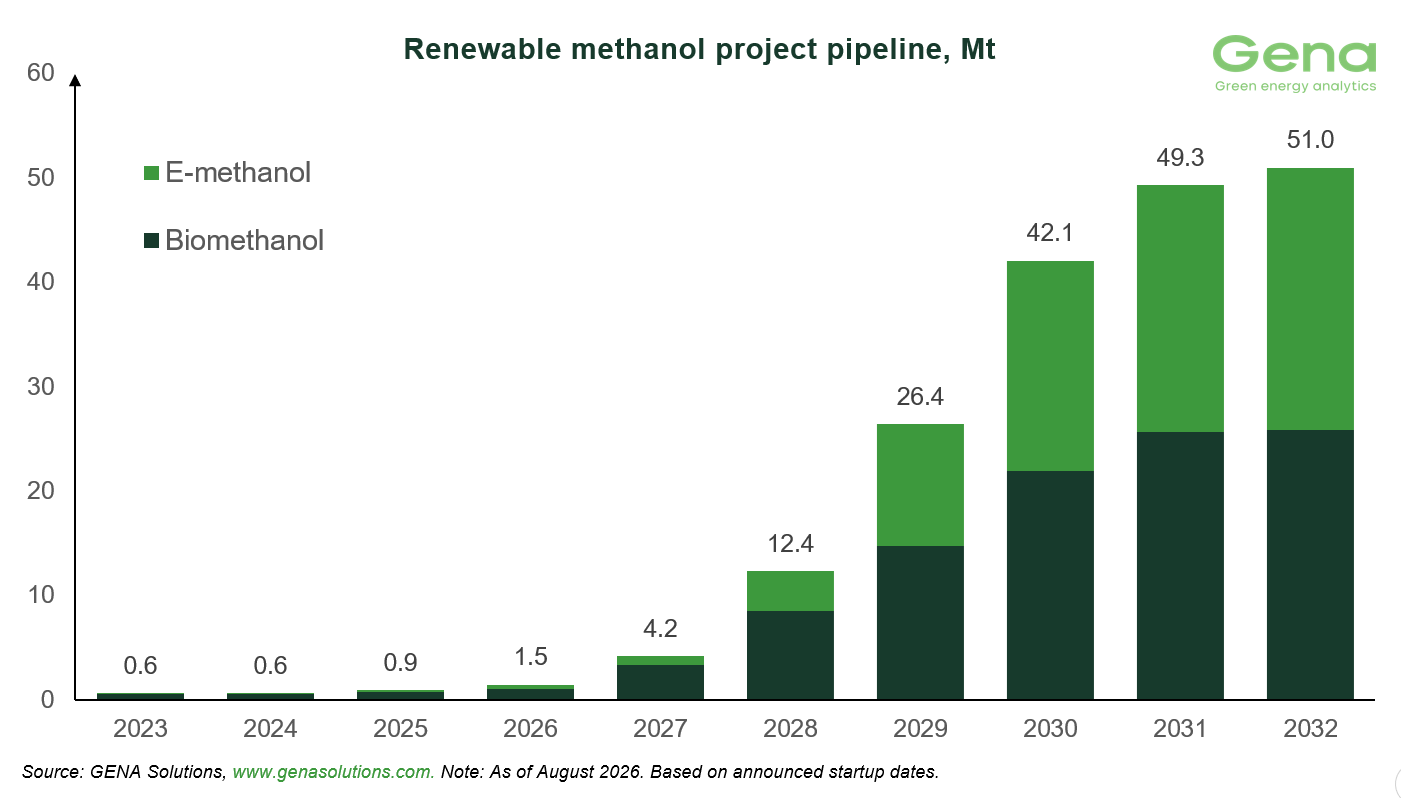
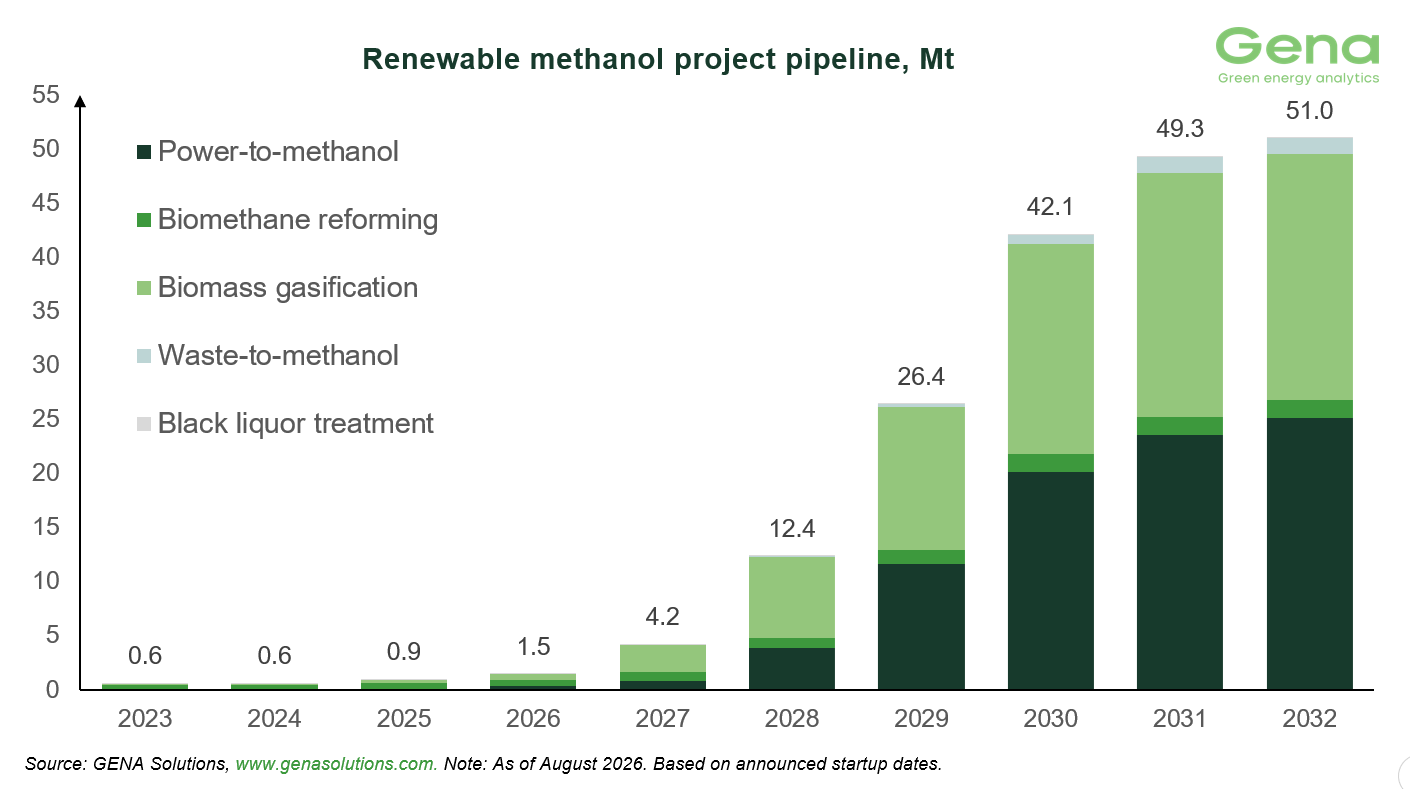
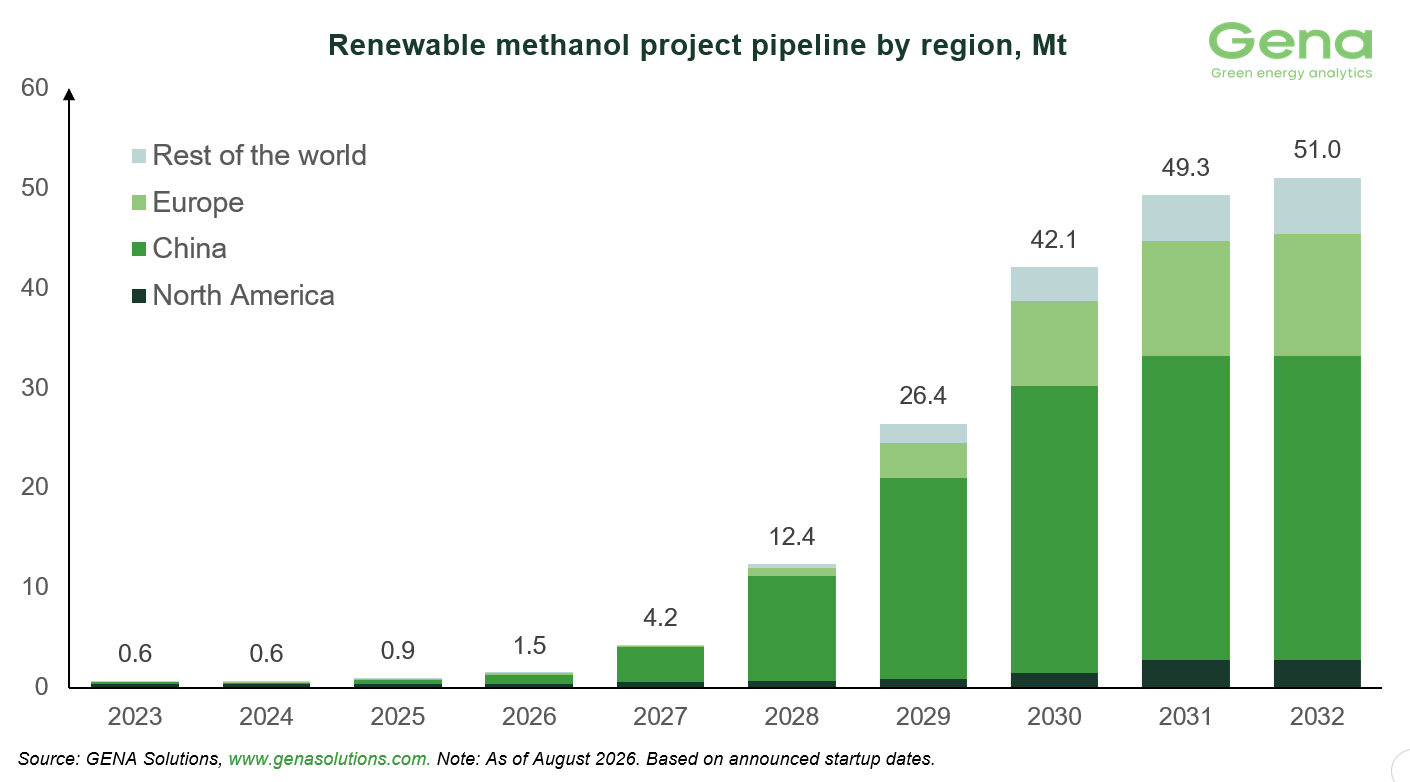
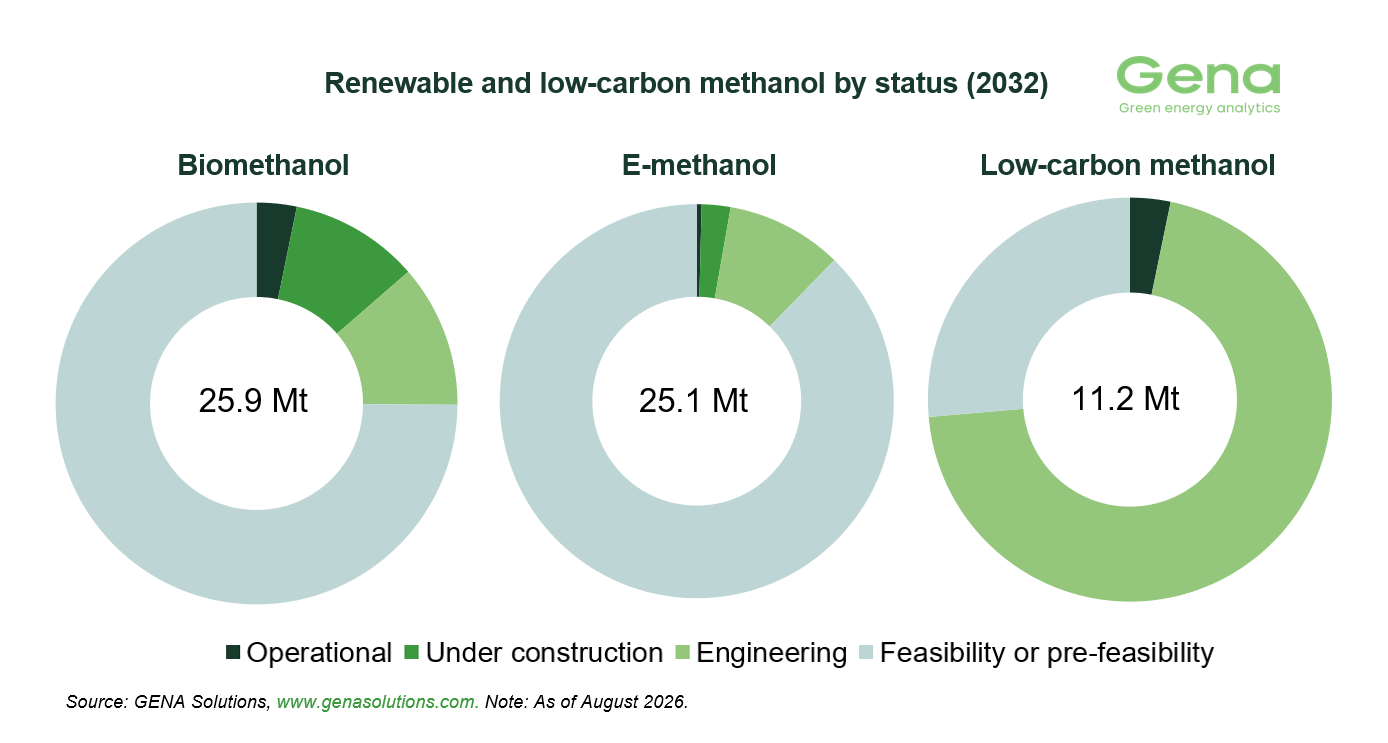
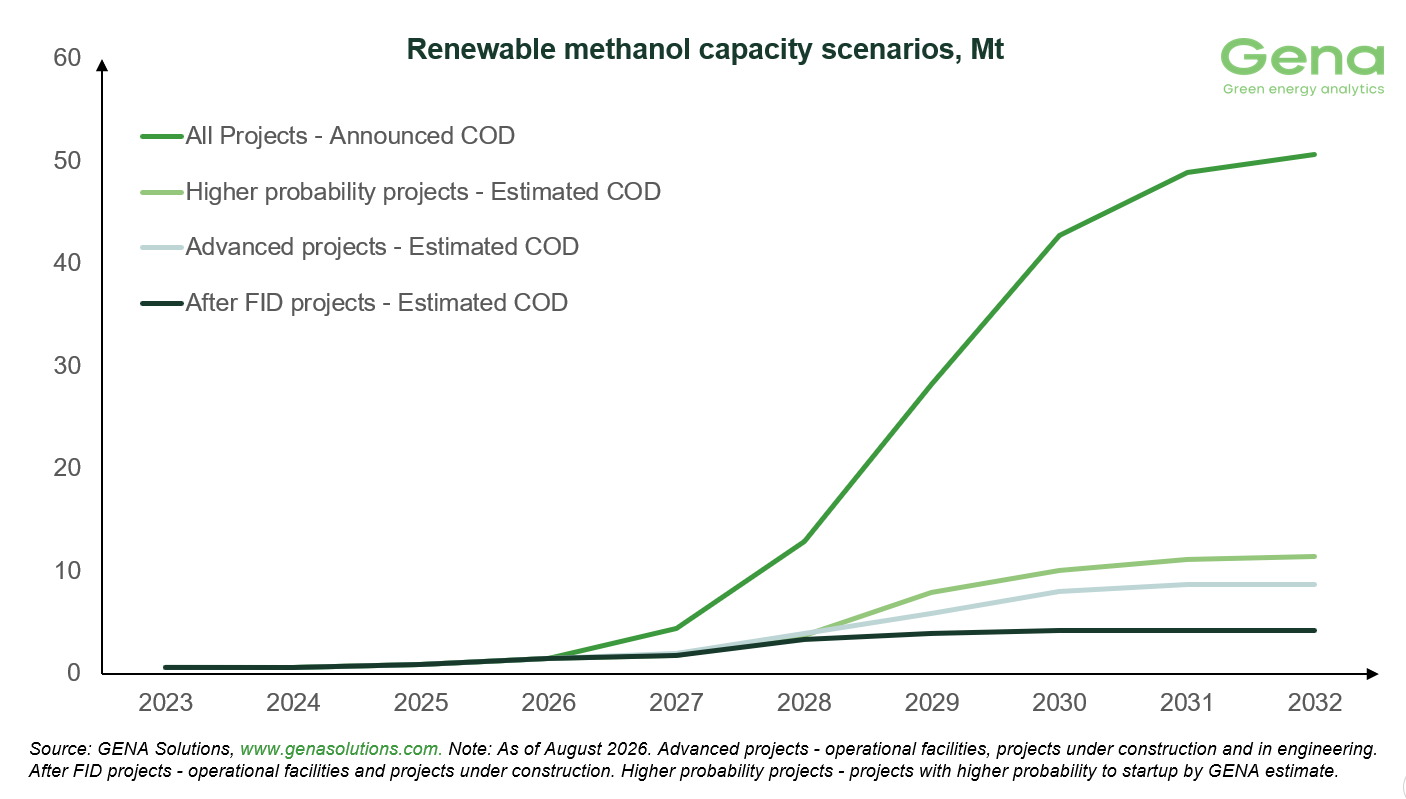
Photo credit: GENA Solutions
Published: 4 September, 2026
Business
Singapore: MPA urges maritime firms to prepare for potential haze with plan
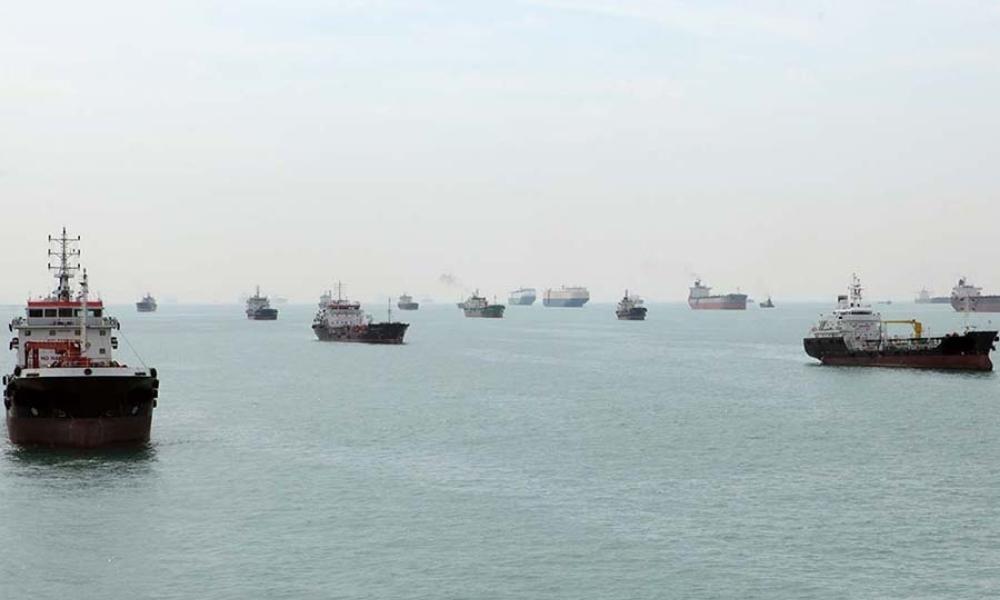
MPA encourages all maritime companies, especially those with workers performing outdoor work to maintain a business continuity plan for haze.
Alternative Fuels
DNV report: Regulatory uncertainty demands fleet strategies built for multiple futures
Report examines four regulatory scenarios, ranging from adoption of IMO NZF in its current form to its outright rejection, energy efficiency uptake, and long-term bunker fuel and technology strategies.

OUR INDUSTRY PARTNERS

Yang Ming orders six LNG dual-fuel, ammonia-ready containerships from Hanwha Ocean

LR, China’s MARIC unveil tanker concept ready for three future bunker fuels

DNV: Alternative-fuelled vessel orders hit highest monthly level since October 2024

TFG Marine advances global MFM rollout with two US Gulf bunker barges

GENA Solutions: Total renewable and low-carbon methanol project pipeline increases from 61.8 to 62.2 Mt by 2032

Baltic Exchange: Bunker Report (3 September 2026)

ENGINE: Americas Fuel Availability Outlook (3 September 2026)

Singapore-flagged tugboat “Kim Heng 3203” placed under Sheriff’s arrest

US targets five bunker companies in latest sanctions campaign against Iran

Singapore bunkering community supports Living Hope Evangelism’s 7th anniversary outreach for residents in need

China’s bunker market reshaped by tax rebates, trade flows and refining changes, says economist

Hengli Petrochemical’s ex-Singapore trading arm faces winding up application

Report: GCMD outlines practical approach to quantity assurance in marine biofuel supply chains

Rajah & Tann: Bunker disputes are won in the first 48 hours
-
 Vessel Arrest1 week ago
Singapore-flagged tugboat “Kim Heng 3203” placed under Sheriff’s arrest
-
 Sanctions2 weeks ago
US targets five bunker companies in latest sanctions campaign against Iran
-
 Events2 weeks ago
Singapore bunkering community supports Living Hope Evangelism’s 7th anniversary outreach for residents in need
-
 Interview1 week ago
China’s bunker market reshaped by tax rebates, trade flows and refining changes, says economist
-
 Winding up2 weeks ago
Hengli Petrochemical’s ex-Singapore trading arm faces winding up application
-
 Biofuel1 week ago
Report: GCMD outlines practical approach to quantity assurance in marine biofuel supply chains
-
 Bunker Claim4 days ago
Rajah & Tann: Bunker disputes are won in the first 48 hours
-

 Winding up2 weeks ago
Singapore: Notices of intended dividend issued for Ocean Bunkering Services, Hin Leong Marine