Connect with us
DNV Decarbonization Insight Series August 2026 - What maritime professionals should know about AI Training

Methanol

China: Xiamen issues safety guidelines for methanol bunkering operations

New guidelines establish safety requirements across the full methanol bunkering process, supporting the expansion of green marine fuel supplies at Xiamen Port.

Admin

Published

on

Xiamen, China

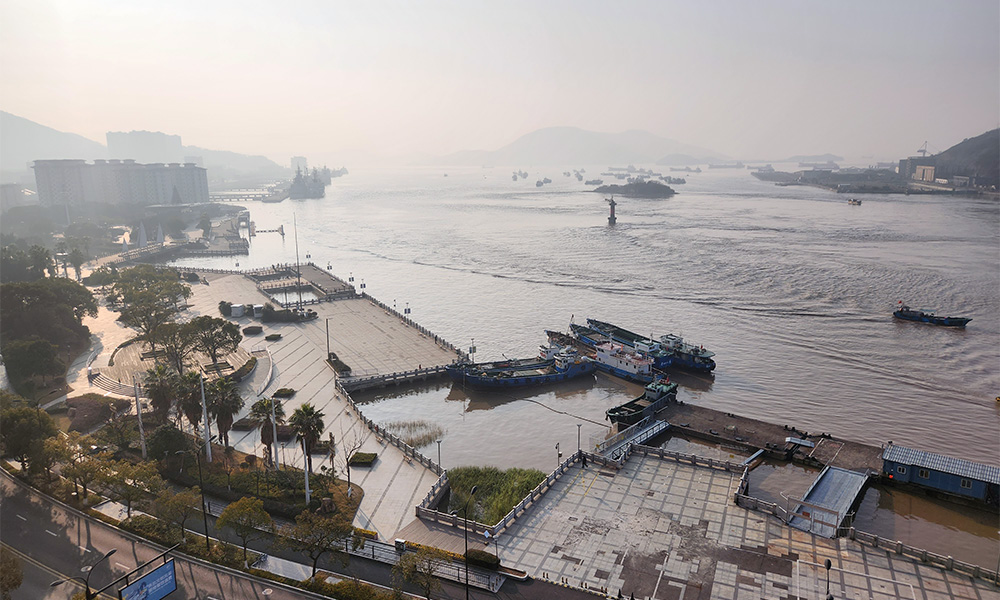
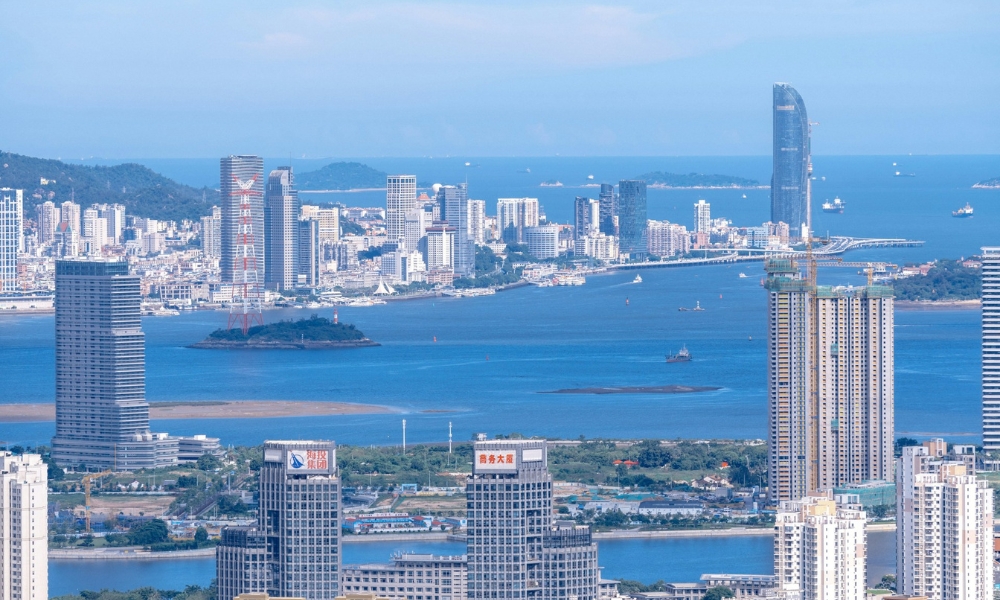
Xiamen Free Trade Zone on Monday (10 August) said its Administrative Committee recently jointly issued the Safety Guidelines for Marine Methanol Fuel Bunkering in Xiamen Waters with Xiamen Port Authority and Xiamen Maritime Safety Administration, establishing a framework for methanol bunkering operations in the port.

The guidelines are the first safety operating standard in Fujian province specifically covering marine methanol fuel bunkering. They apply to methanol bunkering operations conducted by bunker vessels in Xiamen waters and set out safety requirements covering the entire operation, from preparation through completion.

The guidelines specify requirements for bunkering companies, equipment and materials used on bunker vessels, hose inspection intervals, personnel certification and personal protective equipment.

They also require operators to conduct dedicated risk assessments and prepare emergency response plans before operations begin. During bunkering, operators must maintain continuous monitoring and comply with specified weather restrictions. After completion, pipelines must undergo procedures including purging and inerting.

Xiamen Port has previously carried out ship-to-ship bunkering of biofuels and LNG. The new guidelines provide a regulatory framework and operational basis for methanol bunkering and are intended to support the safe and orderly conduct of such operations.

The move is also expected to help Xiamen Port expand its market and bunkering capacity for green marine fuels. 


Photo credit: Woo Winter on Unsplash
Published: 13 August, 2026

Continue Reading

Alternative Fuels

South Korea’s Polaris Shipping orders tri-fuel bulk carriers for Vale charter deal

Bulk carriers, which will be delivered sequentially from 2031, will be equipped with WinGD-developed engines capable of using methanol, ethanol and heavy fuel oil as marine fuels.

Admin

Published

on

By

South Korea’s Polaris Shipping orders tri-fuel bulk carriers for Vale charter deal

South Korean shipowner Polaris Shipping recently said it has signed a newbuilding contract for four tri-fuel vessels with Chinese shipbuilder Qingdao Beihai Shipbuilding Heavy Industry on 4 August.

The 210,000-dwt Newcastlemax bulk carriers, which will be delivered sequentially from 2031, will be equipped with WinGD-developed engines capable of using methanol, ethanol and heavy fuel oil as marine fuels.

The vessels are also designed as LNG- and ammonia-ready ships, allowing them to be converted to LNG or ammonia propulsion in the future.

Polaris Shipping also plans to significantly improve energy efficiency and reduce greenhouse gas emissions by applying various energy-saving technologies, including wind-assist propulsion systems, rotor sails, departure optimisation and land-based systems, to the vessels.

Polaris Shipping has completed a 25-year long-term charter contract for the bulk carriers with Brazilian iron ore producer Vale.

Polaris Shipping plans to sign construction contracts for up to four additional 210,000-dwt eco-friendly Newcastlemax bulk carriers with Chinese shipbuilder Hengli Heavy Industries in the near future. The Newcastlemax bulk carriers ordered from Hengli will be built as high-efficiency, environmentally friendly vessels to replace the company’s existing older bulk carriers.


Photo credit: Polaris Shipping
Published: 13 August, 2026

Continue Reading

Financial Result

Fratelli Cosulich marine energy unit records EUR 7.1 million net profit in 2025

Bunker Trading revenue, the Group’s core activity, at the end of the year stood at approximately EUR 1.382 million compared to approximately EUR 1.638 million in 2024.

Admin

Published

on

By

Fratelli Cosulich marine energy unit records EUR 7.1 million net profit in 2025

Genoa-based international shipping and logistics company Fratelli Cosulich Group on Thursday (31 July) recorded EUR 58.6 million (USD 68 million) in EBITDA in 2025, substantially in line with the EUR 59.7 million recorded in 2024 and remaining close to its all-time highs. 

The company’s consolidated turnover reached EUR 1.877 billion, compared with EUR 2.128 billion in 2024.

“This decrease must be read considering the significant weight of Marine Energy and bunker trading activities, where turnover is naturally influenced by fuel prices, market dynamics and the euro dollar exchange rate,” the company said in its 2025 annual report. 

“For this reason, the reduction in revenues does not represent a proportional decrease in the Group’s operational strength.”

The Group recorded a net profit of EUR 20 million with its marine energy business unit delivering EUR 7.1 million. The unit also achieved EUR 16.8 million in EBITDA. 

In 2024, the company recorded a net profit of EUR 20.6 million with its marine energy business unit delivering EUR 5.6 million. The unit also achieved EUR 28.1 million in EBITDA. 

On the performance of its bunker trading activity, also during the year just ended, as in 2024, the company said margin stabilisation was recorded, remaining at levels similar to the average of previous years.

Bunker Trading revenue, the Group’s core activity, at the end of the year stood at approximately EUR 1.382 million compared to approximately EUR 1.638 million in 2024.

“In 2025, Marine Energy exceeded expectations in a more competitive market marked by lower prices, strengthening its results through a solid commercial structure, key account relationships and a focused approach to smaller bunkering hubs,” the company said.
 “Commercial development was supported by further expansion towards Asian customers, including the opening of a dedicated Japan desk, while the unit prepared the basis for a future local presence.”

The company added that the transition towards a multi-fuel offering continued to move from strategy to operations. 

In Singapore, the unit completed its first B100 biofuel bunker delivery through Marta Cosulich, demonstrating its ability to provide lower-carbon alternatives using its future-ready fleet. 

The Group also entered into a strategic cooperation with a “long-established shipping player” to explore opportunities in methanol, LNG and ammonia bunkering.

The company added that fleet development remained central. 

“Construction progressed on the new series of methanol-ready IMO II chemical bunker tankers, while Maya Cosulich was delivered in December,” it said.

“Designed for safe and efficient alternative fuel delivery, she represents another tangible step in expanding the unit’s physical capabilities for the evolving needs of maritime customers.”

Related: Fratelli Cosulich marine energy unit records EUR 5.6 million profit in 2024


Photo credit: Fratelli Cosulich
Published: 12 August, 2026

Continue Reading

Methanol

COSCO Shipping deploys methanol-ready grain carrier on South America-China routes

“Guo Liang Hai” is equipped with a smart management system, low-carbon design features and a methanol-ready fuel interface, supporting future energy transition pathways.

Admin

Published

on

By

COSCO Shipping deploys methanol-ready grain carrier on South America-China routes

COSCO Shipping on Thursday (6 August) said a methanol-ready 80,000 DWT multi-purpose grain carrier, GUO LIANG HAI, has officially been delivered and entered service.

At nearly 230 metres in length, Guo Liang Hai is equipped with a smart management system, low-carbon design features and a methanol-ready fuel interface, supporting future energy transition pathways.

“As the sixth vessel in its series, she is part of the world’s first 80,000 DWT vessel class specifically designed for grain transportation. But grain is only part of the story,” the company said in a social media post. 

The company said the vessel combines the efficiency of a bulk carrier with the flexibility of a multi-purpose ship. 

In addition to commodities such as soybeans, maize and wheat, it can also transport grain and dry bulk cargo, containers, wind power equipment, rolling stock and rail equipment, new energy vehicles and large-scale industrial machinery.

“Already deployed on routes between South America and China, vessels in this series create value in both directions, carrying agricultural imports while supporting exports of Chinese-made equipment and technology,” the company added.


Photo credit: COSCO Shipping
Published: 7 August, 2026

Continue Reading

Trending