Connect with us

Retrofit

DNV on key lessons learned from a 20,000 TEU methanol retrofit delivered by global partners

DNV demonstrated how complex methanol retrofits can be carried out in practice through a project involving COSCO Shipping, CHI Shanghai, MARIC, suppliers, and DNV.

Admin

Published

on

DNV on key lessons learned from 20,000 TEU methanol retrofit

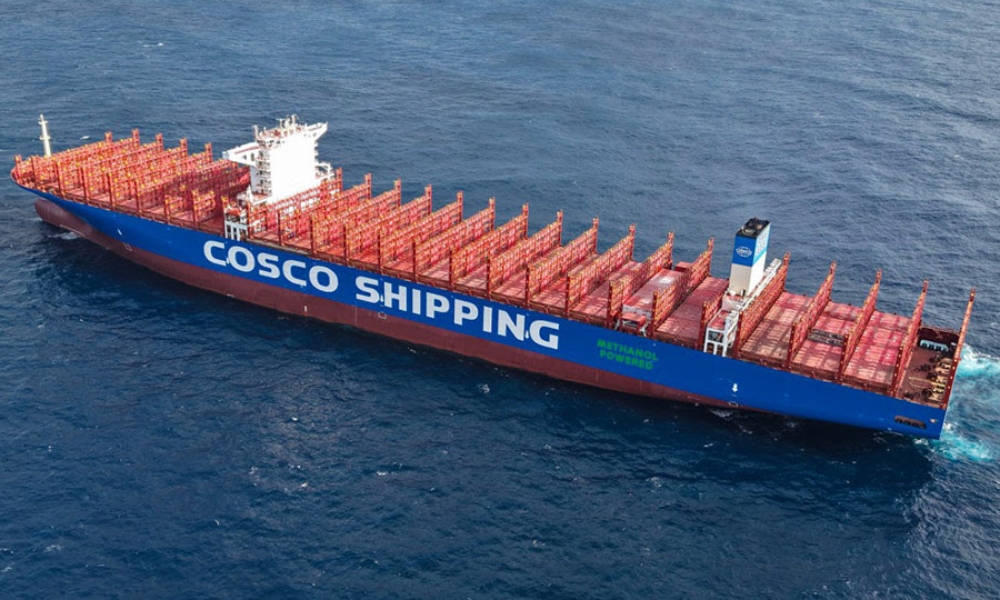
Classification society DNV recently highlighted how complex methanol retrofits can be carried out in practice through a project involving COSCO Shipping, CHI Shanghai, MARIC, suppliers, and DNV. 

Its latest Maritime Impact article detailed challenges in design integration, construction, commissioning, and operations, while demonstrating how close collaboration and early planning support more efficient delivery and knowledge transfer: 

The world’s first methanol conversion project for a mega container carrier was completed at CHI‑Shanghai’s yard in September 2025. At nearly 400 metres in length and with a capacity of 20,000 TEU, the seven‑year‑old vessel became the first ship of its kind to be retrofitted to run on methanol. 

Delivered through close coordination between COSCO Shipping, CHI Shanghai, designers, suppliers, and DNV, and supported by a process of continuous learning, the project demonstrated that deep, first‑of‑a‑kind retrofits can be executed safely, on time, and at industrial scale.

Designing a methanol conversion for a megaship

The vessel’s fuel system, designed only for conventional fuels, required fundamental changes to enable safe and compliant methanol operation across propulsion, auxiliaries, storage, and safety systems.

The general design was developed by MARIC, while CHI Shanghai carried out the detailed engineering and served as EPC contractor. The scope included conversion of the ship’s MAN B&W 11S90 main engine and two of its four Wärtsilä auxiliary engines to dual‑fuel operation. In parallel, new methanol fuel tanks with a total capacity exceeding 15,000 cubic metres were installed forward of the engine room, together with new fuel preparation and supply systems.

Coordinating the complexity of retrofitting

Delivering this as a retrofit rather than a newbuild added complexity that is often underestimated. Existing structural arrangements could not simply be replaced, and new systems had to be integrated into confined spaces, requiring innovative construction sequences and tight interface management between suppliers. 

“This was a very complex project involving many parties, including engine makers, fuel system suppliers, and automation and safety specialists,” says Yan Hao, Commercial Director at CHI‑Shanghai. “It was also the first time all of these suppliers had worked together on a methanol retrofit of this scale. Coordination was critical.”

Note: The full article by DNV can be read here.


Photo credit: DNV and COSCO Shipping
Published: 15 June, 2026

Continue Reading

Alternative Fuels

Auramarine: Marine fuel flexibility will be key to shipping’s energy transition

Operators who adapt best will be the ones who built in the flexibility to their marine fuel strategy to respond as conditions change, says CEO John Bergman.
Admin

Published

on

By

31 1

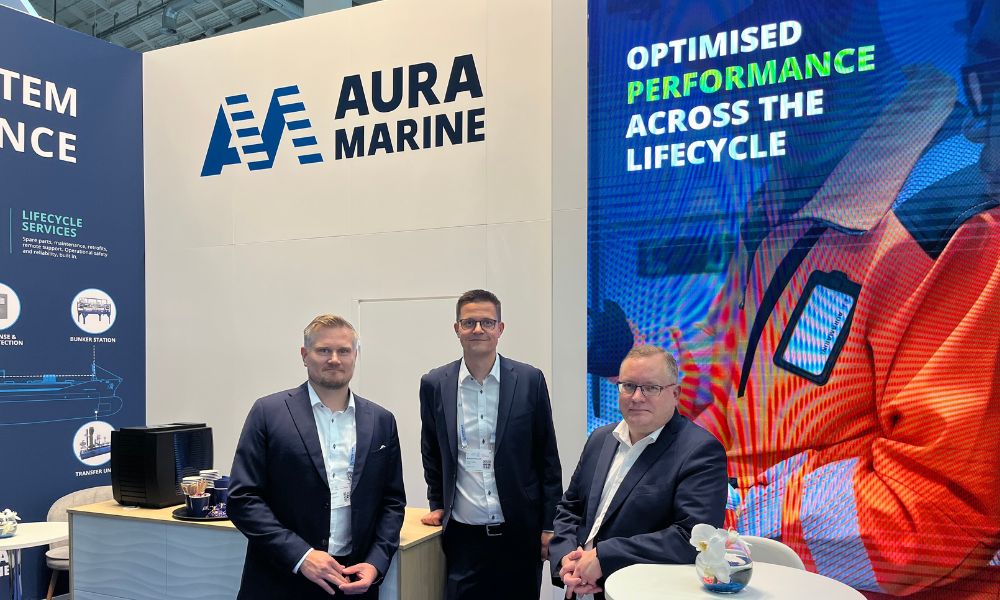
Finland-based fuel supply systems provider Auramarine on Wednesday (2 September) said it believes shipping’s energy transition is entering a phase where flexibility, not fuel choice, will determine which operators adapt successfully. 

With fuel price volatility, inconsistent alternative availability and tightening environmental regulation at different speeds across regions, Auramarine argued that the right approach to fuel supply infrastructure is now as strategically important as the fuel itself.

“The industry has spent years asking which fuel will win,” said John Bergman, CEO, Auramarine. 

“That may be the wrong question. No operator today can predict with confidence what will be available, compliant or commercially viable in five years. The operators who adapt best will be the ones who built in the flexibility to their fuel strategy to respond as conditions change.”

Auramarine’s own fuel split technology, first delivered in 2019 and now installed on around 20 vessels, reflects this thinking in practice. The retrofit system adds a fuel booster module onboard, allowing a ship to run different fuels through the same engine without the extended changeover procedures dual-fuel systems typically require.

This lets operators switch to MGO or biofuel, for example, to meet an ECA requirement, support maintenance schedules, or respond to fuel pricing shifts, without taking a vessel out of service. Delivered in sections through existing doors and hatches, it can be retrofitted to vessels already in operation.

Bergman sees this need for adaptability sharpening in sectors under the most operational and regulatory pressure. 

“Cruise and ferry operators feel this earliest and most acutely,” he said. 

“These vessels constantly move between regulatory zones and environmentally sensitive waters, so the ability to switch fuel supply without disrupting a schedule is an operational necessity. What’s notable is how many operators in this space still don’t know infrastructure like this exists, despite how directly it addresses what they’re already dealing with.”

Reliable flexibility requires a tailored approach, not just adding equipment. “The best results come from scoping flexibility to an owner’s actual fuel strategy, not adding complexity for its own sake,” Bergman added. 

Automated fuel changeover systems are designed to keep multi-fuel operations straightforward for crews, while a structured maintenance approach ensures inspection, testing and servicing can be carried out safely throughout the vessel’s lifecycle. This is where Auramarine’s lifecycle services play a central role, supporting operators well beyond initial installation with the ongoing servicing, spares and technical support needed to keep flexible fuel systems performing reliably for the long term, whatever the fuel landscape looks like in years to come.

“Over the next few years, operators who succeed will be the ones who stopped waiting for certainty and started building optionality instead,” Bergman added

“In a transition this uncertain, adaptability matters more than any single fuel bet. That’s the conversation we want the industry to have.”


Photo credit: Auramarine
Published: 7 September, 2026

Continue Reading

LNG Bunkering

EXMAR to convert LNG carrier into floating transshipment unit for bunkering

Vessel will soon undergo a dry-dock including modifications to make the vessel suitable as a floating transshipment unit, dedicated to the LNG bunkering market.
Admin

Published

on

By

EXMAR to convert LNG carrier into floating transshipment unit for bunkering

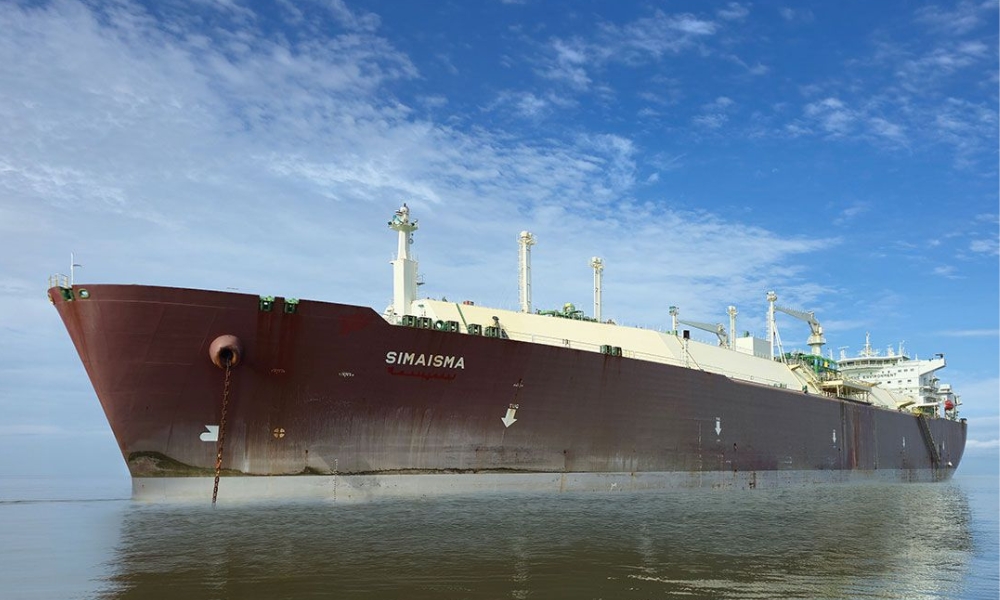
Ship owner EXMAR on Thursday (6 August) announced that it has taken delivery of the 146,000 m³ LNG Carrier SIMAISMA

The vessel is secured under an initial seven-year charter contract with a “first-class counterpart”. 

“The vessel will soon undergo a dry-dock including modifications to make the vessel suitable as a floating transshipment unit (FTU), dedicated to the LNG bunkering market,” it said in a statement. 

The FTU will receive large parcels of LNG from trading LNG carriers and specialised LNG bunkering vessels will load at the FTU before supplying it as a fuel to vessels that use this LNG as a bunker fuel.

EXMAR’s CEO, Carl-Antoine Saverys, said: “EXMAR is gladly assisting its client in further paving the way to unlock LNG as a fuel for the shipping industry. 

“The FTU is a smart solution with which our client brings down the costs of the logistics relating to the LNG bunkering. 

“With this solution, we are building upon EXMAR’s close to 50 years of LNG experience. We look forward to deploying more of these assets to unlock the full potential of LNG as a fuel for the maritime industry.”


Photo credit: EXMAR
Published: 7 August, 2026

Continue Reading

Alternative Fuels

EC clears EUR 103 mil Dutch funding for renewable methanol and hydrogen-powered ships

Scheme will support purchase of vessels powered by renewable methanol or renewable hydrogen and retrofitting of existing vessels to enable them to use renewable methanol and renewable hydrogen.

Admin

Published

on

By

Guillaume Périgois on Unsplash

The European Commission recently said it has approved a EUR 103 million (USD 119 million) State aid scheme by the Netherlands to accelerate the greening of the Dutch maritime fleet. 

The scheme will support the purchase of new clean and zero-emission vessels powered by renewable methanol or renewable hydrogen and the retrofitting of existing vessels to enable them to use renewable methanol and renewable hydrogen. 

It covers different types of vessels, including passenger, cargo and work vessels, mainly operating in the short-sea shipping segment. The support will take the form of direct grants awarded under an open, transparent and non-discriminatory selection process.

The scheme aims to help companies overcome high upfront investment costs and limited market incentives that currently slow the uptake of clean shipping technologies. The aid will be granted between 2027 and 2031 and will help bridge the investment gap in line with the objectives of EU legislation such as the FuelEU Maritime and the EU Emission Trading System.

The Commission assessed the measure under EU State aid rules, in particular Article 107(3)(c) of the Treaty on the Functioning of the EU and the 2022 Climate, Environmental Protection and Energy Aid Guidelines (CEEAG). 

“The Commission concluded that the scheme is necessary and appropriate as the supported investments would not take place without public support at the same scale and within the same timeframe. The measure is also proportionate as it has limited effects on competition and trade in the internal market,” it said. 


Photo credit: Guillaume Périgois on Unsplash
Published: 3 August, 2026

Continue Reading

Trending