
Legal
Strait of Hormuz: Navigating charterers’ orders and shipowners’ rights
Iris Ng and Low Yan Feng examine the interaction between charterers’ rights to direct where a vessel goes and shipowners’ responsibility for navigation under a time charter.


Multi-disciplinary law firm Helmsman LLC examines the interaction between charterers’ rights to direct where a vessel goes and shipowners’ responsibility for navigation under a time charter.

MT: Under a time charter, do charterers or shipowners decide where the vessel goes?
Generally under a time charter, it is charterers who decide where the vessel goes for commercial purposes, while shipowners and the master remain responsible for the navigation of the vessel. This is subject to the wording of the charterparty.
This principle is reflected in the standard time charterparty forms, including NYPE 93 and Baltime 1939. Clause 8 of NYPE 93 provides that the Master shall be under charterers’ “orders and directions … as regards employment and agency”, while clause 9 of Baltime 1939 likewise provides that the master “shall be under the orders of the Charterers as regards employment, agency or other arrangements.”
As explained in The “Hill Harmony” [2001] 1 Lloyd’s Rep. 147, “employment” refers to the vessel’s commercial use, i.e. the charterers’ right to direct where she goes, what cargo she carries, and how her earning capacity is to be exploited. Whereas “navigation” concerns the seamanship and safe operation of the ship.
MT: Is an order to transit the Strait of Hormuz a valid employment order? When can shipowners refuse?
An order to proceed to a port located within the Strait of Hormuz or to take a specific route through the Strait of Hormuz is in principle capable of being characterised as an employment order, subject to the charterparty wording. The choice of an ocean route is generally viewed as a matter of employment rather than navigation. As discussed in The “Hill Harmony”, charterers may order the ship to proceed to a certain port or waiting place, and they may also be entitled to direct the particular route the vessel should take.
That said, an order is not automatically valid just because it relates to employment. For example, under NYPE 93, the vessel is to be employed in lawful trades “between safe ports and safe places” as charterers direct. This means that an order that would require the vessel to proceed outside agreed trading limits, or to an unsafe port or place, would fall outside charterers’ contractual right to give orders in relation to employment.
Coming then to when shipowners may refuse. In principle, shipowners may refuse where compliance would require the vessel to perform an illegitimate order under the charterparty. For example, an order to proceed outside trading limits or an order to proceed to an unsafe port or place. Shipowners may also refuse to comply where performance of the order would imperil the safety of the vessel, her crew, or her cargo, or would expose the vessel to a risk which shipowners had not agreed to bear under the charterparty.
MT: If shipowners choose to comply and suffer loss, can they recover from charterers?
The starting point is always the charterparty. Some forms contain an express indemnity, for example, clause 9 of Baltime 1939.
Absent such wording, English law recognises an implied indemnity in principle where shipowners can rely on an implied right to be indemnified against losses incurred in compliance with charterers’ orders. But recovery is not automatic: Shipowners cannot recover for risks which, on the proper construction of the charterparty, they agreed to bear.
In some cases, if charterers insist on an extra-contractual service and shipowners perform under protest, shipowners may also seek payment on a quantum meruit basis for the market value of services rendered.
MT: How might war risk clauses affect the position of both parties?
War risks clauses may significantly affect both parties’ positions by restricting charterers’ usual right to order the vessel wherever they wish and by giving shipowners contractual rights to refuse or alter performance where war risks arise. For example, BIMCO has very recently updated CONWARTIME in 2025, with the last iteration of CONWARTIME being in 2013.
For charterers, that means an otherwise valid order may not be enforceable if (as provided for in CONWARTIME) “in the reasonable judgment of the Master or the Owners” may be dangerous or may become dangerous to the vessel, her cargo, crew or other persons on board the vessel.
For shipowners, the clause may justify refusal of a risky route, continuation of the voyage by a safer route, and/or recovery of additional war risk premiums and crew costs. But this protection is not absolute. Shipowners must still act reasonably and in good faith: see The “Triton Lark” [2012] 1 Lloyd’s Rep. 151.
MT: If any, what are the practical takeaways?
Shipowners and charterers will need to carefully consider whether an employment order is valid or can be refused. Much turns on the charterparty wording and the facts of the case. Parties should check the trading limits, safe port wording, war risks clause and any indemnity provisions carefully. It is therefore important for both shipowners and charterers to seek timely legal advice when in doubt as regards transit through volatile regions such as the Strait of Hormuz.
Photo credit: Helmsman
Published: 4 May, 2026
Winding up
Singapore: Final general meetings scheduled for Dromond Shipping, related firms
A member is entitled to attend the meetings and should notify the liquidators’ team office via email no later than 48 hours prior to the meeting.

Winding up
Singapore: Liquidator of Da Xin Tankers, Nan Chiau Maritime issues notices of dividend
Da Xin Tankers’s second interim dividend and Nan Chiau Maritime’s third interim dividend are payable from 17 September, according to Government Gazette notices.

Winding up
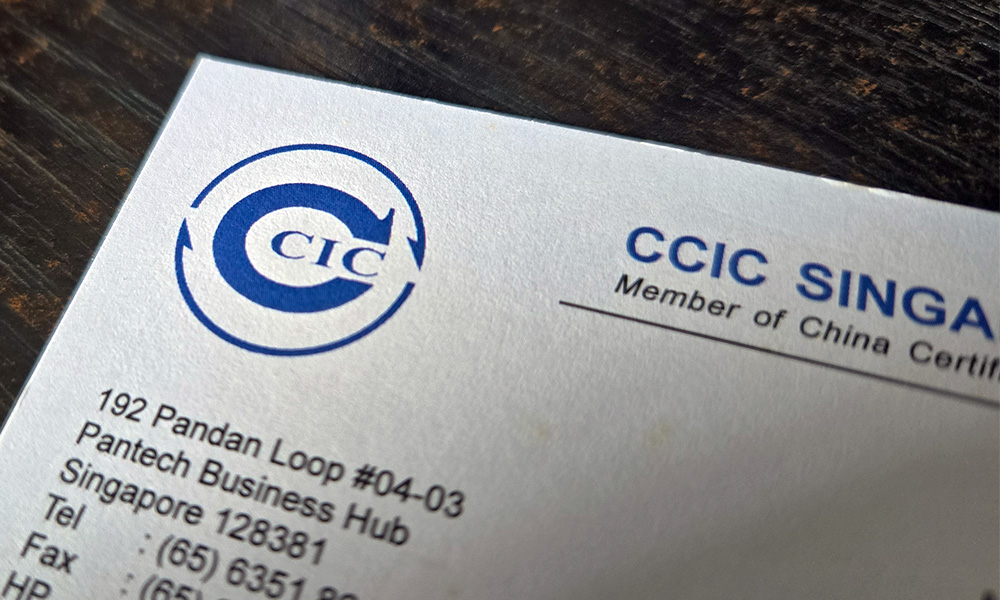
Singapore: Marine fuel testing firm CCIC Singapore faces winding up application
Application for the winding up of CCIC Singapore Pte Ltd was filed by Hong Kong-registered CCIC International Holding Limited on 7 September, according to Government Gazette notice.

OUR INDUSTRY PARTNERS

Petrochina International blends over 30,000 mt of marine biofuel since March

Singapore: Final general meetings scheduled for Dromond Shipping, related firms

NYK wraps up first STS ammonia bunkering operation in Japan

Azane secures ammonia bunker fuel supply from Yara

Moeve launches construction of green hydrogen project to support marine fuels

DNV: How ethanol is expanding shipping’s fuel choices

World Fuel founder Michael J. Kasbar to step down as Executive Chairman

Peninsula confirms one fatality, crew member missing from bunker tanker “Hercules Star”

Singapore: Marine fuel testing firm CCIC Singapore faces winding up application

Singapore: MPA working with industry on next phase of digital bunkering, says Deputy CE

Amogy and LOTTE Fine Chemical to explore ammonia bunkering in South Korea

Kongsberg Maritime to buy Finnish marine propulsion designer Steerprop

High Court of Singapore issues winding up order against Hengli Petrochemical International

China: Guangzhou completes first bio-methanol STS bunkering operation
-
 Incident2 weeks ago
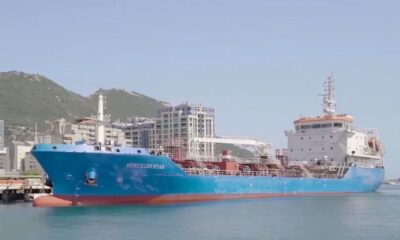
Peninsula confirms one fatality, crew member missing from bunker tanker “Hercules Star”
-
 Winding up6 days ago
Singapore: Marine fuel testing firm CCIC Singapore faces winding up application
-
 Technology2 weeks ago
Singapore: MPA working with industry on next phase of digital bunkering, says Deputy CE
-
 Ammonia1 week ago
Amogy and LOTTE Fine Chemical to explore ammonia bunkering in South Korea
-
 Business2 weeks ago
Kongsberg Maritime to buy Finnish marine propulsion designer Steerprop
-
 Winding up1 week ago
High Court of Singapore issues winding up order against Hengli Petrochemical International
-
 Alternative Fuels2 weeks ago
China: Guangzhou completes first bio-methanol STS bunkering operation
-

 Engine1 week ago
Polaris Shipping orders WinGD engines capable of running on methanol, ethanol