The following article regarding regional bunker fuel availability outlook for the East of Suez region has been provided by online marine fuels procurement platform ENGINE for publication on Singapore bunkering publication Manifold Times:
- HSFO and LSMGO availability tight in Port Klang
- Bunker supply extremely tight across several Japanese ports
- Operations continue in Middle East ports despite escalating regional crisis
Singapore and Malaysia
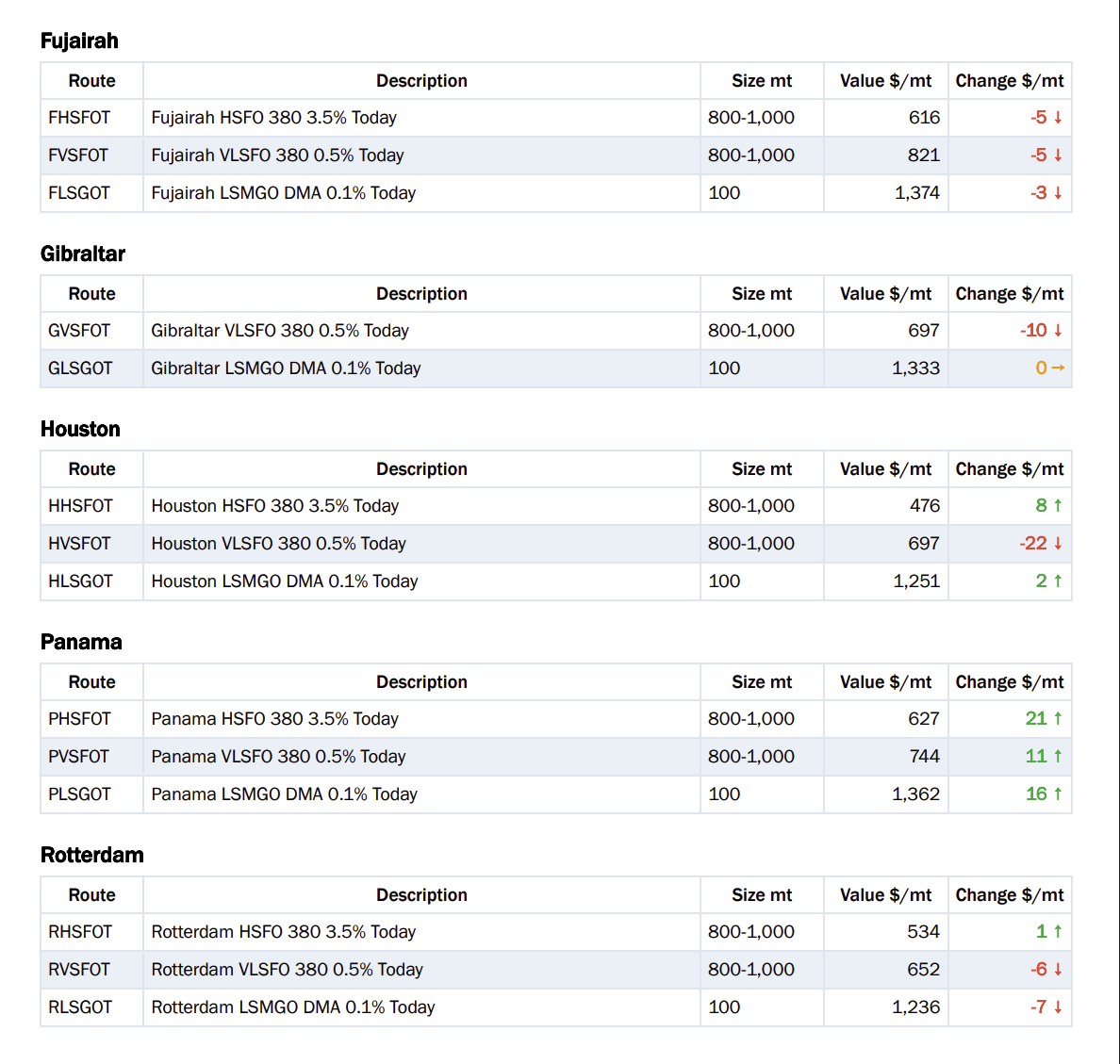
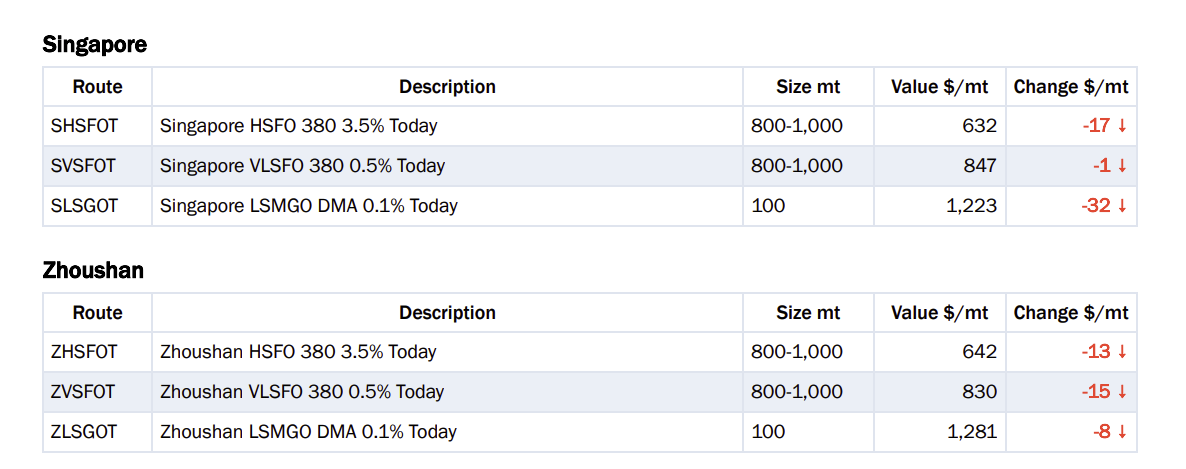
Singapore’s VLSFO and LSMGO prices have remained above $1,000/mt this week, supported by elevated crude prices, tightening supply, stronger demand and escalating geopolitical tensions in the Middle East.
The strength in bunker prices is largely tied to rising tensions in the Middle East, which have pushed Brent crude’s price sharply higher and disrupted trade flows through the Strait of Hormuz, a key artery for global oil shipments.
“Premiums are quite high for now,” a Singapore-based trader said.
VLSFO availability continues to be tight, with recommended lead times of around 10–13 days, slightly down from 12–16 days last week. HSFO supply also remains constrained, with lead times of 9–16 days, compared with 11–15 days in the prior week.
In contrast, LSMGO lead times have shortened significantly to 6–9 days, compared with 13–17 days last week.
On the inventory side, Singapore’s residual fuel oil stocks have averaged 3% higher so far this month compared with February, according to Enterprise Singapore. Total stocks have climbed above 23 million bbls, amid a 2% increase in net fuel oil imports in March. Both trade flows have risen, with imports up by 138,000 bbls and exports increasing by 62,000 bbls.
Meanwhile, middle distillate inventories have moved in the opposite direction, falling by 14% this month to 7.27 million bbls, marking multi-year lows.
Port Klang continues to report adequate VLSFO availability, especially for smaller prompt stems. However, LSMGO supply has tightened, while HSFO availability remains limited, making both grades harder to secure.
East Asia
Bunker prices across Chinese ports, including Zhoushan, have been rising sharply, driven primarily by higher crude prices amid escalating tensions in the Middle East—particularly around the Strait of Hormuz—which have lifted bunker fuel prices across Asia.
In response, China has imposed an immediate ban on refined fuel exports in March to prevent a potential domestic fuel shortage stemming from the Middle East tensions, a source said.
At Zhoushan, recommended lead times for VLSFO and LSMGO remain at 5–10 days, largely unchanged from last week. HSFO supply has improved, with lead times also at 5–10 days, compared with last week when suppliers were not offering lead time indications due to constrained supply, the source added.
Supply conditions vary across northern China. Dalian and Qingdao report adequate availability of VLSFO and LSMGO, though HSFO remains limited in Qingdao. Bunker supply is tight across all grades in Tianjin, while in Shanghai, VLSFO and HSFO stocks are constrained, with LSMGO availability relatively stable.
Further south, supply pressures are evident. Supply of VLSFO and LSMGO is tight in Fuzhou, while suppliers have sufficient VLSFO stocks in Xiamen, with restricted LSMGO availability. Both grades are in tight supply in Yangpu and Guangzhou.
In Hong Kong, bunker availability is broadly stable, with lead times holding at around seven days for all grades in recent weeks.
In Taiwan, supply has seen “not so much impact.” However, prices have responded more strongly, as the Brent rally linked to Middle East tensions has significantly influenced bunker prices over the weekend, a trader said.
Recommended lead times for VLSFO and MGO in Keelung, Taichung and Hualien are around two days, while deliveries in Kaohsiung require around four days, due to CPC MGO barge maintenance and a separate barge issue.
In southern South Korean ports—including Busan, Ulsan, Masan, Onsan, Yeosu and Kwangyang—HSFO availability is tight, with most offers subject to enquiry. VLSFO and LSMGO typically require around four days’ lead time. One supplier is currently withholding price quotes and delivery schedules until there is greater clarity on the evolving situation, a source said.
Across western ports such as Incheon, Daesan, Dangjin, Pyeongtaek and Taean, HSFO is also offered on a firm enquiry basis, while VLSFO and LSMGO require around 3–6 days.
In Japan, supply conditions have tightened further amid escalating Middle East tensions. As of 16 March, the government has initiated the release of both state reserves and private-sector stockpiles equivalent to 15 days’ supply to stabilise the market. However, a time lag is expected before these crude volumes are refined into bunker fuels and reach the market, meaning near-term tightness is likely to persist through April, a Japan-based trader said.
Despite the move, major domestic refiners have yet to outline supply plans or volume allocations for April. They continue to prioritise internal inventories and term commitments, and although updates are expected later this week, no firm details have been disclosed so far.
With limited visibility from refiners, bunker suppliers are not offering any spot volumes for March–April delivery. Securing additional spot cargoes for April remains extremely difficult, the trader added.
As a result, availability across all fuel grades in key Japanese hubs—including Tokyo, Chiba, Yokohama, Kawasaki, Nagoya, Yokkaichi, Mizushima, Kashima, Tokuyama and Oita—is now assessed strictly on an enquiry basis.
Meanwhile, bunker demand in Japan is expected to be subdued on 20 March due to the Vernal Equinox Day public holiday.
In Indonesia, supply conditions remain relatively stable. VLSFO availability is steady in Jakarta, Surabaya, Balikpapan and Cigading, with lead times of around 2–3 days. LSMGO supply is also stable in Jakarta, Benoa, Surabaya and Batam, while HSFO stocks are reported to be well supplied in Jakarta, Surabaya and Balikpapan, according to a trader.
Oceania
Bunker prices across Oceanic ports have risen significantly amid escalating geopolitical tensions. While major suppliers continue to deliver across the region, many smaller truck-based suppliers are struggling, as daily terminal quotas have been tightened by larger players, an Australia-based source said.
Across Australia, overall bunker availability remains largely stable. VLSFO and LSMGO are widely available nationwide, with typical lead times of around seven days.
In Western Australia, suppliers in Kwinana and Fremantle generally require about a week’s notice. Deliveries are primarily carried out by barge through a single provider, while LSMGO can also be supplied by truck.
In New South Wales, VLSFO deliveries at Port Kembla can be arranged via truck or pipeline. Suppliers in Sydney hold healthy inventories of VLSFO and LSMGO, though HSFO supply remains tight, with lead times of around seven days.
In Queensland, suppliers in the ports of Brisbane and Gladstone are supplying VLSFO and LSMGO with lead times of roughly seven days. HSFO is available on request in Brisbane. Deliveries of VLSFO and LSMGO are handled by two barges operated by separate suppliers, while HSFO is offered on an enquiry basis.
In Victoria, VLSFO and LSMGO inventories are strong in both Melbourne and Geelong. HSFO availability is limited for prompt deliveries, although Melbourne currently has sufficient volumes. Bunkering operations in both ports rely on a single barge, with lead times close to seven days.
Meanwhile, Australia’s northern cyclone season, which runs from November to April, is expected to cause intermittent disruptions. Tropical Cyclone Narelle has formed and is forecast to impact the Far North Queensland coast in the coming days, according to the Bureau of Meteorology, potentially affecting bunkering operations in the region.
In New Zealand, bunker supply conditions remain stable. VLSFO is readily available in Tauranga and Auckland, with pipeline connections at some Tauranga berths. Suppliers can deliver both VLSFO and LSMGO at Marsden Point via pipeline to cargo vessels, although truck-based deliveries across South Island ports continue to face constraints.
South Asia
Adverse weather conditions are forecast to impact operations at India’s Kandla port on 18 March and at Sikka between 18–19 March, which could lead to bunkering disruptions.
In Bangladesh, the Chittagong Port Authority has warned that March, April and May are peak months for tornadoes, cyclones and nor’westers, which can occur suddenly without warning.
Mariners have been advised to remain vigilant at all times to mitigate potential risks, according to GAC Hot Port News.
Middle East
Despite ongoing volatility in the Middle East, bunkering operations at Fujairah continue, even after fires broke out following a drone strike on the Fujairah Oil Industries Zone on Monday morning, a source said.
Oil loading service was temporarily suspended after the attack, although some loadings resumed later on Monday, according to Reuters.
This incident marks the second major disruption at the key bunkering hub in recent days. Operations had only resumed on Sunday after being halted due to another drone strike over the weekend.
Authorities in Fujairah and Khor Fakkan have not issued formal alerts, but navigational warnings have been circulated following reports of intermittent GPS spoofing and signal jamming offshore. These disruptions can lead to inaccurate positioning, erratic vessel movements and misleading navigational data, prompting advice for mariners to treat the area as high risk, according to Inchcape Shipping.
Availability remains tight across all fuel grades, with offers subject to firm enquiry, a trader said.
“Bunkering is taking place, but some suppliers [are] waiting to load.” Some “terminals have opened up,” while suppliers are working through backlogs, the trader added.
Elsewhere in the UAE, terminal operations at Jebel Ali, Hamriya and Sharjah Port are proceeding normally. Petroleum ports in Abu Dhabi, including Ruwais, are also functioning as usual.
Ras Al Khaimah Ports remain open and fully operational. However, RAK Ports Group will implement a marine risk surcharge applicable to all vessels calling at its ports, harbours, anchorages and approaches, the shipping agency added.
In Kuwait, both Shuaiba and Shuwaikh ports continue to operate under normal conditions.
In Saudi Arabia, no formal alerts have been issued. However, bunker availability is tight in Jeddah, particularly for VLSFO and LSMGO, with several suppliers facing backlogs due to weather-related disruptions, a source said. Adverse weather is forecast to affect Jeddah and Yanbu on 18–19 March, which may disrupt bunkering at both ports.
“Ports in Saudi Arabia’s Eastern Province, such as Dammam and Jubail, remain operational and can support bunkering subject to approvals,” another source added.
In Qatar, port operations and vessel movements remain normal at Hamad, Doha and Al Ruwais, with activity also ongoing at Mesaieed and Ras Laffan. However, VLSFO and LSMGO supply is tight in Ras Laffan, while Al Ruwais Port is restricted to small craft, including dhows and barges.
“Bunkering operations are not permitted at the moment, including in Salalah [in Oman],” an Oman-based trader said.
At Oman’s Salalah port, bunkering and other operations were suspended following a drone attack last week, but have since partially resumed.
“We are happy to share that the port has resumed operations partially. While we are currently operating at partial capacity, we are ramping up and expect to be at full capacity soon,” the port authority said.
Other Omani ports—including Port Sultan Qaboos, Muscat, Mina Al Fahal, Port of Sohar and Port of Duqm—are operating normally.
In Bahrain, vessel movements have gradually resumed, though operations remain limited due to a shortage of pilots. The Suez Canal and all Egyptian ports continue to operate normally, while conditions remain stable in Jordan. Ports in Pakistan, Cyprus and Lebanon are functioning normally.
Meanwhile, Israeli ports—including Eilat, Ashkelon, Ashdod, Hedera and Haifa—are operating at full capacity, Inchcape Shipping added.
By Tuhin Roy
Photo credit and source: ENGINE
Published: 18 March, 2026











 Biofuel1 week ago