Connect with us

Ammonia

OCI Global and Victrol to develop ammonia bunkering supply chain in Netherlands, Belgium

OCI’s subsidiary OCI Ammonia Distribution will lead the sourcing and import of clean ammonia from key global production hubs while Victrol will design, build, and operate a liquid ammonia bunker barge.

Admin

Published

on

OCI Global and Victrol to develop ammonia bunkering supply chain in Netherlands, Belgium

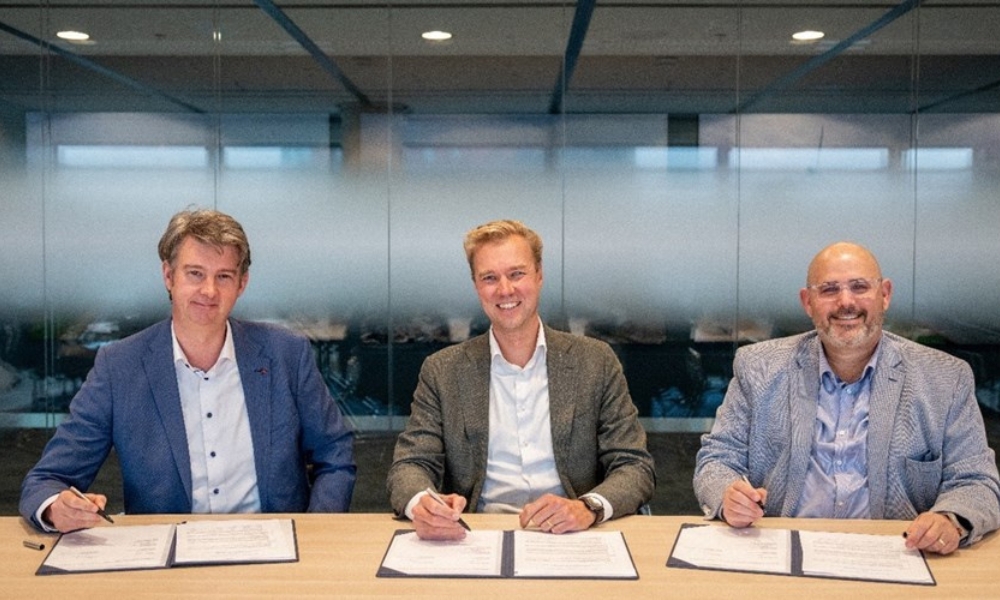
Bunker barge operator Victrol on Thursday (9 October) said it has signed a Memorandum of Understanding (MoU) with OCI Global (OCI) to jointly develop a safe, scalable and commercially viable supply chain for clean ammonia bunkering in the Netherlands and Belgium. 

Under the terms of the collaboration, OCI’s subsidiary OCI Ammonia Distribution will lead the sourcing and import of clean ammonia – both blue and green – from key global production hubs in the US, Middle East, North Africa, and Asia. 

The molecules will be transported by sea-going vessels to the OCI Terminal Europoort (OTE) ammonia import terminal in the Port of Rotterdam, where they will be safely stored, distributed, and made available for use as marine fuel. OCI is concurrently building partnerships with a growing network of shipowners and end-users who will adopt ammonia as a clean fuel for their fleets.

Victrol will design, build, and operate a liquid ammonia bunker barge. This critical piece of infrastructure will load refrigerated ammonia at OCI’s terminal and deliver it directly to ships in the ports, as well as to inland industrial off-takers. With expertise in barging and bunkering operations, Victrol will ensure safe last-mile delivery to vessels that will consume ammonia as a low- or zero-carbon fuel.

Through OTE, OCI owns and operates the only independent large-scale ammonia import terminal in the Port of Rotterdam. The port’s strategic location allows for seamless connection between overseas supply and European demand, enabling the continent to adequately address its anticipated future hydrogen deficit. 

With permits in place to expand OTE’s storage capacity from 30,000 metric tons to 90,000 metric tons and throughput up to 2 million tons per year in line with increasing market demand, OCI is positioning Rotterdam to be Europe’s leading hub for the distribution and storage of clean ammonia.

Both companies are working closely with the Port of Rotterdam and the relevant authorities to ensure all safety and regulatory frameworks are in place on time. 

The partnership builds on the port’s first-ever successful ammonia ship-to-ship bunkering pilot in April 2025, a significant milestone that raised Rotterdam’s readiness for ammonia fuel to level 7 under the International Port Readiness framework.

Related: Port of Rotterdam moves closer to ammonia bunkering after successful pilot


Photo credit: Victrol
Published: 15 October, 2025

Continue Reading

Alternative Fuels

Höegh Autoliners orders six more ammonia, methanol-ready Aurora class PCTCs

Höegh Autoliner inked a contract with China Merchants Group for six additional Aurora class PCTCs, which will be built by China Merchants Heavy Industry (Jiangsu) and delivered between 2029 and 2031.
Admin

Published

on

By

Höegh Autoliners orders six more ammonia, methanol-ready Aurora class PCTCs

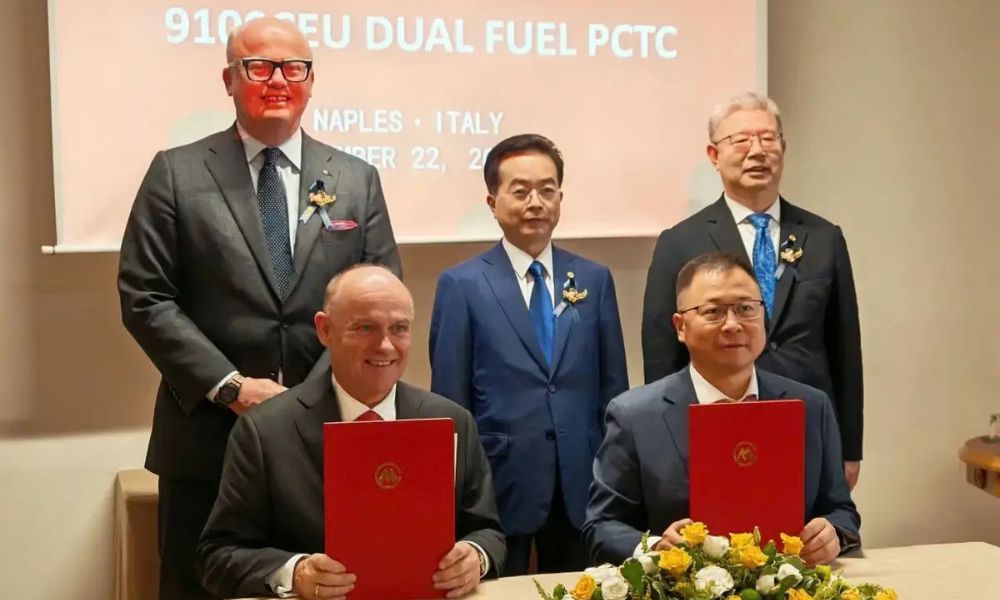
Höegh Autoliners on Tuesday (22 September) said it has formally signed a contract with China Merchants Group (CMG) for six additional Aurora class pure car and truck carriers (PCTCs). 

The contract was signed during a high-level meeting in Naples attended by senior representatives from both companies, including Miao Jianmin, Chairman of China Merchants Group. Chair of Höegh Autoliners, Leif O. Høegh, and Andreas Enger, CEO of Höegh Autoliners.

The six additional dual-fuel LNG and zero-carbon-ready vessels will be built by China Merchants Heavy Industry (Jiangsu) Co., Ltd. (CMHI) and delivered between 2029 and 2031. 

With 18 Aurora Class vessels in the programme, Höegh Autoliners is building the fleet needed for a zero- emission future and setting the pace for the transformation of deep-sea shipping.

The Aurora Class vessels can carry up to 9,100 cars and reduce carbon emissions per transported car by up to 58 per cent compared with conventional PCTCs. They have DNV’s ammonia-ready and methanol-ready notations and are designed to be converted to run on future zero-carbon fuels.

Leif O. Høegh, Chair of the Board of Directors of Höegh Autoliners, said: “For nearly 100 years, we have developed, adapted and led the way through major changes in shipping. It is in our DNA to keep moving and challenge what is possible. This signing continues that story. We are investing in the vessels that will define our fleet for decades and help move our industry towards zero emissions.”

Andreas Enger, CEO of Höegh Autoliners, said: “This is not just another vessel-building agreement. It is a statement about the future of deep-sea shipping and the role we intend to play in shaping it. The Aurora Class is at the heart of our fleet renewal and our path to a sustainable future. By expanding the programme to 18 vessels, we are securing efficient, flexible and future-ready capacity while setting the pace towards zero-emission operations.”

Miao Jianmin, Chairman of China Merchants Group, said: “Höegh Autoliners is a pioneer in international shipping and will celebrate its 100th anniversary next year. We would like to offer our congratulations in advance! Over the past century, Höegh Autoliners has achieved remarkable development and has grown into a leading company in the global RoRo shipping sector. We truly admire what you have accomplished.”


Photo credit: Höegh Autoliners
Published: 24 September, 2026

Continue Reading

Alternative Fuels

GCMD, Equinor to combine expertise on alternative bunker fuels, decarbonisation solutions

Equinor brings extensive experience to partnership as a vessel charterer and marine fuel supplier, including chartering dual-fuel LNG and methanol tankers, testing biofuels and supplying methanol.
Admin

Published

on

By

GCMD, Equinor to combine expertise on alternative bunker fuels, decarbonisation solutions

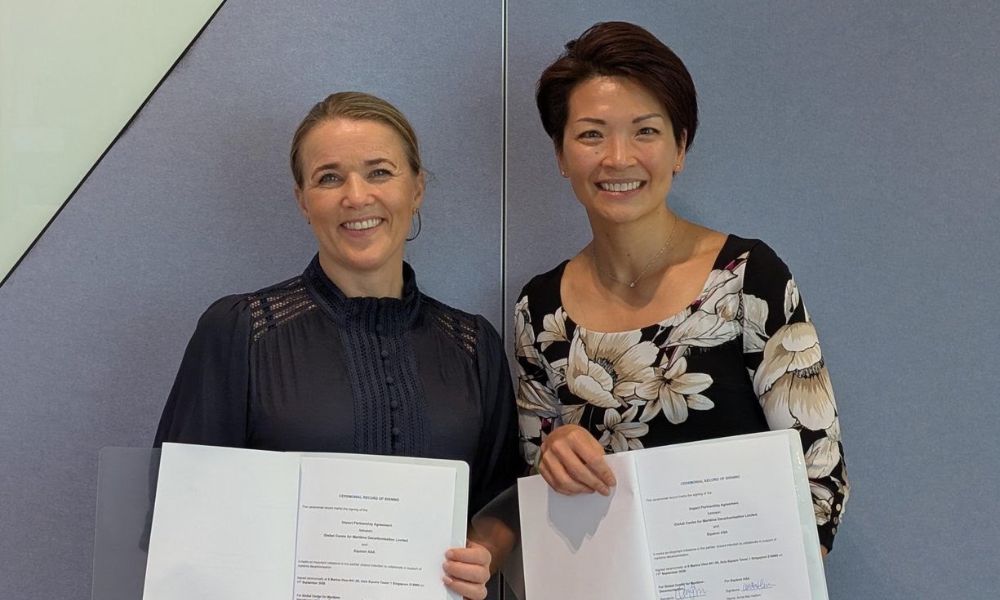
The Global Centre for Maritime Decarbonisation (GCMD) and Equinor on Tuesday (22 September) announced a five-year Impact partnership.

The partnership brings together GCMD’s capabilities in conducting real-world maritime pilots with Equinor’s experience as a charterer, energy provider and developer of low-carbon solutions.

Together, the organisations will leverage their complementary expertise to help address technical and operational gaps in scaling alternative marine fuels and supporting the development and uptake of other maritime decarbonisation solutions.

GCMD’s work on alternative fuels, including biofuels, ammonia and methanol, focuses on two critical aspects of deployment: operational safety and robust monitoring, reporting and verification (MRV). Its pilots and studies are generating operational data to support safe bunkering and handling of these fuels. 

At the same time, its assurance work seeks to strengthen confidence in quantity, quality and GHG emissions abatement.

“Equinor brings extensive experience as a vessel charterer and marine fuel supplier. This includes chartering dual-fuel LNG, LPG and methanol tankers, testing and using biofuels and supplying methanol to the maritime sector,” GCMD said.

Equinor is also piloting the use and supply of ammonia as a marine fuel, contributing to the development of associated safety, regulatory and bunkering arrangements.

Combining these perspectives can help address practical barriers to alternative fuels deployment while strengthening assurance across emerging marine fuel value chains.

Beyond alternative fuels, GCMD is working to accelerate the adoption of solutions that can reduce emissions from the existing fleet, including energy efficiency technologies (EETs) and onboard carbon capture and storage (OCCS).

GCMD’s work on EETs includes quantifying real-world fuel savings from technologies such as wind-assisted propulsion systems and developing financing mechanisms to scale their adoption. In OCCS, Project CAPTURED demonstrated an end-to-end value chain for onboard captured and liquefied CO₂, generating evidence that contributed to the recognition of captured CO2 under the EU ETS and in-principle support at the IMO for recognising carbon mineralisation as permanent storage.

Equinor brings decades of experience in offshore CO₂ storage, including its role in the development and operation of Northern Lights, the world’s first cross-border CO2 transport and storage facility, where liquefied CO₂ is transported by ship to an onshore receiving terminal before it is sent by pipeline for permanent geological storage beneath the North Sea.

Through the partnership, GCMD and Equinor will explore opportunities to combine their respective capabilities and experience to support the deployment and scaling of maritime decarbonisation solutions.


Photo credit: Global Centre for Maritime Decarbonisation
Published: 23 September, 2026

Continue Reading

Ammonia

IMO technical seminar examines ammonia bunkering and infrastructure

Around 800 participants exchanged technical information and experiences on the potential use of ammonia as a marine fuel, including developments in production and bunkering and infrastructure.
Admin

Published

on

By

16

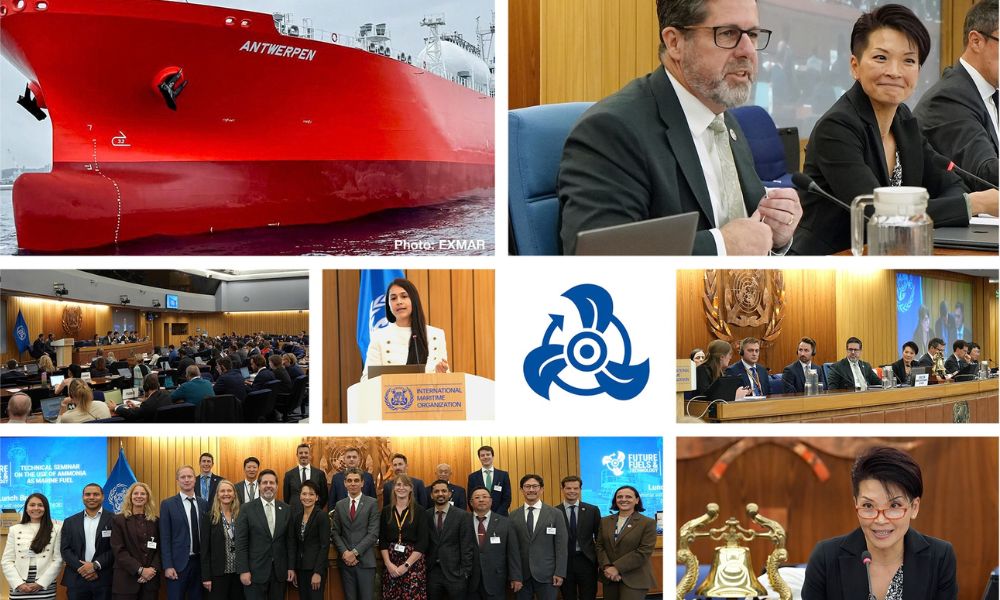
The International Maritime Organization on Tuesday (22 September) said international experts have shared their insight on the use of ammonia as marine fuel during an IMO technical seminar at IMO Headquarters in London (17 September). 

The seminar was organized by IMO’s Future Fuels and Technology Project (FFT Project) and brought together around 800 participants from IMO Member States, NGOs, IGOs, industry and academia, both in person and online. 

Professor Lynn Loo, Chief Executive Officer of the Global Centre for Maritime Decarbonization, moderated the event. 

Participants exchanged technical information and experiences on the potential use of ammonia as a marine fuel, including developments in production, bunkering and infrastructure, technology developments, notably on ammonia-fuelled engines and control of emissions, as well as safety and environmental considerations. 

Opening the seminar, David Osborn, Director of the IMO Marine Environment Division, highlighted the importance of technical knowledge in supporting discussions on alternative fuels.

“Sound policy must nevertheless rest on sound evidence. The decisions this Organization takes on alternative fuels depend on a clear and shared understanding of what the technology can do today, where the difficulties lie, and what remains unresolved,” he said. 

IMO’s Future Fuels and Technology Project (FFT Project) is a partnership between the Government of the Republic of Korea and IMO, aiming to support GHG emissions reduction from international shipping by promoting the uptake of future fuels and technology. 

The seminar was the fifth technical seminar organized under the project, following previous editions covering onboard carbon capture and storage (OCCS), energy transition of shipping (Hong Kong Maritime week), biofuels and methane-based fuels

Note: Video recording and presentations of the seminar is available here. 


Photo credit: International Maritime Organization
Published: 23 September, 2026

Continue Reading

Trending