Connect with us

Battery

Tokyo Kisen and Marindows launch Japan’s first pure battery-powered tug project

Construction of the EV harbor tugboat is expected to start in 2028 while its commercial service is expected to start at the ports in 2030.

Admin

Published

on

Tokyo Kisen and Marindows launch Japan’s first pure battery-powered tug project

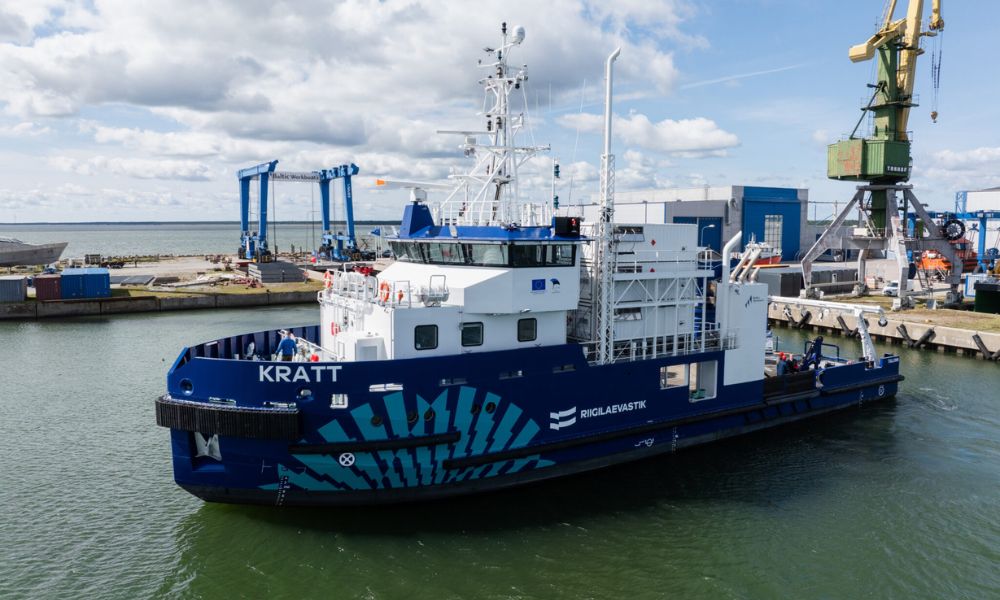
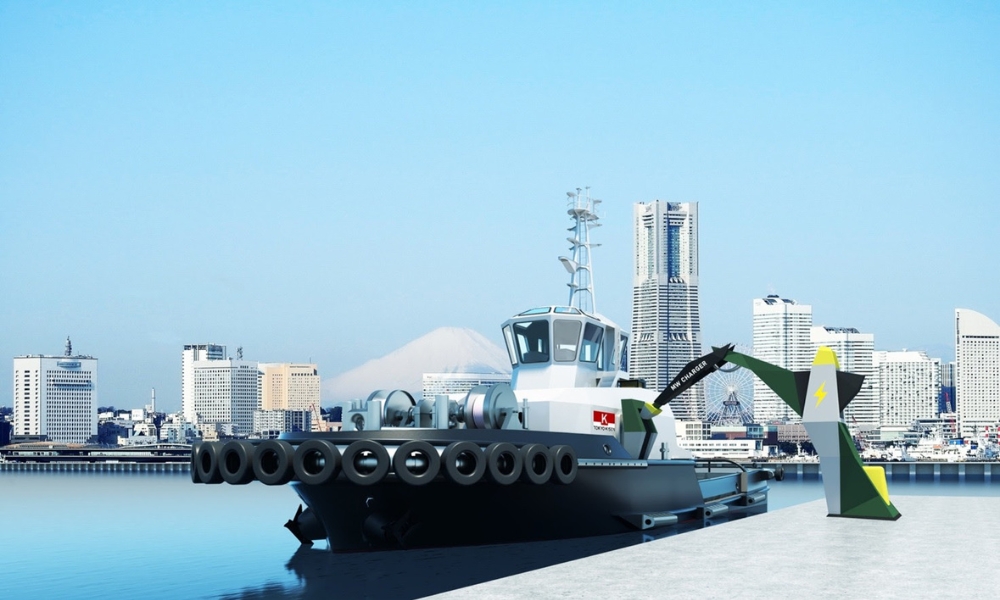
Tokyo Kisen and Marindows on Wednesday (13 August) said they have officially launched Japan’s first pure battery-powered EV harbour tugboat development project.

Tokyo Kisen is the project owner while Marindows is the project coordinator. This EV harbour tugboat which will be operated in the ports of Yokohama and Kawasaki is aiming to contribute to “zero GHG emissions from the ports” in accordance with the Carbon Neutral Port (CNP) policy.

Both plan to conduct a detailed feasibility study and concept design this year before finalising the construction and concept design.The construction of the vessel is expected to start in 2028 while its commercial service is expected to start at the ports in 2030. 

In January 2023, Tokyo Kisen put into service TAIGA which was Japan’s first series-hybrid electric-powered tugboat equipped with a large-capacity 2,486 kWh battery. 

Building on two and a half years of operating experience with electric-powered tugs, this project advances to the next stage—enabling truly zero-emission (zero CO₂) operations—by developing and constructing a pure battery-powered EV tugboat. 

This could be possible by the combination of a large-capacity onboard battery system (6.66 MWh) and MW-class fast chargers.


Photo credit: Tokyo Kisen
Published: 14 August, 2025

Continue Reading

Battery

ICCT: China’s electric cargo ship fleet grows 950% in three years

In its latest blog, ICCT says vessel sizes for electric cargo ships have grown significantly, indicating that China is testing the feasibility of electrification for increasingly larger ships.

Admin

Published

on

By

CHUTTERSNAP MT

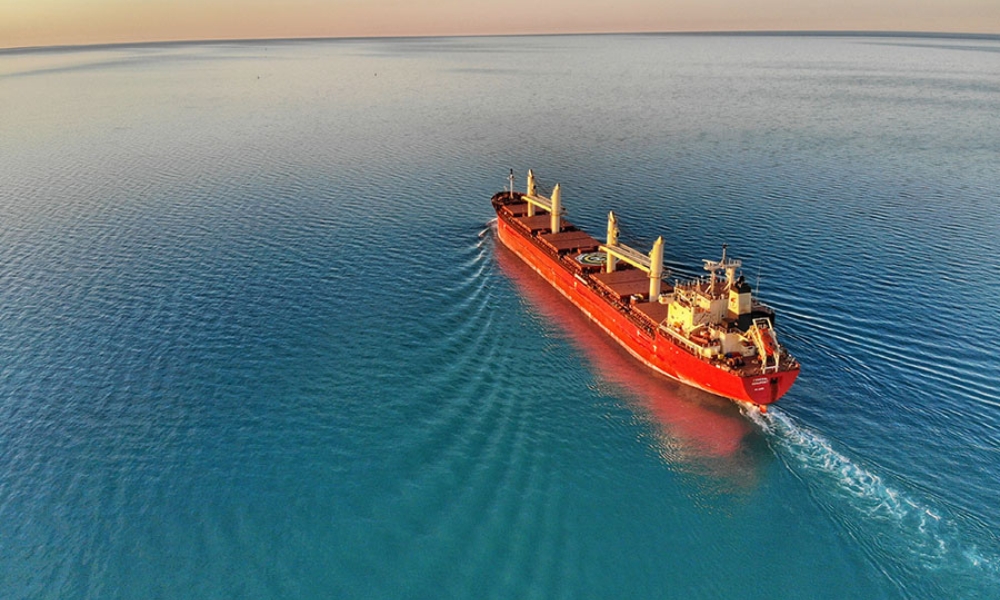
The International Council on Clean Transportation (ICCT) recently said China’s fleet of electric cargo ships has grown by 950%, from just four vessels in 2022 to 42 in 2025.

According to its latest blog, electrification is rapidly expanding along inland waterways in the country, offering a pathway to cut emissions, improve air quality, and lower operating costs.

ICCT said electric cargo ships are entering real-world operation at a rapidly growing pace

“Ship types have diversified, from bulk carriers and container ships to multi-purpose cargo ships. At the same time, vessel sizes have grown significantly, with the maximum deadweight tonnage (DWT) rising from around 3,000 tonnes in 2022 to approximately 14,000 tonnes in 2025,” it said.

“This indicates that China is testing the feasibility of electrification for increasingly larger ships.”

Although battery capacity constraints continue to limit sailing range per charge—which typically hovered between 150 km and 400 km from 2022 to 2025—trends show steady improvement; by 2025, electric cargo ships with a range of up to 500 km were already in operation in China.

Inland waterways have become the primary testing ground for electric cargo ship deployment. 

By the end of 2025, 86% of electric cargo ships in China were operating on internal rivers. 

“Nine provinces and municipalities have already launched pilot projects, covering major waterways such as the Yangtze River, the Pearl River, and the Beijing-Hangzhou Grand Canal,” ICCT added.

The blog also explored the opportunities, challenges, and policy actions that could accelerate the shift to electric inland shipping.

“Developing an enhanced subsidy that favors electric vessels, on top of the current vessel trade-in subsidy program, could help reduce the upfront investment burden for electric vessel adoption,” it recommended.

ICCT added that tightening ship engine emission standards toward world-leading levels could increase the compliance costs of conventional-fuel vessels and improve the relative competitiveness of electric ships.

“The electrification of inland shipping in China is already underway; what is needed now is smart policy to accelerate the transition,” it said.


Photo credit: CHUTTERSNAP on Unsplash
Published: 6 July, 2026

Continue Reading

Decarbonisation

Consortium validates grid-independent hydrogen power hub for ports

Consortium demonstrated that large vessels can already be powered at berth using existing hydrogen, battery, fuel cell and electrical technologies integrated into a modular floating system.

Admin

Published

on

By

Consortium validates grid-independent hydrogen power hub for ports

ELIRE Maritime and consortium partners on Monday (25 May) announced the successful completion of the UKRI-funded Clean Maritime Demonstrator Competition Round 6 (CMDC6) programme.

CMDC6 is a GBP 1 million (USD 1.3 million) feasibility programme and initiative delivered by Innovate UK in partnership with the UK Shipping Office for Reducing Emissions (UK SHORE), part of the UK Department for Transport.

The partners are Ricardo UK, Schneider Electric, Rux Energy UK, Triton Anchor Europe, OREC (Offshore Renewable Energy Catapult), and the University of Strathclyde. 

The programme successfully validated one of the world’s first fully grid-independent Hydrogen Floating Power Hub systems capable of delivering clean power directly to vessels at berth without requiring traditional shore-side grid infrastructure. 

The consortium demonstrated that large vessels can realistically be powered at berth today using existing hydrogen, battery, fuel cell, and electrical technologies integrated into a modular floating maritime system designed for rapid deployment across global ports.

The solution can now be deployed and would be expected to support the reduction of up to 500,000 tonnes of CO₂ emissions globally over the next decade through a scalable maritime clean energy infrastructure capable of operating independently from constrained port grids.

“Ports are under increasing pressure to decarbonise while facing major infrastructure constraints,” said Luke Jenkinson, Founder and CEO of ELIRE Maritime. 

“The Hydrogen Power Hub proves that ports do not need to wait years for grid upgrades to begin reducing emissions. We have validated a practical, scalable, and deployable system capable of delivering clean power directly where it is needed most.”

The Hydrogen Power Hub establishes a new category of maritime infrastructure by moving energy and power generation as well as storage onto water rather than relying on fixed, land-based systems constrained by grid access, cost, permitting, and land availability.

At full configuration, this particular validated system is capable of delivering 5MW of continuous clean power output directly to vessels at berth, enough to support medium-sized cruise vessels and other large maritime assets requiring both 6.6kV and 11kV shore power connections. This system integrates three modular hexagonal floating platforms with a combined 1,200 sqm footprint, approximately 45MWh of battery energy storage capacity, modular fuel cell systems, hydrogen-powered generation, onboard renewable generation, and advanced grid-forming AC/DC electrical architecture.

The consortium confirmed the platform can deliver approximately 91MWh of energy per week while supporting repeated vessel charging operations without requiring major civil works, land reclamation, or expensive grid reinforcement.

The system uses approximately 7,500 to 8,000kg of hydrogen weekly, stored within modular ISO-compatible low-pressure storage containers integrated directly into the floating infrastructure. The current layout accommodates seven onboard hydrogen tanks, with refuelling operations expected approximately twice weekly, enabling ports to adopt hydrogen incrementally without requiring permanent hydrogen infrastructure during early deployment phases.

Instead of relying on oversized generators, the platform uses modular 1.3MW fuel cells operating continuously throughout the week to gradually charge the onboard batteries before rapidly dispatching energy when vessels arrive at berth.


Photo credit: ELIRE Maritime
Published: 26 May, 2026

Continue Reading

Battery

Wah Kwong NatPower backs Greater Bay Area zero-carbon shipping initiative

Initiative will focus on deploying electric vessels and establishing shore-side battery swapping and charging infrastructure across key ports in Guangdong province and Hong Kong.

Admin

Published

on

By

Wah Kwong NatPower backs Greater Bay Area zero-carbon shipping initiative

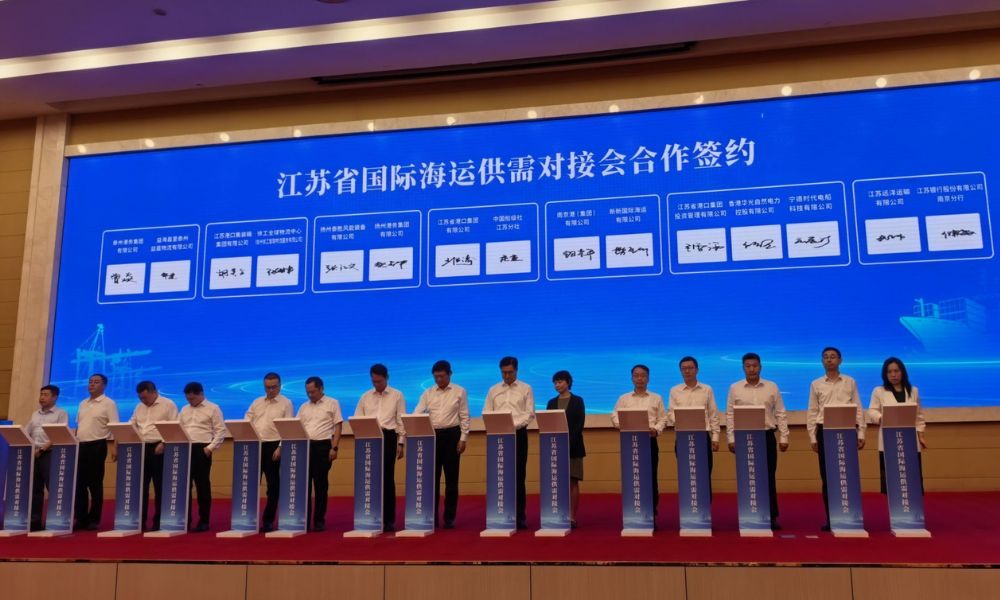
Wah Kwong NatPower Marine (WK NatPower), a joint venture between Wah Kwong Maritime Transport and NatPower Marine, on Wednesday (20 May) said it is supporting a new initiative to develop zero-carbon shipping routes across China’s Greater Bay Area, following a recent broader Memorandum of Understanding (MoU) with Guangzhou Port Group.

Under this MoU, WK NatPower will support maritime electrification by advancing the development of shore power infrastructure across Hong Kong, Greater China, and Asia. 

The initiative will focus on deploying electric vessels and establishing shore-side battery swapping and charging infrastructure across key ports in Guangdong province and Hong Kong, supporting the transition toward low-emission shipping operations.

WK NatPower will play a central role in developing a scalable electrification network, supplying clean electricity to vessels both at berth and for propulsion. The project aligns with China’s “dual carbon” targets and reflects broader efforts to integrate energy systems and port infrastructure at scale.

Guangzhou Port, a major international hub, is advancing its green port strategy through expanded shore power deployment and increased use of clean energy. The collaboration aims to establish standardised charging and battery-swapping infrastructure across the Greater Bay Area, enabling the development of integrated zero-carbon shipping corridors.

The partners will also explore the use of alternative marine fuels, including methanol and ammonia, as part of a broader decarbonisation pathway.

“Delivering zero-carbon shipping at scale requires alignment across ports, energy providers and shipping lines,” said Vincent Ni, General Manager of WK NatPower. 

“This initiative represents a significant step toward building the infrastructure needed to support electrified maritime operations across the region.”

WK NatPower is part of a broader strategy to develop a comprehensive maritime electrification infrastructure network across Asia, combining Wah Kwong’s maritime expertise with NatPower Marine’s global energy infrastructure capabilities.


Photo credit: Wah Kwong NatPower Marine
Published: 21 May, 2026

Continue Reading

Trending