
Contamination
VPS: Crew safety endangered in the wake of bunker failures
Steve Bee and Captain Rahul Choudhuri highlight a case study involving a vessel’s crew and potentially others placed in great danger when the ship lost power and propulsion due to chemically contaminated fuel.


Steve Bee, Group Marketing Director and Captain Rahul Choudhuri, President of Strategic Partnerships of marine fuels testing company VPS, on Tuesday (5 August) highlighted a case study involving a vessel’s crew and potentially others working on oil rig structures placed in great danger when the ship lost power and propulsion due to chemically contaminated fuel:
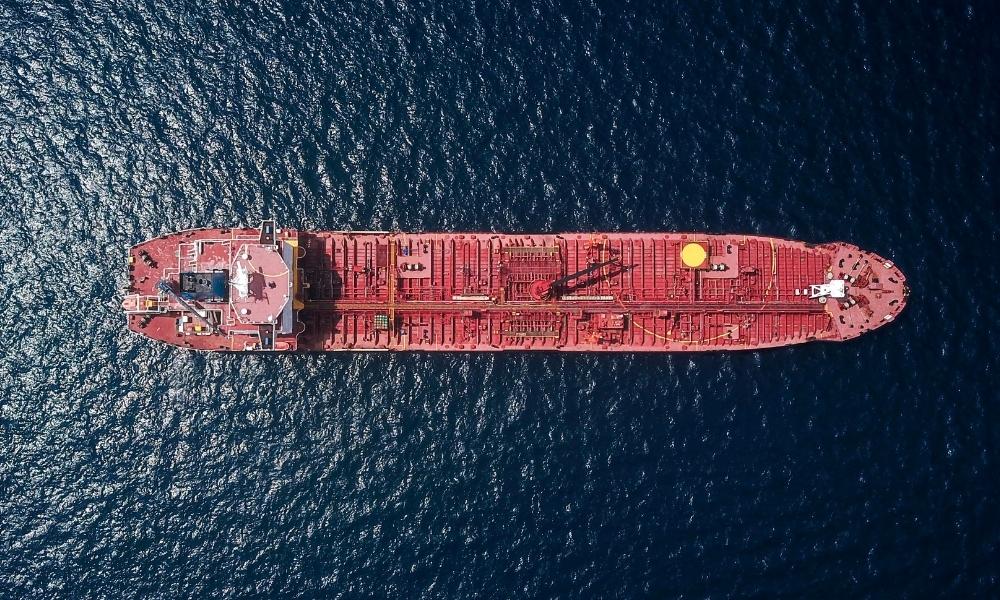
During February 2025, a prominent shipowner had one of its vessels bunker 405mt of VLSFO in New York. This case study highlights what happened next and the consequential dangers and costs contaminated marine fuel posed to the vessel, its crew and the owner.
The bunker was purchased against the ISO8217 specifications, yet the initial VPS laboratory test report, whilst showing the fuel met the ISO8217 specification, also indicated via CGMS-Headspace Screening, the presence of Volatile Organic Compounds (VOCs) in the form of Indene and 4-Methylphenol.
Following this finding, a more detailed forensic GCMS-Vacuum Distillation analysis was performed, which identified the presence of a number of chemical compounds not typically associated with marine fuels:

On the 27th February, VPS provided cautionary notes within this GCMS-VD report:
- The Alkene and Styrene compounds were collectively present in substantial concentration and are known to cause sticking and seizure of fuel pumps plunger and barrel.
- The Phenolic compounds were present in a disproportionately high concentration of 8782 ppm (0.88%). These compounds are known to cause sludge formation in fuel filters / separators and fuel injection issues.
However, despite VPS test results and advisory comments, for numerous reasons, the vessel had no other choice but to begin to use this fuel from 28th February and subsequently struggled to consume the bunker. As the vessel makes frequent calls to ECA-based ports, there is a regular requirement for fuel changeovers to occur, ie from VLSFO to LSMGO and vice versa.
However, with this specific VLSFO bunker, the vessel experienced excessive sludge formation in filters and purifiers, which forced the vessel to slow down or stop and perform several cycles of filter and purifier cleaning until the changeover in the system was complete.
On 3rd May the tank containing the above grade was stripped to allow for the next grade of VLSFO to be used. Within a few hours, whilst the last of contaminated bunkers were being used, all Main Engine plunger barrels seized, the purifiers clogged, and the filters (fine filter / jet filter/ transfer pump filter) were choked. It was noticed that an unusual and excessive plastic-like, hardened sludge, had formed and this inundated the settling / service tanks and sludge tanks.
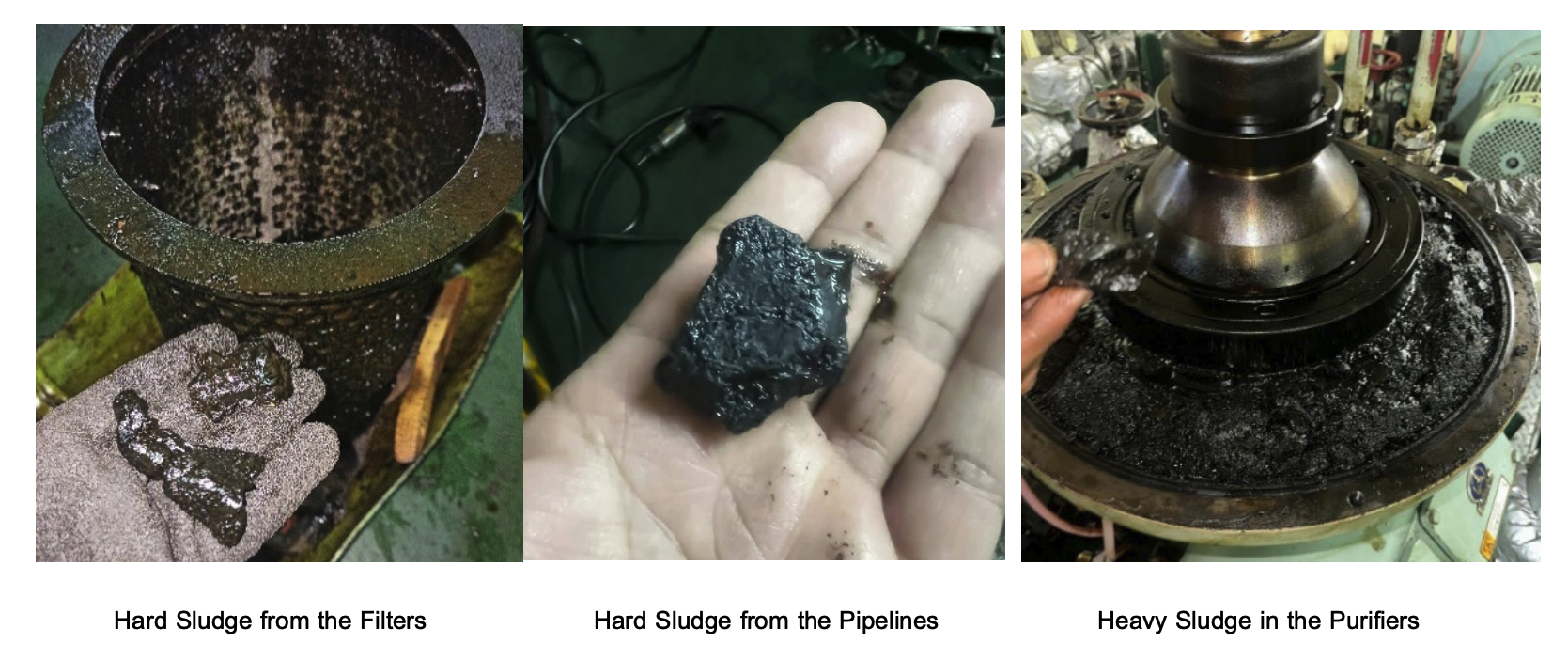
The vessel was subsequently without propulsion for over 3 days. It drifted from outside ECA waters close to fixed oil rig structures within the US Gulf region, as it tried to recover from the precarious situation. This posed a significant safety risk to the vessel and crew.
The after effects of this case continued for several days and involved the following:
- A major emergency alert due to the loss of propulsion, necessitating the involvement of Qualified Individual (QI), USCG and tugs assistance to be on standby as a contingency measure for mobilisation, if necessary.
- Several days of cleaning and clearing of filters/ purifiers/ pipelines and tanks.
- Severe disruption to the rest hours of the crew with significant overtime incurred.
- A financial burden on the owners due to the engagement of various shore workshops to clean sludge and tanks onboard while conducting full manual tank cleaning.
- Considerable time and effort in reporting to Authorities, followed by Flag State and USCG Inspections.
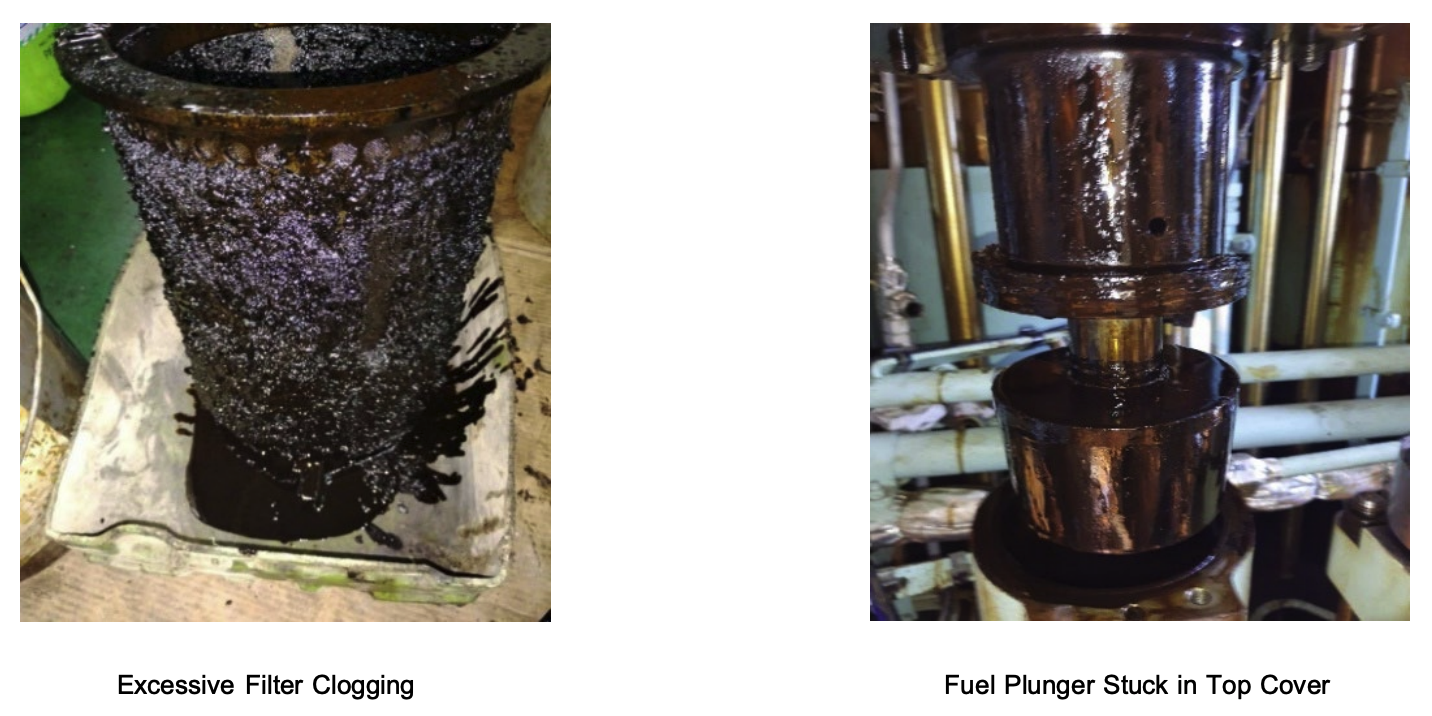
In conclusion, this case study shows that considerable shipboard damage and work stress can be caused due to contaminated bunkers. It is also worth noting, following the final stripping of the fuel, the situation became even worse, indicating the contamination may well have settled in the lower part of the fuel. However, the far greater risk posed, was one of the safety of the crew and vessel, when the vessel became immobilized at sea due to such a bunker condition. On reflection, the consequences of this could quite easily have been even more disastrous & immeasurable, than they were.
Photo credit: VPS
Published: 6 August, 2025
Bunker Fuel Quality
FOBAS report warns of growing operational risks from ISO-compliant bunker fuels
LR’s latest FOBAS Fuel Quality Report reveals that the biggest fuel quality risks are no longer confined to off-specification fuels, with some compliant fuels creating operational challenges.
Bunker Fuel Quality
VPS on lifeboat fuel quality: A safety of life at sea critical risk
Neil Chapman and Steve Bee said regular fuel testing, correct fuel selection, and proactive fuel management are essential to ensure lifeboats are ready when they’re needed most.
Neil Chapman, Managing Director of Americas, and Steve Bee, Group Marketing and Strategic Projects Director of marine fuels testing company VPS, on Monday (13 July) said regular fuel testing, correct fuel selection, and proactive fuel management are essential to ensure lifeboats are ready when they’re needed most:
Performance when its most critical
In an emergency, a lifeboat engine is not simply a mechanical asset, it is a life-saving system. If the fuel in that system is of poor quality due to degradation, contamination, or simply unsuitable for the operating environment, then the result may be failure to launch, manoeuvre, or sustain operation, when human lives depend on it. Fuel failures in lifeboats onboard Cruise Liners are high-consequence life-safety risk as the engine may be the only power source available during an emergency. It is a key SOLAS (Safety of Life at Sea) requirement that lifeboats should hold sufficient fuel to enable them to run at 6 knots for no less than 25 hours.
The primary consequence of a lifeboat failure is not the commercial loss, but the potential failure of a safety-critical system during an abandon-ship scenario. Financial, legal and reputational consequences will undoubtedly follow but the immediate risk is to life.
Now with the inclusion of Biofuels and FAME in the marine fuel mix and assuming the same fuel used in the main engines may be used in the emergency systems, how do you verify the operability of the lifeboats in times of crisis?
Fuel grade DMX within the ISO8217 specification is specifically intended for use within emergency equipment. However, since this is not a mandatory requirement, marine gas oil (MGO grade DMA) used for other purposes on board, is often used to fill up lifeboat fuel tanks. This could lead to hazardous outcomes as the DMA grade fuel might not be suitable for its intended use. DMA fuel whilst acceptable for general machinery use, will unlikely provide the same assurance of low-temperature operability, ignition quality, storage reliability, or starting reliability required for emergency craft. The quality of the fuel in the lifeboat tanks may also deteriorate during storage. Hence it is essential to test and ensure that the quality of the fuel being taken into the tanks is ’fit for purpose’ and monitored at regular intervals. DMX fuel should be chosen due to its ability to operate at a lower temperature, superior ignition quality and improved starting capabilities. However, this fuel only accounts for approximately 1-2% of the global supply, compared to the regular DMA grade.
Failure Modes in Emergency Operations
SOLAS compliance should not be viewed only in terms of carrying the required quality of fuel. The fuel must also remain fit-for-purpose regarding stability, cleanliness and be capable of supporting reliable engine operation throughout the vessel’s operation. Lifeboat failures are rarely a singular dramatic event, rather a chain of events. These are typically caused by degraded fuel, filter blockages or storage issues. Incorrect handling and storage can result in the ingress of water, which with modern fuels, can promote the growth of filter blocking bacteria rendering the engine inoperable. So rather than the issue being no fuel, it is more likely to be an issue of fuel that is of poor quality. As lifeboat engines may sit idle for long periods it potentially allows the fuel to degrade, if the correct due care and attention is not paid to this key piece of emergency equipment.
The handling and storage of fuel, coupled with the observance of quality operating procedures can lessen the risk of these failures, but are unlikely to eliminate them completely. However, the failure to follow established procedures can result in issues that are likely to cause catastrophic financial and reputational damage to the cruise line operator.
The most common failure modes in emergency lifeboats can be categorised as follows:
- Fuel Starvation
- Contamination
- Degraded Fuel
- Blocked Filter/Injectors
Contamination in the engine due to the presence of water, as previously mentioned, can be catastrophic as this can induce corrosion and oxidation, along with promoting microbial growth which results in filter blocking and fuel starvation to the engine.
If an engine fails to start, or runs poorly under load, due to fuel related issues this would likely cause a secondary emergency, compounding the reason the lifeboat was required in the first instance.
The danger with degraded fuel is that the risk is often hidden. A lifeboat may appear available, inspected and compliant, whilst he fuel inside its tank is steadily losing the properties required for reliable emergency operation.
IMO guidelines indicate that inspectors and regulators are increasingly looking at emergency systems for fuel compliance, highlighting its importance in the operation of a vessel.
Seasonal & Regional Fuel Requirements
Often overlooked are the cold flow properties of diesel and biofuels. While hydrocarbon-based diesel has very good (low temperature) cold flow properties, this is not the case for biofuels, so lifeboats fuelled in the Caribbean for the summer season may be completely inoperable if the vessels are transferred to the Northeast or higher location, for a winter period.
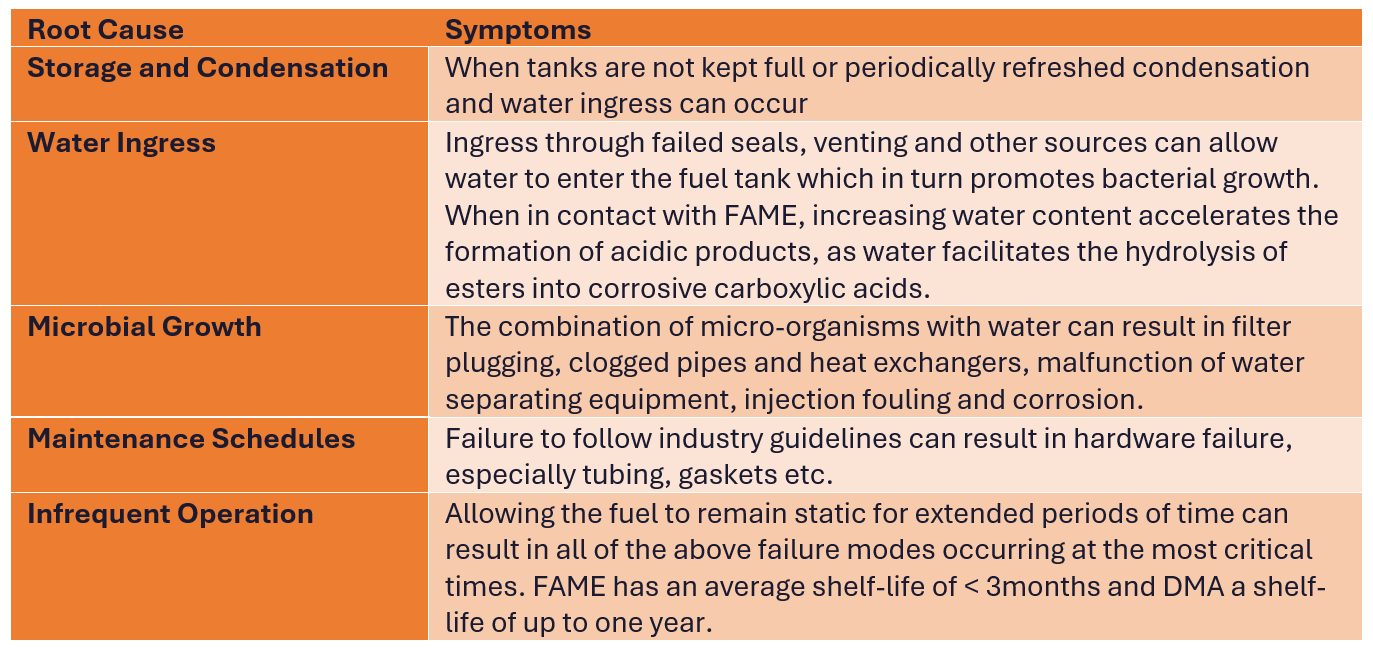
Root Cause Failure Mechanisms
The failure to follow the appropriate standards which result in engine failure can be categorised as follows:
The Effect of Biofuels on Marine Fuel Quality
In a study recently completed by a major shipping line, blends of biofuels were tested for a wide range of parameters. The findings were:
Biological growth appeared within the first month, increasing rapidly with exposure to light.
Within 3 months oxidative corrosion started to occur requiring regular monitoring.
46 CFR § 169.837 states:
“(2) The fuel tanks of motor propelled lifeboats have been emptied, and fuel changed once every twelve months.”
Yet the evidence shows fuel stability effectively starts to deteriorate within the first month and can be unusable by month 3.
Prevention Strategy
Fuel testing should be viewed as part of the vessel’s safety assurance programme. It provides evidence that the lifeboat fuel remains fit-for-purpose, not only on the day it was supplied, but throughout storage and across changing operational conditions. A strong housekeeping policy requires a multi-pronged approach to ensure operability in times of crisis; such steps include:
- Housekeeping – ensuring the fuel system remains closed when not in use to eliminate the ingress of water.
- Operation – frequently run the engines so that fuel and lubricants are cycled through the units.
- Testing program – likely to be cheaper and more efficient than changing out the fuel. A well-developed fuel testing program can eliminate the need to change the fuel.
- Documentation – by recording all the actions taken to protect the emergency systems historic data can be tracked.
Advanced Testing Programs
Due to the importance of these emergency assets several different tests should be considered to ensure the suitability of the fuel. Testing should include:
- Cold-Flow properties using Pour Point, Cold Filter plugging Point, Cloud Point
- Water content for moisture
- BYF for Microbial testing
- Acid Number for corrosion tendencies
- FAME for biofuels content
- Sulphur for MARPOL Annex VI compliance
- Visual Appearance
- Viscosity for flow properties
- Density
- Flash Point for SOLAS compliance
- Cetane Index
Conclusion
It is possible to avoid engine failures, but this can only be achieved with a well-documented and well-followed operating procedure. Regular fuel sampling and testing along with general good housekeeping techniques will ensure these units are ready go when they are most needed. Once they are seen as an active safety-critical asset rather than a dormant emergency component the value in this process will be realized.
Lifeboat fuel quality is not a housekeeping detail, it is a Safety of Life at Sea issue. Emergency craft must be capable of starting manoeuvring and operating for the required duration whenever called upon. Sub-standard, degraded, contaminated, or unsuitable fuel can compromise that capability and turn an emergency response into a secondary emergency. Regular testing, correct fuel choice, controlled storage and documented fuel management provide the evidence and assurance that lifeboats remain ready when lives depend on them.
Photo credit: VPS
Published: 14 July, 2026
Bunker Fuel Quality
Fuel quality issues drive 50% rise in bunker claims, says Gard
Gard says bunker-related claims increased significantly in between January and May 2026, with over 70 cases recorded – a 50% rise compared to 2025 and notes that most claims involve fuel quality.

OUR INDUSTRY PARTNERS

Yang Ming orders six LNG dual-fuel, ammonia-ready containerships from Hanwha Ocean

LR, China’s MARIC unveil tanker concept ready for three future bunker fuels

DNV: Alternative-fuelled vessel orders hit highest monthly level since October 2024

TFG Marine advances global MFM rollout with two US Gulf bunker barges

GENA Solutions: Total renewable and low-carbon methanol project pipeline increases from 61.8 to 62.2 Mt by 2032

Baltic Exchange: Bunker Report (3 September 2026)

ENGINE: Americas Fuel Availability Outlook (3 September 2026)

Singapore-flagged tugboat “Kim Heng 3203” placed under Sheriff’s arrest

US targets five bunker companies in latest sanctions campaign against Iran

Singapore bunkering community supports Living Hope Evangelism’s 7th anniversary outreach for residents in need

China’s bunker market reshaped by tax rebates, trade flows and refining changes, says economist

Hengli Petrochemical’s ex-Singapore trading arm faces winding up application

Rajah & Tann: Bunker disputes are won in the first 48 hours

Report: GCMD outlines practical approach to quantity assurance in marine biofuel supply chains
-
 Vessel Arrest2 weeks ago
Singapore-flagged tugboat “Kim Heng 3203” placed under Sheriff’s arrest
-
 Sanctions2 weeks ago
US targets five bunker companies in latest sanctions campaign against Iran
-
 Events2 weeks ago
Singapore bunkering community supports Living Hope Evangelism’s 7th anniversary outreach for residents in need
-
 Interview1 week ago
China’s bunker market reshaped by tax rebates, trade flows and refining changes, says economist
-
 Winding up2 weeks ago
Hengli Petrochemical’s ex-Singapore trading arm faces winding up application
-
 Bunker Claim5 days ago
Rajah & Tann: Bunker disputes are won in the first 48 hours
-
 Biofuel2 weeks ago
Report: GCMD outlines practical approach to quantity assurance in marine biofuel supply chains
-

 Winding up1 week ago
Singapore: Notices of annual meeting issued for Vroon Shipping Asia and related firms