Connect with us
DNV Decarbonization Insight Series August 2026 - What maritime professionals should know about AI Training

Ammonia

Enova awards funding to 15 projects exploring ammonia bunkering in Norway

Ammonia AS, AZANE Fuel Solutions, and Iverson eFuels among the projects that have been awarded pre-project funding to explore investments in bunkering facilities for ammonia as a marine fuel.

Admin

Published

on

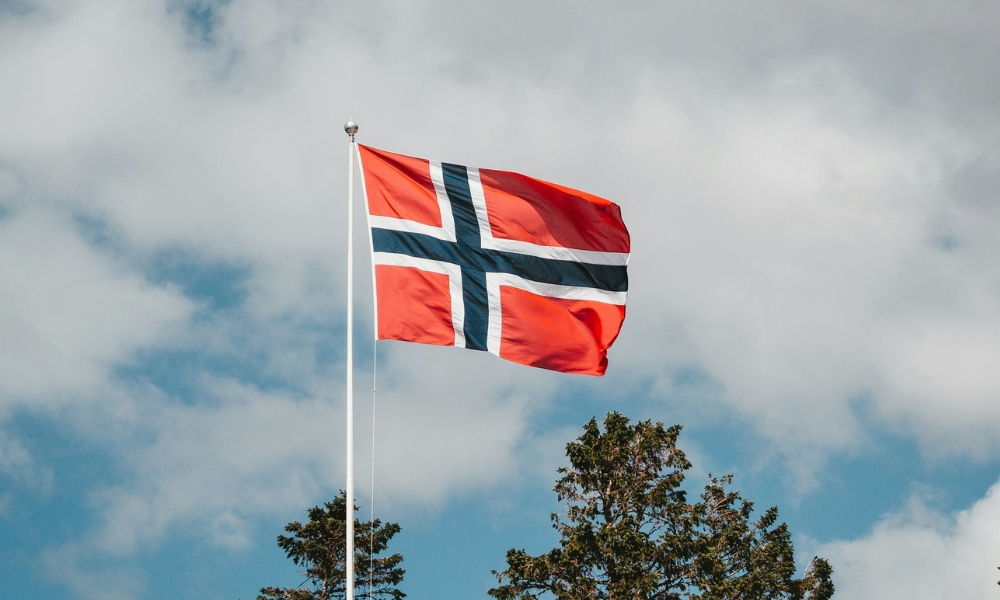
Norway flag Max van den Oetelaar on Unsplash

Norwegian state-owned enterprise Enova on Wednesday (5 February) announced 15 projects have been awarded pre-project funding to explore investments in bunkering facilities for ammonia as a marine fuel.

The projects cover the Norwegian coast from the Oslo Fjord in the south to Troms in the north.

“We received more applications than we had expected in this round. This shows that many players are working purposefully on projects to offer bunkering of ammonia to the maritime sector, and this is gratifying to see,” said Børge Noddeland, who is responsible for the Pre-project maritime technology support programme.

The companies to receive support for their projects are:

  • Ammonia AS
  • AZANE Fuel Solutions 
  • Boreal sjø AS
  • Grieg Group Ammonia Distribution Vessels AS
  • Hitra Municipality 
  • Iverson eFuels AS 
  • Neptun Tromsø AS
  • Skiga AS

The projects receive up to NOK 500,000 (USD 44,463) in support, and have six months to mature the projects towards a possible investment decision and realisation of the projects. In the next round, the best projects will be able to apply for investment support from Enova for the upcoming support programme “Bunkering plants for ammonia.” 

“To succeed with this initiative, we are dependent on good projects in all parts of the value chain. Now an important next step is to establish infrastructure for bunkering ammonia along the Norwegian coast,” said Sigmund Ø. Størset, goal manager for hydrogen at Enova.

“It is therefore very positive to see that so many players are working on this part of the value chain, and that the geographical spread of the projects covers large parts of the Norwegian coast.”


Photo credit: Max van den Oetelaar on Unsplash
Published: 6 February, 2025

Continue Reading

Ammonia

New report calls for standardised approach to Safe Havens on ammonia-fuelled ships

The Decarb Hub report identifies an opportunity to build a shared, evidence-based approach to Safe Havens as the industry applies new regulatory requirements to ammonia-fuelled vessels.

Admin

Published

on

By

RESIZED william william on Unsplash

Lloyd’s Register Maritime Decarbonisation Hub (The Decarb Hub) on Thursday (30 July) called for a standardised approach to the design and assessment of Safe Havens on ammonia-fuelled vessels, highlighting that inconsistent interpretations of emerging regulatory requirements could result in differing safety outcomes across the future ammonia fleet.

This is set out in a new report, ‘Safe Havens for ammonia-fuelled ships’, which examines how the maritime sector can apply lessons from offshore oil and gas, chemical processing and other safety-critical industries to address a new requirement introduced under the International Maritime Organization’s (IMO) Interim Guidelines for the Safety of Ships using Ammonia as Fuel. The new guidelines now require vessels to incorporate Safe Havens to protect crew in the event of an ammonia release.

However, the report highlights that, as is often the case with interim, goal-based guidance for a new safety concept, the guidelines set high-level requirements that leave room for differing interpretations of what makes an effective Safe Haven. It proposes a shared framework to help vessel designers, operators, classification societies and flag administrations apply these requirements consistently as ammonia-fuelled vessels enter service.

The Decarb’s Hub research found that Safe Havens should not be viewed as standalone spaces designed solely to prevent ammonia exposure. Instead, they should be treated as human-centred systems that form part of a vessel’s wider emergency response strategy.

The report identifies three core functions that every maritime Safe Haven should provide: protection, command and control, and accessibility. Together they are intended to ensure that all crew remain protected from ammonia and other hazards, while enabling the execution of the vessel’s emergency response plan.

Drawing on established practices from industries that routinely manage toxic gas hazards, the report recommends that Safe Haven performance is assessed against realistic worst-case scenarios. It also highlights the importance of calculating Safe Haven endurance periods, assessing accessibility, regular testing and maintenance and human factors considerations to ensure systems continue to perform as intended throughout a vessel’s operational life.

The report concludes that the industry should focus on developing standardised methods for demonstrating Safe Haven performance. Establishing a consistent basis for assessment will help ensure Safe Havens deliver the intended level of protection across the future ammonia-fuelled fleet while supporting regulatory certainty and long-term operational confidence.

Jonathan Bolton, Decarbonisation Risk Analyst at the Lloyd’s Register Maritime Decarbonisation Hub, said: “Ammonia has the potential to play an important role in shipping’s decarbonisation journey, but its adoption must be supported by safety solutions that are robust, practical and consistently applied. Safe Havens are a new requirement for ammonia-fuelled ships and as with any new safety concept, the industry needs practical guidance to build a shared understanding of how Safe Havens should be designed and assessed.

“Our report brings together decades of experience from industries that have long managed toxic gas risks and translates those lessons into a maritime context. By identifying the critical functions that Safe Havens must perform and proposing a common framework for their assessment, we hope to support designers, operators, classification societies and regulators as they work towards the safe deployment of ammonia-fuelled vessels.”

The findings are intended to support shipowners, designers, regulators and classification societies as they develop the first generation of ammonia-fuelled vessels and contribute to the long-term evolution of international regulations governing ammonia safety. 

Note: A copy of the report can be downloaded at Safe Havens for ammonia-fuelled ships. 


Photo credit: william william on Unsplash
Published: 31 July, 2026

Continue Reading

Alternative Fuels

Sallaum Lines orders 1+1 LNG dual-fuel, ammonia-ready PCTC

Company signed a new shipbuilding contract with China Merchants Shipyard for the construction of one + one additional 8,600 CEU Pure Car and Truck Carrier, with delivery scheduled for 2029.

Admin

Published

on

By

Sallaum Lines orders 1+1 LNG dual-fuel, ammonia-ready PCTC

Sallaum Lines on Tuesday (28 July) announced the signing of a new shipbuilding contract with China Merchants Shipyard for the construction of one + one additional 8,600 CEU Pure Car and Truck Carrier (PCTC).

The new vessel will be LNG dual-fuel and ammonia-ready, with delivery scheduled for 2029. 

This latest firm order comes weeks after Sallaum Lines announced a separate newbuilding agreement with Xiamen Shipbuilding Industry Co., Ltd. for two firm 8,600 CEU vessels, with options for two additional vessels.

“The China Merchants order adds further momentum to Sallaum Lines’ newbuilding programme and confirms the company’s continued investment in modern, high-capacity RoRo tonnage at a time when the global PCTC market remains structurally important to automotive supply chains,” the company said. 

The newly signed vessel at China Merchants Shipyard brings Sallaum Lines’ total newbuilding programme to nine vessels, representing a total order value of above USD 850 million. The programme includes four vessels already delivered, one vessel scheduled for delivery in August 2026, one vessel scheduled for delivery in December 2026, and three vessels scheduled for delivery in 2029.


Photo credit: Sallaum Lines
Published: 29 July, 2026

Continue Reading

Bunker Fuel

Port of Rotterdam publishes bunker fuel sales data for Q2 2026

Ethanol as a bunker fuel was reported in Rotterdam for the first time with 1,025 mt delivered in Q2 2026, following an ethanol-methanol blend bunkering operation of container vessel Eco Levant in May.

Admin

Published

on

By

RESIZED port of rotterdam

The Port of Rotterdam Authority recently published bunker fuel sales data for the second quarter (Q2) of 2026.

Deliveries of ultra low sulphur fuel oil, very low sulphur fuel oil, high sulphur fuel oil, marine gas oil and marine diesel oil in Q2 2026 (against on year) recorded respectively 123,190 metric tonnes (mt) (+33%  from 162,142 mt), 354,448 mt (-9.1% from 439,804 mt), 704,637 mt (+10.9% from 619,010 mt), 266,570(+18% from 273,696 mt), 64,777 mt (-8.2% from 86,821 mt). 

Bio-blended variants of ultra low sulphur fuel oil, very low sulphur fuel oil, high sulphur fuel oil, marine gas oil and marine diesel oil in Q2 2026 (against on year) recorded respectively 22,032 mt (-28.3% from  24,573 mt), 144,665 mt (-57% from 68,271 mt), 30,191 mt (+15.3% from 38,490 mt), 34,574 mt (+627.7% from 31,663 mt) and 8,413 mt (-30.2% from 2,223 mt).

Port data showed 273,021 m3 of liquefied natural gas (LNG) being delivered as a marine fuel in Q2 2026, down by 17.4% from 207,658 m3 in Q2 2025. Bio-methanol and bio-blended LNG recorded 2,845 mt and 7,506 m3 respectively in Q2 2026.

Ethanol as a bunker fuel was reported in Rotterdam for the first time with 1,025 mt delivered in Q2 2026,  following an ethanol-methanol blend bunkering operation of container vessel Eco Levant in May.

Manifold Times previously reported Evos Rotterdam holding a ground-breaking ceremony for its methanol and ethanol expansion project at the Port of Rotterdam, formally starting the construction phase of a major investment in additional terminal capacity.

Once operational in early 2028, the expansion will give Evos Rotterdam greater capacity to handle methanol and ethanol for industrial customers, as well as for the developing market in cleaner, low-carbon marine fuels and bunkering.

Shipping giant A.P. Moller – Maersk (Maersk) recently announced a new milestone in its marine fuel trials, with its dual-fuel feeder vessel Laura Maersk successfully operating on 100% ethanol for a second time.

The latest trial marked a significant step forward from earlier tests, as the vessel was supplied through a larger-scale bunkering operation conducted by barge in Rotterdam.

Related: X-Press Feeders, METHANAVE complete first ethanol-methanol bunkering op in Rotterdam
Related: Maersk advances ethanol fuel trials with larger-scale Rotterdam bunkering


Photo credit: Port of Rotterdam
Published: 29 July, 2026

Continue Reading

Trending