Connect with us

Bunker Fuel

Allianz: ‘Shadow fleet’ of tankers involved in at least 50 incidents including oil spills

Vessels have been involved in at least 50 incidents to date, including fires, engine failures, collisions, loss of steerage, and oil spills; shadow tankers also participate in ‘dangerous practice of STS transfers in the open ocean’.

Admin

Published

on

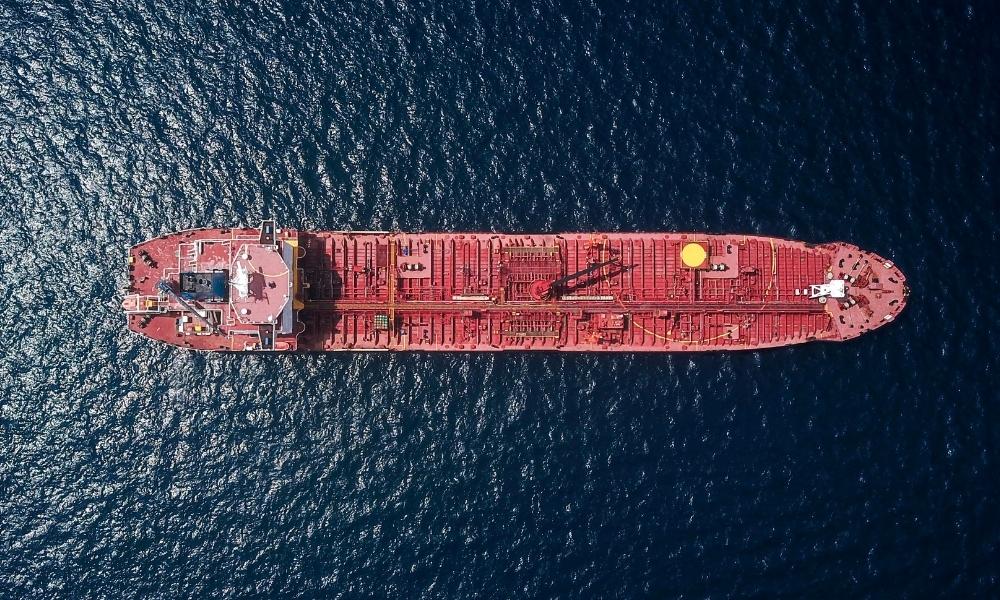
RESIZED Shaah Shahidh on Unsplash

Allianz Commercial marine experts shared some of the major consequences of growing volatility and uncertainties from war and geopolitical events, climate change risk, including the threat the rise of the ‘shadow fleet’ poses to vessels and the environment and the multi-faceted impacts of rerouting. 

The following are excerpts from the original expert risk article by insurer Allianz :

Recent incidents in the wake of the conflict in Gaza have demonstrated the increasing vulnerability of global shipping to proxy wars and disputes. Between November 19, 2023, and the beginning of April 2024, there were more than 50 attacks against merchant shipping in the Red Sea by Houthi militants in response to the conflict. We have also seen the first total loss of a vessel, the first fatal attack, as well as signs that the crisis may have spread following the seizure of a container ship by Iranian forces in the Strait of Hormuz, the world’s most important chokepoint for oil shipping. The Houthi military group has also warned it would target any ships heading to Israeli ports if they are within range.

Disruption to shipping has persisted longer than expected and is likely to remain for the foreseeable future, says Captain Rahul Khanna, Global Head of Marine Risk Consulting, Allianz Commercial. “While we have seen sporadic attacks in the past, the conflict in Gaza has opened the flood gates. Even if a political solution is reached, we may see attacks continue as there is clearly now an opportunity for those wishing to disrupt shipping in the Red Sea and beyond. Ultimately, shipping has become a ripe target for those wishing to wage a proxy war. It opens avenues for terrorists or militia groups to get recognition and hit global markets.”

Rerouting brings supply chain, trade, risk, inflation, and environmental challenges

Attacks against shipping in the Red Sea and Middle East waters, closely following on from the ongoing disruption caused by drought in the Panama Canal, have amounted to a double strike for shipping, causing yet more issues for global supply chains, as well as significantly adding to the distance vessels must sail.

The attacks in the Red Sea have severely impacted Suez Canal transits, while a lack of rain and the El Nino phenomenon contributed to the second driest year in the Panama Canal’s history, also affecting transits.  Both routes are critical for the transport of manufactured goods and energy between Asia, Europe, and the US East Coast.

At the start of 2024 transits in the Suez and Panama canals were down by more than 42% and 49% respectively, compared to their peaks. Whichever route vessels take, they face lengthy diversions and increased costs. For example, avoiding the Suez Canal adds at least 3,000 nautical miles and 10 days sailing time to each trip, rerouting via the Cape of Good Hope.

Businesses that source goods and components from factories in China and South-East Asia have faced delays and higher costs from longer transit times. Some reported rises of 300% for container hire, and logistical delays, adding up to three to four weeks to delivery times, creating cashflow difficulties, and component shortages on production lines.

Such experiences have thrown the shipping industry and the issue of supply chain resilience into the public consciousness, says Khanna.

“Supply chains have been disrupted by a series of events in recent years, from extreme weather and climate incidents, container ship fires and groundings, through to the pandemic and conflicts in Ukraine and the Middle East, not forgetting the recent Baltimore bridge collapse.

“How should the shipping industry and its customers address this challenge? In today’s interconnected environment it is even more important to have a ‘Plan B’ and alternative options. An unexpected event can have a domino effect globally. Shippers around the world should consider diversification of their supply chains and in some cases nearshoring and onshoring might be an option.”

Increased transparency is also part of the solution, particularly when it comes to tracking cargo. While the global risk environment for shipping has changed significantly in recent years, the average shipper still knows very little about the location of their cargo, which makes it very difficult for them to put effective contingency plans in place to minimize disruption. Ultimately businesses will need to update their approach to cargo risk management and business continuity planning, says Régis Broudin, Global Head of Marine Claims, Allianz Commercial.

Rerouting will also require a shift in the shipping industry supply chain, if large numbers of vessels switch to alternative routes around the Cape of Good Hope for a prolonged period. Container lines tend to ply the same established trade routes, but rerouting will require alternative bunkering, supply, repair, and maintenance facilities. The risk environment could be impacted suggests Wayne Steel, Senior Marine Risk Consultant, Allianz Commercial. For example, storms and rough seas could be more challenging for smaller vessels used to plying coastal waters, especially where crews may not be sufficiently trained and equipped for such conditions.

Other areas impacted include container capacity, older vessels being kept in service as longer journeys means an increasing demand for ships, inflation – according to Allianz Trade analysis, a prolonged period of disruption in the Red Sea could cause it to increase by +0.5% – as well as the environment. The disruption in the Red Sea, combined with factors linked to the Panama Canal and the Black Sea in the wake of the Ukraine war, could erode the environmental gains achieved through ‘slow steaming’, as rerouted vessels increase speeds to cover longer distances. The longer distances caused by rerouting container ships from the Suez Canal to the Cape of Good Hope result in an estimated 70% increase in greenhouse gas emissions for a round trip from Singapore to Northern Europe. Shipping diversions from the Red Sea are already cited as being a primary cause of a 14% surge in the carbon emissions of the EU shipping sector during the first two months of 2024.

Ukraine war: ‘shadow fleet’ risk to vessels and environment

A gradual tightening of international sanctions on Russian oil and gas exports over the past three years since its invasion of Ukraine has resulted in the emergence of a sizable ‘shadow fleet’ of tankers, mostly older vessels that operate outside international regulation and often without proper insurance. This situation presents serious environmental and safety risks in key chokepoints where oil is shipped.

Russia is not the only country to operate a shadow fleet. Iran and Venezuela have used such tankers to circumvent sanctions and maintain oil exports. Estimates put the size of the dark fleet at between 600 to 1,400 vessels, roughly a fifth of the overall global crude oil tanker fleet.

Much of the shadow fleet is likely poorly maintained and may not have undergone appropriate inspections. Shadow tankers also participate in the dangerous practice of ship-to-ship transfers in the open ocean, as well as turning off Automatic Identification System (AIS) transponders to obscure their identity. Vessels have been involved in at least 50 incidents to date, including fires, engine failures, collisions, loss of steerage, and oil spills. The cost of dealing with these incidents often falls on governments or other vessels’ insurers if one is involved in an incident.

“As long as there are sanctions on countries like Russia and Iran, the shadow fleet looks here to stay,” says Justus Heinrich, Global Product Leader Marine Hull, Allianz Commercial. “Given the age of the vessels in the shadow fleet, safety is a big concern. Often these vessels are at the end of their operational lives and are used in a high-risk business.”

Note: The full article by Allianz can be found here


Photo credit: Shaah Shahidh on Unsplash
Published: 20 May 2024

Continue Reading

Alternative Fuels

Yang Ming orders six LNG dual-fuel, ammonia-ready containerships from Hanwha Ocean

Each of the six new vessels will have a capacity of up to 13,650 TEU and feature LNG dual-fuel propulsion and Ammonia Fuel Ready specifications.
Admin

Published

on

By

Yang Ming orders six LNG dual-fuel, ammonia-ready containerships from Hanwha Ocean

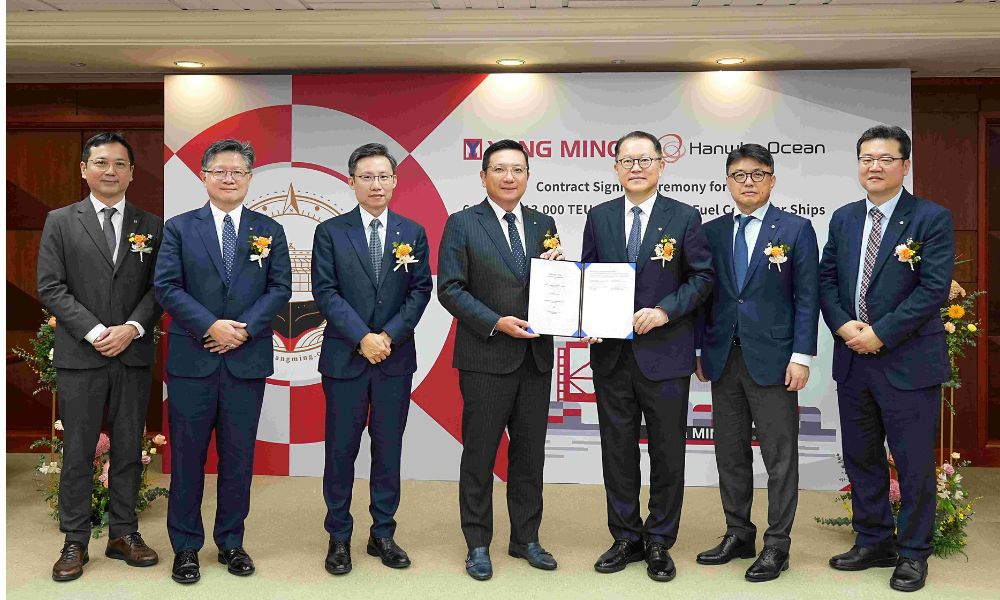
Taiwanese shipping firm Yang Ming Marine Transport Corporation (Yang Ming) and South Korean shipbuilder Hanwha Ocean on Wednesday (2 September) signed a shipbuilding contract for six 13,000 TEU class LNG dual-fuel container vessels. 

The contract was signed by Dr. Chuck Tsai, Chairman of Yang Ming, and Mr. Charles Kim, CEO of Hanwha Ocean. The vessels are scheduled for delivery between 2028 and 2029. 

They will complement Yang Ming’s existing fleet of 10,000+ TEU vessels and serve as key vessels on East-West services, with deployment flexibility across trade lanes connecting Asia with the East and West Coasts of North America, South America, and the Mediterranean. 

Each of the six new vessels will have a capacity of up to 13,650 TEU and feature LNG dual-fuel propulsion and Ammonia Fuel Ready specifications.

“As Yang Ming transitions toward net-zero emissions, LNG provides a relatively mature and economically viable alternative fuel solution, capable of reducing greenhouse gas emissions by approximately 20%,” the company said. 

“At the same time, ammonia can serve as a carbon-free fuel by utilising converted LNG storage facilities, while offering relatively lower conversion costs and comparatively well-developed supply chains and infrastructure. The Ammonia Fuel Ready design will therefore provide Yang Ming with greater flexibility in responding to increasingly stringent international regulations on greenhouse gas emissions.”

In addition, the vessels will be equipped with Type B LNG fuel tanks with a design pressure of 1.0 bar to enhance the safety and efficiency of LNG operations, together with a range of energy-saving technologies, including Wind Shields, Rudder Bulbs, Pre-Swirl Stators, and Shore Power Systems. Smart ship technologies and cybersecurity protection features will also be incorporated to enhance operational efficiency, safety, and reliability while effectively reducing fuel consumption and greenhouse gas emissions.

Deliveries under Yang Ming’s next-generation fleet optimization plan commenced earlier this year. By 2030, a total of 24 new vessels are expected to enter service. 

This includes 18 LNG dual-fuel vessels—comprising five 15,500 TEU, seven 16,000 TEU, and the six 13,000 TEU vessels under this contract—alongside six 8,000 TEU methanol dual-fuel-ready ships. 


Photo credit: Yang Ming Marine Transport
Published: 4 September, 2026

Continue Reading

Alternative Fuels

LR, China’s MARIC unveil tanker concept ready for three future bunker fuels

Both secured AiP for a new 114,000 DWT product and crude oil tanker designed to accommodate future conversion to LNG, methanol or ammonia.
Admin

Published

on

By

LR, China’s MARIC unveil tanker concept ready for three future bunker fuels

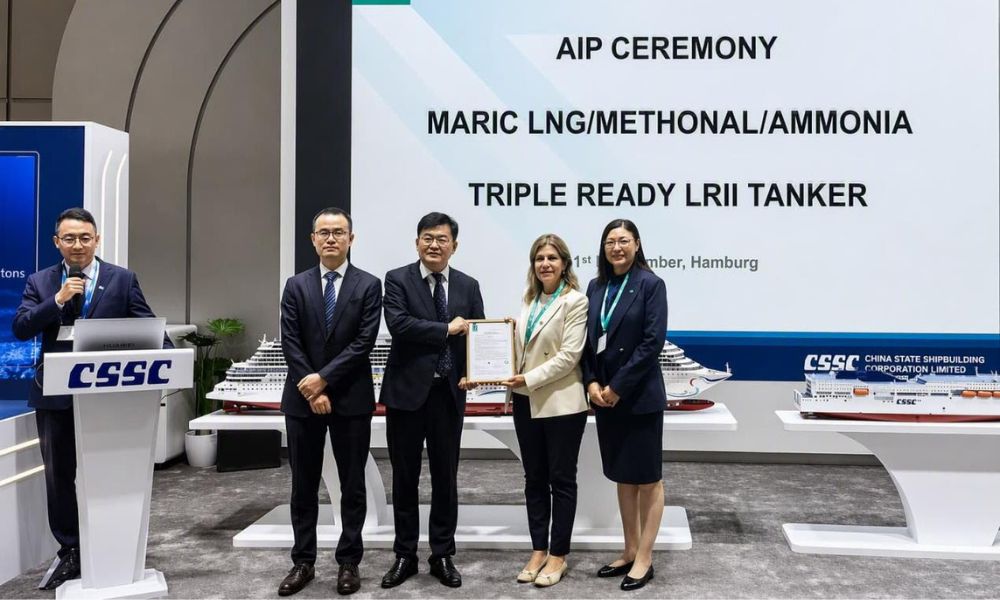
Lloyd’s Register (LR) and the Marine Design and Research Institute of China (MARIC) on Thursday (3 September) have secured Approval in Principle (AiP) for a new 114,000 DWT product and crude oil tanker designed to accommodate future conversion to LNG, methanol or ammonia.

Announced at SMM 2026, the concept addresses one of the biggest investment challenges facing shipping today: the need to develop vessels and capabilities that can support a range of alternative fuel options and pathways as technologies, infrastructure and regulations evolve.

While LNG is already a mature fuel pathway, methanol and ammonia remain at an earlier stage of development, with questions around global fuel availability, infrastructure development, economics and long-term adoption.

The 114,000 DWT tanker concept has been designed as a product and crude oil carrier that can accommodate future conversion to LNG, methanol or ammonia as technologies, regulations and fuel supply chains mature. By incorporating conversion readiness at the design stage, the concept aims to reduce future retrofit complexity and provide owners with greater confidence when planning long-term fleet investments.

The design concept was reviewed against LR’s July 2026 class rules and regulations, including requirements relating to ships using gases and other low-flashpoint fuels, alongside relevant IACS Common Structural Rules for oil tankers. Final classification and statutory approval remain subject to full compliance with all applicable rules and regulations.

Theo Kourmpelis, Global Business Director for Tankers, Lloyd’s Register, said: “Shipowners are being asked to make major investment decisions today despite continued uncertainty around which fuels will dominate in the decades ahead. Alternative fuel solutions each offer potential pathways to compliance, but fuel infrastructure, regulation and economics continue to evolve at different speeds around the world.

“Designs that preserve flexibility will be critical in helping owners manage risk while preparing for multiple future scenarios.”

Si Nan, Marine & Offshore Marketing Department Vice Director, MARIC, said: “As the industry explores different decarbonisation pathways, shipowners need vessel designs that can adapt alongside technological and regulatory developments. This concept was developed specifically to provide greater fuel flexibility and long-term resilience, allowing owners to respond to changing market requirements without being locked into a single fuel strategy.

“Receiving Approval in Principle from Lloyd’s Register is an important milestone that validates the design concept and supports its future development.”


Photo credit: Lloyd’s Register
Published: 4 September, 2026

Continue Reading

Alternative Fuels

DNV: Alternative-fuelled vessel orders hit highest monthly level since October 2024

LNG-fuelled vessels accounted for the vast majority of August activity while the strong summer performance marked a significant acceleration in ordering activity after a relatively slow start to the year.
Admin

Published

on

By

DNV: Alternative-fuelled vessel orders hit highest monthly level since October 2024

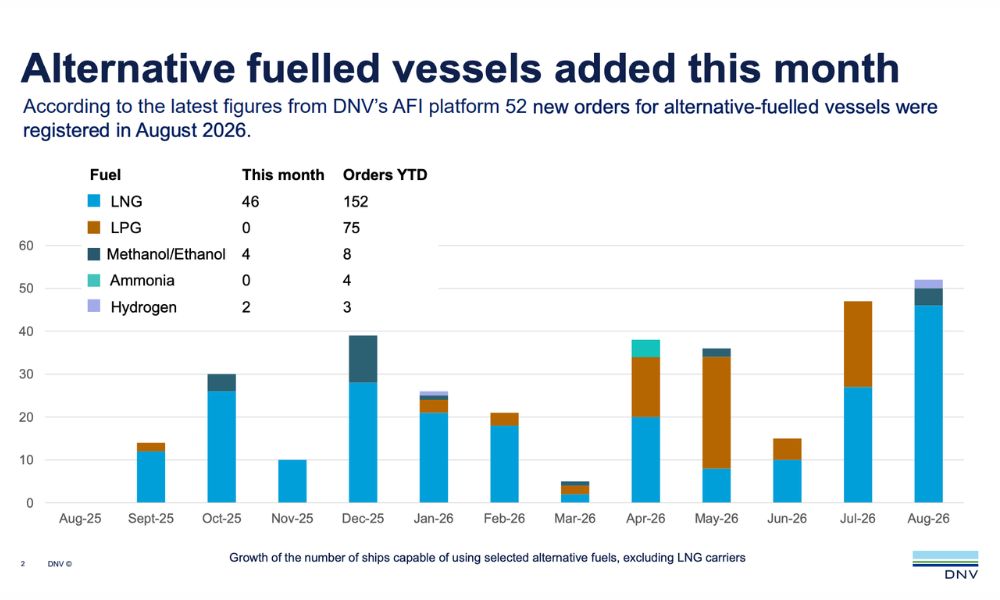
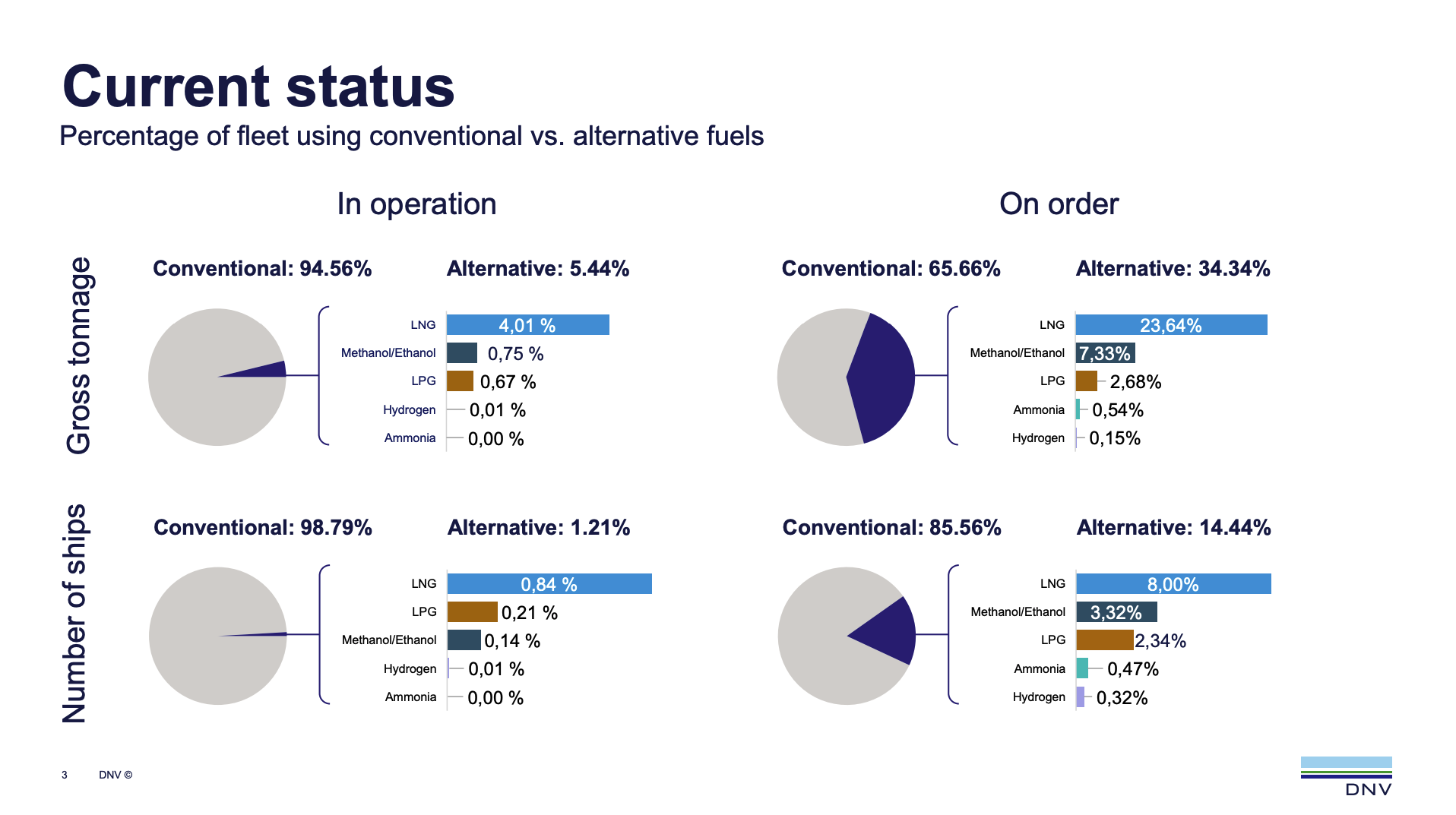
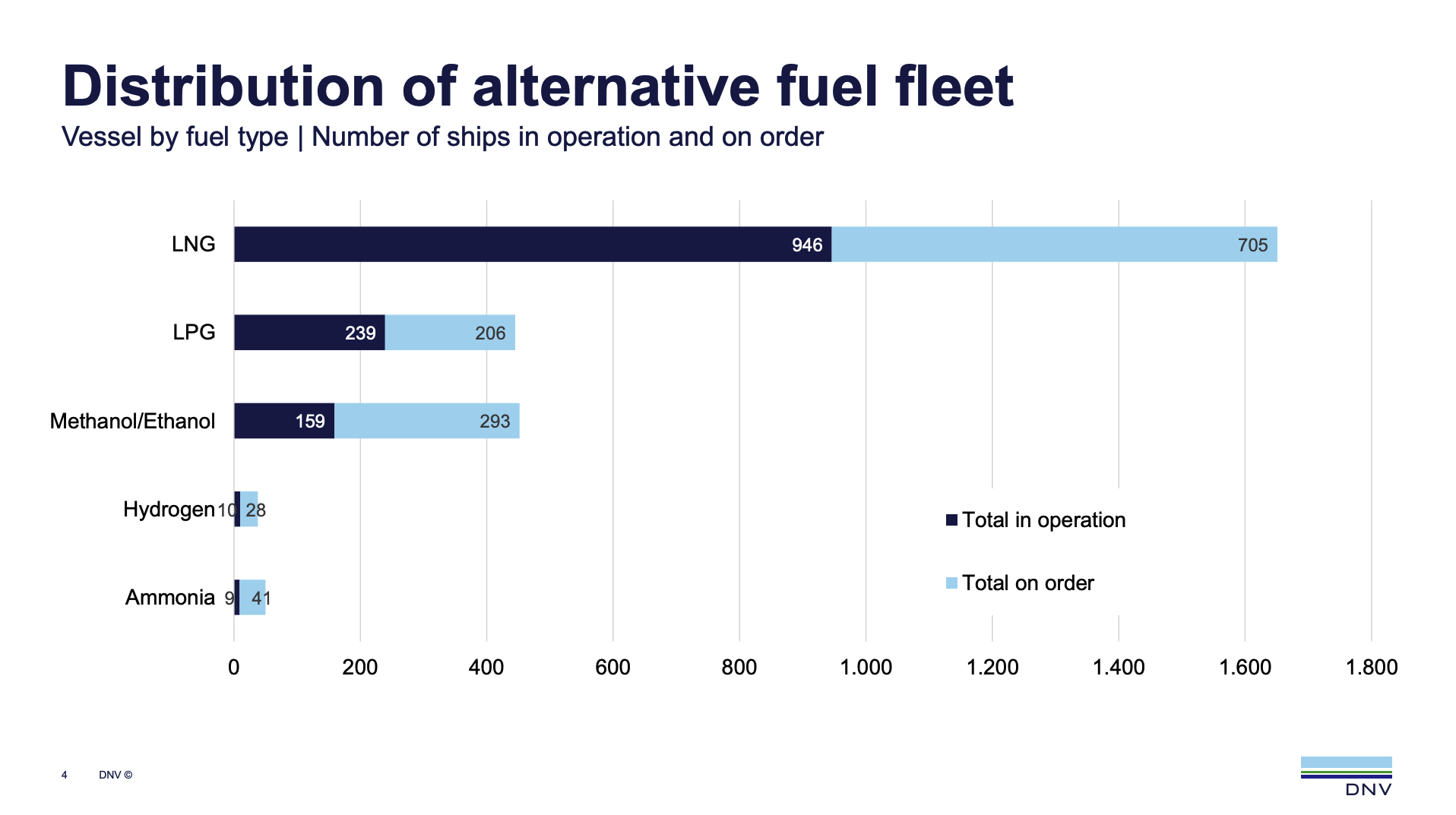
Latest data from classification society DNV’s Alternative Fuels Insight (AFI) platform alternative-fuelled vessel ordering was strong in August, with 52 new vessels added to the platform.

This is the highest monthly total since October 2024 and follows another active month in July, when 47 vessels were added to the database.

LNG-fuelled vessels accounted for the vast majority of August activity, with 46 orders recorded. The container segment led the way with 30 orders, while the car carrier segment contributed a further 12 LNG-fuelled vessels. In addition, four ethanol-fuelled bulk carriers and two hydrogen-powered bulk carriers were added during the month, as well as one LNG bunker vessel.

The strong summer performance marked a significant acceleration in ordering activity after a relatively slow start to the year. In total, 242 alternative-fuelled vessel orders have been placed in the first eight months of 2026, representing a 27% increase compared with the same period in 2025.

LNG remains the dominant fuel choice, accounting for 63% of all alternative-fuelled vessel orders registered so far this year. Container vessels represent the largest share of these LNG orders (59%), followed by car carriers (30%).

Jason Stefanatos, Global Decarbonization Director at DNV Maritime, said: “The past two months have been particularly strong for alternative-fuelled vessel ordering, with August recording the highest monthly total we’ve seen since October 2024. This has helped lift year-to-date orders to a level well above the same period last year.

“LNG remains the leading fuel choice, driven largely by activity in the container and car carrier segments. These sectors have been among the earliest adopters of alternative fuels, supported by predictable liner operations and increasing demand from cargo owners to reduce emissions across supply chains. 

“For many owners, LNG offers a combination of emissions reductions, fuel availability and future flexibility while the longer-term fuel landscape continues to evolve. 

“At the same time, the latest figures include orders for ethanol- and hydrogen-fuelled vessels, highlighting that owners continue to explore a range of decarbonization pathways. Different segments are making different fuel choices, but the overall level of activity demonstrates continued investment in lower-emission shipping.”
Screenshot 2026 09 04 at 12.29.26 PM Screenshot 2026 09 04 at 12.29.36 PM


Photo credit: DNV
Published: 4 September, 2026

Continue Reading
Advertisement

OUR INDUSTRY PARTNERS


Trending