Connect with us

Alternative Fuels

接收“Pearl Khaoyai”轮,Consort Bunkers将以IMO 2型新油轮迎向IMO 2030/2050年目标

Admin

Published

on

Pearl Khaoyai 1

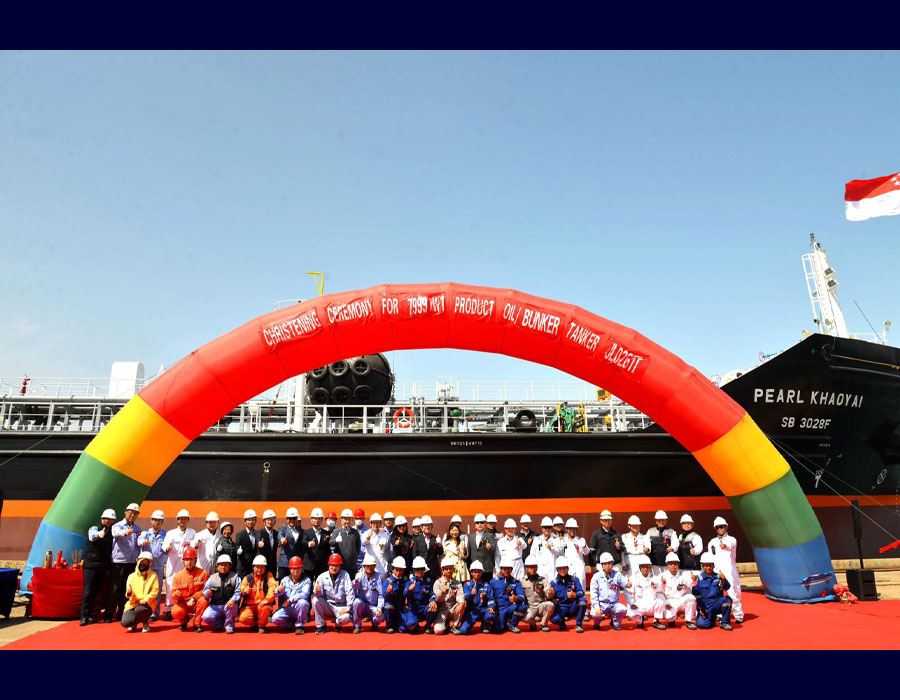
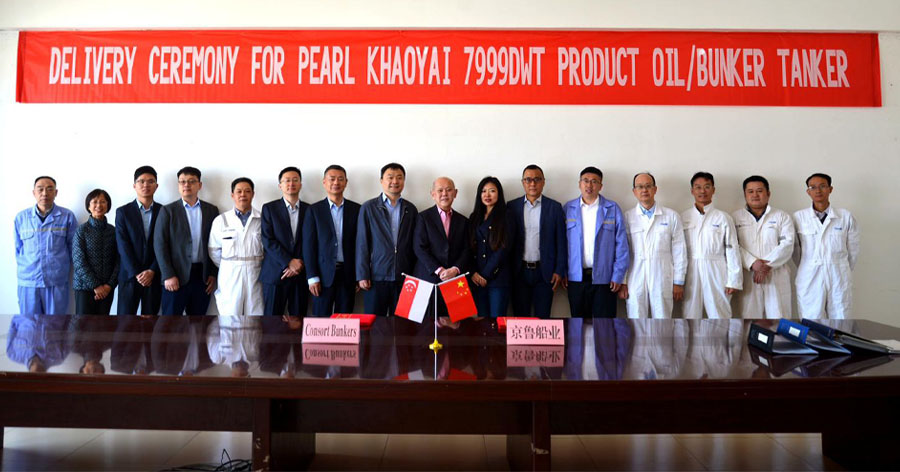
周二(4 月 18 日),新加坡燃油与物流服务提供商Consort Bunkers Pte Ltd从中国山东省的京鲁船业(蓬莱中柏京鲁船业有限公司)接收了“Pearl Khaoyai”轮。

Consort Bunkers创始人杨肃敬(SK Yeo)先生告诉《满航时报》,这艘悬挂新加坡国旗的7,999 载重吨加油船是2020年该公司订购的七艘“K”系列加油船中的第三艘,将被部署于Maersk Oil Trading的海上加油业务。

“我们‘K’系列加油船的最后一艘将升级IMO 2型化学品油轮,以部署在面向未来的加油业务,并涵盖传统船燃类以及绿色替代船燃,如生物燃料和甲醇。”杨先生分享道。

“预计,这艘船将在2024 年第一季度交付;其中,Consort Bunkers 将成为先行运营此新建IMO 2 型油轮的新加坡燃料供应商之一,并于当地提供服务。”
Pearl Khaoyai 2

借此机会,杨先生表示,作为Consort Bunkers 船队更迭计划的一部分,Consort Bunkers 也在4月初向招商局金陵船舶(南京)有限公司订购了6艘6,500载重吨的IMO 2型油轮。

这一批6,500 载重吨的新船除了能够提供各种常规船用燃料,也可以提供包含生物燃料和甲醇在内的可持续绿色燃料。

“这六艘船都属于我们的‘L’系列油轮,将于2024年至2025年之间陆续交付。”他指出,并解释,这些最新订购的升级版IMO 2型油轮将能够在即将来临的IMO 2030目标框架下提供加注服务。

“生物燃料和甲醇是当今被预测可能帮助航运业向IMO 2030/2050脱碳目标推进的替代燃料之一,同时,也都属于化学品类,其运输必须依靠配备不锈钢或涂层管道、涂层罐等其他特性的化学品油轮,以确保能够符合相关的安全规定。

“因此,我们推进航运脱碳的理念,也促成了我们决定委托金陵船厂建造新型的加油船;而这也与MPA(新加坡海事及港务管理局)去年发布的《新加坡海事脱碳蓝图》步伐一致。

“另外,我们也注意到,MPA已引入一项有关生物船燃规格的临时国家标准 (WA 2:2022),因此,我们在致力于推出新的IMO 2 型油轮时也考量了这一因素。”

展望未来,杨先生分享道,Consort Bunkers 将把2018 年建竣的“Pearl Mercury ”轮和2019年建竣的“Pearl Majestic”轮分别出售给欧洲和中东买家;这两艘8,000 载重吨的船舶是该公司2016 年向一家中国造船厂订购的七艘“M”系列船的其中姊妹船。

“从 2016 年至今 [2023 年],能够运载常规船燃的新建加油船成本已经上涨了30-40%。”杨先生发表其个人洞见。

“根据我们最新的[‘L’ 系列新造船订单] 信息,与当前的新造传统油轮价格相比,新型IMO 2型油船还得面对额外15-20% 的建造成本溢价。”

2022 年,在MPA的年度船用燃油供应商排行榜上,Consort Bunkers排名第18 位(2021 年的排名为第20 位)。

相关文章Singapore: Consort Bunkers welcomes first of seven 7,999 dwt ‘K’ series newbuild bunker tankers to bunkering fleet
相关文章Consort Bunkers acquires five bunker tankers in Q4; orders up to seven more newbuilds from China
相关文章Consort Bunkers takes productivity to new levels with latest fleet expansion
相关文章MPA blueprint prepares marine fuels sector for multi-fuel bunkering transition
相关文章Singapore: MPA maritime decarbonisation blueprint sets target for bunkering sector
相关文章MPA: Singapore bunker tanker fleet expected to run on net zero fuels by 2050
相关文章Singapore: MPA develops framework to support biofuel bunker fuel deliveries
相关文章Exclusive: Estimated marine fuel sales figures of Singapore top 10 bunker suppliers by volume in 2022

照片来源:Consort Bunkers
发布日期:2023 年 4 月 20 日
Continue Reading

Alternative Fuels

MPA and MSC ink MoU to support adoption of alternative bunker fuels

MPA and MSC will explore new routes and services to strengthen connectivity, support the adoption of alternative marine fuels such as bio-LNG, and advance technologies to improve vessel energy efficiency.

Admin

Published

on

By

MPA and MSC ink MoU to support adoption of alternative bunker fuels

The Maritime and Port Authority of Singapore (MPA) on Wednesday (3 June) said it signed a Memorandum of Understanding (MoU) with MSC Mediterranean Shipping Company to strengthen collaboration in maritime decarbonisation, digitalisation, innovation, and manpower development. 

The MoU was signed on 25 May 2026 by Mr Ang Wee Keong, Chief Executive of MPA, and Mr Soren Toft, Chief Executive Officer of MSC.

The MoU underscores the shared commitment of MPA and MSC to foster a sustainable, digital, and future-ready maritime sector, while enhancing MSC’s operational and business activities in Singapore. This year also marks the 30th anniversary of MSC establishing its Asia Regional Office and local office in Singapore.

Under the MoU, MPA and MSC will explore new routes and services to strengthen connectivity, support the adoption of alternative marine fuels such as bio-LNG, and advance technologies to improve vessel energy efficiency and operational performance.

MPA and MSC will also collaborate on maritime digitalisation initiatives to improve operational efficiency, including streamlining vessel arrivals and port operations. 

On manpower development, MSC will support internship and scholarship opportunities through Singapore Maritime Foundation’s Maritime Outreach Network (MaritimeONE) platform, an industry-led tripartite partnership comprising industry, government and institutes of higher learning that aims to raise awareness of the maritime industry and attract quality talent into the maritime sector.

Mr Ang Wee Keong, Chief Executive of MPA, said: “This partnership reflects the strong collaboration between MPA and MSC in driving sustainability and digitalisation in the maritime sector. By working together on decarbonisation, operational efficiency and talent development, we aim to strengthen Maritime Singapore’s position as a trusted and future-ready global maritime hub.”

Mr Soren Toft, Chief Executive Officer of MSC, said: “Singapore is a strategically important hub for MSC and a key gateway to the broader Asia region. As we mark 30 years in Singapore, this MOU reinforces our long-term commitment to strengthening our presence here. MSC and Singapore are closely aligned on the priorities shaping the future of global shipping, and we look forward to deepening this partnership to drive the continued growth and resilience of the maritime industry.”


Photo credit: Maritime and Port Authority of Singapore
Published: 4 June, 2026

Continue Reading

Methanol

Seaspan and Hapag-Lloyd complete first of five methanol vessel retrofit

Following “Seaspan Yangtze”, the remaining vessels planned for retrofit under the methanol retrofit programme are “Seaspan Amazon”, “Seaspan Ganges”, “Seaspan Thames”, and “Seaspan Zambezi”.

Admin

Published

on

By

Seaspan and Hapag-Lloyd complete first of five methanol vessel retrofit

Seaspan Corporation (Seaspan) and Hapag-Lloyd on Wednesday (3 June) announced the successful completion of the first of the five vessel conversions under their methanol retrofit programme with the delivery of Seaspan Yangtze.

From the early SAVER (Seaspan Action for Vessel Energy Reduction) programme to today’s CleanBlue initiative, Seaspan has committed over USD 230 USD million across 86 vessels, executing more than 550 efficiency and retrofit projects.

Following Seaspan Yangtze, the remaining vessels planned for retrofit under the programme are Seaspan Amazon, Seaspan Ganges, Seaspan Thames, and Seaspan Zambezi. Each retrofit is expected to reduce well-to-wake CO₂e emissions by approximately 30,000 to 50,000 metric tonnes per vessel annually when operating on low-carbon methanol, while also extending vessel lifespan and enhancing fuel flexibility.

“Decarbonisation is not just about building the fleet of tomorrow, it is also about unlocking the full potential of the fleet we have today. Retrofitting and upgrades on existing fleets play a practical, immediate, and economical role in accelerating shipping’s decarbonization journey,” said Bing Chen, Chairman, President and CEO of Seaspan. 

“Project SAVER CleanBlue highlights Seaspan’s strong customer partnerships, deep technical expertise, and unique platform integrated with JV partners, such as WattSpan Maritime Technology, in executing complex and large-scale retrofit projects.”

“The successful conversion of the Seaspan Yangtze together with the planned retrofit of its four sister vessels is another important step on our ambitious path towards net-zero fleet operations by 2045,” said Silke Lehmköster, Managing Director, Fleet, Hapag-Lloyd. 

“Together with Seaspan, we are demonstrating that retrofitting existing vessels for low-carbon methanol can be a practical way to reduce emissions in shipping.”


Photo credit: Seaspan
Published: 4 June, 2026

Continue Reading

Nuclear

South Korean-led nuclear car carrier design secures LR backing

LR is working with HHI, KSOE, Hyundai Glovis, G- Marine Service and KAERI on a joint development project exploring an advanced small modular reactor (SMR) installation on a PCTC.

Admin

Published

on

By

South Korean-led nuclear car carrier design secures LR backing

Classification society Lloyd’s Register (LR) on Tuesday (2 June) said it has teamed up with South Korean shipbuilding, marine services and nuclear research organisations to advance the development of a nuclear‑assisted car carrier concept. 

LR is working with Hyundai Heavy Industries, Korea Shipbuilding & Offshore Engineering (KSOE), Hyundai Glovis, G- Marine Service and the Korea Atomic Energy Research Institute (KAERI) on a joint development project (JDP) exploring an advanced small modular reactor (SMR) installation on a pure car and truck carrier (PCTC). 

The study focused on how a Molten Salt Reactor (MSR) could be physically and operationally integrated into a large vehicle carrier. Work examined the internal arrangement and segregation of the reactor system, shielding requirements, and the impact on cargo deck layout and vehicle capacity, alongside stability and trim implications linked to the reactor’s weight and positioning. 

The partners also assessed propulsion system configuration and power delivery, as well as operational flexibility compared with conventionally fuelled PCTCs, where trade routes and port calls can be tightly constrained. 

A key focus of the project has been safety. LR led hazard identification (HAZID) and preliminary risk assessment work, focusing on containment, onboard safety systems and potential operability constraints tied to nuclear technology at sea. 

The partners will mark the project milestone with an Approval in Principle (AiP) granting ceremony on 2 June at the LR stand during Posidonia 2026. 

Sung-Gu Park, President – North East Asia, Lloyd’s Register, said: “While nuclear propulsion is still at an early stage of development, this project shows the importance of building technical understanding now to support future progress. 

“Establishing feasibility at concept stage is a valuable step forward, particularly in areas such as cargo optimisation, vessel stability and integrated safety design.” 

Hong-Ryeul Ryu, CTO and Senior Executive Vice President at HD HHI, said: “With global environmental regulations becoming increasingly stringent and no definitive net-zero fuel yet available, SMR-powered ships can serve as a highly effective alternative, representing a pioneering next-generation maritime technology capable of complying with GHG emission regulations while allowing lifetime operation without refuelling, and HD HHI will remain at the forefront of sustainable maritime technology development.”


Photo credit: Lloyd’s Register
Published: 4 June, 2026

Continue Reading

Trending