
Alternative Fuels
An interview with Knut Ørbeck-Nilssen, CEO Maritime, DNV
A third of vessels on orderbooks, by gross tonnage, are being built to operate on alternative bunker fuels with LPG and the first hydrogen-fuelled designs also generating interest, says Ørbeck-Nilssen.

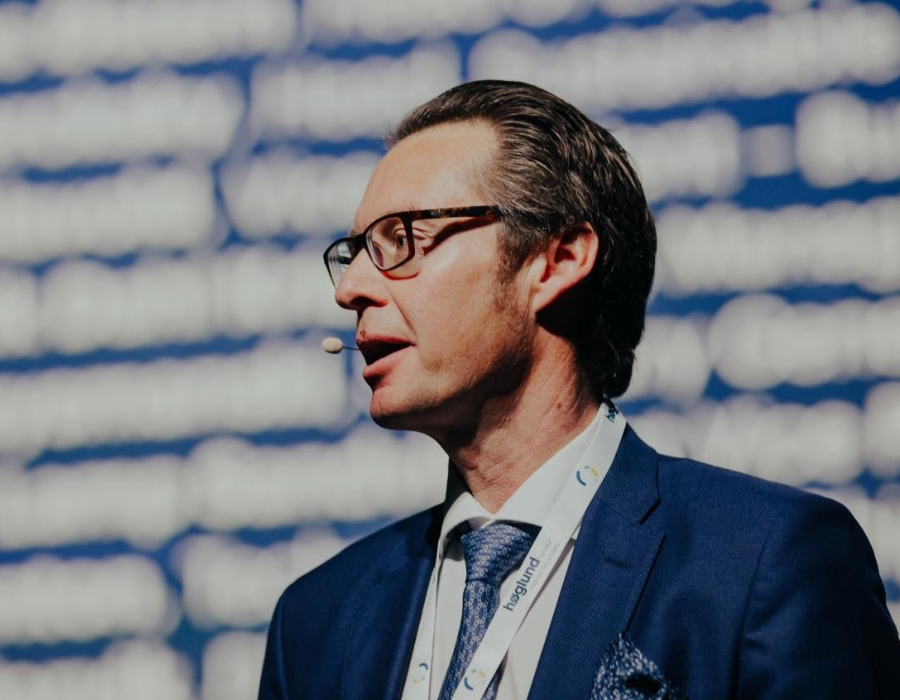
Knut Ørbeck-Nilssen, CEO Maritime, DNV, says that while progress towards industry decarbonisation should be applauded, it must be accelerated. Shipping needs to work together, in tandem with other sectors and stakeholders, if we’re to stand a hope of reaching our most ambitious, and necessary, goals. Nor-Shipping, he believes, with its 2023 theme of #PartnerShip, is an ideal platform for progress.
It’s difficult to know what’s going to happen in the next ten days, let alone the next ten years.
So, how are shipowners and operators, eyeing investments with timescales of 25 to 30 years, expected to make optimal long-term decisions, especially regarding fuels?
And how can an organisation like DNV, the world’s leading Class society, make the right decisions to advise them? Surely it’s impossible to navigate a landscape that’s yet to take shape? Isn’t it?
Knut Ørbeck-Nilssen, CEO of the Maritime division at DNV, smiles.
He is a man who, as befits his position, exudes a steady calm and confidence… Even though he’s just ran from another meeting and has yet to eat his lunch, which he pushes aside to deliver his answer.
“That’s why big decisions can’t be taken alone,” he replies. “Everybody needs partners; no one can prosper, or change, in isolation, and that’s especially true when we consider an energy and technology transition of the scale facing shipping.
“We need one another to navigate the future, now more than ever.”
Alternative options
Ørbeck-Nilssen isn’t just being nice here. This isn’t a platitude; it’s a cornerstone of his, and DNV’s, vision.
He’s been quoted over the past year or two as noting that “collaboration is the true fuel of the future” and 2022, with its unpredictable geopolitical, economic and environmental challenges, seems only to have deepened that conviction.
He talks of “significant barriers” that have to be overcome together, but before addressing the future wants to dwell on the present – recognising achievements so far.
“It’s encouraging to see that some of the key issues highlighted in past editions of our Maritime Forecasts and Reports have been picked up by the industry,” he comments, referring back to previous statements identifying LNG as arguably shipping’s “most feasible transitional fuel”.
“If we look at newbuild ordering there’s now an established trend for alternative dual-fuel propulsion, with LNG as the dominant fuel, especially amongst the larger, deep-sea segments. A third of the vessels on the orderbooks, by gross tonnage, are being built to operate on alternative fuels, with LPG and the first hydrogen-fuelled designs also generating interest.
“So, we can see concrete proof that the transition is gathering pace, with regulatory pressure, access to investment and capital, and cargo owner and consumer demands as the key drivers. But is it moving fast enough?
“Well, that’s another question.”
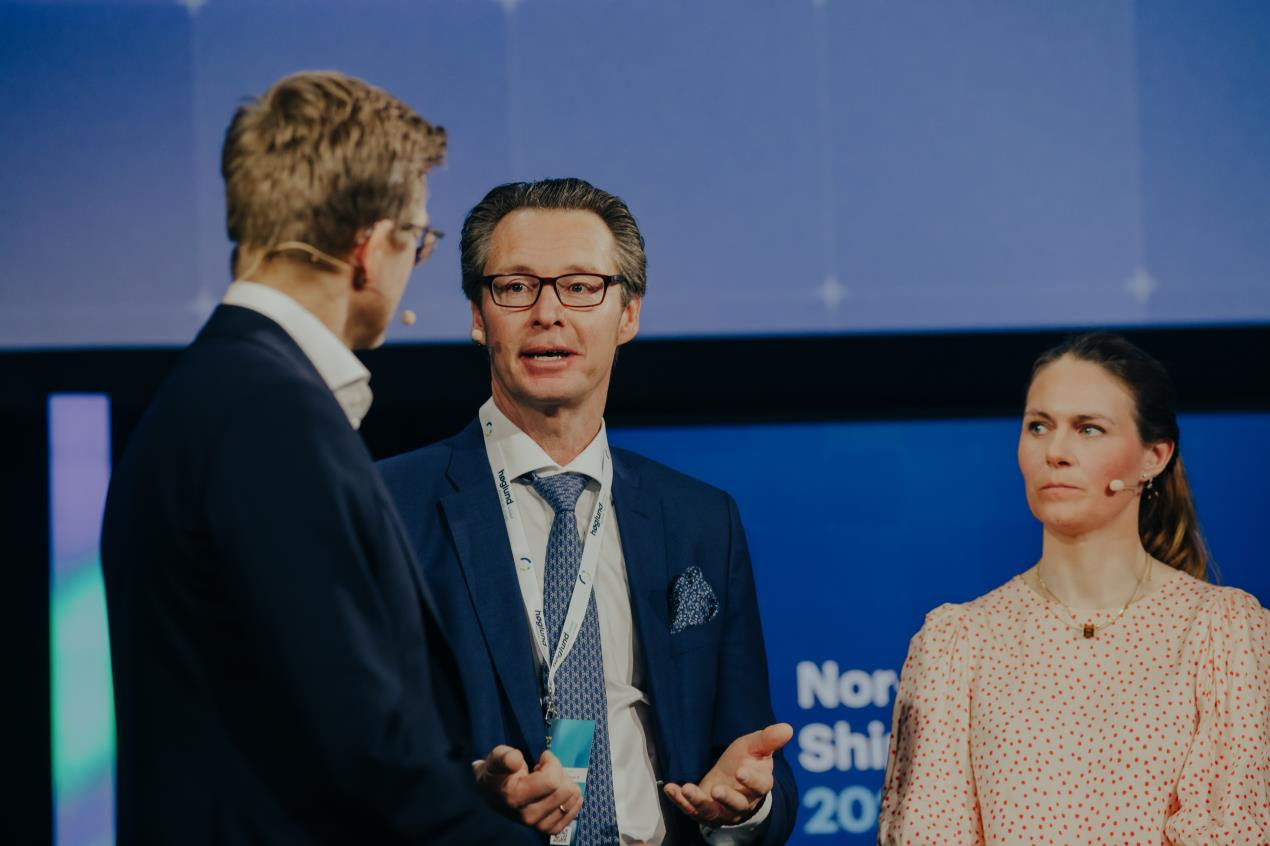
Clearing the hurdles
And the answer, he implies, is ‘no’.
Ørbeck-Nilssen says that “substantial investment” is needed – “and quickly” – in terms of researching safe and economically feasible carbon neutral fuels, as well as developing the optimal technologies to utilise them.
However, that will be in vain, he stresses, if the main hurdle to progress can’t be overcome, namely, fuel availability:
“According to our recent Maritime Forecast to 2050 report, we need to produce 5% of shipping’s total energy consumption from carbon-neutral fuels by 2030. That requires huge investment… and it’s just the start.
“And if the IMO strategy is revised in 2023, pushing for full decarbonization by 2050, then we require the means and infrastructure to deliver around 270 million tonnes of alternative fuels, according to our research. That is a massive challenge, and it requires action, now.”
He continues: “It goes without saying, this is an issue that shipping cannot resolve alone. We need to see collaboration in the industry, for sure, but beyond that we have to work in unison with energy producers, infrastructure developers, ports, and, not least, national and international authorities and organisations to enable such fundamental change.
“This goes beyond working within our ‘tribes’ – it’s a global issue of critical importance.”
But, of course, it’s difficult to know where to place bets when it comes to that fuel.
Should a shipowner today invest in assets running on natural gas for tomorrow, or will it pay to be an early mover on hydrogen, ammonia or any other emerging alternative?
This, Ørbeck-Nilssen retorts, is where DNVs ‘pathways’ come in.
Solving the puzzle
Arguably, DNVs core strengths lie in its neutrality and acknowledged expertise and networks in a broad range of industries and disciplines. It has teams spanning maritime, oil & gas, carbon capture and storage, renewables, technology, and more, in addition to strong links with academia, authorities and other key societal stakeholders. As such it can understand the “big picture” and see how pieces of the transitional puzzle might fit together, helping mitigate risk, enhance safety and facilitate development.
It’s pathways – again, featured in the latest Maritime Forecast to 2050 – detail likely scenarios on the journey towards decarbonisation, considering factors such as fuel availability, costs and the apparent lack of one “silver bullet” solution.
“There’s so much uncertainty,” Ørbeck-Nilssen stresses. “The only things that are certain are that we need to change, and that the future fuel mix, at least in the near-term, is going to get more complex, with a wide variety of energy choices emerging. That creates obvious challenges for the industry.
“The pathways address that, helping plot potential routes to decarbonisation.”
As an example, he picks an owner opting for LNG today.
“Now, they know this isn’t a perfect fuel,” he explains, “but it enables substantial gains over conventional heavy fuel, utilising proven technology. So, on the ‘gas pathway’ they use LNG as the first step, before switching to bio-gas and then later transitioning to synthetic gas. That’s an over-simplified example, but it shows how you create clarity as you move ahead with business strategy and investments.”
This “clarity from confusion” wouldn’t be possible, Ørbeck-Nilssen notes, without an understanding drawn from close relationships throughout the industry and beyond.
“It all comes back to partnership.”
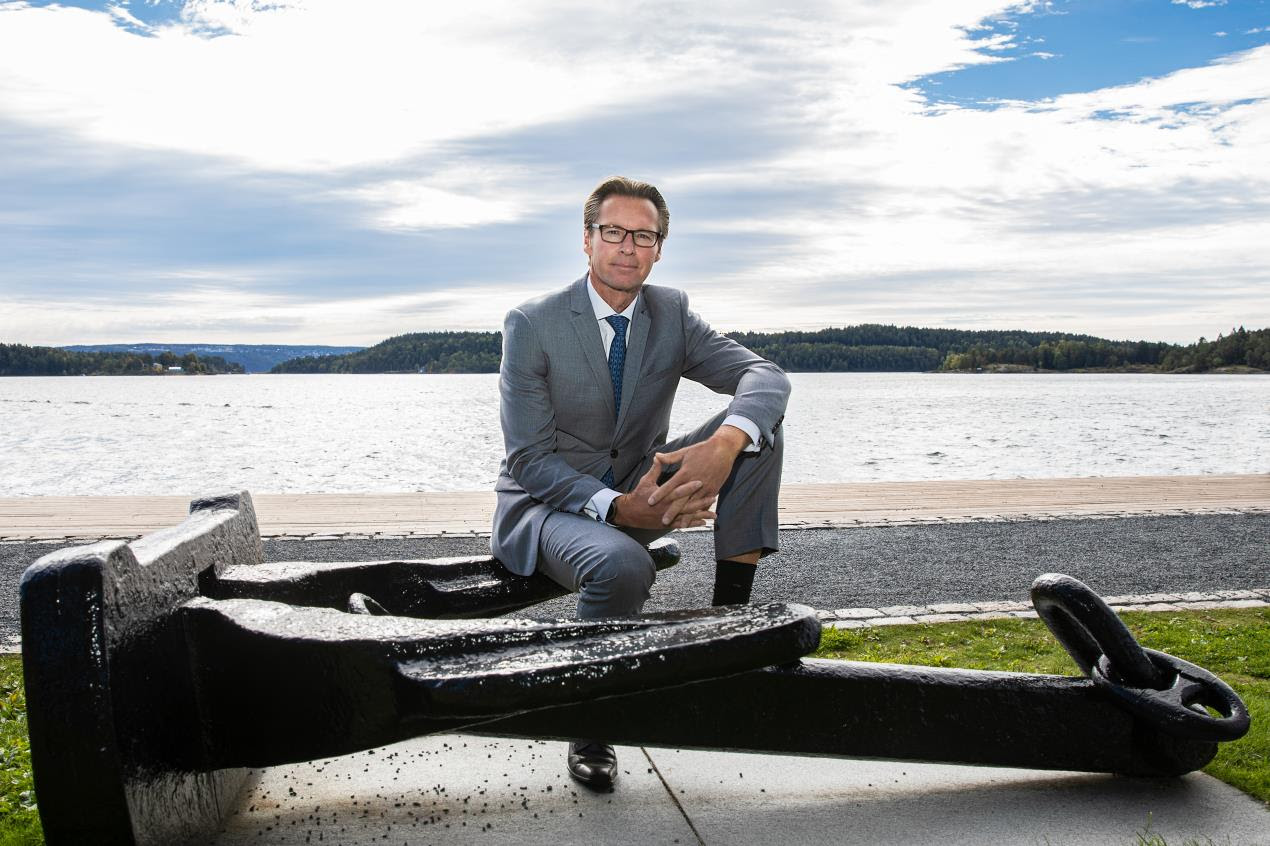
Collective ambition
A further example of that, and of DNV’s role as a key enabler for an industry in transition, is the recently unveiled Nordic Roadmap initiative.
This follows on the back of the Clydebank Declaration at COP26, where shipping “green corridors” were identified as a key tool for accelerating change. In a bid to position the region at the vanguard of developments, the Nordic Council of Ministers, with support from all the Nordic nations, set up the project as a “cooperation platform” creating unity of purpose. The result is a joint public and private initiative aiming to bring together diverse stakeholders to enable green corridor infrastructure, start pilots, share knowledge, build alternative fuel experience and, Ørbeck-Nilssen says, “set an example for other regions to follow.”
DNV has been brought in as project manager, recently hosting the first meeting at the company’s Høvik HQ in Oslo.
“When you look at the industry in its entirety, the scale and complexity of change needed can seem overwhelming,” he notes. “But if you take separate regions, and look at establishing individual green corridors, it makes the challenge more manageable. Then, when you bring together diverse partners, it’s suddenly possible to work towards concrete, achievable goals – goals that can form a blueprint for the industry in general.
“It’s a really exciting example of partnership in action.”
The Nor-Shipping connection
The repetition of the ‘p-word’ brings us on to Nor-Shipping.
The 2023 event, taking place in Oslo and Lillestrøm, 6-9 June, has chosen #PartnerShip as its main theme.
Needless to say, Ørbeck-Nilssen approves, confirming that DNV has once again secured the position of Main Partner.
“Nor-Shipping is a fantastic meeting place for the global industry,” he comments, “bringing people from right across the ocean value chain together in one place. As such, it provides a physical platform for partnership, and progress, helping build relationships, share knowledge and highlight the latest developments.
“We need this kind of face-to-face interaction,” he continues. “And, on a personal level, it’s always so rewarding meeting people, discussing issues and gaining new insights. It’s a constant source of learning.
And, not least, it’s fun!”
Here he mentions the traditional Nor-Shipping BBQ at DNV’s fjord-side facilities, which, he adds with a broad smile, is back.
“I’m really looking forward to the chance to host a few thousand guests again,” Ørbeck-Nilssen concludes. “It’s great to see the industry coming together here and, of course, it’s helpful Nor-Shipping is back in the summertime. It’s always a bit more pleasant to have a chat, drink and something to eat when the sun’s shining!”
And with the talk of food, he takes the chance to politely, finally excuse himself.
Lunch, and the next meeting with industry partners, beckons.
Note: For more information on the event, please visit www.nor-shipping.com
Photo credit: Nor-Shipping
Published: 11 January, 2023
Alternative Fuels
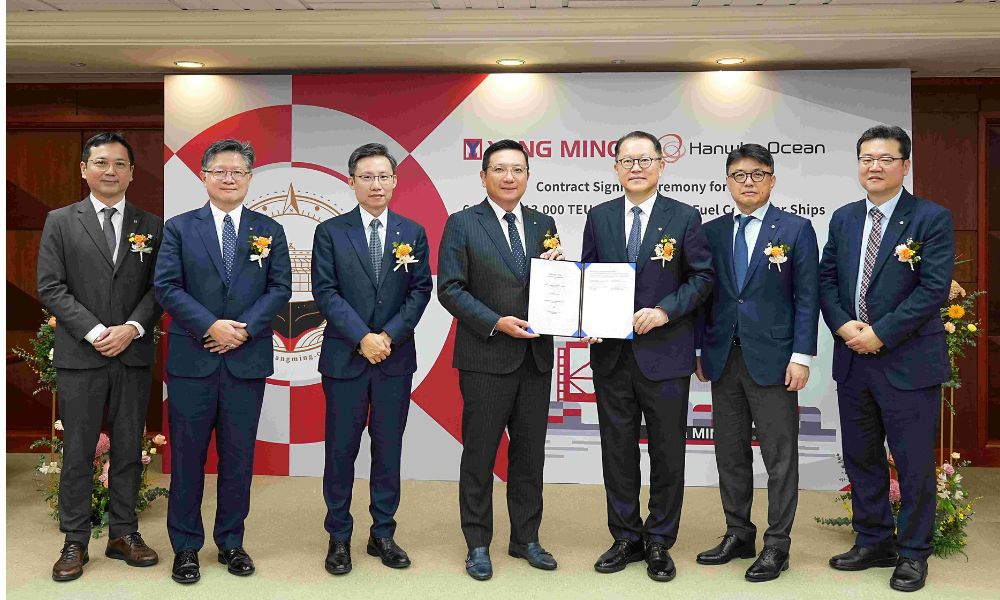
Yang Ming orders six LNG dual-fuel, ammonia-ready containerships from Hanwha Ocean
Each of the six new vessels will have a capacity of up to 13,650 TEU and feature LNG dual-fuel propulsion and Ammonia Fuel Ready specifications.
Alternative Fuels
LR, China’s MARIC unveil tanker concept ready for three future bunker fuels
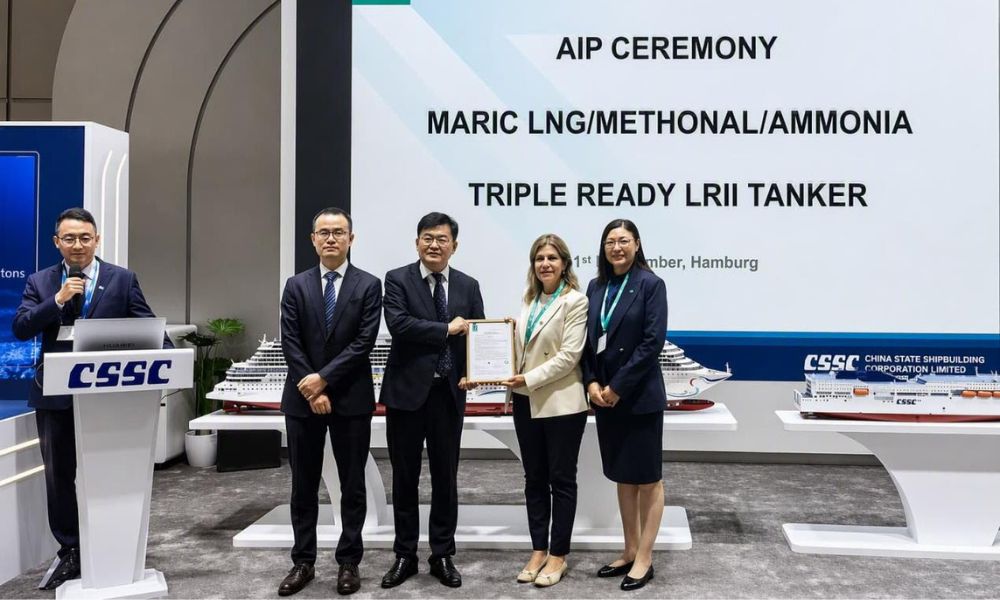
Both secured AiP for a new 114,000 DWT product and crude oil tanker designed to accommodate future conversion to LNG, methanol or ammonia.
Alternative Fuels
DNV: Alternative-fuelled vessel orders hit highest monthly level since October 2024
LNG-fuelled vessels accounted for the vast majority of August activity while the strong summer performance marked a significant acceleration in ordering activity after a relatively slow start to the year.
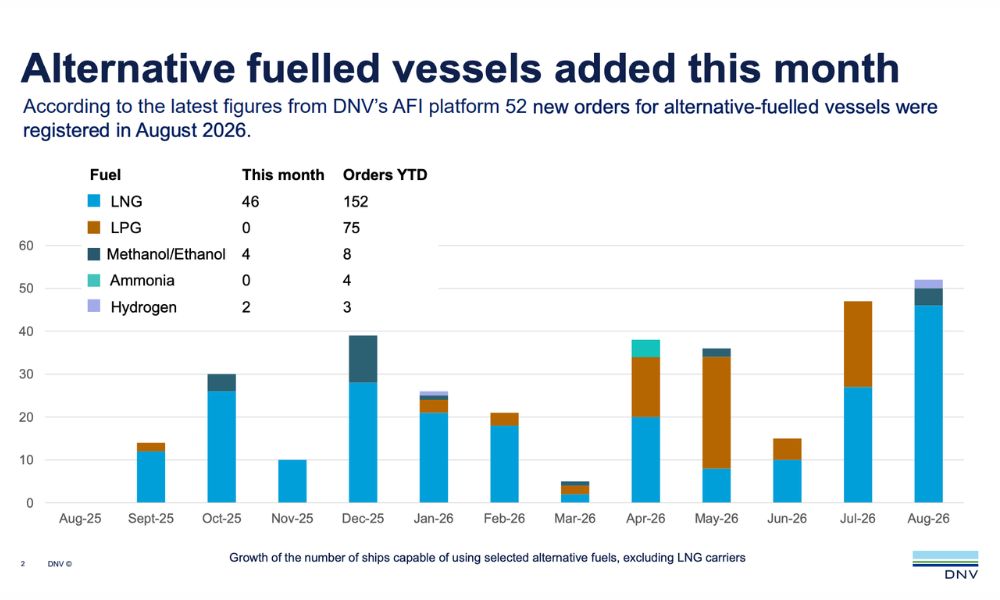
Latest data from classification society DNV’s Alternative Fuels Insight (AFI) platform alternative-fuelled vessel ordering was strong in August, with 52 new vessels added to the platform.
This is the highest monthly total since October 2024 and follows another active month in July, when 47 vessels were added to the database.
LNG-fuelled vessels accounted for the vast majority of August activity, with 46 orders recorded. The container segment led the way with 30 orders, while the car carrier segment contributed a further 12 LNG-fuelled vessels. In addition, four ethanol-fuelled bulk carriers and two hydrogen-powered bulk carriers were added during the month, as well as one LNG bunker vessel.
The strong summer performance marked a significant acceleration in ordering activity after a relatively slow start to the year. In total, 242 alternative-fuelled vessel orders have been placed in the first eight months of 2026, representing a 27% increase compared with the same period in 2025.
LNG remains the dominant fuel choice, accounting for 63% of all alternative-fuelled vessel orders registered so far this year. Container vessels represent the largest share of these LNG orders (59%), followed by car carriers (30%).
Jason Stefanatos, Global Decarbonization Director at DNV Maritime, said: “The past two months have been particularly strong for alternative-fuelled vessel ordering, with August recording the highest monthly total we’ve seen since October 2024. This has helped lift year-to-date orders to a level well above the same period last year.
“LNG remains the leading fuel choice, driven largely by activity in the container and car carrier segments. These sectors have been among the earliest adopters of alternative fuels, supported by predictable liner operations and increasing demand from cargo owners to reduce emissions across supply chains.
“For many owners, LNG offers a combination of emissions reductions, fuel availability and future flexibility while the longer-term fuel landscape continues to evolve.
“At the same time, the latest figures include orders for ethanol- and hydrogen-fuelled vessels, highlighting that owners continue to explore a range of decarbonization pathways. Different segments are making different fuel choices, but the overall level of activity demonstrates continued investment in lower-emission shipping.”
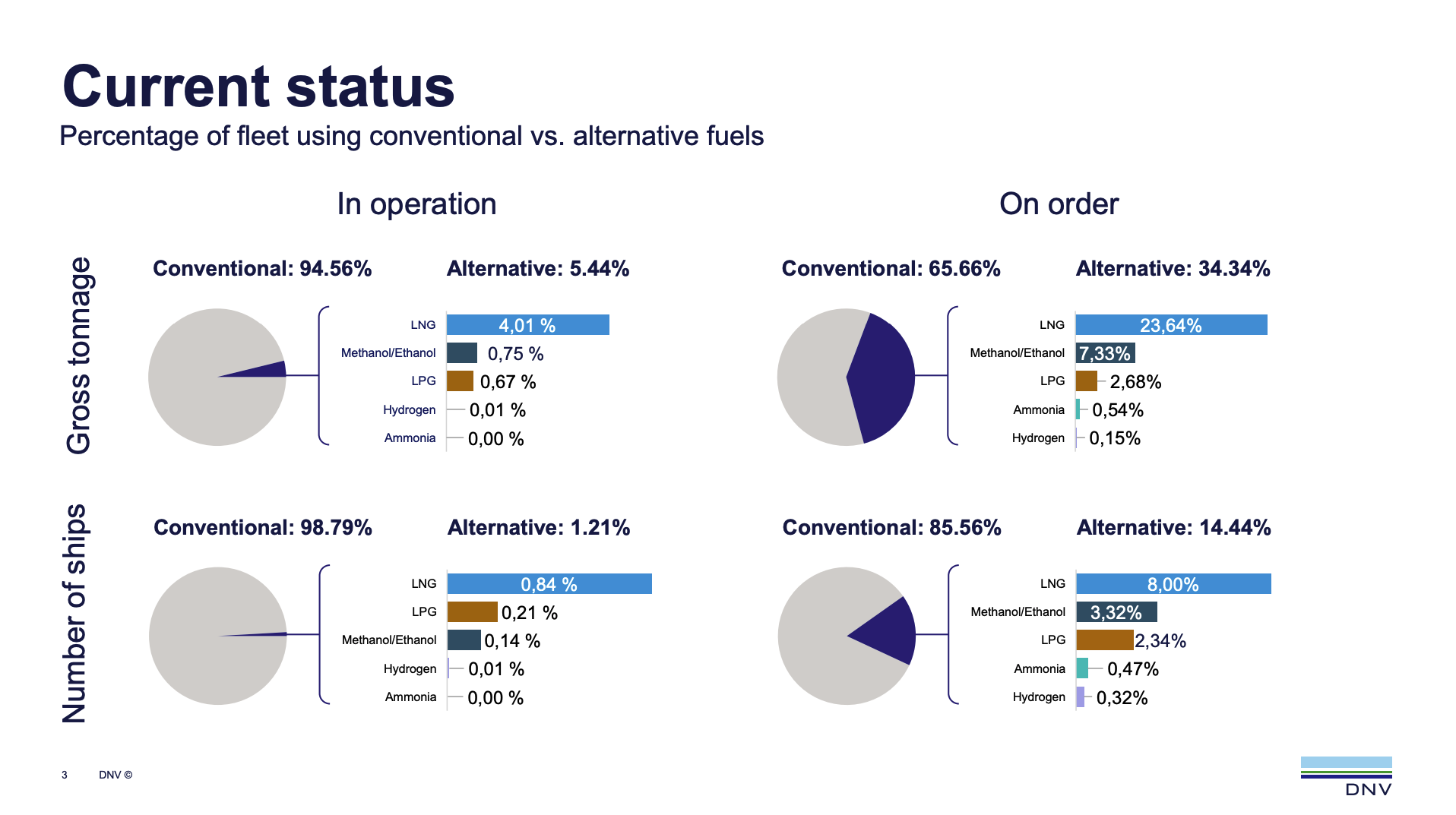
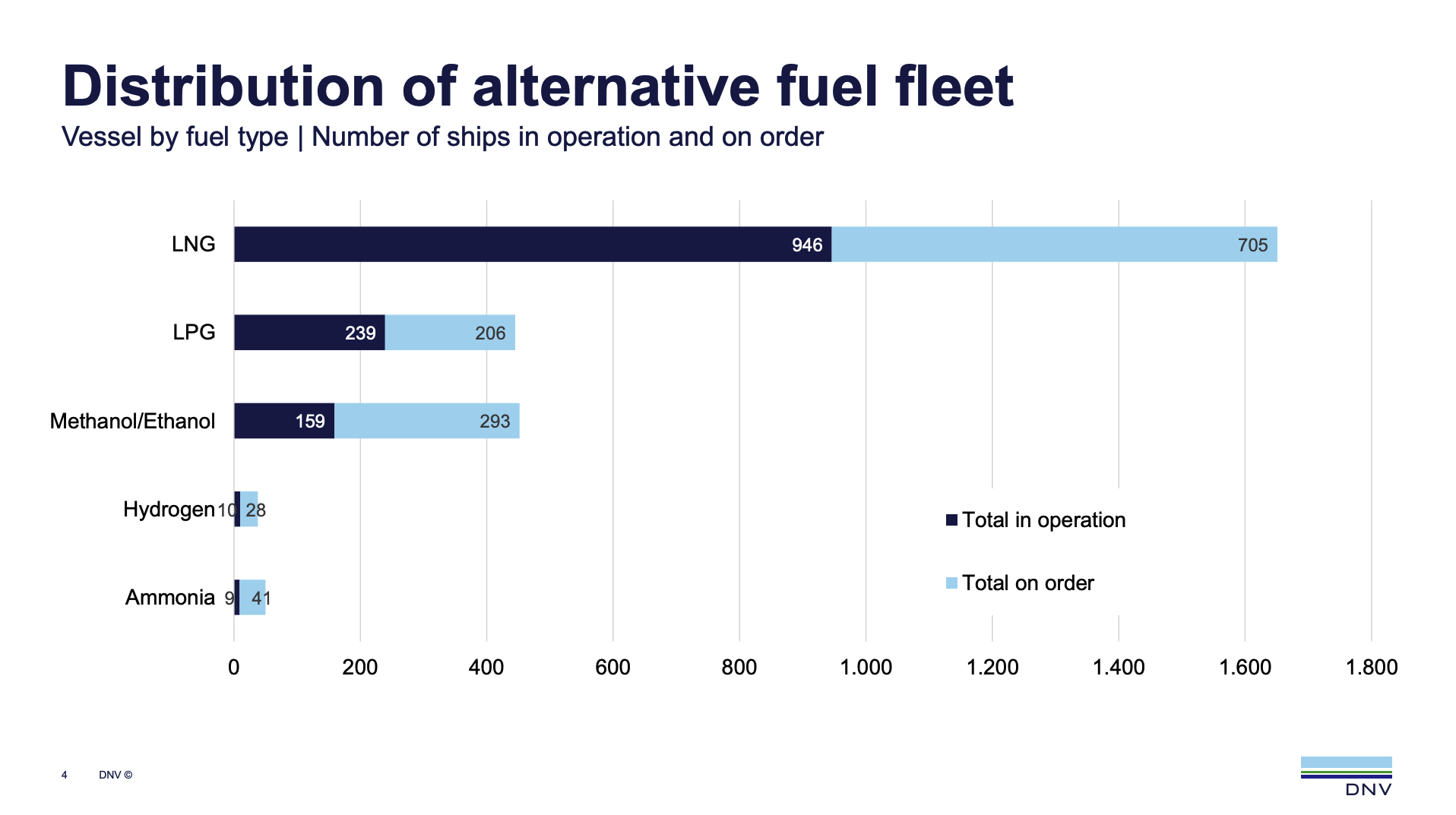
Photo credit: DNV
Published: 4 September, 2026

OUR INDUSTRY PARTNERS

Yang Ming orders six LNG dual-fuel, ammonia-ready containerships from Hanwha Ocean

LR, China’s MARIC unveil tanker concept ready for three future bunker fuels

DNV: Alternative-fuelled vessel orders hit highest monthly level since October 2024

TFG Marine advances global MFM rollout with two US Gulf bunker barges

GENA Solutions: Total renewable and low-carbon methanol project pipeline increases from 61.8 to 62.2 Mt by 2032

Baltic Exchange: Bunker Report (3 September 2026)

ENGINE: Americas Fuel Availability Outlook (3 September 2026)

Singapore-flagged tugboat “Kim Heng 3203” placed under Sheriff’s arrest

US targets five bunker companies in latest sanctions campaign against Iran

Singapore bunkering community supports Living Hope Evangelism’s 7th anniversary outreach for residents in need

China’s bunker market reshaped by tax rebates, trade flows and refining changes, says economist

Hengli Petrochemical’s ex-Singapore trading arm faces winding up application

Rajah & Tann: Bunker disputes are won in the first 48 hours

Report: GCMD outlines practical approach to quantity assurance in marine biofuel supply chains
-
 Vessel Arrest1 week ago
Singapore-flagged tugboat “Kim Heng 3203” placed under Sheriff’s arrest
-
 Sanctions2 weeks ago
US targets five bunker companies in latest sanctions campaign against Iran
-
 Events2 weeks ago
Singapore bunkering community supports Living Hope Evangelism’s 7th anniversary outreach for residents in need
-
 Interview1 week ago
China’s bunker market reshaped by tax rebates, trade flows and refining changes, says economist
-
 Winding up2 weeks ago
Hengli Petrochemical’s ex-Singapore trading arm faces winding up application
-
 Bunker Claim4 days ago
Rajah & Tann: Bunker disputes are won in the first 48 hours
-
 Biofuel1 week ago
Report: GCMD outlines practical approach to quantity assurance in marine biofuel supply chains
-
 Winding up2 weeks ago
Singapore: Notices of intended dividend issued for Ocean Bunkering Services, Hin Leong Marine