Connect with us

Business

IBIA: Changes afoot

Increased willingness at latest IMO ISWG-GHG sessions to develop fuel lifecycle assessment guidelines that account for well to wake GHG emissions, says IBIA director.

Admin

Published

on

Unni MT

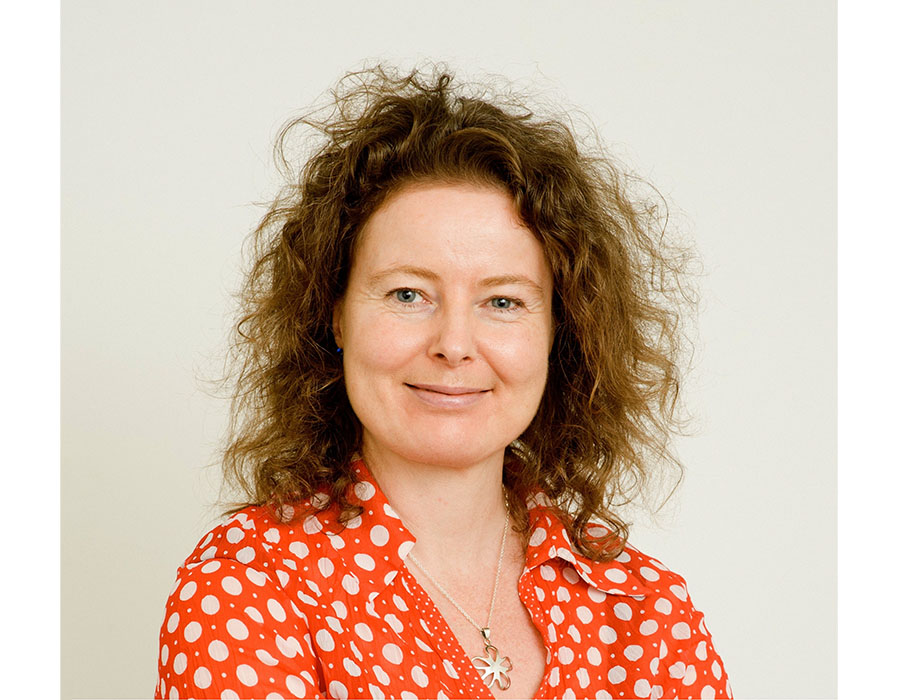
The International Bunker Industry Association (IBIA) on Friday (10 June) published an article by IBIA director, Unni Einemo, who writes about the growing appetite towards maritime decarbonisation and the introduction of a GHG fuel standard, amongst others:

Is there appetite for change in the marine fuels and shipping industry? There are signs that there is.

The IBIA Board of Directors and Secretariat has seen a number of changes recently. Since the last issue of World Bunkering, Henrik Zederkof’s allotted time as our Chair has come to an end. He showed exceptional drive and commitment to the focus areas he outlined for IBIA in 2020. We are lucky to have another driven individual step into the role; Timothy Cosulich, who became the Chair on 1 April this year. In his first Chair’s Letter for World Bunkering, he sets out the Association’s goals for the year ahead.

Work set in motion two years ago continues. We have set up two out of five planned Regional Boards, one for Asia and one for Africa. This allow issues specific to each region to be more thoroughly examined. Also continuing is a focus on decarbonisation, to ensure our industry understands what’s coming and plays a part in necessary changes. Our work on bunker licensing and Mass Flow Meters also continues. A new area of focus outlined by Timothy is integrity, with an initial task to update and strengthen the IBIA Code of Ethics.

Some of these areas are underpinned by the desire for improving transparency in our sector. But what exactly does ‘transparency’ mean? I think it is about building an environment where stakeholders feel comfortable and confident in their dealings with each other. Confidence that they are treated fairly. It means putting in place mechanisms that help build trust, where good practices are rewarded and bad practices are penalised.

Our Licensing and MFM Working Group have just completed analysis of a joint IBIA and BIMCO survey into industry experiences and attitudes. You can read about the key findings in this issue. Two things stand out to me: The percentage of deliveries associated with disputes about quantity (1.61%) and quality (0.98%) was relatively low, yet a clear majority of respondents were in favour of bunker licensing programmes and MFMs as tools to improve transparency and trust in the bunker supply industry. Respondents included a large share of traders and suppliers, over half of the total, so it isn’t just bunker buyers that want this.

When it comes to decarbonisation, I am also witnessing growing appetite for taking steps to get this major transition underway, both in the industry and among Member States at the IMO. The latest IMO intersessional working groups on greenhouse gases (ISWG-GHG) have signalled increasing willingness to develop fuel lifecycle assessment (LCA) guidelines that will take well to wake GHG emissions into account as a basis for new regulatory moves to cut shipping’s GHG emissions. At the moment, regulations account only for tank to wake emissions. I am also seeing agreement emerging that the IMO must put a price on CO2 or CO2 equivalents, though exactly how this will be done still needs to be worked out. And there is growing support for introducing a GHG fuel standard to gradually increase the share of low carbon or renewable fuels used by shipping; which I believe is a crucial regulatory signal to ensure that there will be demand for such fuels even if the price is high.

There is even willingness among shipping organisations and IMO Member States to push for a net-zero GHG target by 2050, when the IMO revises its GHG strategy in 2023. This is a huge commitment compared to the 50% reduction agreed in the initial strategy in 2018.

We all know that stakeholders need to work together to help us reach GHG reduction goals. To that effect, IBIA has recently signed a Coalition partner contract with the Global Centre for Maritime Decarbonisation (GCMD), and we hope this partnership will be a positive way of ensuring we’re all pulling (or pushing) in the same direction without too much duplication of effort.

I mentioned changes in the IBIA Secretariat. The Regional Manager for IBIA Asia, Alex Tang, left us in April to take up a new position with Intertek Lintec. At the end of April, Noraini Binte Salim left her position as Office Manager for IBIA Asia for family reasons. We are grateful to both for their hard work and dedication to IBIA. As this issue goes to print, we are in the process of recruiting their replacements and look forward to welcoming them to the team.


Photo credit and source: International Bunker Industry Association
Published: 13 June, 2022

Continue Reading

Mass Flowmeter

Hong Kong backs MFM adoption with voluntary scheme to boost bunkering competitiveness

Hong Kong’s Marine Department launched the Quality Bunker Operator Scheme to encourage bunker operators to install and use mass flow meter systems on their bunker vessels.

Admin

Published

on

By

RESIZED EH dual mfm setup

Hong Kong’s Marine Department (MD) on Wednesday (3 June) launched the Quality Bunker Operator Scheme to encourage bunker operators to install and use mass flow meter systems (MFM systems) on their bunker vessels.

MD said the scheme aims to enhance Hong Kong’s bunkering service quality and the competitiveness of Hong Kong ports, thereby further consolidating Hong Kong’s position as an international maritime centre and a major bunkering port.

Under the Scheme, bunker operators of traditional maritime fuel and biodiesel that install and use MFM systems on their bunker vessels, with the MFM systems inspected and certified by an accredited body in accordance with the International Organization for Standardization’s ISO 22192 Standard or equivalent requirements, can apply to the MD for inclusion in the scheme’s “List of Quality Bunker Vessels”, provided they meet the relevant technical and operational requirements. 

Details of the bunker vessels successfully included in the List will be published on a dedicated page on the MD’s website for reference by shipping companies and relevant stakeholders.

Participation in the Scheme is voluntary. In addition to receiving recognition from the MD, participating bunker operators will benefit from enhanced corporate image and competitiveness through the adoption of MFM systems, thereby boosting customers’ confidence and helping to create new business opportunities.

 A spokesman for the MD, said: “As an international maritime centre supported by our country, Hong Kong has a strategic location adjacent to major international fairways. Coupled with years of development in marine fuel bunkering, Hong Kong possesses rich experience and talent in the field. For many years, Hong Kong has consistently ranked as the seventh-largest bunkering port globally, the second-largest in our country, and the largest in the Greater Bay Area, providing reliable and competitive fuel bunkering services to ocean-going vessels from around the world. 

“As the international shipping industry has an increasing demand for accuracy and transparency in bunkering services, service quality and measurement precision in bunkering operations have become important indicators of a bunkering port’s competitiveness. The Scheme will enhance bunkering accuracy and transparency, further enhancing the quality of Hong Kong’s bunkering services.

The spokesman added that comprehensive port services are one of Hong Kong’s key advantages as an international maritime centre.

“We will also mandate the use of MFM systems on all methanol bunker vessels this year to ensure that Hong Kong continues to provide high-quality bunkering services in the era of green maritime fuels.” 

Note: The application form for the Scheme can be found on the MD’s website. Interested bunker operators can download the application form from the website or contact the MD’s Green Maritime Fuel Team via email ([email protected]) for details.


Photo credit: Manifold Times
Published: 4 June, 2026

Continue Reading

Alternative Fuels

MPA and MSC ink MoU to support adoption of alternative bunker fuels

MPA and MSC will explore new routes and services to strengthen connectivity, support the adoption of alternative marine fuels such as bio-LNG, and advance technologies to improve vessel energy efficiency.

Admin

Published

on

By

MPA and MSC ink MoU to support adoption of alternative bunker fuels

The Maritime and Port Authority of Singapore (MPA) on Wednesday (3 June) said it signed a Memorandum of Understanding (MoU) with MSC Mediterranean Shipping Company to strengthen collaboration in maritime decarbonisation, digitalisation, innovation, and manpower development. 

The MoU was signed on 25 May 2026 by Mr Ang Wee Keong, Chief Executive of MPA, and Mr Soren Toft, Chief Executive Officer of MSC.

The MoU underscores the shared commitment of MPA and MSC to foster a sustainable, digital, and future-ready maritime sector, while enhancing MSC’s operational and business activities in Singapore. This year also marks the 30th anniversary of MSC establishing its Asia Regional Office and local office in Singapore.

Under the MoU, MPA and MSC will explore new routes and services to strengthen connectivity, support the adoption of alternative marine fuels such as bio-LNG, and advance technologies to improve vessel energy efficiency and operational performance.

MPA and MSC will also collaborate on maritime digitalisation initiatives to improve operational efficiency, including streamlining vessel arrivals and port operations. 

On manpower development, MSC will support internship and scholarship opportunities through Singapore Maritime Foundation’s Maritime Outreach Network (MaritimeONE) platform, an industry-led tripartite partnership comprising industry, government and institutes of higher learning that aims to raise awareness of the maritime industry and attract quality talent into the maritime sector.

Mr Ang Wee Keong, Chief Executive of MPA, said: “This partnership reflects the strong collaboration between MPA and MSC in driving sustainability and digitalisation in the maritime sector. By working together on decarbonisation, operational efficiency and talent development, we aim to strengthen Maritime Singapore’s position as a trusted and future-ready global maritime hub.”

Mr Soren Toft, Chief Executive Officer of MSC, said: “Singapore is a strategically important hub for MSC and a key gateway to the broader Asia region. As we mark 30 years in Singapore, this MOU reinforces our long-term commitment to strengthening our presence here. MSC and Singapore are closely aligned on the priorities shaping the future of global shipping, and we look forward to deepening this partnership to drive the continued growth and resilience of the maritime industry.”


Photo credit: Maritime and Port Authority of Singapore
Published: 4 June, 2026

Continue Reading

Emissions reporting

StormGeo and OceanScore link emissions data, compliance workflows

Cooperation combines StormGeo’s expertise in operational vessel and emissions data with OceanScore’s expertise in emissions compliance workflows across EU ETS, FuelEU Maritime and UK ETS requirements.

Admin

Published

on

By

StormGeo and OceanScore link emissions data, compliance workflows

Weather intelligence and decision support solutions provider StormGeo and Hamburg-based technology platform OceanScore on Wednesday (3 June) said they have deepened their ongoing cooperation through the signing of a collaboration agreement during Posidonia 2026 in Athens on 2 June.

The cooperation combines StormGeo’s expertise in operational vessel and emissions data with OceanScore’s expertise in emissions compliance workflows across EU ETS, FuelEU Maritime and upcoming UK ETS requirements.

Together, the companies aim to help shipping companies seamlessly navigate increasing regulatory complexity more efficiently — from emissions reporting and data validation to compliance exposure management, pooling and financial settlement.

As emissions regulation becomes an increasingly important part of commercial shipping operations, the need for reliable operational data and streamlined compliance processes continues to grow. The cooperation between StormGeo and OceanScore is designed to support shipping companies with more connected, transparent and actionable processes across operational and commercial teams.

“From the outside, companies like StormGeo and OceanScore may sometimes be perceived as competitors because both operate around emissions and compliance workflows,” said Albrecht Grell, Managing Director at OceanScore. 

“But in reality, the industry increasingly needs both perspectives working together: trusted operational emissions data on one side and commercial compliance execution on the other. Our cooperation reflects that shipping companies are no longer looking for isolated solutions — they need connected processes, automated across different systems and reliable decision-making throughout the full compliance chain.”

By connecting validated operational emissions data with commercial compliance management, the cooperation supports workflows across:

  • emissions reporting and validation 
  • compliance management across EU ETS, FuelEU Maritime and upcoming UK ETS requirements
  • exposure visibility and cost transparency
  • pooling, settlement and financial processes 

The cooperation also aims to improve commercial transparency and coordination across operational and commercial stakeholders.

“StormGeo plays a central role in helping shipping companies turn operational vessel and emissions data into trusted, decision-ready insights,” said Espen Martinsen, Chief Commercial Officer at StormGeo. 

“As emissions regulations become more complex, this data is essential for transparent and efficient compliance management. By working with OceanScore, we can help customers connect StormGeo’s validated operational data with commercial compliance processes, creating a more integrated and practical approach to emissions management.”

The signing ceremony took place at the StormGeo booth during Posidonia 2026 in Athens and was attended by representatives from both companies.

Both companies expect the cooperation to continue evolving alongside upcoming regulatory developments, including FuelEU Maritime, EU ETS, the upcoming UK ETS and future emissions-related frameworks affecting global shipping.


Photo credit: StormGeo
Published: 4 June, 2026

Continue Reading

Trending