Connect with us

Business

Argus Media: Shipping decarbonisation needs transformational change, says panel

‘Regulations have to adapt with technologies, along with fuels, along with commercial measures. All of this has to come together now,’ says a panellist.

Admin

Published

on

5e16c2fc7aa8e 1578550012 1

Nicholas Watt of global energy and commodity price reporting agency Argus Media on Friday (24 September) reported on panellists’ views of the Call to Action programme during a recent shipping conference:

Shipping associations rejected incremental efficiency improvements as the means to reach the increasingly ambitious 2050 emissions-cutting goals adopted by the industry and called for urgent transformational change during the Marine Money conference.

Earlier this week, over 150 signatories of the Call to Action for Shipping Decarbonisation, including AP Moller-Maersk, Euronav, and Trafigura, called for the global maritime fleet to eliminate net carbon emissions by 2050, echoing what the US and UK announced earlier this year.

“You will never get there if you think about the individual problems you have today and trying to solve those problems to get [to decarbonisation],” said David Cummins, President of the Blue Sky Maritime Coalition, a US and Canada shipping association.

“Regulations have to adapt with technologies, along with fuels, along with commercial measures. All of this has to come together now.”

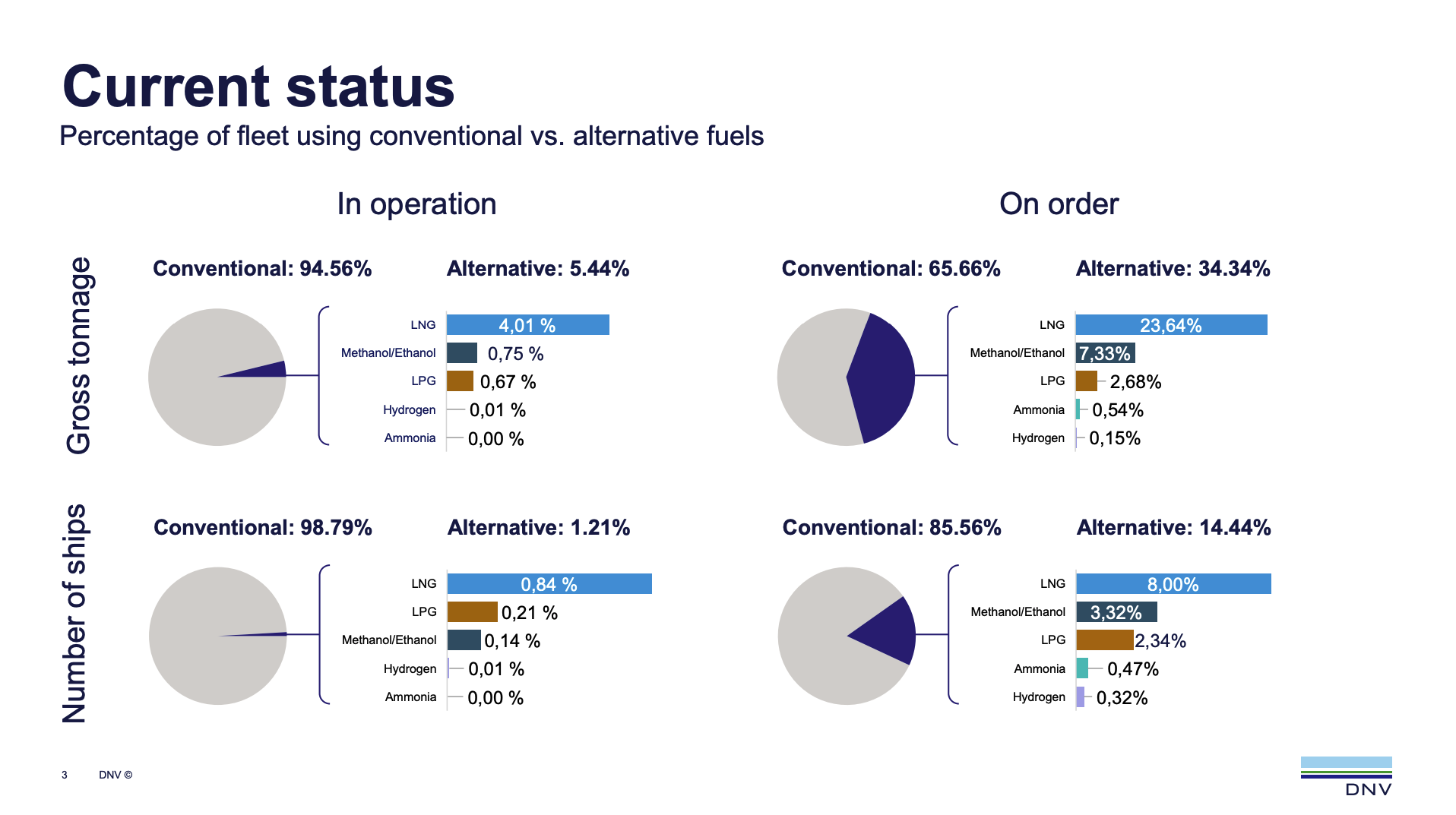
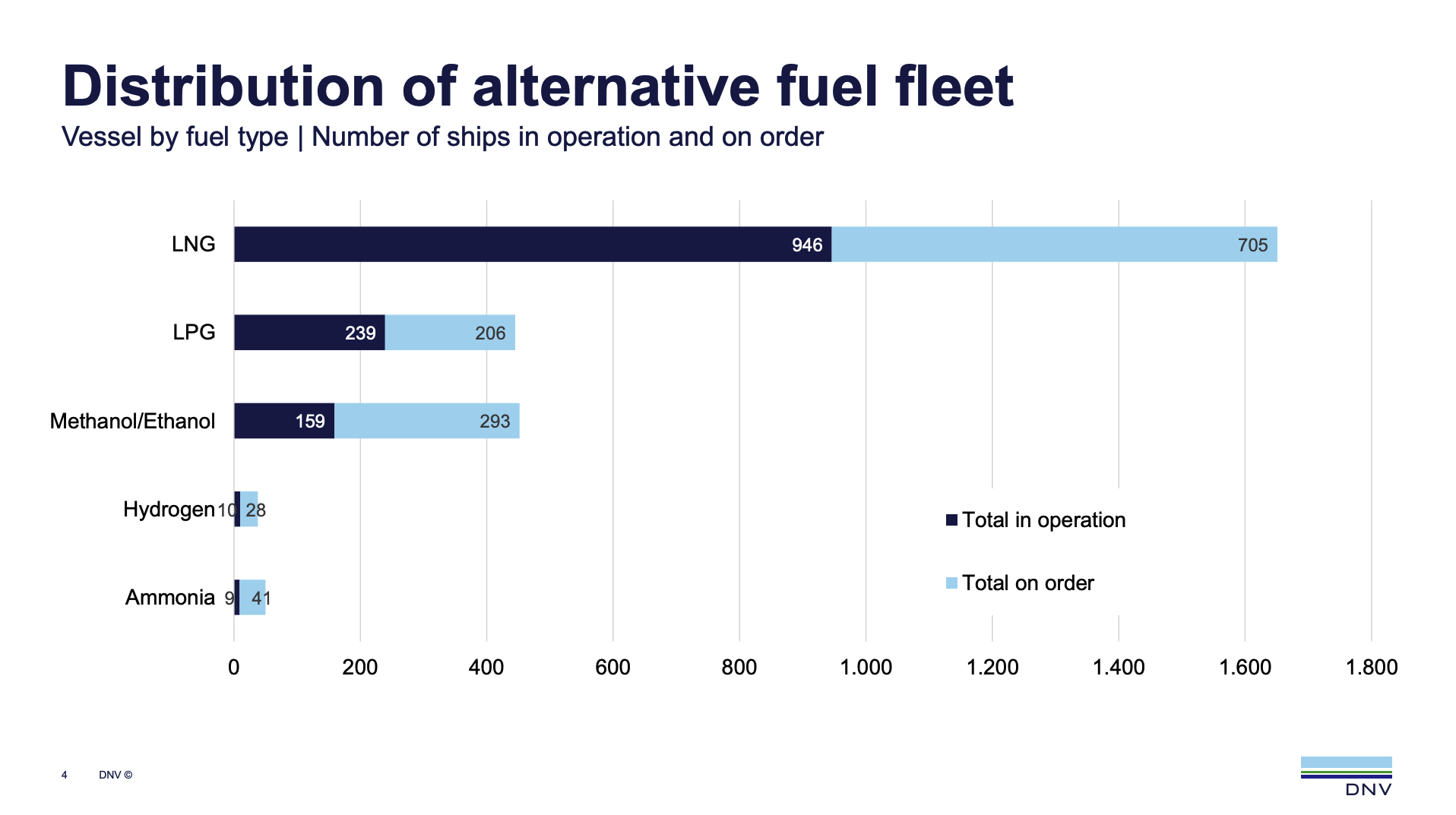
The challenge to reach this goal, or even the less ambitious goal from the International Maritime Organization (IMO) to cut emissions by half in the same time frame, requires bridging a very wide gap. Less than 1pc of the global shipping fleet, which accounts for 2-3pc of the world greenhouse gas emissions, runs on unconventional fuel.

The Call to Action also supported making zero-carbon ships the default newbuilding option by 2030.

“We need to think about the future we want [in 2050] and backing up to today, understanding how to get there,” said Cummins. He floated one possible future scenario that involved crewless autonomous vessels and AI-run ports at which every ship arrives exactly at the same time another leaves the berth.

“If you take that as the future, what do you have to do to transition to it?” he said.

Given the enormity of the decarbonisation task, assuming the status quo in shipping may be misguided, according to another participant in the Marine Money conference. “The idea that ships are going to be powered by a zero carbon/green fuel and all other structural elements remain the same is something to be questioned,” said Hew Crooks, an executive at crude tanker Ridgebury Tankers. “That we are moving oil in the same quantities to the same places is a little bit debatable.”

Opportunities in green shipping

While such change in the shipping industry is likely to be bumpy for many stakeholders, it will open up opportunities for others. One such opportunity would be in the transportation of alternative fuel ammonia, whose lack of energy density — only a fifth of fuel oil — means more cargo demand for shipowners, according to Guy Platten, president of the International Chamber of Shipowners (ICS).

“[Ammonia] is going to have to be shipped from places where it is produced to places where it is needed. And it is going to need five times as many tankers/gas carriers as you do oil tankers,” he said.

Furthermore, on such voyages, ships may be able to use part of their environmentally friendly cargo to fuel their journey, another “potential opportunity,” said Platten.

A fuel quandary for shipowners

Continuing the status quo of building ships that burn conventional fuel is increasingly risky for shipowners too since such ships could be regulated into obsolescence early in their lifespan depending on how emissions rules evolve.

This risk has led to reluctance among shipowners to order new vessels, said Platten.

“We do not think anyone fuel will dominate,” said Anthony Gurnee, chief executive of product tanker company Ardmore Shipping. “We are looking for the right horse to back.”

Furthermore, the appetite among banks to finance carbon intensive projects, such as conventionally fueled newbuildings, will continue to decline, according to Johanna Christensen, chief executive of the Global Maritime Forum.

“On the finance side, the Poseidon Principles is only the beginning. In the financial ecosystem there is more and more focus on bringing investment decisions in line with the kinds of goals being set in the Paris agreement,” she said. “Financing for any type of asset including ships that are not aligned with that trajectory is simply going to dry up in the future.”

But the solution is not simply incentivizing shipowners to build more ships that can burn more environmentally friendly fuel.

Access to alternative fuel supply is the “elephant in the room,” said Platten. “It does not matter how many zero-carbon ships you build if there’s no fuel there to run them on,” he said.

Ammonia or hydrogen bunkering capability is largely non-existent at the world’s seaports.

Government backing needed for shipping change

“This idea of incrementalism is not going to get us [to the decarbonization targets]. I think there are some incremental steps that should be taken efficiency is a good example of that. But there is a wholescale transformation that needs to take place,” said Christensen.

Such momentous change will need the unequivocal support of global policymakers, said Platten.

“Everyone has got the message that we need to decarbonize. But we do need political certainty to do that,” he said. It does need governments stepping up to the plate. You cannot invest unless you have that certainty.”


Photo credit and source: Argus Media
Published: 27 September, 2021

Continue Reading

Legal

Singapore withdraws remaining 127 charges against Hin Leong founder OK Lim

Lim Oon Kuin, also known as OK Lim, was issued a stern warning and a district court granted him a discharge amounting to an acquittal for these charges on 17 July.

Admin

Published

on

By

RESIZED Sora Shimazaki on Pexels

Founder of collapsed oil trader Hin Leong Trading, Lim Oon Kuin, also known as OK Lim, has had the remaining 127 charges against him withdrawn, according to The Straits Times on Monday (20 July). 

OK Lim was issued a stern warning and a district court granted him a discharge amounting to an acquittal for these charges, including those for cheating, on 17 July. The discharge means Lim cannot be prosecuted again for the same offences.

Lim, 84, is currently serving a 13½-year prison sentence after the High Court reduced his original 17½-year jail term in March 2026. He was convicted in 2024 on two cheating charges and one count of abetting forgery in a case prosecutors described as one of Singapore’s most serious trade finance frauds.

Lim was convicted in May 2024 of two charges of cheating the Hongkong and Shanghai Banking Corporation (HSBC) and one count of abetting forgery that proceeded to trial out of a total of 130 criminal charges.

He was first charged in court on 14 August 2020, and was subsequently handed further charges in court on 25 September 2020, 30 April 2021 and 24 June 2021 for his role in perpetuating fraud on various financial institutions. 

A total of 130 charges were eventually brought against him for cheating and forgery-related offences.

Related: Singapore: Hin Leong Founder OK Lim gets jail term slashed to 13.5 years


Photo credit: Sora Shimazaki
Published: 21 July, 2026

Continue Reading

Winding up

Singapore: Coastal Logistics Pte Ltd to be wound up voluntarily

Coastal Logistics was reportedly affiliated with troubled Singapore bunker player Coastal Oil (Singapore) Pte Ltd.

Admin

Published

on

By

RESIZED Drew Beamer

Several resolutions for Coastal Logistics Pte Ltd were made during an extraordinary general meeting held on 14 July, according to a notice in the Government Gazette on Friday (4 July).

The following resolutions were duly passed during the meeting:

As Special Resolution

  • That it has been proved to the satisfaction of the meeting that the Company cannot by reason of its liabilities continue its business and accordingly the Company be wound up voluntarily pursuant to Section 160(1)(b) of the Insolvency, Restructuring and Dissolution Act 2018 (No. 40 of 2018);

As Ordinary Resolutions

  • that Mr. Wong Pheng Cheong Martin and Ms. Koay May Yee, both care of FTI Consulting (Singapore) Pte Ltd, One Raffles Quay, #27-10 South Tower, Singapore 048583 be appointed as the joint and several Liquidators of the Company for the purpose of such winding up; and
  • that the Liquidators be at liberty to open, maintain and operate any bank account(s) or account(s) for monies received by them as Liquidators with such bank(s) as they deem fit; and
  • that a Committee of Inspection will not be formed.

Manifold Times previously reported Nicholas James Gronow, director of Heng Tong Fuels & Shipping and Coastal Logistics, filed statutory declarations for both companies stating the firms cannot continue their businesses due to liabilities.

Both companies were reportedly affiliated with troubled Singapore bunker player Coastal Oil (Singapore) Pte Ltd. 

In 2019, several vessels owned by both firms entered the sale & purchase (S&P) market in Singapore.

Related: Singapore: Director declares Heng Tong Fuels & Shipping’s inability to continue business
Related: Heng Tong Fuels & Shipping in court over DBS Bank bunker tanker loan
Related: Singapore: Bunker tanker “Coastal Neptune” arrested
Related: Heng Tong Fuels & Shipping, Coastal Logistics tankers enter S&P market


Photo credit: Drew Beamer
Published: 21 July, 2026

Continue Reading

LNG Bunkering

PIL’s LNG dual-fuel boxship “Kota Elok” arrives in Singapore on maiden call

As the first of 13 new 13,000 TEU vessels joining its fleet, Kota Elok is equipped to operate on LNG and low-sulphur fuel oil that helps reduce our greenhouse gas emissions.

Admin

Published

on

By

PIL's LNG dual-fuel boxship “Kota Elok” arrives in Singapore on maiden call

Singapore-based Pacific International Lines Pte Ltd on Monday (20 July) said its first 13,000 TEU LNG dual-fuel container vessel, Kota Elok, recently made her maiden call to Singapore on 15 July.

As the first of 13 new 13,000 TEU vessels joining its fleet, Kota Elok is equipped to operate on liquefied natural gas (LNG) and low-sulphur fuel oil that helps reduce our greenhouse gas emissions. 

The vessel also incorporated energy-saving features and digital technologies to reduce fuel consumption and enhance operational performance, as well as a bow windshield to improve aerodynamics, contributing to improved fuel efficiency and lower emissions over the course of long-haul voyages.

“Following Singapore, Kota Elok will continue her voyage on our East Coast Service 1 (ES1) route to South America, calling at ports in Brazil, Uruguay, and Argentina before returning to Asia,” the company said in a social media post. 

Kota Elok also became PIL’s first vessel to receive Lloyd’s Register certification for compliance with the IACS UR E26 and UR E27 cyber security requirements.

Developed by the International Association of Classification Societies (IACS), UR E26 and UR E27 are mandatory cyber resilience requirements for newbuild vessels contracted from 1 July 2024. 


Photo credit: Pacific International Lines
Published: 21 July, 2026

Continue Reading

Trending