Connect with us
DNV Decarbonization Insight Series August 2026 - What maritime professionals should know about AI Training

Environment

Conoship: ‘Great progress’ being made for CO2 capture from exhaust of LNG-fuelled ships

Disagrees with World Bank’s view over role of LNG bunker fuel for maritime decarbonisation; report missed on role of Marine Carbon Capture Systems.

Admin

Published

on

Conoship carbon capture

Vessel design and engineering firm Conoship on Monday (14 June) issued a statement declaring its stance against World Bank’s view over role of LNG bunker fuel for maritime decarbonisation:

BRIGHT FUTURE FOR LNG FUELED VESSELS WITH CARBON CAPTURE SYSTEMS

In contrary to the World Bank point of view, there is a bright future for LNG in the decarbonization of the shipping industry. The World Bank report seemed to have missed an important recent technical development: Marine Carbon Capture Systems. Recently, great progress has been achieved regarding the capturing of CO2 from the exhaust of LNG-fueled ships.

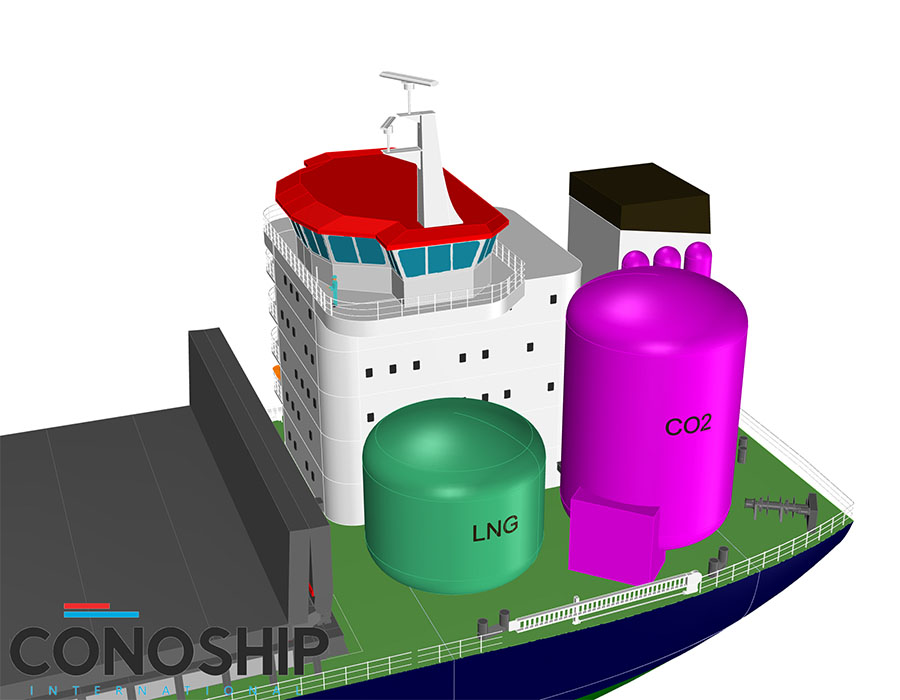
Among others, R&D in the Netherlands – by Conoship, TNO Delft and other partners – leads to feasible and practical ship-based solutions, utilizing ‘the cold’ of the LNG (-160 dgr. C) to liquefy the CO2 and store it in regular liquid-CO2-tankcontainers on board. The captured CO2 can be unloaded while bunkering LNG, to be stored for example offshore in empty gas fields, for which infrastructure is under development in Norway (Northern Lights), Rotterdam (Porthos), Amsterdam (Athos) and by parties like CarbonCollectors.

As the captured and liquefied CO2 can be ‘food-grade’, wider utilization is foreseen in the future as an important and valuable feedstock for the production of synthetic fuels, like synthetic-kerosine, -diesel, -methanol or -methane. Next to ‘green hydrogen’, the production of synthetic fuels requires vast amounts of CO2, for which ‘direct air capture’ is a very inefficient source.

The same ships that actually are fueled by LNG (= abt. 85% Methane CH4), can be fueled in the future by Liquified Synthetic-Methane (LSM, 100% CH4), using the same existing LNG-infrastructure. A closed carbon-loop can be realized by capturing the CO2 after the combustion of LSM in the ship, liquefying it and providing it as feedstock to the producer of the Liquified Synthetic Methane.

Co2Asts Capture module legend

Conoship R&D and design studies show that by future application of onboard CO2-capturing, liquefaction and storage, LNG-driven ships can both be:

  • a good direct economic and ecological alternative to diesel-driven ships, realizing large reductions of SOx, NOx en PM/Sooth and smaller reductions of CO2;
  • a good future-proof economic and ecological solution, increasing the reduction of CO2-emissions (possibly stepwise) to the desired economical & ecological level by application of a CO2-capturing installation.

By integrating the CO2-capturing installation in the initial ship design at Conoship, we reduce the future impact of the modification. However, CCS installations are also suitable for retrofits on board of LNG powered vessels.

Conoship LNG Co2 capture

The studies we have done tend to show that LNG combined with CO2 capture is the first solution to become economically feasible.

Further R&D on handling the challenge of methane slip is making good progress, both in combustion technology in engines and in after-treatment technology and there is no reason why application of the solutions should be limited to a fraction of the fleet. Furthermore, despite all developments, the quantity of “green hydrogen”, either to be used directly as fuel, or as feedstock for e-fuels, will remain limited. It would make sense to use this scarce quantity for applications for which there are no alternatives, such as in long range aviation.

Introduction, through IMO, of a CO2-levy per ton emitted CO2 will facilitate the economical application of CO2-capturing installations on LNG-driven vessels in the coming years. All in all LNG, when combined with CCS, should therefore still be considered as a more than valuable transition fuel up to 2050, reducing the carbon footprint of shipping and its customers with more than 75% compared to today’s diesel powered operations.


Photo credit and source: Conoship
Published: 15 June, 2021

Continue Reading

Alternative Fuels

South Korea’s Polaris Shipping orders tri-fuel bulk carriers for Vale charter deal

Bulk carriers, which will be delivered sequentially from 2031, will be equipped with WinGD-developed engines capable of using methanol, ethanol and heavy fuel oil as marine fuels.

Admin

Published

on

By

South Korea’s Polaris Shipping orders tri-fuel bulk carriers for Vale charter deal

South Korean shipowner Polaris Shipping recently said it has signed a newbuilding contract for four tri-fuel vessels with Chinese shipbuilder Qingdao Beihai Shipbuilding Heavy Industry on 4 August.

The 210,000-dwt Newcastlemax bulk carriers, which will be delivered sequentially from 2031, will be equipped with WinGD-developed engines capable of using methanol, ethanol and heavy fuel oil as marine fuels.

The vessels are also designed as LNG- and ammonia-ready ships, allowing them to be converted to LNG or ammonia propulsion in the future.

Polaris Shipping also plans to significantly improve energy efficiency and reduce greenhouse gas emissions by applying various energy-saving technologies, including wind-assist propulsion systems, rotor sails, departure optimisation and land-based systems, to the vessels.

Polaris Shipping has completed a 25-year long-term charter contract for the bulk carriers with Brazilian iron ore producer Vale.

Polaris Shipping plans to sign construction contracts for up to four additional 210,000-dwt eco-friendly Newcastlemax bulk carriers with Chinese shipbuilder Hengli Heavy Industries in the near future. The Newcastlemax bulk carriers ordered from Hengli will be built as high-efficiency, environmentally friendly vessels to replace the company’s existing older bulk carriers.


Photo credit: Polaris Shipping
Published: 13 August, 2026

Continue Reading

Biofuel

MESD study finds existing Singapore harbour craft ready for B100 bio bunker fuel adoption

Results demonstrate the qualified readiness of existing large harbour craft in Singapore for B100 adoption, provided that appropriate fuel-handling, storage and additive practices are implemented.

Admin

Published

on

By

MESD study finds existing Singapore harbour craft ready for B100 bio bunker fuel adoption

Singapore’s Maritime Energy & Sustainable Development Centre of Excellence (MESD) on Wednesday (5 August) said the findings of its latest study indicate that existing large harbour craft in Singapore are ready for the adoption of B100 biodiesel, provided appropriate fuel handling, storage and additive practices are in place.

The findings were published in MESD’s public report, Study on the Readiness of Existing Large Harbour Craft for B100 Biodiesel in Singapore.

“Overall, the results demonstrate the qualified readiness of existing large harbour craft in Singapore for B100 adoption, provided that appropriate fuel-handling, storage and additive practices are implemented,” MESD said in a social media post. 

“This represents an important step towards supporting the wider adoption of sustainable marine fuels and advancing Singapore’s maritime decarbonisation journey.”

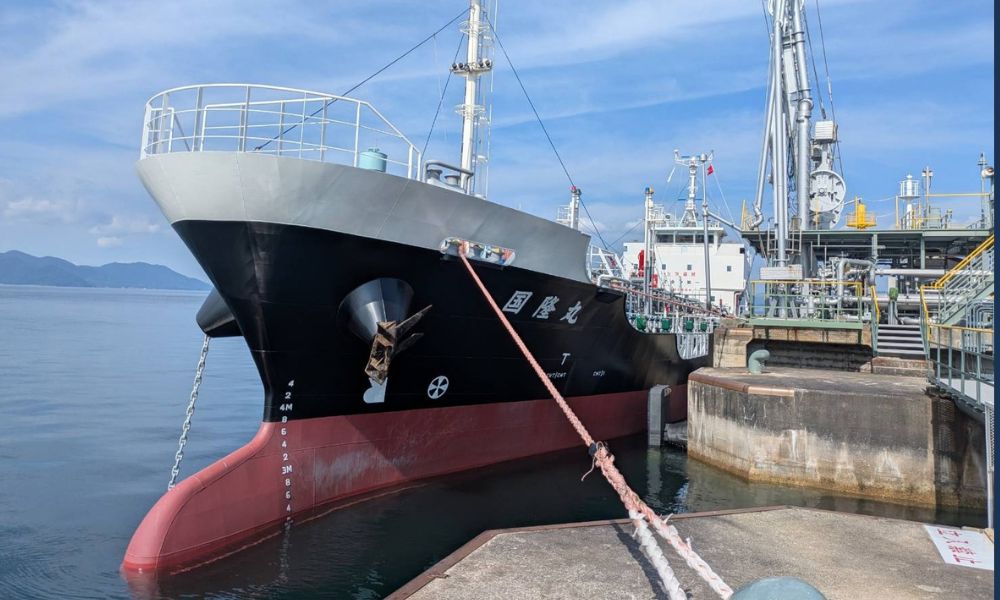
The study evaluated fuel storage stability, engine performance, emissions and operational readiness through controlled laboratory testing and sea trials involving a tugboat and a bunker tanker.

MESD said the findings are highly encouraging, which include:

  • Stable engine performance was maintained throughout the 200-hour sea trials, with no significant power loss, abnormal fuel-consumption trends or critical operational disruptions.
  • Antioxidant additives improved oxidation stability and helped reduce the risk of fuel degradation during storage.
  • B100 achieved brake thermal efficiency comparable to diesel, while producing lower carbon monoxide and particulate matter emissions, with a modest increase in nitrogen oxide emissions.

Led by the MESD, the study was conducted in collaboration with KST Maritime Pte Ltd, V-Bunkers Tankers, Alpha biofuels, Aderco, Maritec Naias and IHI Power Systems Co Ltd.

The Maritime and Port Authority of Singapore (MPA)​ and the ​Singapore Maritime Institute (SMI)​ also contributed to the study. 

MESD added that further research on long-term engine endurance, fuel stability and material compatibility is ongoing under its FAME 1000 project, with a related public report expected to be released later this year.

Note: The report can be accessed here.


Photo credit: Maritime Energy & Sustainable Development Centre of Excellence
Published: 7 August, 2026

Continue Reading

Biofuel

SDHI wins order from Svitzer to build four biofuel-ready tugs

Indian shipbuilder says it has secured a contract from Svitzer to construct four advanced TRAnsverse 3200 tugs, which are up to 15% more fuel efficient than conventional tug designs.

Admin

Published

on

By

SDHI wins order from Svitzer to build four biofuel-ready tugs

Indian shipbuilder Swan Defence and Heavy Industries (SDHI) on Thursday (6 August) said it has secured a contract from Denmark-based towage operator Svitzer to construct four advanced TRAnsverse 3200 tugs. 

The Transverse 3200 tugs will be biofuel, IMO Tier III emissions standards, and FiFi1 firefighting class ready, reflecting the vessels’ capability for reduced environmental impact and enhanced fire-response readiness in port and terminal operations.

The vessels will be built at SDHI’s yard in Pipavav, Gujarat, adjacent to the port where Svitzer also has a harbour towage operation. Deliveries for the order are scheduled to commence in early 2028.

The contract follows an extensive competitive evaluation of leading global shipyards. The high specification vessels will be constructed to the Bureau Veritas class.

Co-developed by naval architects Robert Allan Ltd. and Svitzer, the patented TRAnsverse 3200 design is engineered for complex harbour towage and escort operations. 

Featuring a unique hydrodynamic hull design and omni-directional propulsion, the vessels are capable of safely guiding large ships through severe weather and restricted port channels. Delivering an 80-tonne bollard pull, the TRAnsverse design is up to 15% more fuel efficient than conventional tug designs, directly supporting global maritime decarbonization goals.

Rear Admiral Vipin Kumar Saxena IN (retd.), CEO, Swan Defence and Heavy Industries Limited (SDHI), said: “It is indeed a notable achievement for SDHI to construct one of the world’s most sophisticated towage vessels. Svitzer’s rigorous evaluation process reaffirms the strength of our engineering capabilities in the niche, high-specification vessel segment.”

Mr. Kasper Friis Nilaus, CEO, Svitzer, said: “Svitzer’s TRAnsverse tug design offers significant benefits to customers in terms of releasing operational constraints and improving port productivity, sustainability and safety margins. We are pleased to partner with SDHI to deliver four of these next-generation vessels to the benefit of our customers and maritime supply chains globally.”


Photo credit: Swan Defence and Heavy Industries
Published: 7 August, 2026

Continue Reading

Trending