Connect with us

Uncategorized

Case study for onboard safety meeting: Importance Of checking BDN before signing

Majority of crew on bunkering related duties were not aware they had to monitor the sampling procedures to ensure the sample is truly representative, said Gard.

Admin

Published

on

Screen Shot 2020 09 17 at 3.28.50 PM

Norwegian maritime insurance company Gard on Wednesday (16 September) published a case study to illustrate the importance of shipping crew to read bunker delivery notes (BDNs) before signing them off to ensure the sample is truly representative of the fuel being bunkered: 

Please read the below description of an incident. Keeping your company’s standards and vessel procedures in mind while reading to compare with the actions of the crew below. We will discuss the factors which led to the incident occurring and how to avoid it happening on our vessel.

Vessel had bunkered a few thousand tons of VLSFO at its last port. A few days after departure, analysis results were sent to the vessel by the testing laboratory and the fuel seemed to be on spec for all ISO 8217, table 2 parameters except for Total Sediment Potential (TSP). The result for TSP was 0.15% whereas the maximum limit in table 2 was 0.10%. The vessel operator’s technical department advised the vessel to consume this batch of bunkers and report any operational difficulties faced. Some technical guidelines on operational adjustments to be made were also given to the crew. Within hours of starting to consume the new batch of bunkers, the vessel experienced excessive purifier sludging.

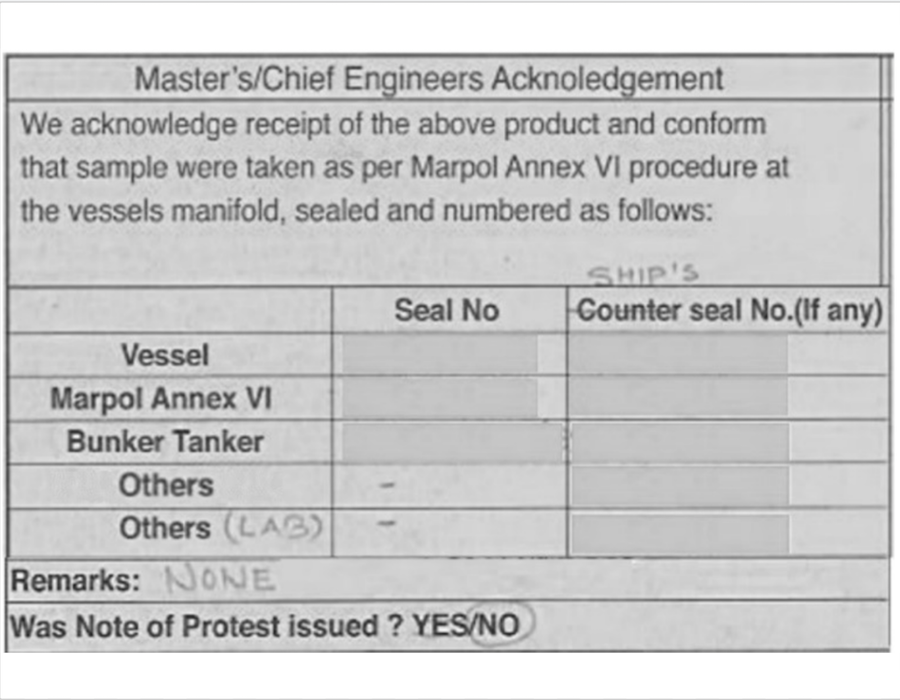
Charterers were informed and they agreed to test the ‘vessel’ sample whose seal number was mentioned in the Bunker Delivery Note (BDN). Owners did not see any reason to object as they thought the samples were taken at the receiving ship’s manifold. The vessel was instructed to land the sample at the next port. The Master acknowledged the message and asked the office in return if the vessel should also land its own samples at the same time since the samples mentioned in the BDN were taken at the bunker barge’s manifold and not their own ship. Owners informed charterers of this as they were now concerned that the samples from bunker barge may not be representative of the fuel bunkered.

Charterers expressed their dissatisfaction as the information provided on the BDN did not reflect what the crew or the owners were saying. Charterers independently went ahead with the testing of the ‘vessel’ sample mentioned in the BDN. The result for TSP was 0.10% and therefore on spec. Under the charterparty, this test result was binding on owners.

To avoid a repeat of this incident, owners investigated the practice of signing BDNs across their fleet. The main findings from their investigation were:

  • During the pre-bunker meeting with the bunker barge representatives, the sampling protocols were not discussed.
  • It was common practice for Masters and Chief Engineers to sign BDNs without verifying the information entered therein.
  • No fleet vessel had ever issued a protest to the bunker barge for such practices, or refused to sign the BDN, or informed the owners or charterers.
  • The majority of crew assigned bunkering related duties were not aware that they had to oversee and continuously monitor the sampling procedures adopted by the barge in order to ensure the sample is truly representative.
  • The crew did not fully understand the repercussions of signing such BDNs as no formal training had been provided by the shore management.
  • The company’s SMS did not clearly highlight how the vessel should act where the bunker barge refuses to enter the seal numbers of the samples taken at the receiving ship’s manifold on the BDN.

HOW TO IMPROVE BY LESSONS LEARNT

Based on the case and the keywords, you should now perform an onboard risk assessment of the incident and the factors which led to it. Bear in mind your vessel’s procedures. You can also discuss the keywords below in order to determine onboard areas/topics for increased awareness:

  • Where can procedures for following be found in our Company’s SMS:
    • action to take when the bunker barge refuses to enter the seal numbers of the vessel’s samples on the BDN; and
    • monitoring the sampling procedure implemented by the bunker barge Discussion centered on these procedures is recommended.
  • Is there a standard note of protest in the SMS which Masters or Chief Engineers can use in such circumstances?
  • Try recalling your previous bunkering experience in different ports with regards to acceptance of ship’s samples by the bunker barge. Discuss your experiences.
  • Discuss the risks where the crew is unable to or does not monitor the sampling procedure adopted by the bunker barge and later accept barge’s samples as being representative of the fuel bunkered.

The full version of the case study can be obtained here.

Screen Shot 2020 09 17 at 2.52.23 PM
Photo credit and Source: Gard
Published: 17 September, 2020

Continue Reading

Bunker Fuel Availability

ENGINE: Europe & Africa Bunker Fuel Availability Outlook (1 April 2026)

East Mediterranean ports see high demand; Malta sees rough weather; high demand increases lead times in West Africa.
Admin

Published

on

By

RESIZED ENGINE Europe and Africa

The following article regarding Europe and Africa bunker fuel availability has been provided by online marine fuel procurement platform ENGINE for post on Singapore bunkering publication Manifold Times:

  • East Mediterranean ports see high demand
  • Malta sees rough weather
  • High demand increases lead times in West Africa

Northwest Europe

Availability of all fuel grades is stable in the ARA bunkering hub, but buyers are recommended to enquire about stems around five days ahead to get competitive offers from a wide selection of suppliers, a trader said.

The ARA’s independently held fuel oil stocks slumped 20% lower in March, according to Insights Global data.

The region imported around 160,000 b/d of fuel oil in March, down from 192,000 b/d imported in February, according to cargo tracker Vortexa. Most supplies have arrived from Denmark (21%), Poland (14%) and Libya (13%).

The region’s independent gasoil inventories – which include diesel and heating oil – have dipped 1% lower in March, compared to February.

The ARA imported 289,000 b/d of gasoil, down from the 304,000 b/d in February, according to Vortexa data. Around 27% of cargo volumes have come from Kuwait, while the US has sent around 24%.

In Germany’s Hamburg, buyers are being advised to book stems with a lead time of five days, a trader said.

Bunker fuel availability is very tight in Sweden’s Gothenburg and off Denmark’s Skaw, a trader told ENGINE.

Mediterranean

Securing supplies promptly is challenging in the Gibraltar Strait ports, and buyers are advised to book around seven days in advance to secure supplies of any fuel grade, a trader said.

Demand is stable in the Port of Gibraltar, with around 40 vessels expected to call for bunkers between 1-8 April, shipping agent A Mateos & Sons said.

Congestion caused in the port last week due to rough weather conditions has completely cleared as of Wednesday morning, port agent MH Bland said.

In Barcelona, buyers are usually requested to give a week’s notice for any delivery, but supplies can be arranged sometimes on a prompt basis, a trader told ENGINE.

Bunker availability is tight in the Canary Islands bunkering hub of Las Palmas, a trader said. Suppliers are giving earliest delivery dates around 10 days out for stems with competitive prices, the trader added.

Bunkering operations are currently being conducted in the inner anchorage and at the berth due to rough seas, port agent MH Bland said.

Malta is experiencing rough winds of more than 25 knots and waves of more than 2.5 metres, and the conditions are expected to persist until 3 February.

Bunkering operations off Malta have been currently suspended, port agent MH Bland said.

Some operations can be conducted in the sheltered Area 1 and Area 4, and operations are expected to resume normally in the offshore area around Saturday, shipping agent WMR told ENGINE.

Bunker demand has decreased recently off Malta, a trader said.

Fuel availability is steady in the Greece’s Piraeus, but high demand for bunkers is causing operational challenges related to barge and berth availability, a local supplier said. The port may face tight product availability around late April or early May if the conflict continues and crude flows through the Strait of Hormuz continue to remain disrupted, the supplier added.

Fuel availability is stable in Turkey’s Istanbul and demand is very strong, a local supplier told ENGINE. Buyers are securing bunkers as they anticipate tight availability next month, the supplier added.

Africa

Ships re-routing around the Cape of Good Hope have increased bunker demand in African ports, suppliers and traders told ENGINE.

West African ports are experiencing low product availability as demand is rising and supply is not able to keep up, a major supplier in West Africa said.

Lead times have increased significantly in many bunkering hubs due to the additional demand.

In Togo’s Lome and off Namibia’s Walvis Bay, buyers are recommended to enquire about stems around 10-11 days ahead, a trader said.

In Angola’s Luanda, one supplier has stopped supplying VLSFO, while LSMGO supplies may need around 7-10 days of notice, a supplier told ENGINE.

Getting VLSFO supplies in Nigeria’s Lagos anchorage also requires around 10 days of notice, a local supplier said.

In South Africa, availability is stable off Algoa Bay, a trader said. In Durban, LSMGO is priced around $3000/mt.

By Nachiket Tekawade


Photo credit and source: ENGINE
Published: 2 April 2026

Continue Reading

Uncategorized

IMO: Caribbean maritime leaders draft policy recommendations to decarbonize shipping

Participants focused on moving from analysis to implementation by aligning policy, infrastructure planning, energy systems and finance.
Admin

Published

on

By

IMO: Caribbean maritime leaders draft policy recommendations to decarbonize shipping

The International Maritime Organization (IMO) on Tuesday (3 February) said Caribbean policymakers and financiers have emphasized that decarbonization will not succeed through isolated projects or technologies alone, but through coordinated action across sectors and countries, supported by evidence-based planning and investment-ready pathways. 

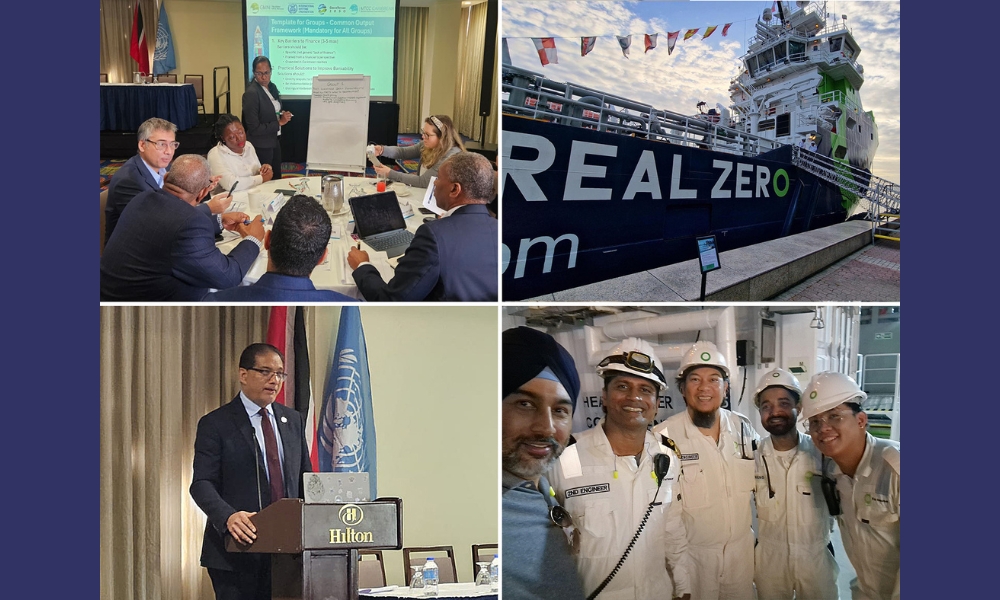
Senior representatives from Caribbean governments, maritime administrations, ports, energy authorities, development banks and financial institutions met for a regional roundtable convened in Port of Spain, Trinidad and Tobago (29 – 30 January) by IMO’s GreenVoyage2050 Programme, in collaboration with Global MTCC Network (GMN Phase II). 

The event, under the theme Unlocking maritime decarbonization, resulted in key draft policy recommendations for the region, including proposals for: 

  • enhanced regional coordination to harmonize national policies; 
  • knowledge-sharing; 
  • capacity building; and 
  • investment facilitation.  

Participants focused on moving from analysis to implementation by aligning policy, infrastructure planning, energy systems and finance. The participation of multilateral and regional development banks alongside policymakers and industry linked technical ambition with financial realism at an early stage. 

Dr Jose Matheickal, Director of the IMO’s Technical Cooperation and Implementation Division, underscored the need to bridge global ambition and national delivery: “The IMO GHG Strategy sets a clear global direction, but implementation happens at country and regional level. What is critical is creating the conditions, policy, institutional capacity and credible project pipelines, that allow finance to flow and turn ambition into action.” 

The first day of discussions connected the 2023 IMO GHG Strategy with delivery through technical cooperation and regional collaboration.  

Findings from the Jamaica Maritime Alternative Fuels Study, supported by the GreenVoyage2050 Programme, were shared to ground the regional dialogue in a concrete country example. The study illustrated how Caribbean States can assess future fuel demand, supply pathways, infrastructure needs and policy implications to inform investment and planning decisions. 

Building on this evidence, participants discussed credible fuel pathways for the region, barriers to adoption and where regional coordination could accelerate progress. Interactive mapping exercises captured existing initiatives, infrastructure gaps and opportunities for collaboration across the Caribbean, while practical examples demonstrated how policy intent is already translating into action through green port development, fleet initiatives and pilot projects. 


The second day of the roundtable focused on unlocking investment, with development banks and financial institutions outlining what is needed to improve project bankability and mobilize public and private finance.  

Discussions explored financial instruments, risk-sharing approaches and policy signals required to support investment in ports, clean fuels and maritime infrastructure, reinforcing the importance of aligning national priorities with financier expectations. 

Ms Thandi McAllister, Director – Legal Services, Maritime Administration Department, Guyana, said: “This Regional Roundtable provided a vital platform for States and other maritime stakeholders to gain valuable insights into the impact and opportunities that are optimizable by Caribbean SIDs and LDCs in their pursuit of decarbonisation goals.” 

Finally, the participants visited the ammonia-fuelled ship Fortescue Green Pioneer for a first-hand look at alternative fuel technology in use onboard.


Photo credit: International Maritime Organization
Published: 5 February, 2026

Continue Reading

Uncategorized

ICS and 47 governments submit GHG pricing mechanism proposal to IMO

Key purpose of mandatory GHG charge will be to reduce cost gap between zero/near-zero GHG emission fuels and conventional bunker fuels to incentivise accelerated uptake of green energy sources.
Admin

Published

on

By

IMO

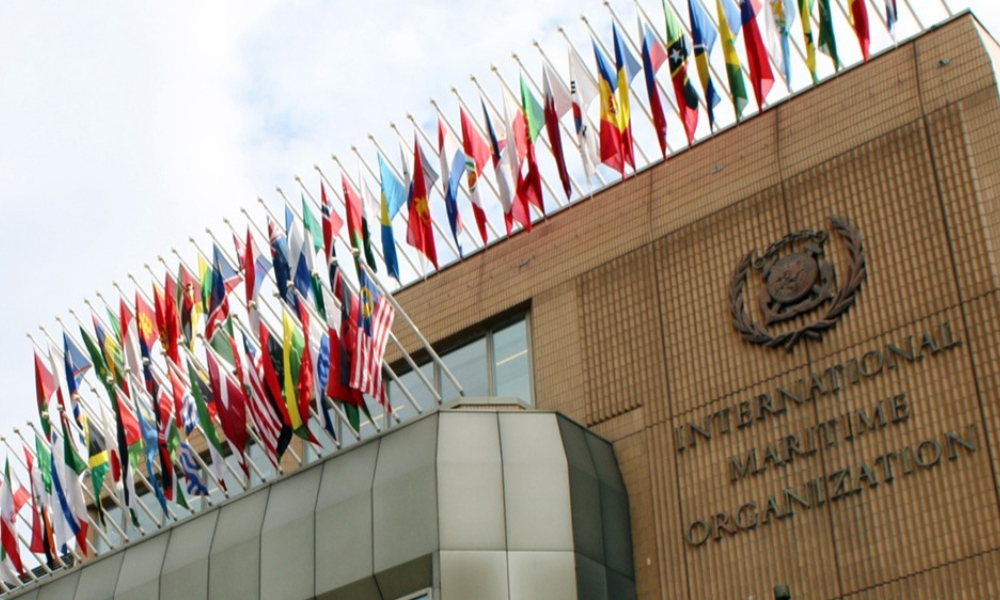
The International Chamber of Shipping (ICS) on Thursday (9 January) said it has joined 47 governments in a joint submission to the final round of negotiations at the United Nations’ International Maritime Organization (IMO) to adopt a maritime greenhouse gas (GHG) emissions pricing mechanism to achieve net zero GHG emissions from international shipping by 2050. 

The joint text is supported by major shipping nations such as Greece, Japan, Korea and the United Kingdom, the world’s largest flag States including Bahamas, Liberia, Marshall Islands and Panama, all EU States (and the European Commission), other African countries such as Nigeria and Kenya, plus Small Island Developing States from the Caribbean and the Pacific.

The joint submission by governments sets out convergent regulatory text for amendments to the IMO MARPOL Convention, which will require shipping companies operating ships on international voyages to make GHG contributions per tonne of CO2e emitted to a new “IMO GHG Strategy Implementation Fund”.

ICS said the key purpose of this mandatory GHG charge will be to reduce the cost gap between zero/near-zero GHG emission (ZNZ) fuels such as green methanol, ammonia and hydrogen and conventional bunker fuels, to incentivise the accelerated uptake of green energy sources. 

Revenue generated will be used to reward the production and uptake of ZNZ marine fuels, whilst also providing billions of US dollars annually to support the maritime GHG reduction efforts of developing countries.

International Chamber of Shipping Secretary General, Guy Platten, said: “The industry fully supports the adoption by IMO of a GHG pricing mechanism for global application to shipping.”

“The joint text put forward by this broad coalition is a pragmatic solution and the most effective way to incentivise a rapid energy transition in shipping to achieve the agreed IMO goal of net zero emissions by or close to 2050.”

“We are very pleased that such a large and diverse group of nations now firmly supports a common approach to maritime carbon charging. This proposed joint text has been hard fought and is broadly based on ideas which ICS has been advocating for the past ten years.

“While a large number of governments now support a universal flat rate GHG contribution by ships – or something similar – a minority of governments continue to have concerns. Working in co-operation with all IMO Member States we will do our best to allay such concerns during the final stages of these critical negotiations about regulatory text.”

This mature regulatory proposal will be considered by a critical IMO meeting in February – in the week of 17 February 2025 at ISWG-GHG 18. 

If the MARPOL amendments are approved by IMO in April 2025, they should enter into force globally in early 2027, with the collection of annual GHG contributions from ships commencing in 2028.

Note: The joint proposal to IMO for a maritime GHG emissions pricing mechanism can be found here.


Photo credit: International Maritime Organization
Published: 10 January, 2025

Continue Reading

Trending