Connect with us

Alternative Fuels

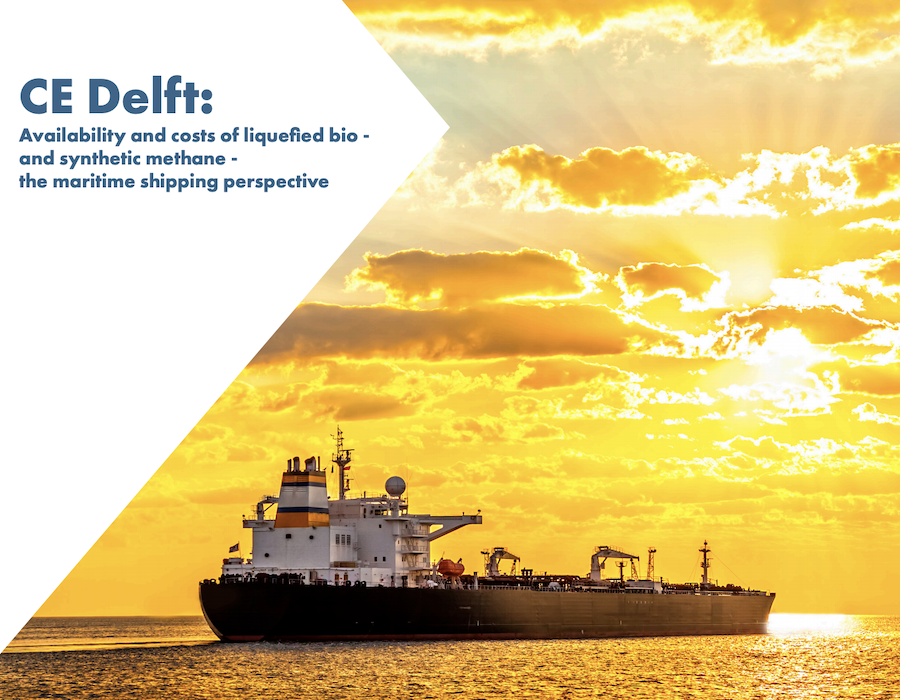
CE Delft studies availability and cost of LBM and LSM as viable bunker fuel

Study finds both could become ‘available in sufficient quantities’ to be an alternative for bunker fuel, without costs being much higher than other options.

Admin

Published

on

Sea LNG CE Delft report

Global multi-sector industry coalition SEA-LNG on Wednesday (25 March) released the latest in its series of independently conducted reports.

The CE Delft study analyses the availability and costs of Liquefied Bio Methane (LBM) and Liquefied Synthetic Methane (LSM) and concludes that both could become available in sufficient quantities to make a contribution towards future decarbonisation for the shipping industry, and that the costs need not be significantly higher than those of other low- and zero-carbon fuels.

The study explores the potential availability and cost of LBM and LSM produced from renewable electricity with the aim of providing industry-leading, timely, and proven analysis to support the growing case for LBM and LSM in driving forward LNG as a decarbonisation solution towards 2030, 2050, and beyond, said  SEA-LNG.

The findings are that both LBM and LSM are scalable solutions for the maritime sector, with estimated sustainable global supplies potentially exceeding the demands of shipping in the future, and likely to be commercially competitive relative to other low- and zero-carbon fuels. 

Further, the growing LNG-fuelled fleet could use LBM or LSM without requiring major modifications, and the existing supply infrastructure will remain fit for bunkering purposes with either fuel.

The study was conducted by independent research and consultancy organisation CE Delft and commissioned by SEA-LNG. 

“Based on an extensive review of the global availability of biomass, and the maturity of technologies to produce biomethane and synthetic methane, we conclude that, in principle, sufficient amounts could be produced to fuel the shipping sector,” Dagmar Nelissen, Senior Researcher, CE Delft.

“However, other sectors are also likely to demand methane, and there needs to be significant investments in production capacity”.

Analysis of the global sustainable biomass resource shows that biomethane from energy crops, agricultural residues, forestry products and residues could significantly exceed the global total energy demand of the maritime sector. 

The sustainable potential for LBM could be substantially higher in 2050 compared to 2030, even when excluding aquatic biomass, which has the potential to play a dominant role in the long term.

The production costs of LBM and LSM could be broadly comparable to other renewable fuels like green hydrogen and ammonia.  

Compared to those fuels, LBM and LSM have the advantage that they can be transported, stored and bunkered, utilising existing and technically matured LNG infrastructure.

“The shipping industry faces unprecedented challenges if it is to meet the IMO’s decarbonisation targets,” commented Peter Keller, Chairman, SEA-LNG. 

“Confusing and countering claims abound for different zero-emissions technologies – all of which require decades of research and development before they are proven safe for marine operations, globally available, and commercially viable.

“In combination, the studies we have commissioned definitely proves that, through LBM and LSM, LNG offers a clear pathway to net zero-carbon emissions from shipping while also future-proofing ship owners’ investments. 

“By investing in LNG-fuelled vessels now, ship owners can realise immediate GHG benefits – up to 21% on a Well-to-Wake basis and 28%, Tank-to-Wake, including the impact of methane emissions. 

“These LNG-based assets can use non-fossil fuel methane such as LBM and LSM with little to no modifications. As LBM and LSM become available at scale, the carbon-free future will become reality.”

The full study is available for download here.


Photo credit: SEA/LNG
Published: 26 March, 2020

Continue Reading

Biofuel

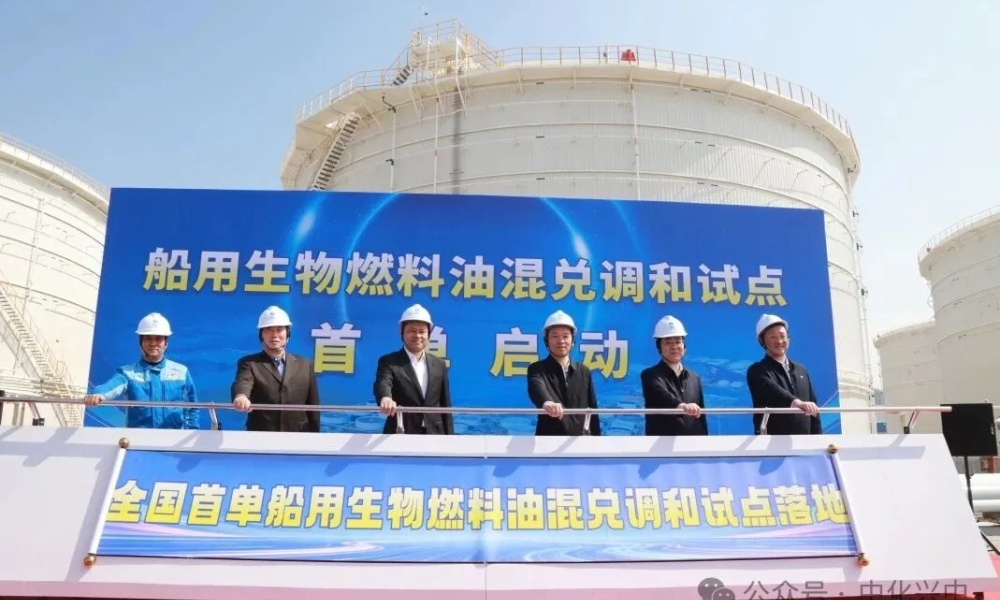
China: Chimbusco completes first bonded B24 bunkering operation in Shenzhen

Chimbusco Marine Bunker (Shenzhen) completed the operation after supplying 1,300 mt of B24 marine biofuel oil for “Xin Chi Wan” vessel, at Shekou Container Terminal.

Admin

Published

on

By

China: Chimbusco completes first bonded B24 bunkering operation in Shenzhen

Zhuhai Chimbusco Petroleum Co Ltd (Chimbusco Zhuhai), a subsidiary of China Marine Bunker (PetroChina) (Chimbusco), on Monday (6 July) said the company completed its first bunkering operation since receiving its local licence in Shenzhen. 

Chimbusco Marine Bunker (Shenzhen) completed the operation after supplying 1,300 metric tonnes (mt) of B24 marine biofuel oil for the Xin Chi Wan vessel, owned by COSCO Shipping Group, at the Shekou Container Terminal in Shenzhen.

The operation adopted the “cross-customs direct supply bunkering” model with the cooperation of Shenzhen and Gongbei Customs and maritime authorities.

Looking ahead, Chimbusco Marine Bunker (Shenzhen) said it will build on its local licensing and policy advantages to expand its bonded marine fuel bunkering business in Shenzhen.

The company plans to optimise its bunkering processes and improve service quality to help strengthen the city’s bonded marine fuel supply capabilities while supporting the shipping industry’s green transition.


Photo credit: Zhuhai Chimbusco Petroleum
Published: 8 July, 2026

Continue Reading

Alternative Fuels

Dan-Bunkering reports 50% increase in alternative marine fuel orders in 2025/26

Company says the positive trend has continued into the new financial year as it continued to support customers as demand for alternative fuel solutions accelerated.

Admin

Published

on

By

Dan-Bunkering reports 50% increase in alternative fuel orders in 2025/26

Global bunker supplier Dan-Bunkering on Tuesday (7 July) said it delivered a strong financial performance in 2025/26, reporting earnings before tax (EBT) of USD 36.4 million and revenue of USD 3.1 billion.

Throughout a year marked by changing market conditions and renewed geopolitical uncertainty, the company continued to expand its customer base, with bunker volumes increasing by more than 5%.

Claus Bulch Klausen, CEO of Dan-Bunkering, said: “This year has shown that when uncertainty increases – whether through supply disruptions, rising price volatility or geopolitical developments – our customers value trusted partnerships more than ever. 

“At the same time, we have had a strong focus on the wellbeing of our colleagues and their families in Dubai and across the region. This year’s result reflects the commitment and professionalism our colleagues demonstrate every day.”

Dan-Bunkering said it continued to support customers as demand for alternative fuel solutions accelerated. 

Orders for new fuels increased by around 50% during the financial year, and this positive trend has continued into the new financial year.

“We are seeing growing interest from customers who are preparing for a more diverse fuel landscape. Our role is to help them understand their options and provide the expertise they need to make informed decisions as the market continues to evolve,” said Klausen.

Dan-Bunkering also expanded its European presence during the year through the integration of Baseblue Netherlands. Since 1 December, the Groningen office has operated under the Dan-Bunkering name. The integration has also brought a team in Groningen into the Dan-Bunkering organisation, further strengthening its capabilities in the region.

Related: Dan-Bunkering integrates Baseblue Netherlands to expand its European operations


Photo credit: Dan-Bunkering
Published: 8 July, 2026

Continue Reading

Methanol

CRI delivers world’s largest e-methanol reactor to Liaoyuan project in China

First phase of the project has a production capacity of 170,000 mt of renewable methanol annually, supporting demand for low-carbon fuels in shipping, chemicals, and other sectors.

Admin

Published

on

By

CRI delivers world’s largest e-methanol reactor to Liaoyuan project in China

Carbon Recycling International (CRI) has recently delivered the largest of its kind e-methanol reactor for the Liaoyuan E-Methanol Project in Jilin Province, China. 

CRI, a company that develops and deploys technology that converts carbon dioxide emissions into renewable methanol, said the delivery and successful installation of CRI’s proprietary methanol converter reactor is a major construction milestone. 

“The project continues to progress according to plan toward commissioning and start-up later this year,” it said. 

The Liaoyuan project is being developed by CRI’s client Tianying Group (CNTY) and once commissioned will become the largest e-methanol facility in operation globally. 

The first phase has a production capacity of approximately 170,000 metric tonnes (mt) of renewable methanol annually from green hydrogen and captured biogenic carbon dioxide, supporting the growing demand for low-carbon fuels in shipping, chemicals, and other sectors seeking practical and scalable pathways to decarbonisation.

The methanol converter reactor forms the core of CRI’s proprietary Emissions-to-Liquids (ETL) technology. Designed and supplied by CRI, the reactor is where renewable hydrogen and captured carbon dioxide are converted into renewable methanol through the company’s proven industrial-scale process. It has been specifically designed and constructed with operational flexibility as a key feature and represents the third generation of CRI’s e-methanol reactor design.

The successful installation represented a significant construction milestone and marked the transition to the final stages of project execution.

“The installation of the methanol converter reactor is an important milestone for both Tianying and CRI,” said John Milner, Project Manager at Carbon Recycling International. 

“The reactor is the core of our ETL technology and embodies nearly two decades of innovation, engineering development, and commercial operating experience. Seeing this equipment installed at one of the world’s most ambitious renewable energy projects is a proud moment for our team and a major milestone as the Liaoyuan facility advances toward commissioning and start-up.”

CRI’s technology is already deployed at commercial scale at the company’s reference plants in Anyang and Lianyungang, and the Liaoyuan project represents the next step in the continued deployment of carbon recycling technology to support the production of renewable fuels and chemicals.


Photo credit: Carbon Recycling International
Published: 7 July, 2026

Continue Reading

Trending