Connect with us

Technology

BunkerTrace fuels tracking solution starts commercial launch

Solution adds DNA markers to fuel at every stage of supply chain and records transactions in blockchain system.

Admin

Published

on

5dae6cc22c07c 1571712194

Blockchain and DNA- based fuels tracking solution BunkerTrace on Friday (18 October) started its commercial launch after a successful trial in the Netherlands with maritime cooperative association Bebeka.

The solution, which adds DNA markers to fuel at every stage of the supply chain and records each transaction in a blockchain-based system, has already received interest from ports, bunker suppliers and vessel operators, it says.

By combining blockchain and DNA-based tagging, BunkerTrace creates an immutable audit trail, which follows the fuel and any changes made to it. It also records all activities and sign-offs by actors transacting the fuel.

“Managing the energy procurement now and in the future has our highest priority. Energy procurement is about sustainability, transparency and environment. CSR reporting takes place at boardroom level since company reputation is at stake,” commented Harry Vasse, General Director at Cooperative Bebeka.

“With the product portfolio in the marine energy market becoming increasingly complex and diverse in the near future our focus is on expertise and continuously developing of member protection tools and this is why we fully support the BunkerTrace initiative.

“Combining these two revolutionary technologies will provide the Cooperative and its members with an independent and transparent method for managing fuel quality throughout the bunker chain. Furthermore, it will support us in identifying the most reliable and trustworthy supply chains and streamline compliance.”

BunkerTrace provides evidence of compliance with IMO 2020 and ensures that at every point in the supply chain, it’s easy for stakeholders to check if the fuel they are moving, loading, buying or selling is the product that it’s meant to be, even if fuel has been blended or mixed.

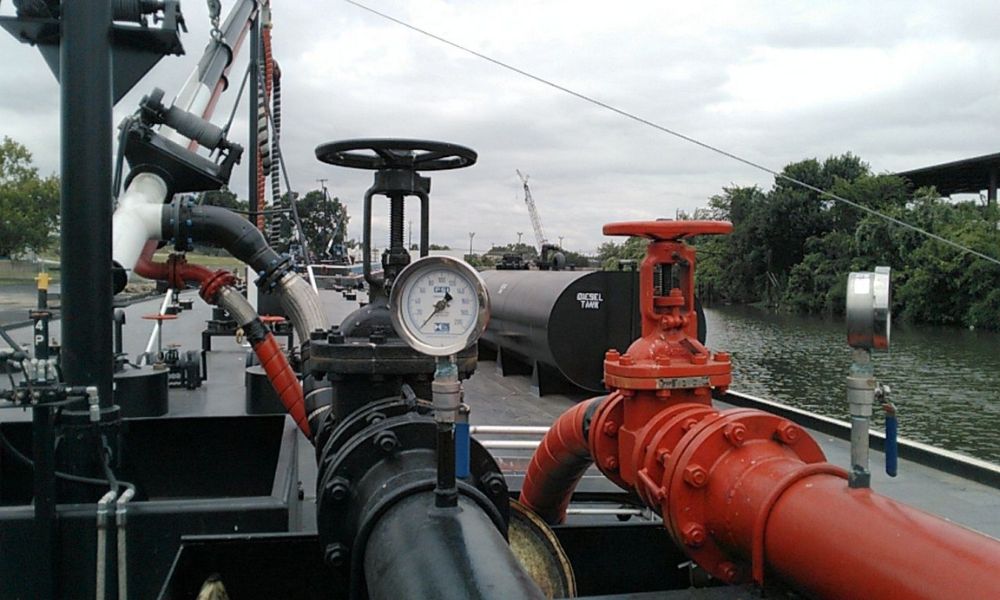
In the recent trial, a Boskalis-owned dredger, Prins der Nederlanden was bunkered with 900 cubic meters (CBM) of DMA 0.1% sulphur ISO 8217:2010 compliant fuel supplied by Minerva with a unique tracer added. The crew then successfully detected this mark with an on-board analysis case that took less than one minute, with the result of the test logged in a blockchain- based transaction record.

“As IMO 2020 approaches, we’re seeing fundamental changes to the dynamics of the bunkering market, which in turn creates uncertainty and risk: risk for owners, charterers, credit providers and financiers in the fuels they buy or fund; risk for insurers in establishing the risks they must manage; risk for operators and the fuels they burn; and for enforcers policing the fuels market. That’s why BunkerTrace exists,” said BunkerTrace CEO Marc Johnson.

“We’d like to thank all our industry partners, colleagues, friends and supporters who’ve helped us get this far so quickly. From Maritime Blockchain Labs’ first consortium in early 2018 to our successful pilot operation in Antwerp/Vlissingen some weeks ago, we’ve come a long way. However, there’s a long journey ahead and we’re inviting stakeholders throughout the industry to join us here.”

Photo credit: BunkerTrace
Published: 22 October, 2019


Continue Reading

Lubricants

VPS on longer drains, lower cost: The role of oil analysis of synthetic engine oils

With synthetic engine oils playing an increasingly important role in marine operations, Joe Star of VPS, said the key to unlocking the full value of synthetic lubricants is condition-based oil analysis.

Admin

Published

on

By

RESIZED VPS logo

With synthetic engine oils playing an increasingly important role in modern machinery and marine operations, Joe Star, Strategic Account Manager of marine fuels testing company VPS on Tuesday (7 July), said the key to unlocking the full value of synthetic lubricants is condition-based oil analysis:

A Demanding Environment

Across the United States, many vessels operating offshore and across the country’s inland water ways are powered by high-speed engines. These engines provide one of the most demanding lubrication environments for engine oils to manage.

Engines frequently run at high loads, switching between long periods of continuous operation and shorter stints alternating between idling, standby and high loads during manoeuvring.

Such load changes, temperature variations and extreme conditions, along with the unique operating profile, vessels encounter, place extreme stress on engine oils. This results in leading Equipment Manufacturer’s (OEM’s) typically recommending drain intervals averaging only 250 operating hours. As a consequence, operators regularly assess the use of synthetic based oils, given the performance and commercial benefits that can be realised based upon extended drain intervals.

Whilst synthetic oils offer clear and significant performance advantages, the successful adoption and monetisation of a higher unit cost base product, depends upon implementing a structured and effective oil analysis program. 

The Synthetic Difference

As engine designs, pressures and temperatures have continued to evolve to keep pace with fuel efficiency needs and requirements, a similar situation has evolved across lubricating oils. With higher pressures and temperatures, the stress on the oil has never been greater. Requiring sufficient viscosity, stability, oxidation control and wear protection capabilities, to be prioritised by lubricant formulators.

Synthetic oils are typically granted a longer drain interval by the equipment manufacturer (OEM) and are proven to be able to achieve this due to their high Viscosity Index (VI) capabilities and the largely uniform molecular structure when compared to mineral oils.

In mineral-based oils, molecules can vary in size and shape, leading to inconsistent lubrication and film creation and most importantly can exhibit a quicker breakdown under heat and increased rate of oxidation. This leads to the low 250 operating hour drain interval, typically recommended in operation.

In theory, Synthetic oils have been proven to be able to significantly extend drain intervals to more than 5-6 times the OEM recommended mineral equivalent, with no performance or reliability issues. However, monetising and ensuring that this is completed, requires a mindset shift from scheduled drain intervals to a condition-based approach based upon routine oil analysis. Adjusting and extending drain intervals can mitigate the most common issue which challenges this practice, which is external contamination in the form of fuel dilution or water ingress.

External Contamination and Fuel Dilution

Due to the operational nature of many vessels which use high-speed engines as a primary source of propulsion, fuel dilution and water ingress are some of the most common occurrences of external contamination, limiting the lifespan of lubricants within engines.

Through leveraging VPS’ MyLubes digital application, extracting results reported so far in 2026, it can be seen that approximately 26% of all high-speed engine oil analysis, in which distillate fuels were in operation, were reported as either a caution or an alert against relevant limits.

Screenshot 2026 07 07 092933

70% of the cautions and failures reported were through a combination of Viscosity, Flash Point or Base Number; highlighting the fuel and lubricant interaction; as Viscosity failures covered both elevated and lower Viscosity values. Elevated viscosity being a sign of oxidation and lower viscosity indicating fuel dilution respectively.

Fuel dilution is when fuel enters the crankcase or sump and mixes with the engine oil in the system. Typically, it is distillate fuel (Marine Gas Oil) which is the fuel choice for these engines.

Vessel’s that are more susceptible to fuel dilution are vessels which operate on frequent start-stop cycles, prolonged idling and low-load operation, where operational profiles require short bursts of high load, this can promote fuel ingress into the lubricating oil.

Critically, when looking to maximise lubricant lifespan, VPS data shows that approximately 23% of caution/failed high-speed engine oil analysis results are due to fuel dilution, highlighting that in these instances, either mineral or synthetic based lubricants are not being maximised.

Screenshot 2026 07 07 093005

Fuel dilution has a direct impact on overall lubricant performance, notably:

  • Viscosity reduction, leading to increased metal to metal contact
  • Reduced flashpoint, leading to safety risks and onboard management requirements
  • Accelerated lubricant degradation and corrosion, leading to reduced component lifespan

Mineral and Synthetic based oils are both equally susceptible to fuel dilution occurring. In addition there are financial considerations to manage fuel dilution when Synthetic products are in place, due to the increased unit cost. Ensuring prompt detection and resolution is the most effective tool to effectively minimise the real-world impact of fuel dilution on lubrication strategies.

Monetising a more costly lubricant

Whilst typical mineral based engine oils drain intervals are approximately 250-500 hours, depending upon the engine make and model, synthetic oils have been able to extend drain intervals to over 2000 hours. The benefit to operators is clear on paper, with synthetic oils typically costing 2-3 times more than mineral equivalents. Provided drain intervals are extended beyond 3 times the mineral equivalent, a significant budget saving can be achieved by the operator.

Notably this creates a shift in operating mentality, moving from a time-based approach to a condition-based assessment of oil quality; meaning that a robust oil analysis programme and sampling interval becomes more important, not less.

In addition to providing the most effective early warning with regards to fuel dilution and contamination, a robust Oil Condition Monitoring (OCM) programme is the critical enabler to safely and reliably extending drain intervals with synthetic, or mineral based engine oils.

At a high level, based upon operational experience, VPS’s core recommendations for an effective programme to support extended drains include:

  • Sampling intervals at least twice per drain cycle: Increasing frequency if fuel dilution is observed, or engines are operated at low loads for extended periods
  • In practice, sampling every 200-300 hours is strongly recommended, typically 6-8 times per drain interval for Synthetic lubricants
  • Oil samples to be taken following representative running of the engine
  • Close monitoring of any deviation of trends, through digital platforms
  • Integration of lubricant sampling and data into Maintenance systems
  • Assessment of common limiting factors across fleets and engine types

Lowering Cost

Fundamentally, with high-speed diesel engines being the workhorse of inland waterborne transportation and offshore vessels; lubricants will be a critical part of the total system and subsequent operating cost.

Synthetic based products offer a benefit on paper when compared to mineral oils, however if such products are consumed at the same rate as mineral oils, there is no benefit to expenditure, and more money is spent for the same outcome.

Drain intervals can only be safely extended, and subsequently monetised, through a robust oil analysis programme. In the demanding environment of inland and offshore operations, oil analysis provides more than a measure of lubricant condition; it also delivers valuable insight into the condition of the engine itself. By routinely monitoring oil health, identifying contamination, wear trends and degradation at an early stage, operators can take timely corrective action, protect engine reliability, extend oil life and ultimately reduce operating costs.


Photo credit: VPS
Published: 8 July, 2026

Continue Reading

FuelEU

Marine Fuels Alliance partners with TidalIQ on website emissions calculator

Emissions calculator helps users estimate vessel or fleet compliance positions, potential penalty exposure, pooling requirements and the indicative value of surplus compliance

Admin

Published

on

By

Marine Fuels Alliance partners with TidalIQ on website emissions calculator

Marine Fuels Alliance (MFA) on Friday (3 July) said it has connected with TidalIQ, which has provided an emissions calculator for its website.

MFA said the FuelEU Maritime has turned vessel emissions performance into a commercial issue. Operators now need to understand whether their fleet is in surplus or deficit, what that means financially, and whether pooling can reduce cost or create value.

“The emissions calculator helps users estimate vessel or fleet compliance positions, potential penalty exposure, pooling requirements and the indicative value of surplus compliance,” the alliance said in a social media post.

From there, the TidalIQ platform helps users move from calculation to action: managing fleet compliance, identifying pooling opportunities, generating standardised documentation and maintaining a clear audit trail for verifiers and internal records.

“For operators facing deficits, TidalIQ helps identify a more cost-effective route to compliance. For operators with surplus, it creates a clearer path to monetising better-performing vessels,” it added.

“FuelEU compliance is no longer just a regulatory task. It is a commercial decision – and TidalIQ helps the market make that decision confidently.” 

Note: The emissions calculator can be found here


Photo credit: Marine Fuels Alliance
Published: 6 July, 2026

Continue Reading

Mass Flowmeter

NorthStandard: No switching off when bunker mass flow meters are switched on

While Mass Flow Meters have significantly improved transparency and accuracy in bunker deliveries, experience shows that they are not immune to misuse, says Alvin Forster.

Admin

Published

on

By

NorthStandard: No switching off when bunker mass flow meters are switched on

While Mass Flow Meters have significantly improved transparency and accuracy in bunker deliveries, experience shows that they are not immune to misuse, writes Alvin Forster, Senior Loss Prevention Executive – Americas & UK of global marine insurer NorthStandard:

Bunker quantity disputes remain one of the most frequent and contentious causes of claims and charterparty disputes. Traditional measurement methods based on tank soundings, ullage measurements and calibration/sounding tables have long been criticised for susceptibility to error and manipulation. In response, some of the major bunkering ports have mandated the use of Mass Flow Meters (MFMs) as the primary means of measuring the quantity transferred.

MFMs have significantly improved transparency and accuracy, but experience has shown that they are not immune to misuse or deliberate manipulation. Recent enforcement actions, most notably in Singapore, demonstrate that unscrupulous suppliers may attempt to defeat even sophisticated measurement systems.

Singapore pioneered the mandatory use of MFMs. Since 1 January 2017, MFMs have been compulsory for the delivery of marine fuel oil in the Port of Singapore, with the delivered quantity on the Bunker Delivery Note (BDN) derived exclusively from the MFM totaliser.

The regime has continued to evolve. From 1 April 2025, Singapore mandates compliance with SS 648:2024, which tightens requirements around data security, system integrity, piping arrangements, certification, and the use of data loggers and edge devices, reflecting lessons learned from earlier enforcement cases.

Mass appeal for MFMs

From 1 January 2026, MFMs have also been made mandatory on bunker vessels delivering fuel oil, diesel and biofuels at the ports of Rotterdam and Antwerp‑Bruges. The systems must be certified and broadly aligned with ISO 22192, mirroring the Singapore model. The use of MFMs is mandatory across port terminals in Türkiye and at the Port of Ceuta in the Gibraltar Strait, while they are also used in Gibraltar by yacht bunker supplier CEPSA, and others.    

These developments signal a significant shift in the European bunker market, which has traditionally been reliant on shore tank measurements and barge gauging.

Elsewhere, Sohar Port and Freezone have introduced measures that effectively mandate the use of MFMs for bunker supplies. Hong Kong is also looking to introduce regulations that mandate their use, but only for methanol.

Further afield, an increasing number of suppliers are adopting the use of MFMs in ports and hubs where there is no mandate.

Locations where MFMs are currently used on a non-mandatory basis include Fujairah, Zhoushan, Busan, Houston and Prince Rupert (Canada).

Manipulation against the flow

Despite the broadening appeal, and the tamper‑resistant design work that has gone into MFM solutions, there have been instances that show they can still be manipulated through physical or operational interference.

The most well‑known example concerns the bunker tankers Southernpec 6 and Southernpec 7 in Singapore. Between 2016 and 2019, industrial‑strength magnets were placed on the MFM sensors to distort measurement signals, causing the meters to record more fuel than was actually delivered. The fraud resulted in buyers being cheated of over US$300,000 worth of marine fuel oil.

Another recurring manipulation method involves irregular piping arrangements between the MFM and the ship’s manifold. Investigations in Singapore revealed cases where bunker barges had connections allowing fuel to be siphoned back to barge tanks during delivery, inflating MFM readings without the receiving vessel receiving the corresponding quantity.

Such arrangements directly contravene certification requirements but may be difficult for ship crews to detect without detailed inspection.

MFMs have defined operational limits, calibrated for liquid at constant flow. When removing the final amounts from a tank, flow rates may fall outside these parameters, and risk producing unreliable readings.

Guidance for Shipowners and Operators

Despite the increased use of MFMs and the introduction of mandates in some ports, the crew of the receiving vessel should remain vigilant with respect to the way these systems can be manipulated and take measures to protect their position. As a matter of routine, crew should:

  • Always take ship’s bunker tank soundings and witness barge measurements before and after bunkering, even where MFM figures are contractually binding, and retain records.
  • Inspect visible sections of MFM systems, including seals, cabling, and piping.
  • Request to see the MFM bunker system certificate and confirm the unit’s serial number.
  • Engage reputable, experienced bunker surveyors.  
  • Issue letters of protest promptly where discrepancies arise between ship calculations and MFM figures, even if suppliers refuse to countersign.
  • Ensure crews are familiar with bunkering procedures and aware of common manipulation indicators.

Crew should also be aware of the limitations in accuracy when comparing tank measurements with MFM readings. Even when both measurement technologies are accurate, differences can still exist between them.


Photo credit: NorthStandard
Published: 3 July, 2026

Continue Reading

Trending